Bcl-2

Bcl-2 (B-cell lymphoma 2) is the founding pro-survival member of the Bcl-2 protein family, exerting its pro-survival function in response to a broad range of apoptotic stimuli through the inhibition of the mitochondrial outer membrane permeabilization (MOMP) process and the release of mitochondrial cytochrome c.  [show the full text]

  • All (60)
  • Bcl-2 Inhibitors (41)
  • Bcl-2 Activators (7)
  • Bcl-2 Antagonists (5)
  • Bcl-2 Modulators (5)
  • New Bcl-2 Products
Cat.No. Product Name Information Product Use Citations Product Validations
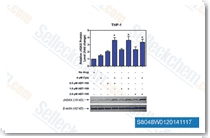
S8048 Venetoclax (ABT-199) Venetoclax (ABT-199, GDC-0199) is a Bcl-2-selective inhibitor with Ki of <0.01 nM in cell-free assays, >4800-fold more selective versus Bcl-xL and Bcl-w, and no activity to Mcl-1. This compound is reported to induce cell growth suppression, apoptosis, cell cycle arrest, and autophagy in triple negative breast cancer MDA-MB-231 cells. Phase 3.
Cell, 2025, S0092-8674(25)00689-0
Cell, 2025, S0092-8674(25)01233-4
Signal Transduct Target Ther, 2025, 10(1):161
Verified customer review of Venetoclax (ABT-199)
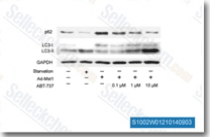
S1002 ABT-737 ABT-737 is a BH3 mimetic inhibitor of Bcl-xL, Bcl-2 and Bcl-w with EC50 of 78.7 nM, 30.3 nM and 197.8 nM in cell-free assays, respectively; no inhibition observed against Mcl-1, Bcl-B or Bfl-1. ABT-737 induces mitochondrial pathway apoptosis and mitophagy. Phase 2.
Signal Transduct Target Ther, 2025, 10(1):161
J Hepatol, 2025, S0168-8278(24)02830-7
Cell Rep Med, 2025, S2666-3791(25)00057-6
Verified customer review of ABT-737
S1001 Navitoclax (ABT-263) A potent inhibitor of Bcl-xL, Bcl-2 and Bcl-w with Ki of ≤ 0.5 nM, ≤1 nM and ≤1 nM in cell-free assays, Navitoclax (ABT-263) binds more weakly to Mcl-1 and A1. Phase 2.
Cell, 2025, S0092-8674(25)00689-0
Nat Cancer, 2025, 6(2):259-277
Nat Metab, 2025, 7(12):2474-2488.
Verified customer review of Navitoclax (ABT-263)
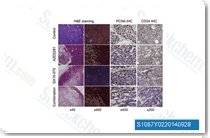
S1057 Obatoclax Mesylate (GX15-070) Obatoclax Mesylate (GX15-070) is an antagonist of Bcl-2 with Ki of 0.22 μM in a cell-free assay, can assist in overcoming MCL-1 mediated resistance to apoptosis.
Nat Commun, 2025, 16(1):2416
bioRxiv, 2024, 10.1101/2023.01.18.524628
Emerg Microbes Infect, 2022, 1-29
Verified customer review of Obatoclax Mesylate (GX15-070)
S8383 S63845 S63845 is a new, selective MCL-1 inhibitor with the Kd value of 0.19 nM and has no discernible binding to the other BCL-2 members, BCL-2 or BCL-XL.
Mol Cancer, 2025, 24(1):154
Nat Commun, 2025, 16(1):7853
Nat Commun, 2025, 16(1):4563
S7790 A-1210477 A-1210477 is a potent and selective MCL-1 inhibitor with Ki and IC50 of 0.454 nM and 26.2 nM, respectively, >100-fold selectivity over other Bcl-2 family members.
Front Pharmacol, 2025, 16:1530270
Cell Rep, 2023, 42(10):113176
Verified customer review of A-1210477
S1121 TW-37 TW-37 is a novel nonpeptide inhibitor to recombinant Bcl-2, Bcl-xL and Mcl-1 with Ki of 0.29 μM, 1.11 μM and 0.26 μM in cell-free assays, respectively.
Signal Transduct Target Ther, 2025, 10(1):161
bioRxiv, 2024, 10.1101/2023.01.18.524628
Cells, 2023, 12(18)2247
Verified customer review of TW-37
S7801 A-1331852 A-1331852 is a potent and selectiveBCL-XL inhibitor with Ki value less than 0.01 nM for BCL-XL and 6 nM, 4 nM, 142 nM for Bcl-2, Bcl-W, MCL-1 respectively. It may be useful in the treatment of cancer, immune and autoimmune diseases.
Cell, 2025, S0092-8674(25)00689-0
Mol Cancer, 2025, 24(1):154
Haematologica, 2025, 110(1):78-91
Verified customer review of A-1331852
S7800 A-1155463 Dihydrochloride A-1155463 Dihydrochloride, a highly potent and selective BCL-XL inhibitor, shows picomolar binding affinity to BCL-XL, and >1000-fold weaker binding to BCL-2 and related proteins BCL-W(Ki=19 nM) and MCL-1(Ki>440 nM).
Front Pharmacol, 2025, 16:1530270
iScience, 2024, 27(1):108503
Verified customer review of A-1155463 Dihydrochloride
S7531 UMI-77 UMI-77 is a selective Mcl-1 inhibitor with Ki of 490 nM, showing selectivity over other members of Bcl-2 family.
iScience, 2024, 27(1):108503
Blood, 2022, blood.2021014304
Nat Commun, 2022, 13(1):6226
Verified customer review of UMI-77
S2812 (R)-(-)-Gossypol (AT-101) acetic acid (R)-(-)-Gossypol (AT-101) acetic acid, the R-(-) enantiomer of Gossypol acetic acid, binds with Bcl-2, Bcl-xL and Mcl-1 with Ki of 0.32 μM, 0.48 μM and 0.18 μM in cell-free assays; does not inhibit BIR3 domain and BID. AT-101 simultaneously triggers apoptosis and a cytoprotective type of autophagy. Phase 2.
Protein Cell, 2024, pwad065
Int J Mol Sci, 2023, 24(7)6662
Leiden University The Netherlands, 2023,
Verified customer review of (R)-(-)-Gossypol (AT-101) acetic acid
S8643 AZD5991 AZD5991 is a macrocyclic MCL-1 inhibitor with sub-nanomolar affinity for MCL-1 (Ki = 0.13 nM). The binding affinity of this compound is about 25-fold lower for mouse Mcl-1 vs. human Mcl-1 but only four-fold lower for rat Mcl-1.
Theranostics, 2025, 15(7):2834-2851
Theranostics, 2025, 15(12):5705-5718
Cell Death Differ, 2025, 10.1038/s41418-025-01514-7
S8061 Sabutoclax Sabutoclax (BI-97C1) is a pan-Bcl-2 inhibitor, including Bcl-xL, Bcl-2, Mcl-1 and Bfl-1 with IC50 of 0.31 μM, 0.32 μM, 0.20 μM and 0.62 μM, respectively.
Cells, 2023, 12(18)2247
Cells, 2023, 10.3390/cells12182247
Mol Divers, 2022, 10.1007/s11030-022-10494-6
Verified customer review of Sabutoclax
S7100 WEHI-539 WEHI-539 has high affinity (IC50=1.1 nM) and selectivity for BCL-XL and potently kills cells by selectively antagonizing its prosurvival activity. This compound has more than a 400-fold higher affinity for BCL-XL versus other prosurvival BCL-2 family members.
bioRxiv, 2025, 2025.06.10.658786
Cell Rep Med, 2023, 4(11):101290
Leiden University The Netherlands, 2023,
S1071 HA14-1 HA14-1 is a non-peptidic ligand of a Bcl-2 surface pocket with IC50 of ~9 μM.
Cell Rep, 2025, 44(5):115617
Platelets, 2020, 10.1080/09537104.2020.1724276
Oncotarget, 2018, 9(24):16701-16717
Verified customer review of HA14-1
S8836 MIK665 (S64315) MIK665 (S64315) is an inhibitor of induced myeloid leukemia cell differentiation protein Mcl-1 with Ki value of 1.2 nM and has potential pro-apoptotic and antineoplastic activities.
Biochem Biophys Res Commun, 2025, 784:152650
Nat Commun, 2024, 15(1):1581
Cancer Biol Ther, 2024, 25(1):2427374
S6709 Obatoclax (GX15-070)

Obatoclax (GX15-070) is an antagonist of Bcl-2 with an Ki of 0.22 μM in a cell-free assay, can assist in overcoming MCL-1 mediated resistance to apoptosis.

Signal Transduct Target Ther, 2025, 10(1):161
Oncotarget, 2024, 15:614-633
Cells, 2023, 12(18)2247
S2448 Gambogic Acid Gambogic Acid (Guttatic Acid, Guttic Acid, Beta-Guttiferrin) activates caspases with EC50 of 0.78-1.64 μM and competitively inhibits Bcl-XL, Bcl-2, Bcl-W, Bcl-B, Bfl-1 and Mcl-1 with IC50 of 1.47, 1.21, 2.02, 0.66, 1.06 and 0.79 μM, respectively.
Theranostics, 2025, 15(11):5420-5439
Cells, 2023, 12(18)2247
Cells, 2023, 10.3390/cells12182247
S7126 Marinopyrrole A (Maritoclax) Maritoclax (Marinopyrrole A) is a selective Mcl-1 antagonist that binds to Mcl-1, but not Bcl-XL, and targets it for proteasomal degradation. This compound disrupts the interaction between Bim and Mcl-1 with an IC50 of 10.1 μM.
Clin Cancer Res, 2023, 29(2):446-457
Cell Signal, 2022, S0898-6568(22)00041-9
S8865 BAI1 BAI1 is a direct allosteric inhibitor of BAX with a dissociation constant (Kd) of 15.0 ± 4 μM.
Biomed Pharmacother, 2025, 187:118049
Int J Hyperthermia, 2024, 41(1):2325489
Nat Commun, 2023, 14(1):865
E2926 A-1155463 A-1155463 is a highly potent and selective BCL-XL inhibitor with EC50 of 65 nM in H146 cells.
Nat Commun, 2025, 16(1):256
Cell Rep Med, 2025, 6(6):102160
Theranostics, 2025, 15(12):5705-5718
S8650 BTSA1 BTSA1 is a pharmacologically optimized BAX activator that binds with high affinity and specificity to the N-terminal activation site and induces conformational changes to BAX leading to BAX-mediated apoptosis. It effectively promotes apoptosis in leukemia cell lines and patient samples while sparing healthy cells.
bioRxiv, 2024, 10.1101/2023.01.18.524628
Cell Mol Life Sci, 2023, 80(10):311
S8759 S55746 S55746 (S 055746,BCL201) is a novel, orally active BCL-2 specific inhibitor (Ki = 1.3 nM) with poor affinity for BCL-XL and no significant binding to MCL-1, BFL-1 (BCL2A1/A1). The selectivity of this compound for BCL-2 versus BCL-XL ranges from ~70 to 400 folds.
Cells, 2023, 12(18)2247
Cells, 2023, 10.3390/cells12182247
Signal Transduct Target Ther, 2022, 7(1):51
S7105 BAM7 BAM 7 is a direct and selective activator of proapoptotic Bax with EC50 of 3.3 μM.
Nat Chem Biol, 2019, 15(4):322-330
Cell Death Discov, 2018, 4:107
Baltimore, Maryland , 2018,
S8199 Ruxotemitide (LTX 315) Ruxotemitide (LTX 315) is the oncolytic peptide that kills cancer cells through Bax/Bak-regulated mitochondrial membrane permeabilization.
J Immunother Cancer, 2022, 10(3)e004129
Nat Metab, 2021, 10.1038/s42255-021-00491-8
S7849 BDA-366 BDA-366 is a small-molecule Bcl2-BH4 domain antagonist and binds BH4 with high affinity and selectivity. It directly binds to Bcl2 with high binding affinity (Ki =3.3 ± 0.73 nM).
Biochem Pharmacol, 2025, S0006-2952(25)00712-9
BMC Cancer, 2023, 23(1):479
S0563 10-Deacetyl-7-xylosyl paclitaxel 10-Deacetyl-7-xylosyl paclitaxel (10-Deacetyl-7-xylosyltaxol, 7-xylosyl-10-deacetylpaclitaxel), a derivative of paclitaxel and naturally occurring xyloside isolated from Taxus chinensis, causes significant mitotic arrest in PC-3 cells followed by up-regulating expression of pro-apoptotic Bax and Bad protein, as well as down-regulating expression of anti-apoptotic Bcl-2 and Bcl-XL , which leads to a disturbance of the mitochondrial membrane permeability and to the activation of caspase-9.
Cell Death Dis, 2022, 13-9:799
E3037 Solanum lyratum Extract Solanum lyratum Extract (300 μg/ml) increases Bax levels and decreases Bcl-2 levels, which cause the loss of mitochondrial membrane potential (Δæm) followed by cytochrome C release and caspase-9 and -3 activation, finally leading to apoptosis. This compound also promotes p53 and p27, but decreases the levels of cyclin B1 thus causing S-phase arrest.
S9970 APG-2575 (lisaftoclax) APG-2575 (lisaftoclax) is a dual Bcl-2 and Bcl-xl inhibitor with IC50 values of 2 nM and 5.9 nM for Bcl-2 and Bcl-xl, respectively.
E8278New WH244 WH244 is a second-generation PROTAC that selectively degrades the anti-apoptotic proteins BCL-xL and BCL-2 with a DC50 of 0.6 nM for BCL-xL and 7.4 nM for BCL-2.
S3243 Zeaxanthin Zeaxanthin, the carotenoid alcohol participates in the xanthophyll cycle, activates the extrinsic apoptosis pathway which induces apoptosis on uveal melanoma cells with IC50 value 40.8 µM.
E0011 Linderalactone Linderalactone inhibits human lung cancer growth by modulating the expression of apoptosis-related proteins (Bax and Bcl-2) with an IC50 of 15 µM in A-549 cells. This compound induces G2/M cell cycle arrest and could also suppress the JAK/STAT signalling pathway. It can be isolated from Radix linderae.
S9276 Alisol B Alisol B, a triterpene from Alismatis rhizoma, induces Bax up-regulation and nuclear translocation, the activation of initiator caspase-8 and caspase-9, and executor caspase-3, suggesting the involvement of both extrinsic and intrinsic apoptosis pathways.
E1510 Sonrotoclax Sonrotoclax(BGB-11417) is a highly potent, orally active and selective inhibitor of Bcl2. This compound demonstrates increased potency along with in vitro and in vivo inhibitory activity against both WT Bcl-2 and the G101V mutant. Bcl-xL It has effective cell killing effect against a variety of lymphoma and leukemia cell lines.
S5600 Flavokawain A Flavokawain A, extracted from kava, is an apoptotic inducers and anticarcinogenic agent. This compound can down-regulation of antiapoptotic proteins, such as XIAP, survivin, and Bcl-xL, thereby changing the balance between apoptotic and antiapoptotic molecules and then induce cell death in tumor cells.
S8177 BH3I-1 BH3I-1 is a Bcl-XL-BH3 domain interaction inhibitor with Ki of 2.4 μM (by fluorescence polarization ).This compound is a selective inhibitor of Bcl-2 family proteins.
S8924 DT2216 DT2216 is a potent and selective degrader of BCL-XL based on PROTAC technology. DT2216 inhibits various BCL-XL-dependent leukemia and cancer cells but considerably less toxic to platelets.
S6004 CCI-007 CCI-007 is a novel small molecule with cytotoxic activity against infant leukemia with MLL rearrangements.
S8758 VU661013 VU661013 is a novel, potent, selective MCL1 inhibitor with Ki of 97 ± 30 pM of human MCL-1 in a TR-FRET assay. However, this compound does not significantly inhibit BCL-xL or BCL-2 with Ki > 40 μM or = 0.73 μM. It de-stabilizes BIM/MCL-1 association, leads to apoptosis in AML.
Gastric Cancer, 2025, 10.1007/s10120-025-01630-w
S8550 Tapotoclax (AMG-176) Tapotoclax (AMG-176) is a potent, selective, and orally bioavailable macrocyclic inhibitor of MCL1 with a Ki of 0.13 nM. It induces a potent apoptosis in models of hematologic malignancies.
E2663 BT2 BT2 is a novel branched-chain α-ketoacid dehydrogenase complex kinase (BDK) inhibitor wieh an IC50 of 3.19 μM.
E5962New BRD-810 BRD-810 is a potent and highly selective inhibitor of MCL1. BRD-810 targets the BH3-binding pocket of MCL1 and blocks the capturing of pro-apoptotic proteins, thereby rapidly triggering caspase activation in MCL1-dependent cells. It demonstrates potent anti-tumor effects in both hematologic malignancies and solid tumor models.
E3020 Hedyotic Diffusa Extract Hedyotic Diffusa Extract is extracted from Hedyotic diffusa, of which polysaccharides inhibit the growth of CNE2 cells in a dose-and-time-dependent way, the mechanism may involve induction of cell apoptosis, which is associated with the activation of Bax and caspase-3 protein and the down-regulation of Bcl-2 protein expression.
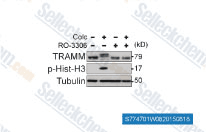
S7747 Ro-3306 RO-3306 is an ATP-competitive, and selective CDK1 inhibitor with Ki of 20 nM, >15-fold selectivity against a diverse panel of human kinases. RO-3306 enhances p53-mediated Bax activation and mitochondrial apoptosis.
Nat Commun, 2025, 16(1):7898
Nat Commun, 2025, 16(1):6439
Nucleic Acids Res, 2025, 53(21)gkaf1179
Verified customer review of Ro-3306
S2606 Mifepristone (RU486) Mifepristone is a remarkably active antagonist of progesterone receptor and glucocorticoid receptor with IC50 of 0.2 nM and 2.6 nM, respectively. Mifepristone promotes cell autophagy and apoptosis, decreases Bcl-2 level and increases Beclin1 level, accompanied by weakened interaction between Bcl-2 and Beclin1.Mifepristone (RU486) can be used to induce animal models of Spontaneous Abortion.
Pharmacol Res, 2025, 215:107696
Cell Death Dis, 2025, 16(1):237
J Virol, 2025, 99(2):e0147224
Verified customer review of Mifepristone (RU486)
S8820 Unesbulin (PTC596) Unesbulin (PTC596) is a second-generation BMI-1 inhibitor that accelerates BMI-1 degradation. This compound downregulates MCL-1 and induces p53-independent mitochondrial apoptosis. IC50 values at 72 hours ranged from 68 to 340 nM in mantle cell lymphoma (MCL) cell lines.
Cell Rep Med, 2025, S2666-3791(25)00150-8
NPJ Precis Oncol, 2024, 8(1):68
PLoS One, 2023, 18(2):e0277313
S6852 Gossypol Gossypol (BL 193) is an orally-active polyphenol isolated from cotton seeds and roots. This compound is a potent inhibitor of 5α-reductase 1 and 3α-hydroxysteroid dehydrogenase with IC50 of 3.33 μM and 0.52 μM in cell-free assay, respectively. It also inhibits the binding of BH3 peptide to Bcl protein with IC50 of 0.4 μM and 10 μM for Bcl-XL and Bcl-2, respectively. This chemical induces apoptosis and cell growth inhibition in various cancer cells.
iScience, 2024, 27(10):110862
Cells, 2023, 12(18)2247
Cells, 2023, 10.3390/cells12182247
S3275 Senkyunolide I Senkyunolide I (SEI, SENI) is an orally active compound isolated from Ligusticum chuanxiong with analgesic, anti-migraine, neuroprotective, anti-oxidation and anti-apoptosis activities. This compound up-regulates the phosphorylation of Erk1/2 and induces Nrf2 nuclear translocation with enhanced HO-1 and NQO1 expressions. It also promotes the ratio of Bcl-2/Bax and inhibits the expressions of cleaved caspase 3 and caspase 9.
Blood Sci, 2025, 7(3):e00246
iScience, 2024, 27(7):110367
World J Emerg Med, 2024, 15(3):206-213
S5967 Berberine chloride hydrate Berberine (Natural Yellow 18) chloride hydrate is a quaternary ammonium salt from the group of isoquinoline alkaloids. Berberine activates caspase 3 and caspase 8, cleavage of poly ADP-ribose polymerase (PARP) and the release of cytochrome c. Berberine chloride decreases the expression of c-IAP1, Bcl-2 and Bcl-XL. Berberine chloride induces apoptosis with sustained phosphorylation of JNK and p38 MAPK, as well as generation of the ROS. Berberine chloride is a dual topoisomerase I and II inhibitor. Berberine chloride is also a potential autophagy modulator.
Front Biosci (Landmark Ed), 2022, 27(8):242
Front Pharmacol, 2021, 12:632201
S3238 Resibufogenin Resibufogenin (Bufogenin, Recibufogenin), a component of huachansu with anticancer effect, triggers necroptosis through upregulating receptor-interacting protein kinase 3 (RIP3) and phosphorylating mixed lineage kinase domain-like protein at Ser358. This compound exerts cytotoxic effect by inducing reactive oxygen species (ROS) accumulation. It induces apoptosis and caspase-3 and caspase-8 activity. This chemical increases Bax/Bcl-2 expression, and suppresses cyclin D1, cyclin E, PI3K, p-AKT, p-GSK3β and β-catenin protein expression.
bioRxiv, 2025, 2025.07.17.665404
Research Square, 2024, 10.21203/rs.3.rs-3790060/v1
Phytomedicine, 2022, 102:154182
E0124 Chelerythrine

Chelerythrine (Toddaline, Broussonpapyrine) is a potent, selective antagonist of PKC with an IC50 of 0.66 μM. This compound also inhibits the BclXL-Bak BH3 peptide binding with an IC50 of 1.5 μM. It shows antitumor, antidiabetic and anti-inflammatory activity.

Nutr Neurosci, 2022, 1-19
S3224 Cinobufagin Cinobufagin (Cinobufagine), an active ingredient of Venenum Bufonis, inhibits tumor development. This compound increases ATM and Chk2 and decreases CDC25C, CDK1, and cyclin B. It inhibits PI3K, AKT and Bcl-2 while increases levels of cleaved caspase-9 and caspase-3. Thus, this chemical induces cell cycle arrest at the G2/M phase and apoptosis.
S6895 TCPOBOP TCPOBOP is a constitutive androstane receptor (CAR) agonist. This compound attenuates Fas-induced murine liver injury by altering Bcl-2 proteins.
S3245 Nodakenetin Nodakenetin (NANI), a plant-derived coumarin isolated from Angelica decursiva, inhibits α-glucosidase, PTP1B, rat lens aldose reductase (RLAR), AChE, BChE, and β-site amyloid precursor protein cleaving enzyme 1 (BACE1). This compound alters the protein expression of Bax and Bcl-2, and prompts mitochondrial apoptosis. It exhibits anti-tumor activity.
S3267 Nicotiflorin (Kaempferol-3-O-rutinoside) Nicotiflorin (Kaempferol-3-O-rutinoside), a flavonoid extracted from Carthamus tinctorius, alters the shape and structure of injured neurons, decreases the number of apoptotic cells, down-regulates expression of p-JAK2, p-STAT3, caspase-3, and Bax and decreases Bax immunoredactivity, and increases Bcl-2 protein expression and immunoreactivity.
E2354 Valepotriate Valepotriate, an unstable iridoid isolated from Valeriana jatamansi Jones, has anti-epileptic by significantly increasing the expression of GABAA, glutamic acid decarboxylase 65, and Bcl-2 and reduce the expression of caspase-3.
E2028 Humanin Humanin (human) (1-24-Protein humanin (human)), a small mitochondrial-derived cytoprotective polypeptide encoded by mtDNA, exhibits protective effects in several cell types against cellular stress conditions and apoptosis through regulating various signaling mechanisms, such as JAK/STAT pathway and interaction of BCL-2 family of protein.
S2271 Berberine chloride Berberine chloride is a quaternary ammonium salt from the group of isoquinoline alkaloids. This compound activates caspase 3 and caspase 8, cleavage of poly ADP-ribose polymerase (PARP) and the release of cytochrome c. It decreases the expression of c-IAP1, Bcl-2 and Bcl-XL. This chemical induces apoptosis with sustained phosphorylation of JNK and p38 MAPK, as well as generation of the ROS. It is a dual topoisomerase I and II inhibitor. It is also a potential autophagy modulator.
J Cardiovasc Dev Dis, 2025, 12(7)278
Adv Healthc Mater, 2023, e2300591.
Transl Oncol, 2023, 35:101712
S9665 Motixafortide (BKT140) Motixafortide (BL-8040, BKT140, TF 14016, 4-fluorobenzoyl, 4F-benzoyl-TN14003, T140) is an antagonist of CXCR4 with IC50 of ~1 nM. BL-8040 induces the apoptosis of AML blasts by down-regulating ERK, BCL-2, MCL-1 and cyclin-D1 via altered miR-15a/16-1 expression.
King's College London, 2023,
S5550 Ethyl gallate Ethyl gallat (Phyllemblin, gallic acid ethyl ester), which could be found naturally in a variety of plant sources, is a food additive with antimicrobial activity. Ethyl gallat activates the death receptor-dependent pathway of apoptosis by enhancing the expression of caspases-8, -9, and -3 and the Bcl-2 interacting domain (Bid).
Front Pharmacol, 2024, 15:1403424
S8048 Venetoclax (ABT-199) Venetoclax (ABT-199, GDC-0199) is a Bcl-2-selective inhibitor with Ki of <0.01 nM in cell-free assays, >4800-fold more selective versus Bcl-xL and Bcl-w, and no activity to Mcl-1. This compound is reported to induce cell growth suppression, apoptosis, cell cycle arrest, and autophagy in triple negative breast cancer MDA-MB-231 cells. Phase 3.
Cell, 2025, S0092-8674(25)00689-0
Cell, 2025, S0092-8674(25)01233-4
Signal Transduct Target Ther, 2025, 10(1):161
Verified customer review of Venetoclax (ABT-199)
S1002 ABT-737 ABT-737 is a BH3 mimetic inhibitor of Bcl-xL, Bcl-2 and Bcl-w with EC50 of 78.7 nM, 30.3 nM and 197.8 nM in cell-free assays, respectively; no inhibition observed against Mcl-1, Bcl-B or Bfl-1. ABT-737 induces mitochondrial pathway apoptosis and mitophagy. Phase 2.
Signal Transduct Target Ther, 2025, 10(1):161
J Hepatol, 2025, S0168-8278(24)02830-7
Cell Rep Med, 2025, S2666-3791(25)00057-6
Verified customer review of ABT-737
S1001 Navitoclax (ABT-263) A potent inhibitor of Bcl-xL, Bcl-2 and Bcl-w with Ki of ≤ 0.5 nM, ≤1 nM and ≤1 nM in cell-free assays, Navitoclax (ABT-263) binds more weakly to Mcl-1 and A1. Phase 2.
Cell, 2025, S0092-8674(25)00689-0
Nat Cancer, 2025, 6(2):259-277
Nat Metab, 2025, 7(12):2474-2488.
Verified customer review of Navitoclax (ABT-263)
S8383 S63845 S63845 is a new, selective MCL-1 inhibitor with the Kd value of 0.19 nM and has no discernible binding to the other BCL-2 members, BCL-2 or BCL-XL.
Mol Cancer, 2025, 24(1):154
Nat Commun, 2025, 16(1):7853
Nat Commun, 2025, 16(1):4563
S7790 A-1210477 A-1210477 is a potent and selective MCL-1 inhibitor with Ki and IC50 of 0.454 nM and 26.2 nM, respectively, >100-fold selectivity over other Bcl-2 family members.
Front Pharmacol, 2025, 16:1530270
Cell Rep, 2023, 42(10):113176
Verified customer review of A-1210477
S1121 TW-37 TW-37 is a novel nonpeptide inhibitor to recombinant Bcl-2, Bcl-xL and Mcl-1 with Ki of 0.29 μM, 1.11 μM and 0.26 μM in cell-free assays, respectively.
Signal Transduct Target Ther, 2025, 10(1):161
bioRxiv, 2024, 10.1101/2023.01.18.524628
Cells, 2023, 12(18)2247
Verified customer review of TW-37
S7801 A-1331852 A-1331852 is a potent and selectiveBCL-XL inhibitor with Ki value less than 0.01 nM for BCL-XL and 6 nM, 4 nM, 142 nM for Bcl-2, Bcl-W, MCL-1 respectively. It may be useful in the treatment of cancer, immune and autoimmune diseases.
Cell, 2025, S0092-8674(25)00689-0
Mol Cancer, 2025, 24(1):154
Haematologica, 2025, 110(1):78-91
Verified customer review of A-1331852
S7800 A-1155463 Dihydrochloride A-1155463 Dihydrochloride, a highly potent and selective BCL-XL inhibitor, shows picomolar binding affinity to BCL-XL, and >1000-fold weaker binding to BCL-2 and related proteins BCL-W(Ki=19 nM) and MCL-1(Ki>440 nM).
Front Pharmacol, 2025, 16:1530270
iScience, 2024, 27(1):108503
Verified customer review of A-1155463 Dihydrochloride
S7531 UMI-77 UMI-77 is a selective Mcl-1 inhibitor with Ki of 490 nM, showing selectivity over other members of Bcl-2 family.
iScience, 2024, 27(1):108503
Blood, 2022, blood.2021014304
Nat Commun, 2022, 13(1):6226
Verified customer review of UMI-77
S2812 (R)-(-)-Gossypol (AT-101) acetic acid (R)-(-)-Gossypol (AT-101) acetic acid, the R-(-) enantiomer of Gossypol acetic acid, binds with Bcl-2, Bcl-xL and Mcl-1 with Ki of 0.32 μM, 0.48 μM and 0.18 μM in cell-free assays; does not inhibit BIR3 domain and BID. AT-101 simultaneously triggers apoptosis and a cytoprotective type of autophagy. Phase 2.
Protein Cell, 2024, pwad065
Int J Mol Sci, 2023, 24(7)6662
Leiden University The Netherlands, 2023,
Verified customer review of (R)-(-)-Gossypol (AT-101) acetic acid
S8643 AZD5991 AZD5991 is a macrocyclic MCL-1 inhibitor with sub-nanomolar affinity for MCL-1 (Ki = 0.13 nM). The binding affinity of this compound is about 25-fold lower for mouse Mcl-1 vs. human Mcl-1 but only four-fold lower for rat Mcl-1.
Theranostics, 2025, 15(7):2834-2851
Theranostics, 2025, 15(12):5705-5718
Cell Death Differ, 2025, 10.1038/s41418-025-01514-7
S8061 Sabutoclax Sabutoclax (BI-97C1) is a pan-Bcl-2 inhibitor, including Bcl-xL, Bcl-2, Mcl-1 and Bfl-1 with IC50 of 0.31 μM, 0.32 μM, 0.20 μM and 0.62 μM, respectively.
Cells, 2023, 12(18)2247
Cells, 2023, 10.3390/cells12182247
Mol Divers, 2022, 10.1007/s11030-022-10494-6
Verified customer review of Sabutoclax
S1071 HA14-1 HA14-1 is a non-peptidic ligand of a Bcl-2 surface pocket with IC50 of ~9 μM.
Cell Rep, 2025, 44(5):115617
Platelets, 2020, 10.1080/09537104.2020.1724276
Oncotarget, 2018, 9(24):16701-16717
Verified customer review of HA14-1
S8836 MIK665 (S64315) MIK665 (S64315) is an inhibitor of induced myeloid leukemia cell differentiation protein Mcl-1 with Ki value of 1.2 nM and has potential pro-apoptotic and antineoplastic activities.
Biochem Biophys Res Commun, 2025, 784:152650
Nat Commun, 2024, 15(1):1581
Cancer Biol Ther, 2024, 25(1):2427374
S2448 Gambogic Acid Gambogic Acid (Guttatic Acid, Guttic Acid, Beta-Guttiferrin) activates caspases with EC50 of 0.78-1.64 μM and competitively inhibits Bcl-XL, Bcl-2, Bcl-W, Bcl-B, Bfl-1 and Mcl-1 with IC50 of 1.47, 1.21, 2.02, 0.66, 1.06 and 0.79 μM, respectively.
Theranostics, 2025, 15(11):5420-5439
Cells, 2023, 12(18)2247
Cells, 2023, 10.3390/cells12182247
S8865 BAI1 BAI1 is a direct allosteric inhibitor of BAX with a dissociation constant (Kd) of 15.0 ± 4 μM.
Biomed Pharmacother, 2025, 187:118049
Int J Hyperthermia, 2024, 41(1):2325489
Nat Commun, 2023, 14(1):865
E2926 A-1155463 A-1155463 is a highly potent and selective BCL-XL inhibitor with EC50 of 65 nM in H146 cells.
Nat Commun, 2025, 16(1):256
Cell Rep Med, 2025, 6(6):102160
Theranostics, 2025, 15(12):5705-5718
S8759 S55746 S55746 (S 055746,BCL201) is a novel, orally active BCL-2 specific inhibitor (Ki = 1.3 nM) with poor affinity for BCL-XL and no significant binding to MCL-1, BFL-1 (BCL2A1/A1). The selectivity of this compound for BCL-2 versus BCL-XL ranges from ~70 to 400 folds.
Cells, 2023, 12(18)2247
Cells, 2023, 10.3390/cells12182247
Signal Transduct Target Ther, 2022, 7(1):51
S9970 APG-2575 (lisaftoclax) APG-2575 (lisaftoclax) is a dual Bcl-2 and Bcl-xl inhibitor with IC50 values of 2 nM and 5.9 nM for Bcl-2 and Bcl-xl, respectively.
E8278New WH244 WH244 is a second-generation PROTAC that selectively degrades the anti-apoptotic proteins BCL-xL and BCL-2 with a DC50 of 0.6 nM for BCL-xL and 7.4 nM for BCL-2.
S3243 Zeaxanthin Zeaxanthin, the carotenoid alcohol participates in the xanthophyll cycle, activates the extrinsic apoptosis pathway which induces apoptosis on uveal melanoma cells with IC50 value 40.8 µM.
E0011 Linderalactone Linderalactone inhibits human lung cancer growth by modulating the expression of apoptosis-related proteins (Bax and Bcl-2) with an IC50 of 15 µM in A-549 cells. This compound induces G2/M cell cycle arrest and could also suppress the JAK/STAT signalling pathway. It can be isolated from Radix linderae.
E1510 Sonrotoclax Sonrotoclax(BGB-11417) is a highly potent, orally active and selective inhibitor of Bcl2. This compound demonstrates increased potency along with in vitro and in vivo inhibitory activity against both WT Bcl-2 and the G101V mutant. Bcl-xL It has effective cell killing effect against a variety of lymphoma and leukemia cell lines.
S5600 Flavokawain A Flavokawain A, extracted from kava, is an apoptotic inducers and anticarcinogenic agent. This compound can down-regulation of antiapoptotic proteins, such as XIAP, survivin, and Bcl-xL, thereby changing the balance between apoptotic and antiapoptotic molecules and then induce cell death in tumor cells.
S8177 BH3I-1 BH3I-1 is a Bcl-XL-BH3 domain interaction inhibitor with Ki of 2.4 μM (by fluorescence polarization ).This compound is a selective inhibitor of Bcl-2 family proteins.
S6004 CCI-007 CCI-007 is a novel small molecule with cytotoxic activity against infant leukemia with MLL rearrangements.
S8758 VU661013 VU661013 is a novel, potent, selective MCL1 inhibitor with Ki of 97 ± 30 pM of human MCL-1 in a TR-FRET assay. However, this compound does not significantly inhibit BCL-xL or BCL-2 with Ki > 40 μM or = 0.73 μM. It de-stabilizes BIM/MCL-1 association, leads to apoptosis in AML.
Gastric Cancer, 2025, 10.1007/s10120-025-01630-w
S8550 Tapotoclax (AMG-176) Tapotoclax (AMG-176) is a potent, selective, and orally bioavailable macrocyclic inhibitor of MCL1 with a Ki of 0.13 nM. It induces a potent apoptosis in models of hematologic malignancies.
E2663 BT2 BT2 is a novel branched-chain α-ketoacid dehydrogenase complex kinase (BDK) inhibitor wieh an IC50 of 3.19 μM.
E5962New BRD-810 BRD-810 is a potent and highly selective inhibitor of MCL1. BRD-810 targets the BH3-binding pocket of MCL1 and blocks the capturing of pro-apoptotic proteins, thereby rapidly triggering caspase activation in MCL1-dependent cells. It demonstrates potent anti-tumor effects in both hematologic malignancies and solid tumor models.
E3020 Hedyotic Diffusa Extract Hedyotic Diffusa Extract is extracted from Hedyotic diffusa, of which polysaccharides inhibit the growth of CNE2 cells in a dose-and-time-dependent way, the mechanism may involve induction of cell apoptosis, which is associated with the activation of Bax and caspase-3 protein and the down-regulation of Bcl-2 protein expression.
S2606 Mifepristone (RU486) Mifepristone is a remarkably active antagonist of progesterone receptor and glucocorticoid receptor with IC50 of 0.2 nM and 2.6 nM, respectively. Mifepristone promotes cell autophagy and apoptosis, decreases Bcl-2 level and increases Beclin1 level, accompanied by weakened interaction between Bcl-2 and Beclin1.Mifepristone (RU486) can be used to induce animal models of Spontaneous Abortion.
Pharmacol Res, 2025, 215:107696
Cell Death Dis, 2025, 16(1):237
J Virol, 2025, 99(2):e0147224
Verified customer review of Mifepristone (RU486)
S8820 Unesbulin (PTC596) Unesbulin (PTC596) is a second-generation BMI-1 inhibitor that accelerates BMI-1 degradation. This compound downregulates MCL-1 and induces p53-independent mitochondrial apoptosis. IC50 values at 72 hours ranged from 68 to 340 nM in mantle cell lymphoma (MCL) cell lines.
Cell Rep Med, 2025, S2666-3791(25)00150-8
NPJ Precis Oncol, 2024, 8(1):68
PLoS One, 2023, 18(2):e0277313
S6852 Gossypol Gossypol (BL 193) is an orally-active polyphenol isolated from cotton seeds and roots. This compound is a potent inhibitor of 5α-reductase 1 and 3α-hydroxysteroid dehydrogenase with IC50 of 3.33 μM and 0.52 μM in cell-free assay, respectively. It also inhibits the binding of BH3 peptide to Bcl protein with IC50 of 0.4 μM and 10 μM for Bcl-XL and Bcl-2, respectively. This chemical induces apoptosis and cell growth inhibition in various cancer cells.
iScience, 2024, 27(10):110862
Cells, 2023, 12(18)2247
Cells, 2023, 10.3390/cells12182247
S5967 Berberine chloride hydrate Berberine (Natural Yellow 18) chloride hydrate is a quaternary ammonium salt from the group of isoquinoline alkaloids. Berberine activates caspase 3 and caspase 8, cleavage of poly ADP-ribose polymerase (PARP) and the release of cytochrome c. Berberine chloride decreases the expression of c-IAP1, Bcl-2 and Bcl-XL. Berberine chloride induces apoptosis with sustained phosphorylation of JNK and p38 MAPK, as well as generation of the ROS. Berberine chloride is a dual topoisomerase I and II inhibitor. Berberine chloride is also a potential autophagy modulator.
Front Biosci (Landmark Ed), 2022, 27(8):242
Front Pharmacol, 2021, 12:632201
E0124 Chelerythrine

Chelerythrine (Toddaline, Broussonpapyrine) is a potent, selective antagonist of PKC with an IC50 of 0.66 μM. This compound also inhibits the BclXL-Bak BH3 peptide binding with an IC50 of 1.5 μM. It shows antitumor, antidiabetic and anti-inflammatory activity.

Nutr Neurosci, 2022, 1-19
S3224 Cinobufagin Cinobufagin (Cinobufagine), an active ingredient of Venenum Bufonis, inhibits tumor development. This compound increases ATM and Chk2 and decreases CDC25C, CDK1, and cyclin B. It inhibits PI3K, AKT and Bcl-2 while increases levels of cleaved caspase-9 and caspase-3. Thus, this chemical induces cell cycle arrest at the G2/M phase and apoptosis.
S6895 TCPOBOP TCPOBOP is a constitutive androstane receptor (CAR) agonist. This compound attenuates Fas-induced murine liver injury by altering Bcl-2 proteins.
E2354 Valepotriate Valepotriate, an unstable iridoid isolated from Valeriana jatamansi Jones, has anti-epileptic by significantly increasing the expression of GABAA, glutamic acid decarboxylase 65, and Bcl-2 and reduce the expression of caspase-3.
S2271 Berberine chloride Berberine chloride is a quaternary ammonium salt from the group of isoquinoline alkaloids. This compound activates caspase 3 and caspase 8, cleavage of poly ADP-ribose polymerase (PARP) and the release of cytochrome c. It decreases the expression of c-IAP1, Bcl-2 and Bcl-XL. This chemical induces apoptosis with sustained phosphorylation of JNK and p38 MAPK, as well as generation of the ROS. It is a dual topoisomerase I and II inhibitor. It is also a potential autophagy modulator.
J Cardiovasc Dev Dis, 2025, 12(7)278
Adv Healthc Mater, 2023, e2300591.
Transl Oncol, 2023, 35:101712
S9665 Motixafortide (BKT140) Motixafortide (BL-8040, BKT140, TF 14016, 4-fluorobenzoyl, 4F-benzoyl-TN14003, T140) is an antagonist of CXCR4 with IC50 of ~1 nM. BL-8040 induces the apoptosis of AML blasts by down-regulating ERK, BCL-2, MCL-1 and cyclin-D1 via altered miR-15a/16-1 expression.
King's College London, 2023,
S8650 BTSA1 BTSA1 is a pharmacologically optimized BAX activator that binds with high affinity and specificity to the N-terminal activation site and induces conformational changes to BAX leading to BAX-mediated apoptosis. It effectively promotes apoptosis in leukemia cell lines and patient samples while sparing healthy cells.
bioRxiv, 2024, 10.1101/2023.01.18.524628
Cell Mol Life Sci, 2023, 80(10):311
S7105 BAM7 BAM 7 is a direct and selective activator of proapoptotic Bax with EC50 of 3.3 μM.
Nat Chem Biol, 2019, 15(4):322-330
Cell Death Discov, 2018, 4:107
Baltimore, Maryland , 2018,
S9276 Alisol B Alisol B, a triterpene from Alismatis rhizoma, induces Bax up-regulation and nuclear translocation, the activation of initiator caspase-8 and caspase-9, and executor caspase-3, suggesting the involvement of both extrinsic and intrinsic apoptosis pathways.
S7747 Ro-3306 RO-3306 is an ATP-competitive, and selective CDK1 inhibitor with Ki of 20 nM, >15-fold selectivity against a diverse panel of human kinases. RO-3306 enhances p53-mediated Bax activation and mitochondrial apoptosis.
Nat Commun, 2025, 16(1):7898
Nat Commun, 2025, 16(1):6439
Nucleic Acids Res, 2025, 53(21)gkaf1179
Verified customer review of Ro-3306
S3275 Senkyunolide I Senkyunolide I (SEI, SENI) is an orally active compound isolated from Ligusticum chuanxiong with analgesic, anti-migraine, neuroprotective, anti-oxidation and anti-apoptosis activities. This compound up-regulates the phosphorylation of Erk1/2 and induces Nrf2 nuclear translocation with enhanced HO-1 and NQO1 expressions. It also promotes the ratio of Bcl-2/Bax and inhibits the expressions of cleaved caspase 3 and caspase 9.
Blood Sci, 2025, 7(3):e00246
iScience, 2024, 27(7):110367
World J Emerg Med, 2024, 15(3):206-213
S3238 Resibufogenin Resibufogenin (Bufogenin, Recibufogenin), a component of huachansu with anticancer effect, triggers necroptosis through upregulating receptor-interacting protein kinase 3 (RIP3) and phosphorylating mixed lineage kinase domain-like protein at Ser358. This compound exerts cytotoxic effect by inducing reactive oxygen species (ROS) accumulation. It induces apoptosis and caspase-3 and caspase-8 activity. This chemical increases Bax/Bcl-2 expression, and suppresses cyclin D1, cyclin E, PI3K, p-AKT, p-GSK3β and β-catenin protein expression.
bioRxiv, 2025, 2025.07.17.665404
Research Square, 2024, 10.21203/rs.3.rs-3790060/v1
Phytomedicine, 2022, 102:154182
S5550 Ethyl gallate Ethyl gallat (Phyllemblin, gallic acid ethyl ester), which could be found naturally in a variety of plant sources, is a food additive with antimicrobial activity. Ethyl gallat activates the death receptor-dependent pathway of apoptosis by enhancing the expression of caspases-8, -9, and -3 and the Bcl-2 interacting domain (Bid).
Front Pharmacol, 2024, 15:1403424
S1057 Obatoclax Mesylate (GX15-070) Obatoclax Mesylate (GX15-070) is an antagonist of Bcl-2 with Ki of 0.22 μM in a cell-free assay, can assist in overcoming MCL-1 mediated resistance to apoptosis.
Nat Commun, 2025, 16(1):2416
bioRxiv, 2024, 10.1101/2023.01.18.524628
Emerg Microbes Infect, 2022, 1-29
Verified customer review of Obatoclax Mesylate (GX15-070)
S7100 WEHI-539 WEHI-539 has high affinity (IC50=1.1 nM) and selectivity for BCL-XL and potently kills cells by selectively antagonizing its prosurvival activity. This compound has more than a 400-fold higher affinity for BCL-XL versus other prosurvival BCL-2 family members.
bioRxiv, 2025, 2025.06.10.658786
Cell Rep Med, 2023, 4(11):101290
Leiden University The Netherlands, 2023,
S6709 Obatoclax (GX15-070)

Obatoclax (GX15-070) is an antagonist of Bcl-2 with an Ki of 0.22 μM in a cell-free assay, can assist in overcoming MCL-1 mediated resistance to apoptosis.

Signal Transduct Target Ther, 2025, 10(1):161
Oncotarget, 2024, 15:614-633
Cells, 2023, 12(18)2247
S7126 Marinopyrrole A (Maritoclax) Maritoclax (Marinopyrrole A) is a selective Mcl-1 antagonist that binds to Mcl-1, but not Bcl-XL, and targets it for proteasomal degradation. This compound disrupts the interaction between Bim and Mcl-1 with an IC50 of 10.1 μM.
Clin Cancer Res, 2023, 29(2):446-457
Cell Signal, 2022, S0898-6568(22)00041-9
S7849 BDA-366 BDA-366 is a small-molecule Bcl2-BH4 domain antagonist and binds BH4 with high affinity and selectivity. It directly binds to Bcl2 with high binding affinity (Ki =3.3 ± 0.73 nM).
Biochem Pharmacol, 2025, S0006-2952(25)00712-9
BMC Cancer, 2023, 23(1):479
S8199 Ruxotemitide (LTX 315) Ruxotemitide (LTX 315) is the oncolytic peptide that kills cancer cells through Bax/Bak-regulated mitochondrial membrane permeabilization.
J Immunother Cancer, 2022, 10(3)e004129
Nat Metab, 2021, 10.1038/s42255-021-00491-8
S0563 10-Deacetyl-7-xylosyl paclitaxel 10-Deacetyl-7-xylosyl paclitaxel (10-Deacetyl-7-xylosyltaxol, 7-xylosyl-10-deacetylpaclitaxel), a derivative of paclitaxel and naturally occurring xyloside isolated from Taxus chinensis, causes significant mitotic arrest in PC-3 cells followed by up-regulating expression of pro-apoptotic Bax and Bad protein, as well as down-regulating expression of anti-apoptotic Bcl-2 and Bcl-XL , which leads to a disturbance of the mitochondrial membrane permeability and to the activation of caspase-9.
Cell Death Dis, 2022, 13-9:799
S3245 Nodakenetin Nodakenetin (NANI), a plant-derived coumarin isolated from Angelica decursiva, inhibits α-glucosidase, PTP1B, rat lens aldose reductase (RLAR), AChE, BChE, and β-site amyloid precursor protein cleaving enzyme 1 (BACE1). This compound alters the protein expression of Bax and Bcl-2, and prompts mitochondrial apoptosis. It exhibits anti-tumor activity.
S3267 Nicotiflorin (Kaempferol-3-O-rutinoside) Nicotiflorin (Kaempferol-3-O-rutinoside), a flavonoid extracted from Carthamus tinctorius, alters the shape and structure of injured neurons, decreases the number of apoptotic cells, down-regulates expression of p-JAK2, p-STAT3, caspase-3, and Bax and decreases Bax immunoredactivity, and increases Bcl-2 protein expression and immunoreactivity.
E2028 Humanin Humanin (human) (1-24-Protein humanin (human)), a small mitochondrial-derived cytoprotective polypeptide encoded by mtDNA, exhibits protective effects in several cell types against cellular stress conditions and apoptosis through regulating various signaling mechanisms, such as JAK/STAT pathway and interaction of BCL-2 family of protein.
E8278New WH244 WH244 is a second-generation PROTAC that selectively degrades the anti-apoptotic proteins BCL-xL and BCL-2 with a DC50 of 0.6 nM for BCL-xL and 7.4 nM for BCL-2.
E5962New BRD-810 BRD-810 is a potent and highly selective inhibitor of MCL1. BRD-810 targets the BH3-binding pocket of MCL1 and blocks the capturing of pro-apoptotic proteins, thereby rapidly triggering caspase activation in MCL1-dependent cells. It demonstrates potent anti-tumor effects in both hematologic malignancies and solid tumor models.

Signaling Pathway Map

Bcl-2 (B-cell lymphoma 2) is encoded by the Bcl-2 gene and is the first identified member of a large family of apoptosis regulatory proteins (Bcl-2 family) that derives its name from the B-cell lymphoma 2, as it is the second member of a variety of proteins initially described in the t(14;18) chromosomal translocation in human follicular B-cell lymphomas. Bcl-2 contains four Bcl-2 homology domains (BH1-BH4) that mediate the formation of homodimer and heterodimer with relative proteins such as Bax, Bad, Bak and Bcl-xL, and a trans-membrane (TM) domain that mediates insertion into the outer membrane of the mitochondria and the endoplasmic reticulum. Bcl-2 proteins are generally integrated within the outer mitochondrial membrane (OMM), and may also be in the cytosol or ER membrane. The Bcl-2 and other antiapoptotic members of the Bcl-2 family preserve the outer mitochondrial membrane (OMM) integrity, thus inhibiting the mitochondrial signaling pathway of apoptosis, by complex interactions with the proapoptotic Bcl-2 proteins such as Bax, Bak, Bim, Puma and tBid. [1][2]

Bcl-2 suppresses apoptosis in response to a broad range of stress stimuli, including those frequently encountered during tumor development, such as oncogene activation, DNA damage, hypoxia (oxygen deprivation), loss of appropriate growth signals and anoikis (loss of cell attachment). In healthy cells, Bax and Bak are kept in check by the pro-survival Bcl-2 family members and the binding of BH3-only proteins unleashes Bax/Bak. Bcl-2 is also critical for the survival of renal epithelial stem cells during embryogenesis, melanocyte progenitors and mature B and T lymphocytes. Bcl-2 over-expression accelerates Eu-myc-induced lymphomagenesis, but loss of endogenous Bcl-2 does not prevent or delay Eu-myc-induced B lymphoma development. Bcl-2 proteins also constitutively binds to Beclin-1, and its dissociation through post-translational modification of Beclin-1 and/or Bcl-2 proteins such as phosphorylation by JNK1, or direct competition for the Bcl-2 BC groove by another BH3-only protein such as Bad, may be sufficient to induce autophagy, leading to the suggestion that autophagy and apoptosis are mechanistically linked. Single-site phosphorylation at Serine 70 (S70) is required for the antiapoptotic function of Bcl-2, and multisite phosphorylation at Threonine 69, S70, and S87 has been reported to inactivate Bcl-2. Phosphorylation of Bcl-2 has been shown to enhance activity to allow response to extracellular growth-factor-mediated signals. [1][2][3]

In addition, Bcl-2 is over-expressed in human follicular centre B-cell lymphoma; high levels of Bcl-2 are also detected in significant numbers of chronic lymphocytic leukaemia (CLL), DLBCL and mantle cell lymphoma, as well as in certain solid tumours(brain, breast and lung). The upregulation of Bcl-2 in CLL and other cancers has been attributed to the hypo-methylation of the Bcl-2 promoter or, possibly more importantly due to hemizygous or homozygous loss of the micro RNAs (miRs) 15a and 16-1 that negatively regulate Bcl-2. The dysregulated Bcl-2 proteins in cancer can lead to increased survival of abnormal cells, which are thought to be involved in resistance to conventional cancer treatment. Mice that constitutively express both Myc and Bcl-2 transgenes develop lymphoblastic leukaemia with high incidence, while shut-down of the inducible Bcl-2 transgene in lymphoma-burdened bi-transgenic mice results in tumor regression and significantly prolonged animal survival in many cases, indicating that inactivation of Bcl-2 constitutes a promising new approach to cancer therapy. Small molecule mimetics of BH3-only proteins that can directly target pro-survival Bcl-2 family members are being developed as a novel therapeutic approach. ABT-737 and the closely related orally bioavailable ABT-263, belong to the BH3 mimetic small molecule inhibitors, targeting Bcl-2 and Bcl-2-related proteins such as Bcl-xL and Bcl-w, therefore promoting tumor regression in murine xeno-transplanation models of certain human lymphomas or small cell lung carcinomas and in primary patient-derived follicular lymphoma cells. [1][4]