ROCK inhibitors, a class of small-molecule compounds targeting Rho-associated coiled-coil kinase (ROCK), have emerged as pivotal tools in biomedical research due to their ability to modulate a wide range of cellular processes. ROCK, a serine/threonine kinase downstream of the Rho GTPase signaling pathway, plays a crucial role in regulating cytoskeletal dynamics, cell adhesion, migration, and proliferation—processes that are fundamental to normal development, tissue homeostasis, and disease progression. In recent years, the application of ROCK inhibitors has expanded rapidly across various research fields, from stem cell biology and regenerative medicine to cancer research and organoid technology.

-
 Argentina
-
 Australia
-
 Austria
-
 Belgium
-
 Brazil
-
 Canada
-
 China
China
-
 Czech Republic
-
 Denmark
-
 Finland
-
 France
-
 Germany
-
 Greece
-
 Hong Kong
-
 Hungary
-
 Iceland
-
 India
India
-
 Ireland
-
 Israel
-
 Italy
Italy
-
 Japan
Japan
-
 Korea
Korea
-
 Luxembourg
-
 Malaysia
-
 Netherlands
-
 New Zealand
-
 Norway
-
 Poland
-
 Portugal
-
 Qatar
Qatar
-
 Romania
-
 Saudi Arabia
-
 Singapore
-
 Spain
Spain
-
 Sweden
-
 Switzerland
-
 Taiwan
-
 Turkey
-
 United Kingdom
-
 United States
ROCK Inhibitors
| Cat.No. | Product Name | Information | Product Use Citations | Product Validations |
|---|---|---|---|---|
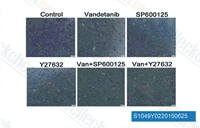
| S1049 | Y-27632 Dihydrochloride | Y-27632 2HCl is a selective ROCK1 and ROCK2 inhibitor with a Ki of 140 nM and 300nM in a cell-free assay, exhibits >200-fold selectivity over other kinases, including PKC, cAMP-dependent protein kinase, MLCK and PAK. |
|
|
| S1459 | Thiazovivin (TZV) | Thiazovivin is a novel ROCK inhibitor with IC50 of 0.5 μM in a cell-free assay, promotes hESC survival after single-cell dissociation. |
|
|
| S6390 | Y-27632 | Y-27632 is a selective ROCK1 and ROCK2 inhibitor with a Ki of 140 nM and 300nM in a cell-free assay, exhibits >200-fold selectivity over other kinases, including PKC, cAMP-dependent protein kinase, MLCK and PAK. |
|
|
| S7936 | KD025 (Belumosudil) | Belumosudil (KD025, SLx-2119) is an orally available, and selective ROCK2 inhibitor with IC50 and Ki of 60 nM and 41 nM, respectively. Phase 2. |
|
|
| S8226 | Netarsudil (AR-13324) 2HCl | Netarsudil (AR-13324) is a ROCK inhibitor with Ki value of 0.2-10.3 nM. It is currently in clinical trials for the treatment of glaucoma and ocular hypertension. |
|
|
| E1921 | NRL-1049 | NRL-1049(BA 1049) is a small molecule selective inhibitor of ROCK2 with an IC50 of 0.59 µM. It exhibits potent efficacy in preserving the blood-brain barrier (BBB) and suppresses seizures after brain injury, and inhibits hemorrhagic transformation after ischemic stroke in mice. | ||
| S7995 | Ripasudil hydrochloride dihydrate | Ripasudil hydrochloride dihydrate is a potent ROCK inhibitor with IC50 of 51 nM and 19 nM for ROCK1 and ROCK2, respectively, used for the treatment of glaucoma and ocular hypertension. |
|
|
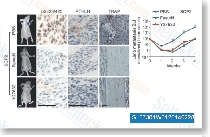
| S1573 | Fasudil (HA-1077) Hydrochloride | Fasudil HCl, a potent and selective inhibitor of Rho kinase, displays less potent inhibiton over PKA, PKG, PKC and MLCK with Ki of 1.6, 1.6, 3.3, and 36 μM in cell-free assays, respectively. Fasudil is also a calcium channel blocker. |
|
|
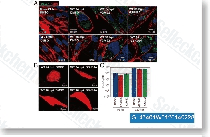
| S1474 | GSK429286A | GSK429286A (RHO-15) is a selective inhibitor of ROCK1 and ROCK2 with IC50 of 14 nM and 63 nM, respectively. |
|
|
| S8448 | ZINC00881524 (ROCK inhibitor) | ZINC00881524 is a ROCK inhibitor. |
|
|
Signaling Pathway Map
Mechanism of Action of ROCK Inhibitors
The Rho/ROCK signaling pathway is a key regulator of cytoskeletal reorganization, which is essential for multiple cellular functions. ROCK exists in two isoforms, ROCK1 and ROCK2, both of which are activated by binding to GTP-bound Rho. Activated ROCK exerts its biological effects by phosphorylating a variety of downstream substrates, including myosin light chain (MLC), myosin light chain phosphatase (MLCP), and LIM kinase (LIMK). Phosphorylation of MLC promotes actin-myosin cross-linking, leading to increased cellular contractility, while phosphorylation of MLCP inhibits its activity, further enhancing MLC phosphorylation. LIMK phosphorylation, on the other hand, results in the inactivation of cofilin, a protein that depolymerizes actin filaments, thereby stabilizing the actin cytoskeleton.
ROCK inhibitors exert their inhibitory effects by binding to the ATP-binding pocket of ROCK, thereby blocking the kinase activity of ROCK and inhibiting the phosphorylation of downstream substrates. The most commonly used ROCK inhibitors include Y-27632, fasudil, and H-1152P. Y-27632, a pyridine derivative, is a selective ROCK inhibitor that targets both ROCK1 and ROCK2 with high affinity. Fasudil, originally developed as a vasodilator for the treatment of cerebral vasospasm, is a non-selective ROCK inhibitor that also inhibits other kinases such as protein kinase A (PKA) and protein kinase C (PKC). H-1152P is a more potent and selective ROCK inhibitor compared to Y-27632, with higher inhibitory activity against ROCK2. By inhibiting ROCK activity, ROCK inhibitors can disrupt the Rho/ROCK signaling pathway, leading to decreased cellular contractility, enhanced cell adhesion, and modulation of various cellular functions such as migration, proliferation, and apoptosis.
Regulatory Effects of ROCK Inhibitors on Stem Cell and iPSC Function
Enhancement of Stem Cell Survival and Proliferation
Stem cells, including embryonic stem cells (ESCs) and adult stem cells, have the characteristics of self-renewal and multi-lineage differentiation, which make them promising candidates for regenerative medicine. However, the low survival rate of stem cells after isolation and in vitro culture limits their clinical application. Studies have shown that ROCK inhibitors can significantly improve the survival rate of stem cells by inhibiting apoptosis. For example, treatment of ESCs with Y-27632 can reduce the apoptosis induced by dissociation, thereby increasing the number of viable cells. Similarly, ROCK inhibitors can enhance the survival and proliferation of adult stem cells such as mesenchymal stem cells (MSCs) and neural stem cells (NSCs) in vitro. The underlying mechanism may be related to the inhibition of ROCK-mediated cellular contractility, which reduces the mechanical stress on stem cells and prevents the activation of apoptotic signaling pathways.
Modulation of Stem Cell Differentiation
In addition to enhancing stem cell survival, ROCK inhibitors also play an important role in regulating stem cell differentiation. The cytoskeletal dynamics modulated by the Rho/ROCK pathway are closely involved in the process of stem cell differentiation. By inhibiting ROCK activity, ROCK inhibitors can alter the cytoskeletal structure of stem cells, thereby affecting the expression of differentiation-related genes and guiding stem cell differentiation into specific lineages. For instance, treatment of MSCs with Y-27632 can promote their differentiation into osteoblasts by upregulating the expression of osteogenic markers such as alkaline phosphatase (ALP) and osteocalcin (OCN). In contrast, ROCK inhibitors can inhibit the differentiation of ESCs into cardiomyocytes, suggesting that the effect of ROCK inhibitors on stem cell differentiation is cell type-specific and lineage-dependent.
Improvement of iPSC Generation and Quality
Induced pluripotent stem cells (iPSCs), generated by reprogramming somatic cells into a pluripotent state, have the same characteristics as ESCs and avoid the ethical issues associated with ESCs. However, the efficiency of iPSC generation is relatively low, and the quality of iPSCs varies, which hinders their application. ROCK inhibitors have been shown to improve the efficiency of iPSC generation by enhancing the survival of reprogrammed cells. During the reprogramming process, somatic cells undergo significant changes in cytoskeletal structure and cellular morphology, which can lead to cell death. Treatment with ROCK inhibitors such as Y-27632 can reduce the apoptosis of reprogrammed cells, thereby increasing the number of iPSC colonies. Moreover, ROCK inhibitors can improve the quality of iPSCs by promoting the formation of compact colonies and enhancing the expression of pluripotency markers such as Oct 4, Sox2, and Nanog.
Role of ROCK Inhibitors in Regulating Apoptosis
Apoptosis, also known as programmed cell death, is a physiological process that plays an important role in maintaining tissue homeostasis and eliminating damaged or abnormal cells. Dysregulation of apoptosis is involved in the pathogenesis of various diseases, including cancer, neurodegenerative diseases, and cardiovascular diseases. The Rho/ROCK signaling pathway is closely involved in the regulation of apoptosis, and ROCK inhibitors have been shown to modulate apoptosis in different cell types.
In cancer cells, ROCK inhibitors can induce apoptosis by inhibiting the Rho/ROCK pathway. For example, treatment of breast cancer cells with Y-27632 can downregulate the expression of anti-apoptotic proteins such as Bcl-2 and upregulate the expression of pro-apoptotic proteins such as Bax, thereby promoting apoptosis. In contrast, in normal cells, ROCK inhibitors can inhibit apoptosis and enhance cell survival. For instance, ROCK inhibitors can protect cardiomyocytes from apoptosis induced by ischemia-reperfusion injury by reducing oxidative stress and inhibiting the activation of apoptotic signaling pathways. The dual role of ROCK inhibitors in regulating apoptosis may be related to the different cell types and microenvironmental conditions. Further studies are needed to clarify the exact mechanism of ROCK inhibitors in regulating apoptosis and to explore their potential application in the treatment of apoptosis-related diseases.
Applications of ROCK Inhibitors in Organoids
Organoids are three-dimensional (3D) in vitro culture systems that recapitulate the structure and function of native organs. They are generated from stem cells or progenitor cells and have become powerful tools for studying organ development, disease modeling, and drug screening. However, the generation and maintenance of organoids are often challenging due to the low survival rate of cells and the difficulty in forming complex 3D structures. ROCK inhibitors have emerged as important additives in organoid culture medium, which can significantly improve the efficiency of organoid generation and maintenance.
ROCK inhibitors can enhance the survival of stem cells or progenitor cells during organoid initiation, thereby increasing the number of organoid-forming units. For example, in the generation of intestinal organoids, treatment with Y-27632 can improve the survival of intestinal stem cells and promote the formation of crypt-villus structures. In addition, ROCK inhibitors can modulate the cytoskeletal dynamics of cells in organoids, which is essential for the formation of complex 3D structures. For instance, in the generation of brain organoids, ROCK inhibitors can promote the migration and differentiation of neural progenitor cells, leading to the formation of more mature neural structures. Moreover, ROCK inhibitors can improve the functionality of organoids by enhancing cell-cell interactions and the expression of functional markers. For example, in the generation of pancreatic organoids, treatment with ROCK inhibitors can increase the expression of insulin and glucagon, thereby enhancing the endocrine function of pancreatic organoids.
Conclusion and Future Perspectives
In summary, ROCK inhibitors have become important tools in biomedical research due to their ability to modulate the Rho/ROCK signaling pathway and regulate various cellular processes. Their mechanism of action involves blocking the kinase activity of ROCK and inhibiting the phosphorylation of downstream substrates, thereby affecting cytoskeletal dynamics and cellular functions. ROCK inhibitors play a crucial role in regulating stem cell and iPSC function, enhancing their survival, proliferation, and differentiation. They also modulate apoptosis in different cell types, showing potential in the treatment of apoptosis-related diseases. Furthermore, ROCK inhibitors have wide applications in organoid culture, improving the efficiency of organoid generation and maintenance and enhancing their functionality.
Despite the significant progress made in the research of ROCK inhibitors, there are still some challenges that need to be addressed. For example, the non-selectivity of some ROCK inhibitors may lead to off-target effects, which limits their clinical application. In addition, the exact mechanism of ROCK inhibitors in regulating various cellular processes and their long-term effects in vivo need to be further clarified. Future research should focus on developing more selective ROCK inhibitors, exploring their molecular mechanisms in depth, and evaluating their safety and efficacy in clinical trials. With the continuous advancement of research, ROCK inhibitors are expected to play an increasingly important role in basic research

Products are for research use only. Not for human use. We do not sell to patients.
©Copyright 2013 Selleck Chemicals. All Rights Reserved.