
-
 Argentina
-
 Australia
-
 Austria
-
 Belgium
-
 Brazil
-
 Canada
-
 China
China
-
 Czech Republic
-
 Denmark
-
 Finland
-
 France
-
 Germany
-
 Greece
-
 Hong Kong
-
 Hungary
-
 Iceland
-
 India
India
-
 Ireland
-
 Israel
-
 Italy
Italy
-
 Japan
Japan
-
 Korea
Korea
-
 Luxembourg
-
 Malaysia
-
 Netherlands
-
 New Zealand
-
 Norway
-
 Poland
-
 Portugal
-
 Qatar
Qatar
-
 Romania
-
 Saudi Arabia
-
 Singapore
-
 Spain
Spain
-
 Sweden
-
 Switzerland
-
 Taiwan
-
 Turkey
-
 United Kingdom
-
 United States
research use only
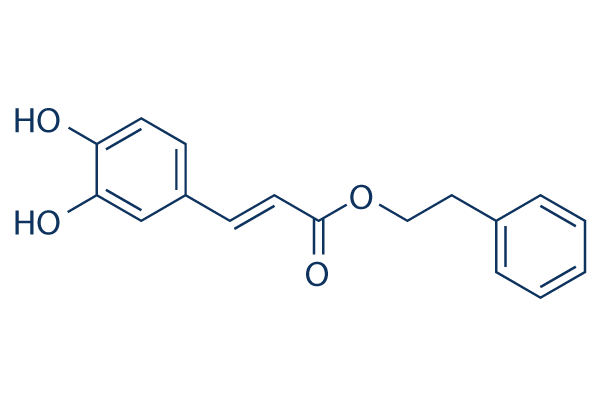
Caffeic Acid Phenethyl Ester NF-κB inhibitor
Cat.No.S7414
Quality Control
| Related Targets | HDAC Antioxidant ROS IκB/IKK Nrf2 AP-1 MALT NOD |
|---|---|
| Other NF-κB Inhibitors | DCZ0415 Omaveloxolone (RTA-408) BAY 11-7082 (BAY 11-7821) JSH-23 QNZ (EVP4593) SC75741 DHA (Dihydroartemisinin) Andrographolide CBL0137 Withaferin A (WFA) |
Cell Culture, Treatment & Working Concentration
| Cell Lines | Assay Type | Concentration | Incubation Time | Formulation | Activity Description | PMID |
|---|---|---|---|---|---|---|
| mouse RAW264.7 cells | Function assay | 24 h | Inhibition of LPS-induced nitric oxide production in mouse RAW264.7 cells assessed as nitrite accumulation administered 1 hr before LPS challenge and measured after 24 hrs by Griess reagent assay, EC50=0.193 μM | |||
| mouse 26-L5 cells | Proliferation assay | 72 h | Antiproliferative activity against mouse 26-L5 cells after 72 hrs by MTT assay, EC50=0.3 μM | |||
| human HeLa cells | Proliferation assay | 72 h | Antiproliferative activity against human HeLa cells after 72 hrs by MTT assay, EC50=2.36 μM | |||
| human Bewo cells | Function assay | Antitumor activity against human Bewo cells assessed as inhibition of cell growth by MTT assay, IC50=2.96 μM | ||||
| mouse J774.1 cells | Function assay | 24 h | Inhibition of LPS-induced NO production in mouse J774.1 cells after 24 hrs by Griess reagent assay, IC50=4.8 μM | |||
| human Bel7402 cells | Cytotoxic assay | Cytotoxicity against human Bel7402 cells by MTT assay, IC50=5.5 μM | ||||
| human LNCAP cells | Function assay | 24 h | Antiandrogenic activity in human LNCAP cells assessed as reduction in DHT-stimulated PSA release after 24 hrs by ELISA, IC50=6.2 nM | |||
| mouse BV2 cells | Function assay | 24 h | Inhibition of nitric oxide production in LPS-stimulated mouse BV2 cells treated 3 hrs before LPS addition measured after 24 hrs by Griess assay, IC50=6.4 μM | |||
| mouse B16-BL6 cells | Proliferation assay | 72 h | Antiproliferative activity against mouse B16-BL6 cells after 72 hrs by MTT assay, EC50=6.79 μM | |||
| HUVEC cells | Cytotoxic assay | 18 h | Cytoprotective activity against H2O2-induced oxidative stress in HUVEC cells after 18 hrs by Cell-Titer Blue assay | |||
| human HT1080 cells | Proliferation assay | 72 h | Antiproliferative activity against human HT1080 cells after 72 hrs by MTT assay, EC50=9.5 μM | |||
| human HL60 cells | Cytotoxic assay | 72 h | Cytotoxicity against human HL60 cells after 72 hrs by MTT assay, IC50=9.8 μM | |||
| human LS 174T cells | Cytotoxic assay | 72 h | Cytotoxicity against human LS 174T cells after 72 hrs by MTT assay, IC60=9.9 μM | |||
| human SGC7901 cells | Function assay | Antitumor activity against human SGC7901 cells assessed as inhibition of cell growth by MTT assay, IC50=14.26 μM | ||||
| human Bel7404 cells | Cytotoxic assay | 72 h | Cytotoxicity against human Bel7404 cells after 72 hrs by MTT assay, IC50=14.5 μM | |||
| human BGC823 cells | Cytotoxic assay | 72 h | Cytotoxicity against human BGC823 cells after 72 hrs by MTT assay, IC50=19.3 μM | |||
| human HO8910 cells | Cytotoxic assay | 72 h | Cytotoxicity against human HO8910 cells after 72 hrs by MTT assay, IC50=25.5 μM | |||
| human MCF7 cells | Cytotoxic assay | Cytotoxicity against human MCF7 cells by MTT assay, IC50=26.7 μM | ||||
| human A549 cells | Cytotoxic assay | 72 h | Cytotoxicity against human A549 cells after 72 hrs by MTT assay, IC50=26.8 μM | |||
| human LNCAP cells | Cytotoxic assay | 24 h | Cytotoxicity against human LNCAP cells assessed as reduction in cell viability after 24 hrs by WST-1 assay, IC50=33.7 μM | |||
| human HeLa cells | Function assay | Antitumor activity against human HeLa cells assessed as inhibition of cell growth by MTT assay, IC50=37.98 μM | ||||
| human HepG2 cells | Function assay | Antitumor activity against human HepG2 cells assessed as inhibition of cell growth by MTT assay, IC50=40.87 μM | ||||
| human ECA109 cells | Cytotoxic assay | 72 h | Cytotoxicity against human ECA109 cells after 72 hrs by MTT assay, IC50=42.6 μM | |||
| human BCG823 cells | Cytotoxic assay | Cytotoxicity against human BCG823 cells by MTT assay, IC50=44.6 μM | ||||
| human KB cells | Cytotoxic assay | 72 h | Cytotoxicity against human KB cells after 72 hrs by MTT assay, IC50=45.2 μM | |||
| human K562 cells | Cytotoxic assay | 72 h | Cytotoxicity against human K562 cells after 72 hrs by MTT assay, IC50=46 μM | |||
| rat VSMC | Function assay | 5 μM | 30 mins | Decrease in intracellular ROS level in PDGF-stimulated rat VSMC at 5 uM pretreated with compound for 30 mins measured after up to 23 hrs of post stimulation using H2DCF by flow cytometric analysis | ||
| rat PC12 cells | Function assay | 2.5 μM | 3 h | Neuroprotective activity against H2O2-induced damage in rat PC12 cells assessed as cell viability at 2.5 uM preincubated for 3 hrs followed by H2O2 challenge measured after 5 hrs by MTT assay | ||
| Click to View More Cell Line Experimental Data | ||||||
Solubility
|
In vitro |
DMSO
: 56 mg/mL
(196.96 mM)
Ethanol : 56 mg/mL Water : Insoluble |
Molarity Calculator
|
In vivo |
|||||
In vivo Formulation Calculator (Clear solution)
Step 1: Enter information below (Recommended: An additional animal making an allowance for loss during the experiment)
Step 2: Enter the in vivo formulation (This is only the calculator, not formulation. Please contact us first if there is no in vivo formulation at the solubility Section.)
Calculation results:
Working concentration: mg/ml;
Method for preparing DMSO master liquid: mg drug pre-dissolved in μL DMSO ( Master liquid concentration mg/mL, Please contact us first if the concentration exceeds the DMSO solubility of the batch of drug. )
Method for preparing in vivo formulation: Take μL DMSO master liquid, next addμL PEG300, mix and clarify, next addμL Tween 80, mix and clarify, next add μL ddH2O, mix and clarify.
Method for preparing in vivo formulation: Take μL DMSO master liquid, next add μL Corn oil, mix and clarify.
Note: 1. Please make sure the liquid is clear before adding the next solvent.
2. Be sure to add the solvent(s) in order. You must ensure that the solution obtained, in the previous addition, is a clear solution before proceeding to add the next solvent. Physical methods such
as vortex, ultrasound or hot water bath can be used to aid dissolving.
Chemical Information, Storage & Stability
| Molecular Weight | 284.31 | Formula | C17H16O4 |
Storage (From the date of receipt) | |
|---|---|---|---|---|---|
| CAS No. | 104594-70-9 | Download SDF | Storage of Stock Solutions |
|
|
| Synonyms | CAPE, Phenylethyl Caffeate | SMILES | C1=CC=C(C=C1)CCOC(=O)C=CC2=CC(=C(C=C2)O)O | ||
Read more about storage stability stock solution CAS number SMILES
Mechanism of Action
| Targets/IC50/Ki |
NF-κB
|
|---|---|
| In vitro |
Caffeic acid phenethyl ester blocks NF-κB activation induced by phorbol ester, ceramide, okadaic acid, and hydrogen peroxide by preventing the translocation of the p65 subunit of NF-κB to the nucleus. In a series of tumor cell lines, Caffeic acid phenethyl ester shows promising antiproliferative activity with EC50 of 1.76, 3.16, 13.7, and 44.0 μM against murine colon 26-L5, murine B16-BL6 melanoma, human HT-1080 fibrosarcoma and human lung A549 adenocarcinoma cell lines, respectively. Caffeic acid phenethyl ester, as a potent antioxidant, exerts its anti-apoptotic effect in cerebellar granule cells by blocking ROS formation and inhibiting caspase activity. Moreover, Caffeic acid phenethyl ester attenuates the pro-inflammatory phenotype of LPS-stimulated HSCs, and LPS-induced sensitization of HSCs to fibrogenic cytokines by inhibiting NF-κB signaling.
|
| In vivo |
In vivo, Caffeic acid phenethyl ester (10 mg/kg, i.p.) inhibits the growth and angiogenesis of primary tumors in C57BL/6 and BALB/c mice inoculated with Lewis lung carcinoma, colon carcinoma, and melanoma cells. Caffeic acid phenethyl ester (5, 10, 20 mg/kg) also shows immunomodulatory effects in vivo by decreasing thymus weight and/or cellularity of thymus and spleen.
|
References |
|
Applications
| Methods | Biomarkers | Images | PMID |
|---|---|---|---|
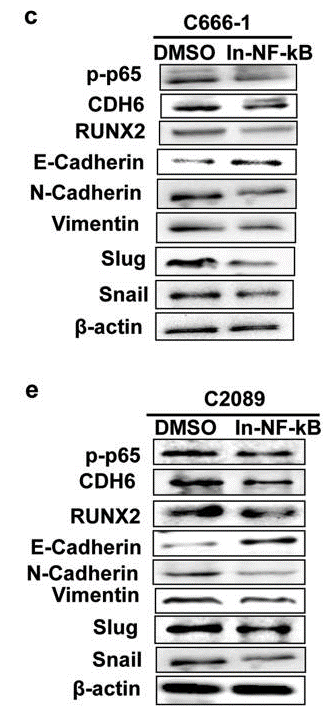
| Western blot | p-p65 / CDH6 / RUNX2 / E-cadherin / N-cadherin / Vimentin / Slug / Snail Nrf2 AKT / AKT1 / AKT2 / AKT3 / p-AKT / FOXO1 / FOXO3a / p-FOXO1 / p-FOXO3a / Skp2 / p27(Kip) / Cyclin D1 / Rb / p-Rb |
|
29284791 |
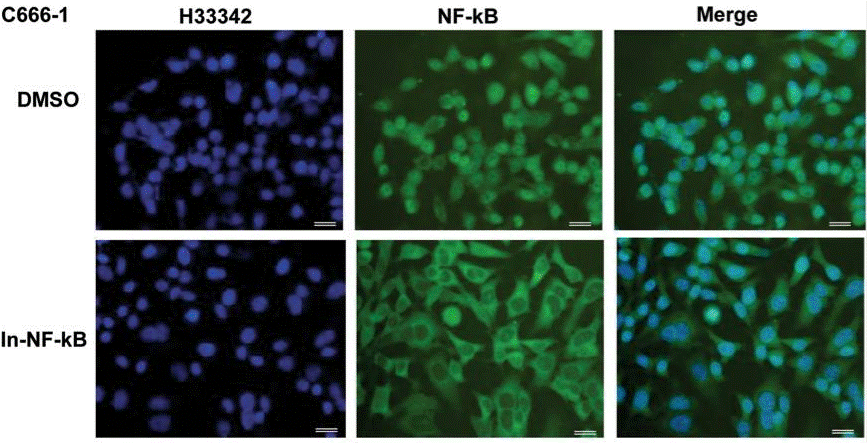
| Immunofluorescence | NF-κB |
|
29284791 |
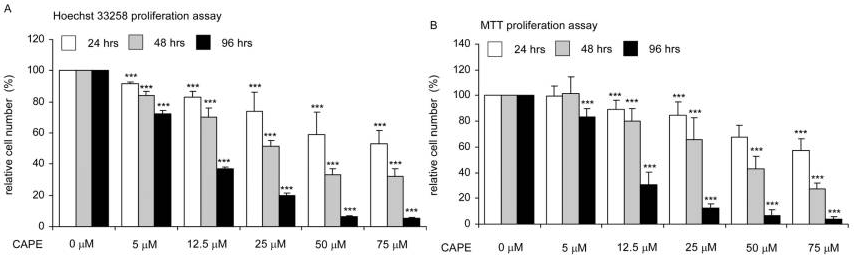
| Growth inhibition assay | Cell number |
|
23615471 |
Clinical Trial Information
(data from https://clinicaltrials.gov, updated on 2024-05-22)
| NCT Number | Recruitment | Conditions | Sponsor/Collaborators | Start Date | Phases |
|---|---|---|---|---|---|
| NCT05726708 | Recruiting | Autism Spectrum Disorder |
Centre Hospitalier Universitaire Vaudois |
2023-10-24 | Not Applicable |
| NCT05934019 | Recruiting | Mental Health Issue|Transdiagnostic Mechanisms|Adolescent Psychology|Prevention|Online Intervention|Psychological Intervention|Mental Disorder in Adolescence Subclinical |
University of Bern |
2023-06-09 | Not Applicable |
Read more about Clinical Trials
Tech Support
Tel: +1-832-582-8158 Ext:3
If you have any other enquiries, please leave a message.
Signaling Pathway Map

Products are for research use only. Not for human use. We do not sell to patients.
©Copyright 2013 Selleck Chemicals. All Rights Reserved.