
-
 Argentina
-
 Australia
-
 Austria
-
 Belgium
-
 Brazil
-
 Canada
-
 China
-
 Czech Republic
-
 Denmark
-
 Finland
-
 France
-
 Germany
-
 Greece
-
 Hong Kong
-
 Hungary
-
 Iceland
-
 India
-
 Ireland
-
 Israel
-
 Italy
-
 Japan
-
 Korea
-
 Luxembourg
-
 Malaysia
-
 Netherlands
-
 New Zealand
-
 Norway
-
 Poland
-
 Portugal
-
 Qatar
-
 Romania
-
 Saudi Arabia
-
 Singapore
-
 Spain
-
 Sweden
-
 Switzerland
-
 Taiwan
-
 Turkey
-
 United Kingdom
-
 United States
Ipilimumab (anti-CTLA-4)
Synonyms: CTLA4, CD152
Ipilimumab (anti-CTLA-4) is an immunomodulatory monoclonal antibody directed against the cell surface antigen CTLA-4 and also a type of immune checkpoint inhibitor. MW : 148 kD.
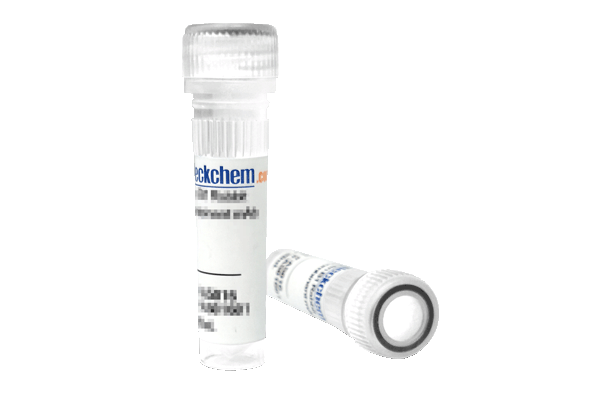
Click to purchase the isotype control of Ipilimumab (anti-CTLA-4)
20 Citations

17 Nobel Prize winners have used Selleck products
Shimon Sakaguchi
Nature Communications 2025,16, Article number:1325
David Baker
Dev Cell 2023, 58(20):2163-2180.e9.
David Julius
Cell 2017, 185-198.e16
Michael Houghton
Cell Chem Biol, 2020, 27(7):780-792.e5
Charles M. Rice
Cell 2018, 172(3):423-438.e25
Quality Control
| Featured Inhibitors | Y-27632 Dihydrochloride SB431542 CHIR-99021 (Laduviglusib) RMC-7977 RMC-6236 (Daraxonrasib) MRTX1133 MG132 Z-VAD-FMK VT3989 IAG933 |
|---|
Specificity
Mechanism of Action
| Description |
Ipilimumab (anti-CTLA-4) is an immunomodulatory monoclonal antibody directed against the cell surface antigen CTLA-4 and also a type of immune checkpoint inhibitor. MW : 148 kD.
|
|---|---|
| Features |
Human IgG1
|
| Targets/IC50/Ki |
CTLA-4
(Cell-free assay) |
| In vitro |
Pembrolizumab plus ipilimumab and nivolumab plus ipilimumab with chemotherapy have been approved by FDA for the first-line treatment of NSCLC patients. |
| Cell Research |
For the intracellular cytokine analysis of TILs, cells from dissociated tumors in the density range of 1×10⁵ to 1×10⁶ cells were cultured in a 96-well U-bottom plate containing 10 µg/mL of pembrolizumab, 10 µg/mL of ipilimumab, soluble 50 ng/mL of anti-CD3, and 50 ng/mL of anti-CD28 for 24 h at 37°C, followed by the addition of brefeldin A and monensin. To measure interferon (IFN)-γ and tumor necrosis factor (TNF) secretion levels by CD8+ TILs according to PD-1 expression on anti-CD3 and anti-CD28 stimulation, the pre-incubation step without brefeldin A and monensin for 24 h was omitted. After 12 h, the cells were harvested and stained. Intracellular cytokines were stained after surface staining, fixation, and permeabilization with Foxp3 fixation/permeabilization solution. |
| In vivo |
64Cu-labeled ipilimumab may be used to noninvasively monitor CTLA-4-expressing tissues in vivo. |
| Animal Research |
AnimalModels:Female athymic nude mice of human lung adenocarcinoma xenograft model
|
References |
|
Product Details
| CAS No. | 477202-00-9 |
|---|---|
| Isotype | Human IgG1 |
| Source | CHO cells |
| Sterility | 0.2 μM filtered |
| Formulation | PBS buffer, pH 7.2 |
| Storage (From the date of receipt) |
Store the undiluted solution at 4°C in the dark to avoid freeze-thaw cycles |
Comparison of Clones for
*Literature analysis of various clone (for this target) products available on the market shows that Selleck's selected clones are more frequently applied. (data until September 2024)
Clinical Trial Information
| NCT Number | Recruitment | interventions | Conditions | Sponsor/Collaborators | Start Date | Phases |
|---|---|---|---|---|---|---|
| NCT07770100 | NOT_YET_RECRUITING | Drug: Pembrolizumab|Drug: Nivolumab|Drug: Atezolizumab|Drug: | Head and Neck Cancer; Non-Small Cell Lung Cancer; Cervical Cancer; Esophageal Cancer; Gastric Cancer (GC) | Mark Bernard | 2026-10-01 | PHASE2 |
| NCT02498756 | NOT_YET_RECRUITING | Drug: Ipilimumab | Melanoma | The First People's Hospital of Changzhou | 2015-08 | PHASE2 |
| NCT07510334 | RECRUITING | Advanced Clear Cell Renal Cell Carcinoma; Metastatic Clear Cell Renal Cell Carcinoma; Stage III Renal Cell Cancer AJCC v8; Stage IV Renal Cell Cancer AJCC v8 | Mayo Clinic | 2026-04-21 | PHASE2 | |
| NCT07383441 | RECRUITING | Drug: Axitinib|Drug: Cabozantinib|Drug: Clostridium butyricu | Advanced Clear Cell Renal Cell Carcinoma; Metastatic Clear Cell Renal Cell Carcinoma; Stage III Renal Cell Cancer AJCC v8; Stage IV Renal Cell Cancer AJCC v8 | SWOG Cancer Research Network | 2026-06-05 | PHASE3 |
| NCT05112601 | RECRUITING | Endometrial Adenocarcinoma; Endometrial Clear Cell Adenocarcinoma; Endometrial Dedifferentiated Carcinoma; Endometrial Endometrioid Adenocarcinoma; Endometrial Mixed Cell Adenocarcinoma; Endometrial Mucinous Adenocarcinoma; Endometrial Undifferentiated Carcinoma; Endometrioid Adenocarcinoma; Recurrent Endometrial Carcinoma | National Cancer Institute (NCI) | 2022-06-02 | PHASE2 | |
| NCT06364631 | RECRUITING | Drug: Nivolumab|Drug: Ipilimumab|Drug: Pembrolizumab|Drug: C | Metastatic Kidney Cancer; Metastatic Kidney Carcinoma | Gustave Roussy, Cancer Campus, Grand Paris | 2024-04-12 | PHASE3 |
(data from https://clinicaltrials.gov, updated on 2026-08-20)
Tech Support
Tel: +1-832-582-8158 Ext:3
If you have any other enquiries, please leave a message.
Frequently Asked Questions
Question 1:
How to store the antibody?
Answer:
Store the undiluted solution at 4 °C in the dark. Freezing antibodies can result in a loss of activity caused by the freezing/thawing process. Diluting antibodies to working concentrations and storing at 4°C for more than a day should be avoided. Additionally, make sure to keep the antibody sterile. Under these storage conditions, your antibodies should remain active for up to one year and oftentimes longer.

Products are for research use only. Not for human use. We do not sell to patients.
©Copyright 2013 Selleck Chemicals. All Rights Reserved.