
-
 Australia
-
 Austria
-
 Belgium
-
 Brazil
-
 Canada
-
 China
China
-
 Czech Republic
-
 Denmark
-
 Finland
-
 France
-
 Germany
-
 Greece
-
 Hong Kong
-
 Hungary
-
 Iceland
-
 India
India
-
 Ireland
-
 Israel
-
 Italy
Italy
-
 Japan
Japan
-
 Korea
Korea
-
 Luxembourg
-
 Malaysia
-
 Netherlands
-
 New Zealand
-
 Norway
-
 Poland
-
 Qatar
Qatar
-
 Romania
-
 Saudi Arabia
-
 Singapore
-
 Spain
Spain
-
 Sweden
-
 Switzerland
-
 Taiwan
-
 Turkey
-
 United Kingdom
-
 United States
PPAR Inhibitors
| Cat.No. | Product Name | Information | Product Use Citations | Product Validations |
|---|---|---|---|---|
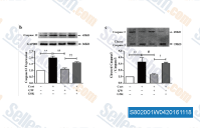
| S8020 | GW0742 | GW0742 is a potent and highly selective PPARβ/δ agonist, with IC50 of 1 nM, with 1000-fold selectivity over hPPARα and hPPARγ. |
|
|
| S7767 | AZ6102 | AZ6102 is a potent TNKS1/2 inhibitor that has 100-fold selectivity against other PARP family enzymes and shows IC50 of 5 nM for Wnt pathway inhibition in DLD-1 cells. |
|
|
| S8432 | Troglitazone (CS-045) | Troglitazone is a potent agonist for the peroxisome proliferator-activated receptor-(PPAR) that is a ligand activated transcription factor regulating cell differentiation and growth. Troglitazone induces autophagy, apoptosis and necroptosis in bladder cancer cells. Troglitazone prevents RSL3-induced ferroptosis and lipid peroxidation in Pfa1 cells. |
|
|
| S3868 | Harmine | Harmine (Telepathine), a fluorescent harmala alkaloid belonging to the beta-carboline family of compounds, is a highly cell-permeant and competitive inhibitor of ATP binding to the kinase pocket of DYRK1A, with about 60-fold higher IC50 value for DYRK2. This compound also inhibits monoamine oxidases (MAOs), PPARγ and cdc-like kinases (CLKs). It inhibits 5-HT2A serotonin receptor with Ki of 397 nM. |
|
|
| S3834 | Astaxanthin | Astaxaxanthin (β-Carotene-4,4'-dione, Trans-Astaxanthin), a xanthophyll carotenoid, is a nutrient with unique cell membrane actions and diverse clinical benefits with excellent safety and tolerability. This compound, a red dietary carotenoid isolated from Haematococcus pluvialis, is a modulator of PPARγ and a potent antioxidant with antiproliferative, neuroprotective and anti-inflammatory activity. |
|
|
| S3846 | Eupatilin | Eupatilin (NSC 122413), a major flavonoid from Artemisia plants, possesses various beneficial biological effects including anti-inflammation, anti-tumor, anti-cancer, anti-allergy, and anti-oxidation activity. This compound, a lipophilic flavonoid isolated from Artemisia species, is a PPARα agonist, and possesses anti-apoptotic, anti-oxidative and anti-inflammatory activities. |
|
|
| S5817 | GSK0660 | GSK0660 is a potent PPARβ/δ antagonist with a pIC50 of 6.8 (binding assay IC50 = 155 nM; antagonist assay IC50 = 300 nM) and is nearly inactive on PPARα and PPARγ with IC50s above approximately 10 μM. |
|
|
| S4527 | Fenofibric acid | Fenofibric acid (NSC 281318, Trilipix, FNF acid) is a fibrate that acts as a lipid-lowering agent, decreasing low-density lipoprotein cholesterol and triglycerides. |
|
|
| S4159 | Bezafibrate | Bezafibrate (BM 15075) is the first clinically tested dual and pan-PPAR co-agonism. |
|
|
| S8770 | Lanifibranor (IVA-337) | Lanifibranor (IVA-337) is a moderately potent and well balanced pan PPAR agonist, with EC50 values of 1537 nM, 866 nM and 206 nM for hPPARα, hPPARδ and hPPARγ, respectively. |
|
|
| S4708 | Palmitoylethanolamide | Palmitoylethanolamide (PEA, Palmidrol, N-palmitoylethanolamine) is an endogenous fatty acid amide and selectively activates PPAR-α in vitro with an EC50 value of 3.1±0.4 μM. |
|
|
| S1849 | Daidzein | Daidzein is a natural isoflavone phytoestrogen found in Leguminosae, used as a component of foods and dietary supplements. This compound is a soy isoflavone, which acts as a PPAR activator. |
|
|
| S9189 | Oroxin A | Oroxin A (Baicalein 7-O-glucoside), an active component isolated from the herb Oroxylum indicum (L.) Kurz, activates PPARγ and inhibits α-glucosidase, exerting antioxidant activity. |
|
|
| S3290 | Procyanidin B2 (PCB2) | Procyanidin B2 (PCB2), a natural flavonoid found in commonly consumed foods, possess anti-inflammatory, anti-oxidant and anti-cancer activities. It activates PPARγ to induce M2 polarization in mouse macrophages and significantly suppresses the activation of NLRP3 inflammasome in the lung tissue induced by paraquat in the rat model. |
|
|
| S3786 | Glabridin | Glabridin (Q-100692, KB-289522, LS-176045), one of the active phytochemicals in licorice extract, binds to and activates the ligand binding domain of PPARγ, as well as the full length receptor. It is also a GABAA receptor positive modulator promoting fatty acid oxidation and improving learning and memory. |
|
|
| S8046 | GW7647 | GW7647 is a potent PPARα agonist, with EC50s of 6 nM, 1.1 μM, and 6.2 μM for human PPARα, PPARγ and PPARδ, respectively. |
|
|
| S9177 | Gypenoside XLIX | Gypenoside XLIX, a naturally occurring gynosaponin, is a selective peroxisome proliferator-activated receptor (PPAR)-alpha activator. |
|
|
| S1473 | GW501516 (GSK-516, Cardarine) | GW501516 is a potent and highly selective PPARβ/δ agonist, with EC50 of 1 nM, with 1000-fold selectivity over hPPARα and hPPARγ. Phase 4. |
|
|
| S1729 | Gemfibrozil | Gemfibrozil (CI-719) is an activator of peroxisome proliferator-activated receptor-alpha (PPARα), used for the treatment of hypercholesterolemia and hypertriglyceridemia. |
|
|
| S2665 | Ciprofibrate | Ciprofibrate (Win-35833) is a peroxisome proliferator-activated receptor agonist. |
|
|
| S4207 | Clofibric Acid | Clofibric acid(Chlorofibrinic acid) is a PPARα agonist and hypolipidemic agent. |
|
|
| S0531 | DG172 dihydrochloride | DG-172 dihydrochloride is a novel PPARβ/δ-selective antagonist with the IC50 of 27 nM. |
|
|
| E2876 | pemafibrate | Pemafibrate(K-877) is a selective agonist of peroxisome proliferator-activated receptor (PPAR) α with an IC50 of 10 µM. |
|
|
| S3875 | Alpinetin | Alpinetin, a composition of Alpinia katsumadai Hayata, has been reported to have a number of biological properties, such as antibacterial, antitumor and other important therapeutic activities. This compound is a flavonoid isolated from Alpinia katsumadai Hayata, activates PPAR-γ, with potent anti-inflammatory activity. |
|
|
| S3720 | Elafibranor | Elafibranor (GFT505) is an agonist of the peroxisome proliferator-activated receptor-α(PPAR-alpha) and peroxisome proliferator-activated receptor-δ(PPAR-δ). This compound improves insulin sensitivity, glucose homeostasis, and lipid metabolism and reduces inflammation. |
|
|
| S9199 | Pseudoginsenoside F11 | Pseudoginsenoside F11, a natural product found in American ginseng but not in Asian ginseng, is a novel partial PPARγ agonist. | ||
| E8300New | Amezalpat | Amezalpat acts as a PPARα antagonist with an IC50 value of 58 nM. This compound demonstrates antineoplastic effects. | ||
| S5121 | Phytol | Phytol (Trans-Phytol), a diterpene alcohol from chlorophyll widely used as a food additive and in medicinal fields, shows antinociceptive and antioxidant activities as well as anti-inflammatory and antiallergic effects. It is a specific activator of PPARα. | ||
| S0773 | Mifobate | Mifobate (SR-202), a potent and specific PPARγ antagonist, selectively inhibits Thiazolidinedione (TZD)-induced PPARγ transcriptional activity (IC50=140 μM). | ||
| E3521 | Auricledleaf Swallowwort Root Extract | Auricledleaf Swallowwort Root Extract is obtained from Cynanchum otophyllum Schneid., which may be mediated by activation of PPARα and TFEB, and the subsequent autophagy-lysosomal pathway enhancement, thus attenuate Alzheimer’s disease pathology and improve cognitive function in 3XTg mice. | ||
| S6635 | Seladelpar | Seladelpar(MBX-8025) is a potent and selective agonist of peroxisome proliferator–activated receptor-delta (PPAR-δ) with EC50 of 2 nM for human PPAR-δ. MBX-8025 enhances insulin sensitivity, counters dyslipidemia, and reduces hepatic storage of lipotoxic lipids, thereby ameliorating NASH pathology in obese diabetic mice. | ||
| S5824 | Cinnamyl alcohol | Cinnamyl alcohol is a naturally occurring compound that is found within cinnamon. This compound can be significantly attenuated the enhanced expression of obesity-related proteins PPARγ in MDI medium-cultivated 3T3-L1 cells. | ||
| S5113 | Propyl gallate | Propyl gallate (Gallic acid propyl esterZ, n-Propyl gallate) is an antioxidant used in foods especially animal fats and vegetable oils, also in a wide variety of cosmetics and beauty care products. | ||
| S3878 | Bavachinin | Bavachinin (7-O-Methylbavachin) is a novel natural pan-PPAR agonist from the fruit of the traditional Chinese glucose-lowering herb malaytea scurfpea. It shows stronger activities with PPAR-γ than with PPAR-α and PPAR-β/δ (EC50 = 0.74 μmol/l, 4.00 μmol/l and 8.07 μmol/l in 293T cells, respectively). | ||
| S0170 | BMS-687453 | BMS-687453 (compound 2) is a potent and selective agonist of PPARα with EC50 of 10 nM and IC50 of 260 nM for human PPARα. | ||
| S5812 | Choline Fenofibrate | Choline fenofibrate(ABT-335) is a newly developed choline salt of fenofibric acid, a synthetic phenoxy-isobutyric acid derivate with antihyperlipidemic activity that acts as an PPARα agonist. | ||
| S9674 | Saroglitazar | Saroglitazar (Lipaglyn, ZYH1) is an agonist of peroxisome proliferator-activated receptor (PPAR) with EC50 of 0.65 pM and 3 nM for hPPARα and hPPARγ in HepG2 cells, respectively. | ||
| E5858New | Chiglitazar (Carfloglitazar) | Chiglitazar (Carfloglitazar) is a potent dual agonist of PPARα and PPARγ with EC50 values of 1.2 μM and 0.08 μM, respectively, and also activates PPARδ with an EC50 of 1.7 μM. It effectively improves insulin resistance and corrects dyslipidemia in monosodium L-glutamate (MSG)-induced obese rats. | ||
| E1699 | SR10221 | SR10221 is a inverse-agonist of PPARγ with IC50 of 1.6 nM in RT112/84 FABP4-NLucP reporter assay. It exhibits an antiproliferative activity in vitro. | ||
| S9480 | Raspberry Ketone | Raspberry ketone (p-Hydroxybenzyl acetone, Frambinone, Oxyphenylon, Rheosmin, Rasketone) is a natural phenolic compound that is the primary aroma compound of red raspberries. Raspberry ketone shows cardioprotective action against isoproterenol-induced myocardial infarction in rats, and the effects may be due to its PPAR-α agonistic activity. | ||
| E7397 | (+)-Falcarindiol | Falcarindiol is a cytotoxic and anti-inflammatory polyacetylenic oxylipin found in food plants of the Apiaceae family, such as carrots. It functions as a partial agonist of peroxisome proliferator-activated receptor γ (PPARγ) with an EC50 of 3.29 µM in a luciferase reporter assay, leading to the upregulation of the cholesterol transporter ABCA1 in cells. It also promotes a beige adipocyte-like phenotype and enhances mitochondrial respiration in human preadipocyte-derived adipocytes. | ||
| S5851 | 4'-Methoxychalcone | 4'-Methoxychalcone, found in citrus, is chalcone derivative that has shown diverse pharmacological properties, including anti-tumor and anti-inflammatory activities. This compound significantly enhanced adipocyte differentiation, in part, by its potent effects on PPARγ activation and by its reverse effect on TNF-α. | ||
| E1775 | 2,4-Thiazolidinedione | 2,4-Thiazolidinedione (Thiazolidinedione), an insulin sensitizer, is a specific agonist of peroxisome proliferator-activated receptor (PPAR)γ. Thiazolidinedione treatment corrects impaired muscle insulin action in vivo. | ||
| S8027New | GW1929 | GW1929 is a potent and selective agonist of PPARγ with a pKi of 8.84 for human PPARγ and pEC50 of 8.56 and 8.27 in human and murine receptors, respectively. It exhibits potential clinical benefits in managing diabetic dyslipidemias and cardiovascular risk factors through its lipid-lowering effects and improved insulin sensitivity mediated by PPARγ activation. | ||
| E1831 | FX-909 | FX-909 is an orally available inverse agonist and inhibitor of the transcription factor (TF) peroxisome proliferator activated receptor gamma (PPARG, PPARγ) ), which exhibits anti-tumor activity in vivo. | ||
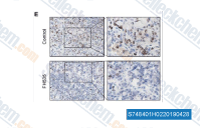
| S7484 | FH535 | FH535 is a Wnt/β-catenin signaling inhibitor and also a dual PPARγ and PPARδ antagonist. |
|
|
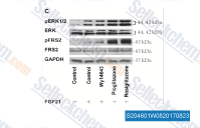
| S2046 | Pioglitazone HCl | Pioglitazone HCl (AD-4833, U-72107E) is an inhibitor of cytochrome P450 (CYP)2C8 and CYP3A4 enzymes. This compound inhibits CYP2C8, CYP3A4 and CYP2C9 with Ki of 1.7 μM, 11.8 μM and 32.1 μM, respectively. It is also a selective peroxisome proliferator-activated receptor-gamma (PPARγ) agonist with EC50 of 0.93 μM and 0.99 μM for human PPARγ and mouse PPARγ, respectively. This chemical inhibits mitochondrial iron uptake, lipid peroxidation, and subsequent ferroptosis. |
|
|
| S7955 | EPI-001 | EPI-001 is an androgen receptor N-terminal domain antagonist with IC50 of ∼6 μM and a selective PPAR-gamma modulator. |
|
|
| S9723 | CDDO-Im (RTA-403) | An activator of nuclear factor erythroid 2–related factor 2 (Nrf2) and peroxisome proliferator-activated receptor (PPAR), CDDO-Im (RTA-403) binds to PPARα and PPARγ with Ki of 232 nM and 344 nM, respectively. It inhibits inflammatory response and tumor growth in vivo. |
|
|
| S7867 | Oleuropein | Oleuropein is an antioxidant polyphenol isolated from olive leaf. It exerts antioxidant, anti-inflammatory and anti-atherogenic effects and suppresses the adipocyte differentiation in vitro. This compound inhibits PPARγ activity. It exerts anti-adipogenic effect through direct inhibition of PPARγ transcriptional activity. This chemical also inhibits aromatase. It induces apoptosis. Phase 2. |
|
|
| S6906 | Capric acid | Capric acid (DA, Decanoic acid, Decylic acid), a component of medium-chain triclycerides occurring naturally in coconut oil and palm kernel oil, contributes to seizure control through direct AMPA receptor inhibition. This compound is also a modulating ligand for PPARs. Due to its specific melting range the product may be solid, liquid, a solidified melt or a supercooled melt. |
|
|
| E0473 | CUDA | CUDA is a potent inhibitor of soluble epoxide hydrolase (sEH), with IC50s of 11.1 nM and 112 nM for mouse sEH and human sEH, respectively, also selectively increases peroxisome proliferator-activated receptor (PPAR) alpha activity. | ||
| E1695 | 9-cis-Retinoic acid | 9-cis-Retinoic acid (Alitretinoin, ALRT 1057) is an active metabolite of vitamin A that functions as a high-affinity ligand for retinoid X receptors (RXRs) and also activates retinoic acid receptors (RARs). It inhibits adipogenesis by activating RXR while simultaneously decreasing RXRα and PPARγ levels in an RXR activation-independent manner. | ||
| S9129 | 20(S)-Ginsenoside Rh1 | 20(S)-Ginsenoside Rh1 (Prosapogenin A2, Sanchinoside B2, Sanchinoside Rh1) is one of major bioactive compounds extracted from red ginseng, which has been increasingly used for enhancing cognition and physical health worldwide. It exhibits potent characteristics of anti-inflammatory, antioxidant, immunomodulatory effects, and positive effects on the nervous system. Ginsenoside Rh1 inhibits the expression of PPAR-γ, TNF-α, IL-6, and IL-1β. |

Products are for research use only. Not for human use. We do not sell to patients.
©Copyright 2013 Selleck Chemicals. All Rights Reserved.