Crizotinib (PF-02341066) Licensed by Pfizer

PF-2341066 (Crizotinib) is a potent inhibitor of c-Met and ALK with IC50 of 11 nM and 24 nnM, respectivley.

Catalog No.S1068
5 5 8 Reviews 20 Product Citations
Price Stock Quantity  
USD 110 In stock
USD 170 In stock
USD 570 In stock

Free Overnight Delivery on all orders over $ 500.

Order now and get it on

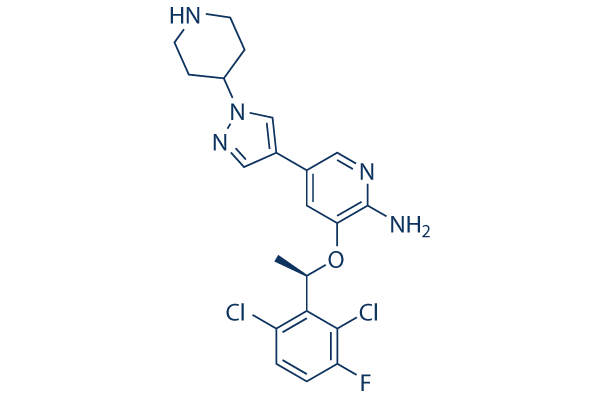
Crizotinib (PF-02341066) Chemical Structure
Molecular Weight: 450.34

Validation & Quality Control

Customer Reviews(8)

Quality Control & MSDS

Related Compound Libraries

Product Information

  • Combination Therapy
    Combination Therapy
  • Compare c-Met Inhibitors
    Compare c-Met Inhibitors
  • Research Area
  • Crizotinib (PF-02341066) Mechanism

Product Description

Biological Activity

Description PF-2341066 (Crizotinib) is a potent inhibitor of c-Met and ALK with IC50 of 11 nM and 24 nnM, respectivley.
Targets c-Met ALK
IC50 11 nM 24 nM [1]
In vitro PF-2341066 displays similar potency against c-Met phosphorylation in mIMCD3 mouse or MDCK canine epithelial cells with IC50 of 5 nM and 20 nM, respectivly. PF-2341066 shows improved or similar activity against NIH3T3 cells engineered to express c-Met ATP-binding site mutants V1092I or H1094R or the P-loop mutant M1250T with IC50 of 19 nM, 2 nM and 15 nM, respectively, compared with NIH3T3 cells expressing wild-type receptor with IC50 of 13 nM. In contrast, a marked shift in potency of PF-2341066 is observed against cells engineered to express c-Met activation loop mutants Y1230C and Y1235D with IC50 of 127 nM and 92 nM, respectively, compared with wild-type receptor. PF-2341066 also potently prevents the phosphorylation of c-Met in NCI-H69 and HOP92 cells, with IC50 of 13 nM and 16 nM, respectively, which express the endogenous c-Met variants R988C and T1010I, respectively. PF-2341066 is >1,000-fold selective for the VEGFR2 and PDGFRβ RTKs, >250-fold selective for IRK and Lck, and ∼40- to 60-fold selective for Tie2, TrkA, and TrkB, all compared with c-Met. PF-2341066 is 20- to 30-fold selective for RON and Axl RTKs. In contrast, PF-2341066 shows a near-equivalent IC50 of 24 nM against the nucleophosmin (NPM)-anaplastic lymphoma kinase (ALK) oncogenic fusion variant of the ALK RTK expressed by the KARPAS299 human anaplastic large cell lymphoma (ALCL) cell line. PF-2341066 inhibits c-Met–dependent neoplastic phenotypes of cancer cells and angiogenic phenotypes of endothelial cells. PF-2341066 suppresses human GTL-16 gastric carcinoma cell growth with IC50 of 9.7 nM. PF-2341066 induces apoptosis in GTL-16 cells with IC50 of 8.4 nM. PF-2341066 inhibits HGF-stimulated human NCI-H441 lung carcinoma cell migration and invasion with IC50 of 11 nM and 6.1 nM, respectively. PF-2341066 inhibits MDCK cell scattering with IC50 of 16 nM. PF-2341066 prevents HGF-stimulated c-Met phosphorylation, cell survival, and Matrigel invasion with IC50 of 11 nM, 14 nM and 35 nM, respectively. In addition, PF-2341066 prevents serum-stimulated HMVEC branching tubulogenesis (formation of vascular tubes) in fibrin gels. [1] PF-2341066 also potently inhibits NPM-ALK phosphorylation in Karpas299 or SU-DHL-1 ALCL cells with an IC50 of 24 nM. PF-2341066 potently prevents cell proliferation, which is associated with G(1)-S-phase cell cycle arrest and induction of apoptosis in ALK-positive ALCL cells with IC50 of 30 nM, but not ALK-negative lymphoma cells. [2] Besides, PF-2341066 prevents osteosarcoma behavior associated with primary tumor growth (i.e., proliferation and survival) as well as metastasis (eg, invasion and clonogenicity). [3]
In vivo In the GTL-16 model, PF-2341066 reveals the ability to cause marked regression of large established tumors (>600 mm3) in both the 50 mg/kg/day and 75 mg/kg/day treatment cohorts, with a 60% decrease in mean tumor volume over the 43-day administration schedule. In an another study, PF-2341066 displays the ability to completely inhibits GTL-16 tumor growth for >3 months, with only 1 of 12 mice exhibiting a significant increase in tumor growth over the 3-month treatment schedule at 50 mg/kg/day. In the NCI-H441 NSCLC model, a 43% decrease in mean tumor volume is observed at 50 mg/kg/day during the 38-day PF-2341066 administration cycle. In the Caki-1 RCC model, a 53% decrease in mean tumor volume is observed to be associated with decreased volume of each tumor by at least 30% at 50 mg/kg/day during the 33-day PF-2341066 administration cycle. PF-2341066 also reveals near-complete prevention of the growth of established tumors at 50 mg/kg/day in the U87MG glioblastoma or PC-3 prostate carcinoma xenograft models, with 97% or 84% inhibition on the final study day, respectively. In contrast, PF-2341066 p.o. given at 50 mg/kg/day does not significantly inhibit tumor growth in the MDA-MB-231 breast carcinoma model, or the DLD-1 colon carcinoma model. A significant dose-dependent reduction of CD31–positive endothelial cells is observed at 12.5 mg/kg/day, 25 mg/kg/day, and 50 mg/kg/day in GTL-16 tumors, indicating that inhibition of MVD shows a dose-dependent correlation to antitumor efficacy. PF-2341066 displays a significant dose-dependent reduction of human VEGFA and IL-8 plasma levels in both the GTL-16 and U87MG models. Marked inhibition of phosphorylated c-Met, Akt, Erk, PLCλ1, and STAT5 levels is observed in GTL-16 tumors following p.o. administration of PF-2341066.[1] P.o. administration of PF-2341066 to severe combined immunodeficient-Beige mice bearing Karpas299 ALCL tumor xenografts leads to dose-dependent antitumor efficacy with complete regression of all tumors at the 100 mg/kg/d dose within 15 days of initial compound administration. In addition, inhibition of key NPM-ALK signaling mediators, including phospholipase C-gamma, signal transducers and activators of transcription 3, extracellular signal-regulated kinases, and Akt by PF-2341066 are observed at concentrations or dose levels, which correlated with inhibition of NPM-ALK phosphorylation and function.[2] PF-2341066 prevents osteosarcoma behavior associated with primary tumor growth (eg, proliferation and survival) as well as metastasis (eg, invasion and clonogenicity). In nude mice treated with PF-2341066 via oral gavage, the growth and associated osteolysis and extracortical bone matrix formation of osteosarcoma xenografts are prevented by PF-2341066.[3] Treatment of c-MET-amplified GTL-16 xenografts with 50 mg/kg PF-2341066 elicits tumor regression that is associated with a slow reduction in 18F-FDG uptake and decreases expression of the glucose transporter 1, GLUT-1.[4]
Clinical Trials PF-2341066 is currently in a Phase III clinical trial in the treatment of non squamous lung cancer.
Features

Protocol(Only for Reference)

Kinase Assay: [1]

Cellular kinase phosphorylation ELISA assays Cells are seeded in 96-well plates in media supplemented with 10% fetal bovine serum (FBS) and transferred to serum-free media [with 0.04% bovine serum albumin (BSA)] after 24 h. In experiments investigating ligand-dependent RTK phosphorylation, corresponding growth factors are added for up to 20 min. After incubation of cells with PF-2341066 for 1 h and/or appropriate ligands for the designated times, cells are washed once with HBSS supplemented with 1 mM Na3VO4, and protein lysates are generated from cells. Subsequently, phosphorylation of selected protein kinases is assessed by a sandwich ELISA method using specific capture antibodies used to coat 96-well plates and a detection antibody specific for phosphorylated tyrosine residues. Antibody-coated plates are (a) incubated in the presence of protein lysates at 4°C overnight; (b) washed seven times in 1% Tween 20 in PBS; (c) incubated in a horseradish peroxidase–conjugated anti–total-phosphotyrosine (PY-20) antibody (1:500) for 30 min; (d) washed seven times again; (e) incubated in 3,3′,5,5′-tetramethyl benzidine peroxidase substrate to initiate a colorimetric reaction that is stopped by adding 0.09 N H2SO4; and (f) measured for absorbance in 450 nm using a spectrophotometer.

Cell Assay: [1]

Cell lines GTL-16 gastric carcinoma cells and T47D breast carcinoma cells
Concentrations 0-256 nM
Incubation Time 1 hour
Method Cells including GTL-16 gastric carcinoma cells and T47D breast carcinoma cells are seeded in 96-well plates in media supplemented with 10% fetal bovine serum (FBS) and transferred to serum-free media [with 0.04% bovine serum albumin (BSA)] after 24 hours. In experiments investigating ligand-dependent RTK phosphorylation, corresponding growth factors are added for up to 20 minutes. After incubation of cells with PF-2341066 for 1 hour and/or appropriate ligands for the designated times, cells are washed once with HBSS supplemented with 1 mM Na3VO4, and protein lysates are generated from cells. Subsequently, phosphorylation of selected protein kinases is assessed by a sandwich ELISA method using specific capture antibodies used to coat 96-well plates and a detection antibody specific for phosphorylated tyrosine residues. Antibody-coated plates are (a) incubated in the presence of protein lysates at 4 °C overnight; (b) washed seven times in 1% Tween 20 in PBS; (c) incubated in a horseradish peroxidase–conjugated anti–total-phosphotyrosine (PY-20) antibody (1:500) for 30 min; (d) washed seven times again; (e) incubated in 3,3,5,5-tetramethyl benzidine peroxidase substrate to initiate a colorimetric reaction that is stopped by adding 0.09 N H2SO4; and (f) measured for absorbance in 450 nm using a spectrophotometer.

Animal Study: [1]

Animal Models Female or male nu/nu mice bearing NCI-H441,or DLD-1, or MDA-MB-231
Formulation
Dosages 12.5 mg/kg/day, 25 mg/kg/day, and 50 mg/kg/day
Administration Administered via p.o.
1

References

Chemical Information

Download Crizotinib (PF-02341066) SDF
Molecular Weight (MW) 450.34
Formula

C21H22Cl2FN5O

CAS No. 877399-52-5, 877399-53-6 (acetate)
Synonyms N/A
Solubility (25°C)
  • DMSO 20 mg/mL
  • Water <1 mg/mL
  • Ethanol <1 mg/mL
Storage 2 years -20°CPowder
2 weeks4°Cin DMSO
6 months-80°Cin DMSO
Chemical Name 3-((R)-1-(2,6-dichloro-3-fluorophenyl)ethoxy)-5-(1-(piperidin-4-yl)-1H-pyrazol-4-yl)pyridin-2-amine

Research Area

Customer Reviews (8)


Click to enlarge
Rating
Source Cancer Cell , 2011, 19, 679–690. Crizotinib (PF-02341066) purchased from Selleck
Method Immunoblot analysis, Tumor growth inhibition Assay
Cell Lines xenograft models
Concentrations 100 mg/kg
Incubation Time 8 days
Results We showed that administration of CH5424802 led to significant tumor regression against both native EML4-ALK- and L1196M-driven tumors. On the other hand, PF-02341066 (100 mg/kg) resulted in no significant tumor growth inhibition against L1196M-driven tumors. Furthermore, we confirmed that phospho-STAT3, one of the downstream targets of ALK, was abolished in both tumors that were treated with CH5424802.

Click to enlarge
Rating
Source Nat Med , 2011, 17, 1116-1120. Crizotinib (PF-02341066) purchased from Selleck
Method Western blot
Cell Lines RCT-E565 transplanted tumors
Concentrations 25 mg/kg/d, 50 mg/kg/d
Incubation Time 0-21 d
Results We then treated mice bearing RCT-E565 tumor transplants with PF02341066, a c-Met inhibitor currently in clinical development. PF02341066 abrogated both p-Akt and p-S6RP signals as well as tumor growth.

Click to enlarge
Rating
Source Int J Proteomics , 2011, 2011, Article ID 215496. Crizotinib (PF-02341066) purchased from Selleck
Method CEER assay
Cell Lines H1993 cell line
Concentrations 0-10 μM
Incubation Time 4 h
Results In the c-MET amplified cell line H1993, activation of this pathway was blocked by the treatment with PF-2341066, a c-MET kinase inhibitor.

Click to enlarge
Rating
Source Int J Proteomics , 2011, 2011, Article ID 215496. Crizotinib (PF-02341066) purchased from Selleck
Method Nikon inverted-phase microscope
Cell Lines lung tumor cell lines
Concentrations 0.1/1 µM
Incubation Time two weeks
Results Large colony formation of H1993 cells, whose proliferation in tissue culture was potently blocked by treatment with the c-MET kinase inhibitor PF-2341066, was also inhibited by treatment with the same inhibitor.

Click to enlarge
Rating
Source Dr. Zhang of Tianjin Medical University. Crizotinib (PF-02341066) purchased from Selleck
Method Western blot
Cell Lines MDA-MB-231 cell line
Concentrations 0-100 nM
Incubation Time
Results

Click to enlarge
Rating
Source Cancer Cell , 2011, 19, 679–690. Crizotinib (PF-02341066) purchased from Selleck
Method Cell Growth Inhibition Assay
Cell Lines Ba/F3 cells
Concentrations
Incubation Time 48 h
Results The sensitivities of L1196M-driven Ba/F3 cell clones to PF-02341066 were lower, closely resembling that of the Ba/F3 parental cells. The therapeutic indexes of CH5424802 and PF-02341066, the IC50 ratio of EML4-ALK L1196M-driven cell clones to the parental cells, were 7- to 12-fold and 1- to 2-fold.

Click to enlarge
Rating
Source J Biomol Screen , 2011, 16, 141-154. Crizotinib (PF-02341066) purchased from Selleck
Method VimPro-Fluc-MDA-MB-231 spheroid viability, Western blot
Cell Lines MDA-MB-231 spheroids
Concentrations
Incubation Time
Results When Vimpro-Fluc downregulation reaches ≥70%, then downregulation of vimentin protein expression is more pronounced. of the modulators tested—U0126, dasatinib,axitinib, and pF2341066-all downregulated Vimpro-Fluc activity by ≥70%, which correlated with a significant down-reglation of vimentin protein expression. Finally, dose-response curves were generated with both U0126 (iC50 = 2.5 µM) and axitinib (iC50 = 0.25 µM), demonstrating that these small molecules modulate Vimpro-Fluc activity in a dose-dependent manner, indicating that their respective target(s) and signaling pathways play a significant role in maintaining vimentin expression and possibly mesenchymal homeostasis (Fig. B)

Click to enlarge
Rating
Source J Biomol Screen , 2011, 16, 141-154. Crizotinib (PF-02341066) purchased from Selleck
Method Secondary assay
Cell Lines MDA-MB-231 spheroids
Concentrations 10 µM
Incubation Time
Results U0126, pF2341066, axitinib, and pKC412 caused significant inhibition of the invasive potential of Mda-Mb-231 spheroids. Conversely, dasatinib, a potent inhibitor of vimentin gene expression, did not significantly alter the invasive potential of Mda-Mb-231 spheroids.

Product Citations (20)

  • Widespread potential for growth-factor-driven resistance to anticancer kinase inhibitors. [Wilson TR, et al. Nature 2012;487(7408):505-9]

    PubMed: 22763448
  • MED12 controls the response to multiple cancer drugs through regulation of TGF-β receptor signaling. [Huang S, et al. Cell 2012;151(5):937-50]

    PubMed: 23178117
  • CH5424802, a selective ALK inhibitor capable of blocking the resistant gatekeeper mutant. [Sakamoto H, et al. Cancer Cell 2011;19(5), 679-690]

    PubMed: 21575866
  • Oncogenic PIK3CA-driven mammary tumors frequently recur via PI3K pathway–dependent and PI3K pathway–independent mechanisms. [Liu P, et al. Nat Med 2011;17(9), 1116-1120]

    PubMed: 21822287
  • Melanoma exosomes educate bone marrow progenitor cells toward a pro-metastatic phenotype through MET. [Peinado H, et al. Nat Med 2012;18(6):883-91]

    PubMed: 22635005
  • A drug resistance screen using a selective MET inhibitor reveals a spectrum of mutations that partially overlap with activating mutations found in cancer patients. [Tiedt R, et al. Cancer Res 2011;71(15), 5255-5264]

    PubMed: 21697284
  • ALK+ anaplastic large cell lymphoma exhibits phosphatidylinositol-3 kinase/Akt activity with retained but inactivated PTEN--a report from the Children's Oncology Group. [Heuckmann JM, et al. Clin Cancer Res 2011;17(23):7394-401]

    PubMed: 21948233
  • Colloidal Aggregation Affects the Efficacy of Anticancer Drugs in Cell Culture. [Owen SC, et al. ACS Chem Biol 2012;7(8):1429-35]

    PubMed: 22625864
  • Identification of basophils as a major source of hepatocyte growth factor in chronic myeloid leukemia: a novel mechanism of BCR-ABL1-independent disease progression. [Cerny-Reiterer S, et al. Neoplasia 2012;14(7):572-84]

    PubMed: 22904675
  • Expression and clinical relevance of MET and ALK in Ewing sarcomas. [Fleuren ED, et al. Int J Cancer 2013;ahead of print]

    PubMed: 23335077
  • Overcoming erlotinib resistance with tailored treatment regimen in patient-derived xenografts from naïve Asian NSCLC patients. [Yang M, et al. Int J Cancer 2013;132(2):E74-84]

    PubMed: 22948846
  • Signatures of drug sensitivity in nonsmall cell lung cancer. [Gong HC, et al. Int J Proteomics 2011;2011, 215496]

    PubMed: 22091388
  • A Receptor Tyrosine Kinase Network Comprised of FGFRs, EGFR, ERBB2 and MET Drives Growth and Survival of Head and Neck Squamous Carcinoma Cell Lines. [Singleton KR, et al. Mol Pharmacol 2013;ahead of print]

    PubMed: 23371912
  • Disturbance of Ca2+ homeostasis converts Pro-Met into non-canonical tyrosine kinase p190MetNC in response to endoplasmic reticulum stress in MHCC97 cells. [Dai R, et al. J Biol Chem 2012;287(18):14586-97]

    PubMed: 22418436
  • The Tyrosine Kinase c-Met Contributes to the Pro-tumorigenic Function of the p38 Kinase in Human Bile Duct Cholangiocarcinoma Cells. [Dai R, et al. J Biol Chem 2012;287(47):39812-23]

    PubMed: 23024367
  • Crizotinib (PF‐02341066) Reverses Multidrug Resistance in Cancer Cells by Inhibiting the function of P‐glycoprotein. [Zhou WJ, et al. Br J Pharmacol 2012;166(5):1669-83]

    PubMed: 22233293
  • Mouse Model for ROS1-Rearranged Lung Cancer. [Arai Y, et al. PLoS One 2013;8(2), e56010]

    PubMed: 23418494
  • STAT3 is activated by JAK2 independent of key oncogenic driver mutations in non-small cell lung carcinoma. [Looyenga BD, et al. PLoS One 2012;7(2):e30820]

    PubMed: 22319590
  • 3D models of epithelial-mesenchymal transition in breast cancer metastasis: high-throughput screening assay development, validation, and pilot screen. [Li Q, et al. J Biomol Screen 2011;16(2), 141-154]

    PubMed: 21297102
  • ALK mutations conferring differential resistance to structurally diverse ALK inhibitors. [Thakral C, et al. Pediatr Blood Cancer 2012;59(3):440-7]

    PubMed: 22488797

Tech Support & FAQs

Answers to questions you may have can be found in the inhibitor handling instructions. Topics include how to prepare stock solutions, how to store inhibitors, and issues that need special attention for cell-based assays and animal experiments.

Tel: +1-832-582-8158 Ext:3Monday–Friday 9:00 AM–5:00 PM (Central Time)

If you have any other enquiries, please leave a message.

* Indicates a Required Field

Related c-Met Inhibitors

  • PHA-665752

    PHA-665752 is a potent, selective and ATP-competitive c-Met inhibitor with IC50 of 9 nM.

  • SU11274

    SU11274 is a selective Met inhibitor with IC50 of 10 nM.

  • PF-04217903

    PF-04217903 is a selective ATP-competitive c-Met inhibitor with IC50 of 4.8 nM.

  • TAE684 (NVP-TAE684)

    TAE684 is a potent and selective ALK inhibitor with IC50 of 3 nM.

  • Foretinib (GSK1363089, XL880)

    XL880 (GSK1363089, EXEL-2880) is an ATP-competitive inhibitor of MET and KDR with IC50 of 0.4 nM and 0.9 nM, respectively.

  • SGX-523

    SGX-523 is a selective Met inhibitor with IC50 of 4 nM.

  • JNJ-38877605

    JNJ-38877605 is an ATP-competitive inhibitor of c-Met with IC50 of 4 nM.

  • AMG-208

    AMG-208 is a highly selective c-Met inhibitor with IC50 of 9.3 nM.

  • MGCD-265

    MGCD-265 is a potent, multi-target and ATP-competitive inhibitor of c-Met, VEGFR1, VEGFR2, VEGFR3, Ron, and Tie2 with IC50 of 1 nM, 3 nM, 3 nM, 4 nM, 2 nM and 7 nM, respectively.

  • BMS 777607

    BMS-777607 is a Met-related inhibitor for c-Met, Axl, Ron and Tyro3 with IC50 of 3.9 nM, 1.1 nM, 1.8 nM and 4.3 nM, respectively.

Recently Viewed Items

Tags: buy Crizotinib (PF-02341066) | Crizotinib (PF-02341066) ic50 | Crizotinib (PF-02341066) price | Crizotinib (PF-02341066) cost | Crizotinib (PF-02341066) solubility dmso | Crizotinib (PF-02341066) purchase | Crizotinib (PF-02341066) manufacturer | Crizotinib (PF-02341066) research buy | Crizotinib (PF-02341066) order | Crizotinib (PF-02341066) mouse | Crizotinib (PF-02341066) chemical structure | Crizotinib (PF-02341066) mw | Crizotinib (PF-02341066) molecular weight | Crizotinib (PF-02341066) datasheet | Crizotinib (PF-02341066) supplier | Crizotinib (PF-02341066) in vitro | Crizotinib (PF-02341066) cell line | Crizotinib (PF-02341066) concentration | Crizotinib (PF-02341066) nmr
Contact Us