
- Bioactive Compounds
- By Signaling Pathways
- PI3K/Akt/mTOR
- Epigenetics
- Methylation
- Immunology & Inflammation
- Protein Tyrosine Kinase
- Angiogenesis
- Apoptosis
- Autophagy
- ER stress & UPR
- JAK/STAT
- MAPK
- Cytoskeletal Signaling
- Cell Cycle
- TGF-beta/Smad
- Compound Libraries
- Antibodies
- Bioreagents
- qPCR
- 2x SYBR Green qPCR Master Mix
- 2x SYBR Green qPCR Master Mix(Low ROX)
- 2x SYBR Green qPCR Master Mix(High ROX)
- Protein Assay
- Protein A/G Magnetic Beads for IP
- Anti-Flag magnetic beads
- Anti-Flag Affinity Gel
- Anti-Myc magnetic beads
- Anti-HA magnetic beads
- Poly FLAG Peptide lyophilized powder
- Protease Inhibitor Cocktail
- Protease Inhibitor Cocktail (EDTA-Free, 100X in DMSO)
- Phosphatase Inhibitor Cocktail (2 Tubes, 100X)
- Cell Biology
- Cell Counting Kit-8 (CCK-8)
- Animal Experiment
- Mouse Direct PCR Kit (For Genotyping)
- New Products
- Contact Us
-
 Australia
-
 Austria
-
 Belgium
-
 Brazil
-
 Canada
-
 China
China
-
 Czech Republic
-
 Denmark
-
 Finland
-
 France
-
 Germany
-
 Greece
-
 Hong Kong
-
 Hungary
-
 Iceland
-
 India
India
-
 Ireland
-
 Israel
-
 Italy
Italy
-
 Japan
Japan
-
 Korea
Korea
-
 Luxembourg
-
 Malaysia
-
 Netherlands
-
 New Zealand
-
 Norway
-
 Poland
-
 Qatar
Qatar
-
 Romania
-
 Saudi Arabia
-
 Singapore
-
 Spain
Spain
-
 Sweden
-
 Switzerland
-
 Taiwan
-
 Turkey
-
 United Kingdom
-
 United States
-
 Other Countries

GSK-3
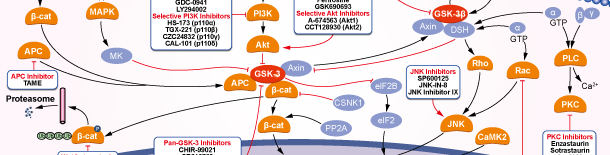
GSK-3 Products
- All (35)
- GSK-3 Inhibitors (33)
- GSK-3 Activator (1)
- New GSK-3 Products
| Catalog No. | Product Name | Information | Product Use Citations | Product Validations |
|---|---|---|---|---|
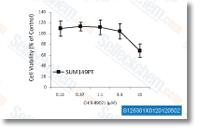
| S1263 | Laduviglusib (CHIR-99021) | Laduviglusib (CHIR-99021, CT99021) is a GSK-3α and GSK-3β inhibitor with IC50 of 10 nM and 6.7 nM, respectively. CHIR99201 does not exhibit cross-reactivity against cyclin-dependent kinases (CDKs) and shows a 350-fold selectivity toward GSK-3β compared to CDKs. CHIR99021 functions as a Wnt/β-catenin activator and induces autophagy. |
|
|
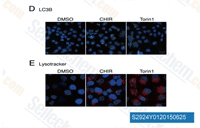
| S2924 | Laduviglusib (CHIR-99021) HCl | Laduviglusib (CHIR-99021; CT99021) HCl is hydrochloride of CHIR-99021, which is a GSK-3α/β inhibitor with IC50 of 10 nM/6.7 nM; CHIR-99021 shows greater than 500-fold selectivity for GSK-3 versus its closest homologs Cdc2 and ERK2. CHIR-99021 is a potent pharmacological activators of the Wnt/beta-catenin signaling pathway. CHIR-99021 significantly rescues light-induced autophagy and augments GR, RORα and autophagy-related proteins. |
|
|
| S1075 | SB216763 | SB216763 is a potent and selective GSK-3 inhibitor with IC50 of 34.3 nM for GSK-3α and equally effective at inhibiting human GSK-3β. SB216763 activates autophagy. |
|
|
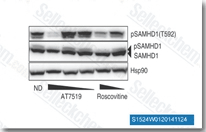
| S1524 | AT7519 | AT7519 is a multi-CDK inhibitor for CDK1, 2, 4, 6 and 9 with IC50 of 10-210 nM. It is less potent to CDK3 and little active to CDK7. AT7519 also decrease GSK3β phosphorylation. AT7519 induces apoptosis. Phase 2. |
|
|
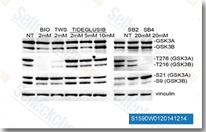
| S1590 | TWS119 | TWS119 is a GSK-3β inhibitor with IC50 of 30 nM in a cell-free assay; capable of inducing neuronal differentiation and may be useful to stem cell biology. GSK-3β inhibition triggers autophagy. |
|
|
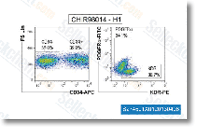
| S2745 | CHIR-98014 | CHIR-98014 (CT98014) is a potent GSK-3α/β inhibitor with IC50 of 0.65 nM/0.58 nM in cell-free assays, with the ability to distinguish GSK-3 from its closest homologs Cdc2 and ERK2. |
|
|
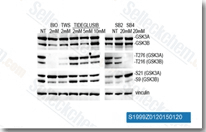
| S7198 | BIO | BIO (GSK-3 Inhibitor IX, 6-bromoindirubin-3-oxime, 6-Bromoindirubin-3'-oxime, MLS 2052) is a specific inhibitor of GSK-3 with IC50 of 5 nM for GSK-3α/β in a cell-free assay, shows >16-fold selectivity over CDK5, also a pan-JAK inhibitor with IC50 of 30 nM for Tyk2. BIO induces apoptosis in human melanoma cells. |
|
|
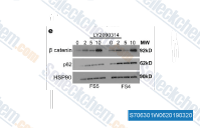
| S7063 | LY2090314 | LY2090314 is a potent GSK-3 inhibitor for GSK-3α/β with IC50 of 1.5 nM/0.9 nM; may improve the efficacy of platinum-based chemotherapy regimens. LY2090314 is highly selective towards GSK3 as demonstrated by its fold selectivity relative to a large panel of kinases. |
|
|
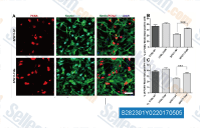
| S2823 | Tideglusib | Tideglusib is an irreversible, non ATP-competitive GSK-3β inhibitor with IC50 of 60 nM in a cell-free assay; fails to inhibit kinases with a Cys homologous to Cys-199 located in the active site. Phase 2. |
|
|
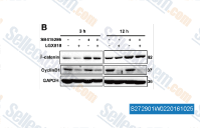
| S2729 | SB415286 | SB415286 is a potent GSK3α inhibitor with IC50/Ki of 78 nM/31 nM with equally effective inhibition of GSK-3β. SB415286 causes MM cell growth arrest and apoptosis. |
|
|
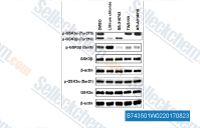
| S7435 | AR-A014418 | AR-A014418 (GSK-3β Inhibitor VIII) is an ATP-competitive, and selective GSK3β inhibitor with IC50 and Ki of 104 nM and 38 nM in cell-free assays, without significant inhibition on 26 other kinases tested. |
|
|
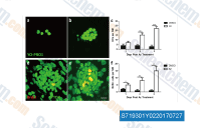
| S7193 | 1-Azakenpaullone | 1-Azakenpaullone (1-Akp) is a potent and selective GSK-3β inhibitor with IC50 of 18 nM, >100-fold selectivity over CDK1/cyclin B and CDK5/p25. |
|
|
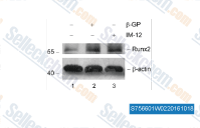
| S7566 | IM-12 | IM-12 is a selective GSK-3β inhibitor with IC50 of 53 nM, and also enhances canonical Wnt signalling. |
|
|
| S7954 | CP21R7 | CP21R7 is a potent and selective GSK-3β inhibitor that can potently activate canonical Wnt signalling. | ||
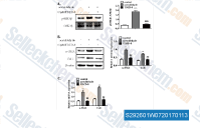
| S2926 | TDZD-8 | TDZD-8 (NP 01139) is a non-ATP competitive GSK-3β inhibitor with IC50 of 2 μM; minimal inhibitory effect observed on CDK1, casein kinase II, PKA and PKC. |
|
|
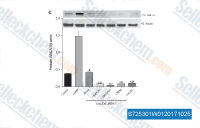
| S7253 | AZD2858 | AZD2858 is a selective GSK-3 inhibitor with an IC50 of 68 nM, activating Wnt signaling, increases bone mass in rats. |
|
|
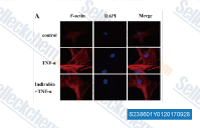
| S2386 | Indirubin (NSC 105327) | Indirubin (NSC 105327) is a potent cyclin-dependent kinases and GSK-3β inhibitor with IC50 of about 5 μM and 0.6 μM. |
|
|
| S7145 | AZD1080 | AZD1080 is a selective, orally active, brain permeable GSK3 inhibitor, inhibits human GSK3α and GSK3β with Ki of 6.9 nM and 31 nM, respectively, shows >14-fold selectivity against CDK2, CDK5, CDK1 and Erk2. | ||
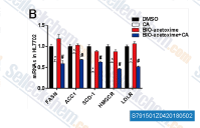
| S7915 | BIO-acetoxime | BIO-acetoxime (GSK-3 Inhibitor X) is a potent dual GSK3α/β inhibitor with IC50 of 10 nM, >240-fold selectivity over CDK5/p25, CDK2/cyclin A and CDK1/cyclin B. |
|
|
| S7722 | Bikinin | Bikinin is an ATP-competitive Arabidopsis GSK-3 inhibitor, and acts as a strong activator of brassinosteroid (BR) signaling. | ||
| S3238 | Resibufogenin | Resibufogenin (Bufogenin, Recibufogenin), a component of huachansu with anticancer effect, triggers necroptosis through upregulating receptor-interacting protein kinase 3 (RIP3) and phosphorylating mixed lineage kinase domain-like protein at Ser358. Resibufogenin exerts cytotoxic effect by inducing reactive oxygen species (ROS) accumulation. Resibufogenin induces apoptosis and caspase-3 and caspase-8 activity. Resibufogenin increases Bax/Bcl-2 expression, and suppresses cyclin D1, cyclin E, PI3K, p-AKT, p-GSK3β and β-catenin protein expression. | ||
| E0474 | 7BIO | 7-bromoindirubin-3-oxime (7BIO), an indirubin derivative derived from indirubin-3-oxime, possesses inhibitory effects against cyclin-dependent kinase-5 (CDK5) and glycogen synthase kinase-3β (GSK3β), also potently inhibits Aβ oligomer-induced neuroinflammation, synaptic impairments, tau hyper-phosphorylation, and activation of astrocytes and microglia. | ||
| E3092 | Paeoniae Radix Rubra Extract | Paeoniae Radix Rubra Extract is obtained from Paeoniae Radix Rubra, prevents deep vein thrombosis by ameliorating inflammation through inhibiting GSK3β activity. | ||
| S0765 | MAZ51 | MAZ51 is a potent and selective inhibitor of vascular endothelial growth factor receptor (VEGFR)-3 (Flt-4) tyrosine kinase. MAZ51 induces cell rounding and G2/M cell cycle arrest in glioma cells through phosphorylation of Akt/GSK3β and activation of RhoA. MAZ51 inhibits the proliferation and induces the apoptosis of a variety of non-VEGFR-3-expressing tumor cell lines. | ||
| E0381 | (E/Z)-GSK-3β inhibitor 1 | (E/Z)-GSK-3β inhibitor 1 is a racemic compound of (E)-GSK-3β inhibitor 1 and (Z)-GSK-3β inhibitor 1 isomers, in which GSK-3β inhibitor 1 (compound 3a) is a glycogen synthase kinase 3β (GSK-3β) inhibitor with an IC50 of 4.19 nM. | ||
| E2819 | PF-04802367 | PF-04802367 (PF-367) is a highly selective Glycogen synthase kinase-3 (GSK-3) inhibitor with IC50s of 2.1 nM based on a recombinant human GSK-3β enzyme assay and 1.1 nM based on ADP-Glo assay. | ||
| E2821 | RGB-286638 free base | RGB-286638 free base is a Cyclin-dependent kinase (CDK) inhibitor that inhibits the kinase activity of cyclin T1-CDK9, cyclin B1-CDK1, cyclin E-CDK2, cyclin D1-CDK4, cyclin E-CDK3, and p35-CDK5 with IC50s of 1, 2, 3, 4, 5 and 5 nM, respectively; also inhibits GSK-3β, TAK1, Jak2 and MEK1, with IC50s of 3, 5, 50, and 54 nM. | ||
| S0354 | Alsterpaullone | Alsterpaullone (Alp, 9-Nitropaullone, NSC 705701) is a potent inhibitor of CDK with IC50 of 35 nM, 15 nM, 200 nM and 40 nM for CDK1/cyclin B, CDK2/cyclin A, CDK2/cyclin E and CDK5/p35, respectively. Alsterpaullone also acts as a potent inhibitor of glycogen synthase kinase-3 (GSK-3) with IC50 of both 4 nM for GSK-3α and GSK-3β. Alsterpaullone induces apoptosis by activation of caspase-9. Alsterpaullone has antitumor activity and possesses potential for the treatment of neurodegenerative and proliferative disorders. | ||
| E0072 | Indirubin-3′-oxime | Indirubin-3′-oxime (IDR3O, I3O) is an indirubin analogue that shows favorable inhibitory activity targeting GSK-3β and CDKs. Indirubin-3′-oxime also inhibits JNKs with IC50s of 0.8 μM, 1.4 μM, and 1.0 μM for JNK1, JNK2, and JNK3, respectively. Indirubin-3′-oxime activates Wnt/β-catenin signaling and inhibits adipocyte differentiation and obesity. | ||
| S5439 | 5-Bromoindole | 5-bromoindole is an important pharmaceutical chemical intermediate and a potential inhibitor of glycogen synthase kinase 3 (GSK-3). | ||
| S6085 | KY19382 (A3051) | KY19382 (A3051) is a Wnt/β-catenin signalling activator through inhibitory effects on both CXXC5–DVL interaction and GSK3β activity with IC50s of 19 nM and 10 nM, respectively. | ||
| S9602 | Elraglusib | Elraglusib(9-ING-41) is a potent inhibitor of glycogen synthase kinase-3 (GSK-3) with antitumor activity. 9-ING-41 induces apoptosis and cell cycle arrest at prophase by targeting centrosomes and microtubule-bound GSK3β. | ||
| E0798 | WAY-119064 | WAY-119064 is a potent glycogen synthase kinase-3β (GSK-3β) inhibitor with an IC50 value of 80.5 nM. | ||
| S9156 | Chonglou Saponin VII | Chonglou Saponin VII (Dioscinin, Polyphyllin-VII, Paris saponin-VII), a kind of steroidal saponins from Chonglou (Rhizoma Paridis Chonglou), inhibits EMT and reduces the invasion of ovarian cancer cells via the GSK-3β/β-catenin signaling pathway. | ||
| S9638 | BRD0705 | BRD0705 is a potent, paralog selective and orally active inhibitor of GSK3α (Glycogen synthase kinase 3α) with IC50 of 66 nM and Kd of 4.8 μM. BRD0705 also inhibits GSK3β with IC50 of 515 nM. BRD0705 can be used for acute myeloid leukemia (AML). | ||
| S1263 | Laduviglusib (CHIR-99021) | Laduviglusib (CHIR-99021, CT99021) is a GSK-3α and GSK-3β inhibitor with IC50 of 10 nM and 6.7 nM, respectively. CHIR99201 does not exhibit cross-reactivity against cyclin-dependent kinases (CDKs) and shows a 350-fold selectivity toward GSK-3β compared to CDKs. CHIR99021 functions as a Wnt/β-catenin activator and induces autophagy. |
|
|
| S2924 | Laduviglusib (CHIR-99021) HCl | Laduviglusib (CHIR-99021; CT99021) HCl is hydrochloride of CHIR-99021, which is a GSK-3α/β inhibitor with IC50 of 10 nM/6.7 nM; CHIR-99021 shows greater than 500-fold selectivity for GSK-3 versus its closest homologs Cdc2 and ERK2. CHIR-99021 is a potent pharmacological activators of the Wnt/beta-catenin signaling pathway. CHIR-99021 significantly rescues light-induced autophagy and augments GR, RORα and autophagy-related proteins. |
|
|
| S1075 | SB216763 | SB216763 is a potent and selective GSK-3 inhibitor with IC50 of 34.3 nM for GSK-3α and equally effective at inhibiting human GSK-3β. SB216763 activates autophagy. |
|
|
| S1524 | AT7519 | AT7519 is a multi-CDK inhibitor for CDK1, 2, 4, 6 and 9 with IC50 of 10-210 nM. It is less potent to CDK3 and little active to CDK7. AT7519 also decrease GSK3β phosphorylation. AT7519 induces apoptosis. Phase 2. |
|
|
| S1590 | TWS119 | TWS119 is a GSK-3β inhibitor with IC50 of 30 nM in a cell-free assay; capable of inducing neuronal differentiation and may be useful to stem cell biology. GSK-3β inhibition triggers autophagy. |
|
|
| S2745 | CHIR-98014 | CHIR-98014 (CT98014) is a potent GSK-3α/β inhibitor with IC50 of 0.65 nM/0.58 nM in cell-free assays, with the ability to distinguish GSK-3 from its closest homologs Cdc2 and ERK2. |
|
|
| S7198 | BIO | BIO (GSK-3 Inhibitor IX, 6-bromoindirubin-3-oxime, 6-Bromoindirubin-3'-oxime, MLS 2052) is a specific inhibitor of GSK-3 with IC50 of 5 nM for GSK-3α/β in a cell-free assay, shows >16-fold selectivity over CDK5, also a pan-JAK inhibitor with IC50 of 30 nM for Tyk2. BIO induces apoptosis in human melanoma cells. |
|
|
| S7063 | LY2090314 | LY2090314 is a potent GSK-3 inhibitor for GSK-3α/β with IC50 of 1.5 nM/0.9 nM; may improve the efficacy of platinum-based chemotherapy regimens. LY2090314 is highly selective towards GSK3 as demonstrated by its fold selectivity relative to a large panel of kinases. |
|
|
| S2823 | Tideglusib | Tideglusib is an irreversible, non ATP-competitive GSK-3β inhibitor with IC50 of 60 nM in a cell-free assay; fails to inhibit kinases with a Cys homologous to Cys-199 located in the active site. Phase 2. |
|
|
| S2729 | SB415286 | SB415286 is a potent GSK3α inhibitor with IC50/Ki of 78 nM/31 nM with equally effective inhibition of GSK-3β. SB415286 causes MM cell growth arrest and apoptosis. |
|
|
| S7435 | AR-A014418 | AR-A014418 (GSK-3β Inhibitor VIII) is an ATP-competitive, and selective GSK3β inhibitor with IC50 and Ki of 104 nM and 38 nM in cell-free assays, without significant inhibition on 26 other kinases tested. |
|
|
| S7193 | 1-Azakenpaullone | 1-Azakenpaullone (1-Akp) is a potent and selective GSK-3β inhibitor with IC50 of 18 nM, >100-fold selectivity over CDK1/cyclin B and CDK5/p25. |
|
|
| S7566 | IM-12 | IM-12 is a selective GSK-3β inhibitor with IC50 of 53 nM, and also enhances canonical Wnt signalling. |
|
|
| S7954 | CP21R7 | CP21R7 is a potent and selective GSK-3β inhibitor that can potently activate canonical Wnt signalling. | ||
| S2926 | TDZD-8 | TDZD-8 (NP 01139) is a non-ATP competitive GSK-3β inhibitor with IC50 of 2 μM; minimal inhibitory effect observed on CDK1, casein kinase II, PKA and PKC. |
|
|
| S7253 | AZD2858 | AZD2858 is a selective GSK-3 inhibitor with an IC50 of 68 nM, activating Wnt signaling, increases bone mass in rats. |
|
|
| S2386 | Indirubin (NSC 105327) | Indirubin (NSC 105327) is a potent cyclin-dependent kinases and GSK-3β inhibitor with IC50 of about 5 μM and 0.6 μM. |
|
|
| S7145 | AZD1080 | AZD1080 is a selective, orally active, brain permeable GSK3 inhibitor, inhibits human GSK3α and GSK3β with Ki of 6.9 nM and 31 nM, respectively, shows >14-fold selectivity against CDK2, CDK5, CDK1 and Erk2. | ||
| S7915 | BIO-acetoxime | BIO-acetoxime (GSK-3 Inhibitor X) is a potent dual GSK3α/β inhibitor with IC50 of 10 nM, >240-fold selectivity over CDK5/p25, CDK2/cyclin A and CDK1/cyclin B. |
|
|
| S7722 | Bikinin | Bikinin is an ATP-competitive Arabidopsis GSK-3 inhibitor, and acts as a strong activator of brassinosteroid (BR) signaling. | ||
| S3238 | Resibufogenin | Resibufogenin (Bufogenin, Recibufogenin), a component of huachansu with anticancer effect, triggers necroptosis through upregulating receptor-interacting protein kinase 3 (RIP3) and phosphorylating mixed lineage kinase domain-like protein at Ser358. Resibufogenin exerts cytotoxic effect by inducing reactive oxygen species (ROS) accumulation. Resibufogenin induces apoptosis and caspase-3 and caspase-8 activity. Resibufogenin increases Bax/Bcl-2 expression, and suppresses cyclin D1, cyclin E, PI3K, p-AKT, p-GSK3β and β-catenin protein expression. | ||
| E0474 | 7BIO | 7-bromoindirubin-3-oxime (7BIO), an indirubin derivative derived from indirubin-3-oxime, possesses inhibitory effects against cyclin-dependent kinase-5 (CDK5) and glycogen synthase kinase-3β (GSK3β), also potently inhibits Aβ oligomer-induced neuroinflammation, synaptic impairments, tau hyper-phosphorylation, and activation of astrocytes and microglia. | ||
| E3092 | Paeoniae Radix Rubra Extract | Paeoniae Radix Rubra Extract is obtained from Paeoniae Radix Rubra, prevents deep vein thrombosis by ameliorating inflammation through inhibiting GSK3β activity. | ||
| E0381 | (E/Z)-GSK-3β inhibitor 1 | (E/Z)-GSK-3β inhibitor 1 is a racemic compound of (E)-GSK-3β inhibitor 1 and (Z)-GSK-3β inhibitor 1 isomers, in which GSK-3β inhibitor 1 (compound 3a) is a glycogen synthase kinase 3β (GSK-3β) inhibitor with an IC50 of 4.19 nM. | ||
| E2819 | PF-04802367 | PF-04802367 (PF-367) is a highly selective Glycogen synthase kinase-3 (GSK-3) inhibitor with IC50s of 2.1 nM based on a recombinant human GSK-3β enzyme assay and 1.1 nM based on ADP-Glo assay. | ||
| E2821 | RGB-286638 free base | RGB-286638 free base is a Cyclin-dependent kinase (CDK) inhibitor that inhibits the kinase activity of cyclin T1-CDK9, cyclin B1-CDK1, cyclin E-CDK2, cyclin D1-CDK4, cyclin E-CDK3, and p35-CDK5 with IC50s of 1, 2, 3, 4, 5 and 5 nM, respectively; also inhibits GSK-3β, TAK1, Jak2 and MEK1, with IC50s of 3, 5, 50, and 54 nM. | ||
| S0354 | Alsterpaullone | Alsterpaullone (Alp, 9-Nitropaullone, NSC 705701) is a potent inhibitor of CDK with IC50 of 35 nM, 15 nM, 200 nM and 40 nM for CDK1/cyclin B, CDK2/cyclin A, CDK2/cyclin E and CDK5/p35, respectively. Alsterpaullone also acts as a potent inhibitor of glycogen synthase kinase-3 (GSK-3) with IC50 of both 4 nM for GSK-3α and GSK-3β. Alsterpaullone induces apoptosis by activation of caspase-9. Alsterpaullone has antitumor activity and possesses potential for the treatment of neurodegenerative and proliferative disorders. | ||
| E0072 | Indirubin-3′-oxime | Indirubin-3′-oxime (IDR3O, I3O) is an indirubin analogue that shows favorable inhibitory activity targeting GSK-3β and CDKs. Indirubin-3′-oxime also inhibits JNKs with IC50s of 0.8 μM, 1.4 μM, and 1.0 μM for JNK1, JNK2, and JNK3, respectively. Indirubin-3′-oxime activates Wnt/β-catenin signaling and inhibits adipocyte differentiation and obesity. | ||
| S5439 | 5-Bromoindole | 5-bromoindole is an important pharmaceutical chemical intermediate and a potential inhibitor of glycogen synthase kinase 3 (GSK-3). | ||
| S6085 | KY19382 (A3051) | KY19382 (A3051) is a Wnt/β-catenin signalling activator through inhibitory effects on both CXXC5–DVL interaction and GSK3β activity with IC50s of 19 nM and 10 nM, respectively. | ||
| S9602 | Elraglusib | Elraglusib(9-ING-41) is a potent inhibitor of glycogen synthase kinase-3 (GSK-3) with antitumor activity. 9-ING-41 induces apoptosis and cell cycle arrest at prophase by targeting centrosomes and microtubule-bound GSK3β. | ||
| E0798 | WAY-119064 | WAY-119064 is a potent glycogen synthase kinase-3β (GSK-3β) inhibitor with an IC50 value of 80.5 nM. | ||
| S9638 | BRD0705 | BRD0705 is a potent, paralog selective and orally active inhibitor of GSK3α (Glycogen synthase kinase 3α) with IC50 of 66 nM and Kd of 4.8 μM. BRD0705 also inhibits GSK3β with IC50 of 515 nM. BRD0705 can be used for acute myeloid leukemia (AML). | ||
| S0765 | MAZ51 | MAZ51 is a potent and selective inhibitor of vascular endothelial growth factor receptor (VEGFR)-3 (Flt-4) tyrosine kinase. MAZ51 induces cell rounding and G2/M cell cycle arrest in glioma cells through phosphorylation of Akt/GSK3β and activation of RhoA. MAZ51 inhibits the proliferation and induces the apoptosis of a variety of non-VEGFR-3-expressing tumor cell lines. |
Choose Selective GSK-3 Inhibitors
Tags: GSK-3 inhibition | GSK-3 cancer | GSK-3 signaling pathway | GSK-3 activation | GSK-3 activity | GSK-3 beta pathway | GSK-3 phosphorylation | GSK-3 beta phosphorylation | GSK-3 assay | GSK-3 inhibitor review



Products are for research use only. Not for human use. We do not sell to patients.
©Copyright 2013 Selleck Chemicals. All Rights Reserved.