
-
 Argentina
-
 Australia
-
 Austria
-
 Belgium
-
 Brazil
-
 Canada
-
 China
China
-
 Czech Republic
-
 Denmark
-
 Finland
-
 France
-
 Germany
-
 Greece
-
 Hong Kong
-
 Hungary
-
 Iceland
-
 India
India
-
 Ireland
-
 Israel
-
 Italy
Italy
-
 Japan
Japan
-
 Korea
Korea
-
 Luxembourg
-
 Malaysia
-
 Netherlands
-
 New Zealand
-
 Norway
-
 Poland
-
 Portugal
-
 Qatar
Qatar
-
 Romania
-
 Saudi Arabia
-
 Singapore
-
 Spain
Spain
-
 Sweden
-
 Switzerland
-
 Taiwan
-
 Turkey
-
 United Kingdom
-
 United States
research use only
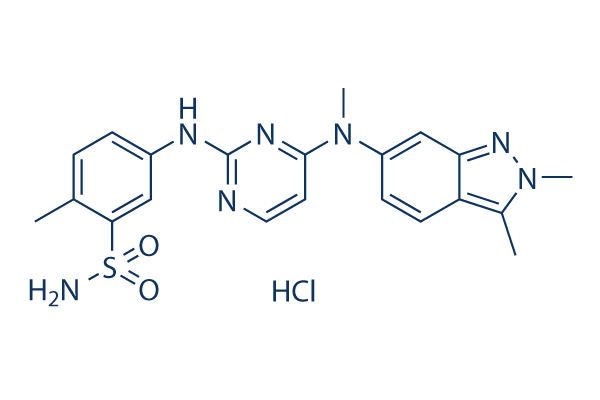
Pazopanib HCl VEGFR inhibitor
Cat.No.S1035
Quality Control
| Related Targets | EGFR FGFR PDGFR c-Met Src MEK CSF-1R FLT3 HER2 c-Kit |
|---|---|
| Other VEGFR Inhibitors | SAR131675 SU 5402 Cediranib (AZD2171) Vatalanib (PTK787) 2HCl Anlotinib (AL3818) Dihydrochloride Linifanib (ABT-869) Apatinib (YN968D1) Apatinib (YN968D1) mesylate Ki8751 Semaxanib (SU5416) |
Cell Culture, Treatment & Working Concentration
| Cell Lines | Assay Type | Concentration | Incubation Time | Formulation | Activity Description | PMID |
|---|---|---|---|---|---|---|
| HT-29 | Function assay | 14 to 24 hrs | Inhibition of RIPK1 in human HT-29 cells assessed as reduction in TNFalpha-induced necroptosis incubated for 14 to 24 hrs in presence of Smac mimetic and z-VAD-FMK by cell titer glo-based luminescence assay, IC50=0.873μM | 31622096 | ||
| HT29 | Antiproliferative assay | Antiproliferative activity against human HT29 cells in serum containing medium | 18620382 | |||
| HN5 | Antiproliferative assay | Antiproliferative activity against human HN5 cells in serum containing medium | 18620382 | |||
| A375P | Antiproliferative assay | Antiproliferative activity against human A375P cells in serum containing medium | 18620382 | |||
| SJ-GBM2 | qHTS assay | qHTS of pediatric cancer cell lines to identify multiple opportunities for drug repurposing: Primary screen for SJ-GBM2 cells | 29435139 | |||
| SK-N-MC | qHTS assay | qHTS of pediatric cancer cell lines to identify multiple opportunities for drug repurposing: Primary screen for SK-N-MC cells | 29435139 | |||
| SK-N-MC | qHTS assay | qHTS of pediatric cancer cell lines to identify multiple opportunities for drug repurposing: Primary screen for SK-N-MC cells | 29435139 | |||
| NB-EBc1 | qHTS assay | qHTS of pediatric cancer cell lines to identify multiple opportunities for drug repurposing: Primary screen for NB-EBc1 cells | 29435139 | |||
| Saos-2 | qHTS assay | qHTS of pediatric cancer cell lines to identify multiple opportunities for drug repurposing: Primary screen for Saos-2 cells | 29435139 | |||
| LAN-5 | qHTS assay | qHTS of pediatric cancer cell lines to identify multiple opportunities for drug repurposing: Primary screen for LAN-5 cells | 29435139 | |||
| BT-12 | qHTS assay | qHTS of pediatric cancer cell lines to identify multiple opportunities for drug repurposing: Primary screen for BT-12 cells | 29435139 | |||
| BT-12 | qHTS assay | qHTS of pediatric cancer cell lines to identify multiple opportunities for drug repurposing: Primary screen for BT-12 cells | 29435139 | |||
| Rh18 | qHTS assay | qHTS of pediatric cancer cell lines to identify multiple opportunities for drug repurposing: Primary screen for Rh18 cells | 29435139 | |||
| OHS-50 | qHTS assay | qHTS of pediatric cancer cell lines to identify multiple opportunities for drug repurposing: Primary screen for OHS-50 cells | 29435139 | |||
| MG 63 (6-TG R) | qHTS assay | qHTS of pediatric cancer cell lines to identify multiple opportunities for drug repurposing: Primary screen for MG 63 (6-TG R) cells | 29435139 | |||
| SK-N-MC | qHTS assay | qHTS of pediatric cancer cell lines to identify multiple opportunities for drug repurposing: Confirmatory screen for SK-N-MC cells | 29435139 | |||
| U-2 OS | qHTS assay | qHTS of pediatric cancer cell lines to identify multiple opportunities for drug repurposing: Confirmatory screen for U-2 OS cells | 29435139 | |||
| Rh41 | qHTS assay | qHTS of pediatric cancer cell lines to identify multiple opportunities for drug repurposing: Confirmatory screen for Rh41 cells | 29435139 | |||
| SK-N-SH | qHTS assay | qHTS of pediatric cancer cell lines to identify multiple opportunities for drug repurposing: Confirmatory screen for SK-N-SH cells | 29435139 | |||
| HUVEC | Function assay | 100 nM | 2 hrs | Inhibition of VEGF-stimulated VEGFR2 phosphorylation in human HUVEC cells at 100 nM preincubated for 2 hrs followed by VEGF stimulation by Western blot analysis | 29787262 | |
| HUVEC | Antiangiogenic assay | 0.1 uM | 6 hrs | Antiangiogenic activity in human HUVEC cells assessed as reduction in capillary-like tubular network formation at 0.1 uM after 6 hrs by phase-contrast microscopy | 29787262 | |
| MM | Kinase assay | inhibits VEGF-induced phosphorylation of flt1 | 17164332 | |||
| MM.1S | Growth inhibitory assay | 10 μg/mL | inhibits MM Cell Growth | 17164332 | ||
| MM.1R | Growth inhibitory assay | 10 μg/mL | inhibits MM Cell Growth | 17164332 | ||
| RPMI | Growth inhibitory assay | 10 μg/mL | inhibits MM Cell Growth | 17164332 | ||
| Dox40 | Growth inhibitory assay | 10 μg/mL | inhibits MM Cell Growth | 17164332 | ||
| INA-6 | Growth inhibitory assay | 10 μg/mL | inhibits MM Cell Growth | 17164332 | ||
| OPM2 | Growth inhibitory assay | 10 μg/mL | inhibits MM Cell Growth | 17164332 | ||
| U266 | Growth inhibitory assay | 10 μg/mL | inhibits MM Cell Growth | 17164332 | ||
| MM.1S | cytotoxicity assay | 20 μg/mL | inhibits MM Cell Survival | 17164332 | ||
| MM.1R | cytotoxicity assay | 20 μg/mL | inhibits MM Cell Survival | 17164332 | ||
| RPMI | cytotoxicity assay | 20 μg/mL | inhibits MM Cell Survival | 17164332 | ||
| Dox40 | cytotoxicity assay | 20 μg/mL | inhibits MM Cell Survival | 17164332 | ||
| INA-6 | cytotoxicity assay | 20 μg/mL | inhibits MM Cell Survival | 17164332 | ||
| OPM2 | cytotoxicity assay | 20 μg/mL | inhibits MM Cell Survival | 17164332 | ||
| U266 | cytotoxicity assay | 20 μg/mL | inhibits MM Cell Survival | 17164332 | ||
| MM.1S | Function assay | suppresses VEGF-Induced Endothelial Cell Proliferation and Migration. | 17164332 | |||
| MM.1R | Function assay | suppresses VEGF-Induced Endothelial Cell Proliferation and Migration. | 17164332 | |||
| Dox40 | Function assay | suppresses VEGF-Induced Endothelial Cell Proliferation and Migration. | 17164332 | |||
| OPM2 | Function assay | suppresses VEGF-Induced Endothelial Cell Proliferation and Migration. | 17164332 | |||
| HBMEC | Growth inhibitory assay | ~10 μM | DMSO | IC50=1 μM | 21081656 | |
| HBMEC | Function assay | ~1 μM | DMSO | abrogates the phosphorylation of VEGFR2 with disruption of downstream PLCγ1 | 21081656 | |
| HBMEC | Function assay | ~1 μM | DMSO | disrupts the Ras-Raf-ERK pathway through decreased phosphorylated MEK1/2 and ERK1/2 | 21081656 | |
| HBMEC | Function assay | ~20 μM | DMSO | disrupts 50% of tube formation at 1 μM | 21081656 | |
| MDA-MB-231 | Growth inhibitory assay | ~10 μM | DMSO | IC50=5 μM | 21081656 | |
| MDA-MB-231 | Function assay | 0.5 μM | DMSO | inhibits the ERK1/2 signaling pathway | 21081656 | |
| MDA-MB-231 | Function assay | 5 μM | DMSO | induces a cell-cycle arrest | 21081656 | |
| J82 | cytotoxicity assay | ~10 μM | DMSO | IC50=24.57 μM | 21529900 | |
| T24 | cytotoxicity assay | ~10 μM | DMSO | IC50=52.45 μM | 21529900 | |
| HT1376 | cytotoxicity assay | ~10 μM | DMSO | IC50=28.21 μM | 21529900 | |
| RT4 | cytotoxicity assay | ~10 μM | DMSO | IC50=5.14 μM | 21529900 | |
| CRL1749 | cytotoxicity assay | ~10 μM | DMSO | IC50=22.69 μM | 21529900 | |
| HTB9 | cytotoxicity assay | ~10 μM | DMSO | IC50=11.84 μM | 21529900 | |
| Sup | cytotoxicity assay | ~10 μM | DMSO | IC50=53.32 μM | 21529900 | |
| HTB3 | cytotoxicity assay | ~10 μM | DMSO | IC50=14.16 μM | 21529900 | |
| CEC | Function assay | ~10 μg/mL | DMSO | down-regulates VEGF levels | 21620822 | |
| RPE | Function assay | ~10 μg/mL | DMSO | down-regulates VEGF levels | 21620822 | |
| CEC | Function assay | ~5 μg/mL | DMSO | blocks endothelial cell migration | 21620822 | |
| 5637 | Growth inhibitory assay | DMSO | IC50=15.0 μM | 23887605 | ||
| J82 | Growth inhibitory assay | DMSO | IC50=18.4 μM | 23887605 | ||
| 5637 | Autophagy assay | 20 μM | DMSO | triggers the autophagic process | 23887605 | |
| J82 | Autophagy assay | 20 μM | DMSO | triggers the autophagic process | 23887605 | |
| 5637 | Function assay | 20 μM | DMSO | induces lysosomal-dependent necrosis | 23887605 | |
| J82 | Function assay | 20 μM | DMSO | induces lysosomal-dependent necrosis | 23887605 | |
| 5637 | Function assay | 20 μM | DMSO | induces lysosome alteration and inhibits CB activity | 23887605 | |
| J82 | Function assay | 20 μM | DMSO | induces lysosome alteration and inhibits CB activity | 23887605 | |
| KATO-II | Growth inhibitory assay | 5 μM | DMSO | blocks proliferation | 25249557 | |
| OCUM-2M | Growth inhibitory assay | 5 μM | DMSO | blocks proliferation | 25249557 | |
| SNU-16 | Growth inhibitory assay | 5 μM | DMSO | blocks proliferation | 25249557 | |
| HSC-39 | Growth inhibitory assay | 5 μM | DMSO | blocks proliferation | 25249557 | |
| KATO-II | cytotoxicity assay | ~10 μM | DMSO | IC50=0.1 to 2.0 μmol/L | 25249557 | |
| OCUM-2M | cytotoxicity assay | ~10 μM | DMSO | IC50=0.1 to 2.0 μmol/L | 25249557 | |
| SNU-16 | cytotoxicity assay | ~10 μM | DMSO | IC50=0.1 to 2.0 μmol/L | 25249557 | |
| HSC-39 | cytotoxicity assay | ~10 μM | DMSO | IC50=0.1 to 2.0 μmol/L | 25249557 | |
| NIH 3T3 | Growth inhibitory assay | ~10 μM | DMSO | inhibits cell growth and colony formation | 25249557 | |
| KATO-III | Function assay | 1 μM | DMSO | induces cell-cycle arrest | 25249557 | |
| OCUM-2M | Function assay | 1 μM | DMSO | induces cell-cycle arrest | 25249557 | |
| KATO-III | Apoptosis assay | 1 μM | DMSO | induces apoptosis | 25249557 | |
| OCUM-2M | Apoptosis assay | 1 μM | DMSO | induces apoptosis | 25249557 | |
| KATO-III | Function assay | 1 μM | DMSO | inhibits FGFR2 phosphorylation and downstream signaling molecules | 25249557 | |
| EoL-1-cell | Growth inhibition assay | Inhibition of human EoL-1-cell cell growth in a cell viability assay, IC50=0.0000289μM. | SANGER | |||
| AN3-CA | Growth inhibition assay | Inhibition of human AN3-CA cell growth in a cell viability assay, IC50=0.01005μM. | SANGER | |||
| CGTH-W-1 | Growth inhibition assay | Inhibition of human CGTH-W-1 cell growth in a cell viability assay, IC50=0.04001μM. | SANGER | |||
| GDM-1 | Growth inhibition assay | Inhibition of human GDM-1 cell growth in a cell viability assay, IC50=0.10399μM. | SANGER | |||
| A204 | Growth inhibition assay | Inhibition of human A204 cell growth in a cell viability assay, IC50=0.10906μM. | SANGER | |||
| G-402 | Growth inhibition assay | Inhibition of human G-402 cell growth in a cell viability assay, IC50=0.53184μM. | SANGER | |||
| MFE-296 | Growth inhibition assay | Inhibition of human MFE-296 cell growth in a cell viability assay, IC50=0.59022μM. | SANGER | |||
| NOS-1 | Growth inhibition assay | Inhibition of human NOS-1 cell growth in a cell viability assay, IC50=0.65987μM. | SANGER | |||
| KG-1 | Growth inhibition assay | Inhibition of human KG-1 cell growth in a cell viability assay, IC50=0.71755μM. | SANGER | |||
| HT55 | Growth inhibition assay | Inhibition of human HT55 cell growth in a cell viability assay, IC50=0.98781μM. | SANGER | |||
| MG-63 | Growth inhibition assay | Inhibition of human MG-63 cell growth in a cell viability assay, IC50=1.00146μM. | SANGER | |||
| CCF-STTG1 | Growth inhibition assay | Inhibition of human CCF-STTG1 cell growth in a cell viability assay, IC50=1.04981μM. | SANGER | |||
| RT-112 | Growth inhibition assay | Inhibition of human RT-112 cell growth in a cell viability assay, IC50=1.10376μM. | SANGER | |||
| MC-IXC | Growth inhibition assay | Inhibition of human MC-IXC cell growth in a cell viability assay, IC50=1.11512μM. | SANGER | |||
| HUTU-80 | Growth inhibition assay | Inhibition of human HUTU-80 cell growth in a cell viability assay, IC50=1.28103μM. | SANGER | |||
| MV-4-11 | Growth inhibition assay | Inhibition of human MV-4-11 cell growth in a cell viability assay, IC50=1.34501μM. | SANGER | |||
| LCLC-103H | Growth inhibition assay | Inhibition of human LCLC-103H cell growth in a cell viability assay, IC50=1.44549μM. | SANGER | |||
| G-401 | Growth inhibition assay | Inhibition of human G-401 cell growth in a cell viability assay, IC50=1.46421μM. | SANGER | |||
| A704 | Growth inhibition assay | Inhibition of human A704 cell growth in a cell viability assay, IC50=1.60323μM. | SANGER | |||
| ESS-1 | Growth inhibition assay | Inhibition of human ESS-1 cell growth in a cell viability assay, IC50=1.60396μM. | SANGER | |||
| HLE | Growth inhibition assay | Inhibition of human HLE cell growth in a cell viability assay, IC50=1.63804μM. | SANGER | |||
| NY | Growth inhibition assay | Inhibition of human NY cell growth in a cell viability assay, IC50=1.84821μM. | SANGER | |||
| A427 | Growth inhibition assay | Inhibition of human A427 cell growth in a cell viability assay, IC50=1.98075μM. | SANGER | |||
| SK-N-DZ | Growth inhibition assay | Inhibition of human SK-N-DZ cell growth in a cell viability assay, IC50=2.02381μM. | SANGER | |||
| J82 | Growth inhibition assay | Inhibition of human J82 cell growth in a cell viability assay, IC50=2.06088μM. | SANGER | |||
| GI-1 | Growth inhibition assay | Inhibition of human GI-1 cell growth in a cell viability assay, IC50=2.22951μM. | SANGER | |||
| NCI-H716 | Growth inhibition assay | Inhibition of human NCI-H716 cell growth in a cell viability assay, IC50=2.31633μM. | SANGER | |||
| SF126 | Growth inhibition assay | Inhibition of human SF126 cell growth in a cell viability assay, IC50=2.47459μM. | SANGER | |||
| H4 | Growth inhibition assay | Inhibition of human H4 cell growth in a cell viability assay, IC50=2.51262μM. | SANGER | |||
| LB831-BLC | Growth inhibition assay | Inhibition of human LB831-BLC cell growth in a cell viability assay, IC50=2.54566μM. | SANGER | |||
| HCC1395 | Growth inhibition assay | Inhibition of human HCC1395 cell growth in a cell viability assay, IC50=2.58156μM. | SANGER | |||
| LK-2 | Growth inhibition assay | Inhibition of human LK-2 cell growth in a cell viability assay, IC50=2.64569μM. | SANGER | |||
| G-361 | Growth inhibition assay | Inhibition of human G-361 cell growth in a cell viability assay, IC50=3.04082μM. | SANGER | |||
| NCI-H2342 | Growth inhibition assay | Inhibition of human NCI-H2342 cell growth in a cell viability assay, IC50=3.13316μM. | SANGER | |||
| SK-LU-1 | Growth inhibition assay | Inhibition of human SK-LU-1 cell growth in a cell viability assay, IC50=3.18767μM. | SANGER | |||
| IGROV-1 | Growth inhibition assay | Inhibition of human IGROV-1 cell growth in a cell viability assay, IC50=3.24713μM. | SANGER | |||
| EB2 | Growth inhibition assay | Inhibition of human EB2 cell growth in a cell viability assay, IC50=3.28168μM. | SANGER | |||
| CAL-54 | Growth inhibition assay | Inhibition of human CAL-54 cell growth in a cell viability assay, IC50=3.28367μM. | SANGER | |||
| OCUB-M | Growth inhibition assay | Inhibition of human OCUB-M cell growth in a cell viability assay, IC50=3.31368μM. | SANGER | |||
| LB1047-RCC | Growth inhibition assay | Inhibition of human LB1047-RCC cell growth in a cell viability assay, IC50=3.53164μM. | SANGER | |||
| Daudi | Growth inhibition assay | Inhibition of human Daudi cell growth in a cell viability assay, IC50=3.66219μM. | SANGER | |||
| A172 | Growth inhibition assay | Inhibition of human A172 cell growth in a cell viability assay, IC50=3.7379μM. | SANGER | |||
| KGN | Growth inhibition assay | Inhibition of human KGN cell growth in a cell viability assay, IC50=4.06709μM. | SANGER | |||
| SNG-M | Growth inhibition assay | Inhibition of human SNG-M cell growth in a cell viability assay, IC50=4.08669μM. | SANGER | |||
| SW1710 | Growth inhibition assay | Inhibition of human SW1710 cell growth in a cell viability assay, IC50=4.47318μM. | SANGER | |||
| Daoy | Growth inhibition assay | Inhibition of human Daoy cell growth in a cell viability assay, IC50=4.77949μM. | SANGER | |||
| DMS-273 | Growth inhibition assay | Inhibition of human DMS-273 cell growth in a cell viability assay, IC50=4.96202μM. | SANGER | |||
| KU812 | Growth inhibition assay | Inhibition of human KU812 cell growth in a cell viability assay, IC50=5.37812μM. | SANGER | |||
| NCI-H727 | Growth inhibition assay | Inhibition of human NCI-H727 cell growth in a cell viability assay, IC50=5.40901μM. | SANGER | |||
| P30-OHK | Growth inhibition assay | Inhibition of human P30-OHK cell growth in a cell viability assay, IC50=5.4694μM. | SANGER | |||
| MIA-PaCa-2 | Growth inhibition assay | Inhibition of human MIA-PaCa-2 cell growth in a cell viability assay, IC50=5.60466μM. | SANGER | |||
| TT | Growth inhibition assay | Inhibition of human TT cell growth in a cell viability assay, IC50=5.6624μM. | SANGER | |||
| DK-MG | Growth inhibition assay | Inhibition of human DK-MG cell growth in a cell viability assay, IC50=5.72028μM. | SANGER | |||
| GB-1 | Growth inhibition assay | Inhibition of human GB-1 cell growth in a cell viability assay, IC50=5.73434μM. | SANGER | |||
| NCI-H520 | Growth inhibition assay | Inhibition of human NCI-H520 cell growth in a cell viability assay, IC50=5.73435μM. | SANGER | |||
| WM-115 | Growth inhibition assay | Inhibition of human WM-115 cell growth in a cell viability assay, IC50=5.75644μM. | SANGER | |||
| CAL-72 | Growth inhibition assay | Inhibition of human CAL-72 cell growth in a cell viability assay, IC50=5.9381μM. | SANGER | |||
| NCI-H1573 | Growth inhibition assay | Inhibition of human NCI-H1573 cell growth in a cell viability assay, IC50=5.96542μM. | SANGER | |||
| ES6 | Growth inhibition assay | Inhibition of human ES6 cell growth in a cell viability assay, IC50=6.02688μM. | SANGER | |||
| TE-8 | Growth inhibition assay | Inhibition of human TE-8 cell growth in a cell viability assay, IC50=6.16473μM. | SANGER | |||
| GAMG | Growth inhibition assay | Inhibition of human GAMG cell growth in a cell viability assay, IC50=6.17776μM. | SANGER | |||
| HGC-27 | Growth inhibition assay | Inhibition of human HGC-27 cell growth in a cell viability assay, IC50=6.2015μM. | SANGER | |||
| CTV-1 | Growth inhibition assay | Inhibition of human CTV-1 cell growth in a cell viability assay, IC50=6.20903μM. | SANGER | |||
| NCI-H810 | Growth inhibition assay | Inhibition of human NCI-H810 cell growth in a cell viability assay, IC50=6.31365μM. | SANGER | |||
| NMC-G1 | Growth inhibition assay | Inhibition of human NMC-G1 cell growth in a cell viability assay, IC50=6.55237μM. | SANGER | |||
| SNB75 | Growth inhibition assay | Inhibition of human SNB75 cell growth in a cell viability assay, IC50=6.56939μM. | SANGER | |||
| SK-MES-1 | Growth inhibition assay | Inhibition of human SK-MES-1 cell growth in a cell viability assay, IC50=6.8663μM. | SANGER | |||
| MZ2-MEL | Growth inhibition assay | Inhibition of human MZ2-MEL cell growth in a cell viability assay, IC50=6.93016μM. | SANGER | |||
| TE-15 | Growth inhibition assay | Inhibition of human TE-15 cell growth in a cell viability assay, IC50=7.16924μM. | SANGER | |||
| S-117 | Growth inhibition assay | Inhibition of human S-117 cell growth in a cell viability assay, IC50=7.57924μM. | SANGER | |||
| HuH-7 | Growth inhibition assay | Inhibition of human HuH-7 cell growth in a cell viability assay, IC50=7.69384μM. | SANGER | |||
| CAS-1 | Growth inhibition assay | Inhibition of human CAS-1 cell growth in a cell viability assay, IC50=7.76339μM. | SANGER | |||
| D-502MG | Growth inhibition assay | Inhibition of human D-502MG cell growth in a cell viability assay, IC50=7.78222μM. | SANGER | |||
| IA-LM | Growth inhibition assay | Inhibition of human IA-LM cell growth in a cell viability assay, IC50=7.93364μM. | SANGER | |||
| CAKI-1 | Growth inhibition assay | Inhibition of human CAKI-1 cell growth in a cell viability assay, IC50=8.28831μM. | SANGER | |||
| KYSE-70 | Growth inhibition assay | Inhibition of human KYSE-70 cell growth in a cell viability assay, IC50=8.45447μM. | SANGER | |||
| HCC1569 | Growth inhibition assay | Inhibition of human HCC1569 cell growth in a cell viability assay, IC50=8.46556μM. | SANGER | |||
| SR | Growth inhibition assay | Inhibition of human SR cell growth in a cell viability assay, IC50=8.70202μM. | SANGER | |||
| SH-4 | Growth inhibition assay | Inhibition of human SH-4 cell growth in a cell viability assay, IC50=8.73653μM. | SANGER | |||
| SW954 | Growth inhibition assay | Inhibition of human SW954 cell growth in a cell viability assay, IC50=8.75347μM. | SANGER | |||
| MPP-89 | Growth inhibition assay | Inhibition of human MPP-89 cell growth in a cell viability assay, IC50=8.7782μM. | SANGER | |||
| IST-MEL1 | Growth inhibition assay | Inhibition of human IST-MEL1 cell growth in a cell viability assay, IC50=8.91086μM. | SANGER | |||
| EFM-19 | Growth inhibition assay | Inhibition of human EFM-19 cell growth in a cell viability assay, IC50=8.92276μM. | SANGER | |||
| KS-1 | Growth inhibition assay | Inhibition of human KS-1 cell growth in a cell viability assay, IC50=8.97341μM. | SANGER | |||
| 786-0 | Growth inhibition assay | Inhibition of human 786-0 cell growth in a cell viability assay, IC50=8.99139μM. | SANGER | |||
| SK-OV-3 | Growth inhibition assay | Inhibition of human SK-OV-3 cell growth in a cell viability assay, IC50=9.01236μM. | SANGER | |||
| C3A | Growth inhibition assay | Inhibition of human C3A cell growth in a cell viability assay, IC50=9.12939μM. | SANGER | |||
| NCI-H358 | Growth inhibition assay | Inhibition of human NCI-H358 cell growth in a cell viability assay, IC50=9.15929μM. | SANGER | |||
| NCI-H2170 | Growth inhibition assay | Inhibition of human NCI-H2170 cell growth in a cell viability assay, IC50=9.20801μM. | SANGER | |||
| HMV-II | Growth inhibition assay | Inhibition of human HMV-II cell growth in a cell viability assay, IC50=9.34065μM. | SANGER | |||
| SW1088 | Growth inhibition assay | Inhibition of human SW1088 cell growth in a cell viability assay, IC50=9.56098μM. | SANGER | |||
| RS4-11 | Growth inhibition assay | Inhibition of human RS4-11 cell growth in a cell viability assay, IC50=9.71841μM. | SANGER | |||
| SNU-423 | Growth inhibition assay | Inhibition of human SNU-423 cell growth in a cell viability assay, IC50=9.87712μM. | SANGER | |||
| A431 | Growth inhibition assay | Inhibition of human A431 cell growth in a cell viability assay, IC50=9.88028μM. | SANGER | |||
| BB65-RCC | Growth inhibition assay | Inhibition of human BB65-RCC cell growth in a cell viability assay, IC50=10.0298μM. | SANGER | |||
| M059J | Growth inhibition assay | Inhibition of human M059J cell growth in a cell viability assay, IC50=10.2576μM. | SANGER | |||
| Calu-3 | Growth inhibition assay | Inhibition of human Calu-3 cell growth in a cell viability assay, IC50=10.5161μM. | SANGER | |||
| LAMA-84 | Growth inhibition assay | Inhibition of human LAMA-84 cell growth in a cell viability assay, IC50=10.6573μM. | SANGER | |||
| ACHN | Growth inhibition assay | Inhibition of human ACHN cell growth in a cell viability assay, IC50=10.6743μM. | SANGER | |||
| SW1990 | Growth inhibition assay | Inhibition of human SW1990 cell growth in a cell viability assay, IC50=10.7009μM. | SANGER | |||
| LC-2-ad | Growth inhibition assay | Inhibition of human LC-2-ad cell growth in a cell viability assay, IC50=10.7475μM. | SANGER | |||
| U-698-M | Growth inhibition assay | Inhibition of human U-698-M cell growth in a cell viability assay, IC50=10.9926μM. | SANGER | |||
| A2780 | Growth inhibition assay | Inhibition of human A2780 cell growth in a cell viability assay, IC50=11.0963μM. | SANGER | |||
| VA-ES-BJ | Growth inhibition assay | Inhibition of human VA-ES-BJ cell growth in a cell viability assay, IC50=11.1909μM. | SANGER | |||
| A253 | Growth inhibition assay | Inhibition of human A253 cell growth in a cell viability assay, IC50=11.3911μM. | SANGER | |||
| NCI-H2087 | Growth inhibition assay | Inhibition of human NCI-H2087 cell growth in a cell viability assay, IC50=11.7288μM. | SANGER | |||
| NTERA-S-cl-D1 | Growth inhibition assay | Inhibition of human NTERA-S-cl-D1 cell growth in a cell viability assay, IC50=11.7718μM. | SANGER | |||
| TE-12 | Growth inhibition assay | Inhibition of human TE-12 cell growth in a cell viability assay, IC50=11.8178μM. | SANGER | |||
| LNCaP-Clone-FGC | Growth inhibition assay | Inhibition of human LNCaP-Clone-FGC cell growth in a cell viability assay, IC50=12.358μM. | SANGER | |||
| HT-1376 | Growth inhibition assay | Inhibition of human HT-1376 cell growth in a cell viability assay, IC50=12.3595μM. | SANGER | |||
| LB2518-MEL | Growth inhibition assay | Inhibition of human LB2518-MEL cell growth in a cell viability assay, IC50=12.4325μM. | SANGER | |||
| QIMR-WIL | Growth inhibition assay | Inhibition of human QIMR-WIL cell growth in a cell viability assay, IC50=12.7363μM. | SANGER | |||
| SF268 | Growth inhibition assay | Inhibition of human SF268 cell growth in a cell viability assay, IC50=12.9423μM. | SANGER | |||
| MES-SA | Growth inhibition assay | Inhibition of human MES-SA cell growth in a cell viability assay, IC50=13.2346μM. | SANGER | |||
| BPH-1 | Growth inhibition assay | Inhibition of human BPH-1 cell growth in a cell viability assay, IC50=13.2694μM. | SANGER | |||
| CA46 | Growth inhibition assay | Inhibition of human CA46 cell growth in a cell viability assay, IC50=13.3899μM. | SANGER | |||
| LB373-MEL-D | Growth inhibition assay | Inhibition of human LB373-MEL-D cell growth in a cell viability assay, IC50=13.4353μM. | SANGER | |||
| NCI-H1755 | Growth inhibition assay | Inhibition of human NCI-H1755 cell growth in a cell viability assay, IC50=13.5203μM. | SANGER | |||
| NCI-H1581 | Growth inhibition assay | Inhibition of human NCI-H1581 cell growth in a cell viability assay, IC50=13.742μM. | SANGER | |||
| SNU-387 | Growth inhibition assay | Inhibition of human SNU-387 cell growth in a cell viability assay, IC50=13.9744μM. | SANGER | |||
| HCC1419 | Growth inhibition assay | Inhibition of human HCC1419 cell growth in a cell viability assay, IC50=14.1325μM. | SANGER | |||
| TE-9 | Growth inhibition assay | Inhibition of human TE-9 cell growth in a cell viability assay, IC50=14.5343μM. | SANGER | |||
| LCLC-97TM1 | Growth inhibition assay | Inhibition of human LCLC-97TM1 cell growth in a cell viability assay, IC50=14.5912μM. | SANGER | |||
| BC-1 | Growth inhibition assay | Inhibition of human BC-1 cell growth in a cell viability assay, IC50=14.6038μM. | SANGER | |||
| DU-145 | Growth inhibition assay | Inhibition of human DU-145 cell growth in a cell viability assay, IC50=14.7605μM. | SANGER | |||
| KARPAS-45 | Growth inhibition assay | Inhibition of human KARPAS-45 cell growth in a cell viability assay, IC50=15.1099μM. | SANGER | |||
| SW684 | Growth inhibition assay | Inhibition of human SW684 cell growth in a cell viability assay, IC50=15.1418μM. | SANGER | |||
| HCC2218 | Growth inhibition assay | Inhibition of human HCC2218 cell growth in a cell viability assay, IC50=15.1714μM. | SANGER | |||
| EW-13 | Growth inhibition assay | Inhibition of human EW-13 cell growth in a cell viability assay, IC50=15.8055μM. | SANGER | |||
| D-392MG | Growth inhibition assay | Inhibition of human D-392MG cell growth in a cell viability assay, IC50=15.8277μM. | SANGER | |||
| PSN1 | Growth inhibition assay | Inhibition of human PSN1 cell growth in a cell viability assay, IC50=15.8665μM. | SANGER | |||
| Saos-2 | Growth inhibition assay | Inhibition of human Saos-2 cell growth in a cell viability assay, IC50=15.9353μM. | SANGER | |||
| COLO-679 | Growth inhibition assay | Inhibition of human COLO-679 cell growth in a cell viability assay, IC50=16.1233μM. | SANGER | |||
| PC-14 | Growth inhibition assay | Inhibition of human PC-14 cell growth in a cell viability assay, IC50=16.4902μM. | SANGER | |||
| CAL-85-1 | Growth inhibition assay | Inhibition of human CAL-85-1 cell growth in a cell viability assay, IC50=16.5837μM. | SANGER | |||
| AU565 | Growth inhibition assay | Inhibition of human AU565 cell growth in a cell viability assay, IC50=16.7598μM. | SANGER | |||
| A2058 | Growth inhibition assay | Inhibition of human A2058 cell growth in a cell viability assay, IC50=16.8504μM. | SANGER | |||
| NH-12 | Growth inhibition assay | Inhibition of human NH-12 cell growth in a cell viability assay, IC50=17.5557μM. | SANGER | |||
| Hs-578-T | Growth inhibition assay | Inhibition of human Hs-578-T cell growth in a cell viability assay, IC50=17.6584μM. | SANGER | |||
| RXF393 | Growth inhibition assay | Inhibition of human RXF393 cell growth in a cell viability assay, IC50=17.8039μM. | SANGER | |||
| COLO-741 | Growth inhibition assay | Inhibition of human COLO-741 cell growth in a cell viability assay, IC50=18.1083μM. | SANGER | |||
| NCI-H1355 | Growth inhibition assay | Inhibition of human NCI-H1355 cell growth in a cell viability assay, IC50=18.1318μM. | SANGER | |||
| GI-ME-N | Growth inhibition assay | Inhibition of human GI-ME-N cell growth in a cell viability assay, IC50=18.453μM. | SANGER | |||
| MEL-HO | Growth inhibition assay | Inhibition of human MEL-HO cell growth in a cell viability assay, IC50=18.9753μM. | SANGER | |||
| SW982 | Growth inhibition assay | Inhibition of human SW982 cell growth in a cell viability assay, IC50=19.8406μM. | SANGER | |||
| MONO-MAC-6 | Growth inhibition assay | Inhibition of human MONO-MAC-6 cell growth in a cell viability assay, IC50=19.9061μM. | SANGER | |||
| MFH-ino | Growth inhibition assay | Inhibition of human MFH-ino cell growth in a cell viability assay, IC50=20.2037μM. | SANGER | |||
| BEN | Growth inhibition assay | Inhibition of human BEN cell growth in a cell viability assay, IC50=20.3128μM. | SANGER | |||
| HT-144 | Growth inhibition assay | Inhibition of human HT-144 cell growth in a cell viability assay, IC50=20.3697μM. | SANGER | |||
| DoTc2-4510 | Growth inhibition assay | Inhibition of human DoTc2-4510 cell growth in a cell viability assay, IC50=20.7966μM. | SANGER | |||
| NCI-H522 | Growth inhibition assay | Inhibition of human NCI-H522 cell growth in a cell viability assay, IC50=20.8971μM. | SANGER | |||
| NCI-H1299 | Growth inhibition assay | Inhibition of human NCI-H1299 cell growth in a cell viability assay, IC50=21.167μM. | SANGER | |||
| CAL-12T | Growth inhibition assay | Inhibition of human CAL-12T cell growth in a cell viability assay, IC50=21.2435μM. | SANGER | |||
| CTB-1 | Growth inhibition assay | Inhibition of human CTB-1 cell growth in a cell viability assay, IC50=21.6855μM. | SANGER | |||
| COR-L105 | Growth inhibition assay | Inhibition of human COR-L105 cell growth in a cell viability assay, IC50=21.7949μM. | SANGER | |||
| NCI-H1650 | Growth inhibition assay | Inhibition of human NCI-H1650 cell growth in a cell viability assay, IC50=21.8133μM. | SANGER | |||
| SK-MEL-3 | Growth inhibition assay | Inhibition of human SK-MEL-3 cell growth in a cell viability assay, IC50=21.9788μM. | SANGER | |||
| 697 | Growth inhibition assay | Inhibition of human 697 cell growth in a cell viability assay, IC50=22.0402μM. | SANGER | |||
| NEC8 | Growth inhibition assay | Inhibition of human NEC8 cell growth in a cell viability assay, IC50=22.1998μM. | SANGER | |||
| ACN | Growth inhibition assay | Inhibition of human ACN cell growth in a cell viability assay, IC50=22.4965μM. | SANGER | |||
| MHH-PREB-1 | Growth inhibition assay | Inhibition of human MHH-PREB-1 cell growth in a cell viability assay, IC50=22.5088μM. | SANGER | |||
| RPMI-6666 | Growth inhibition assay | Inhibition of human RPMI-6666 cell growth in a cell viability assay, IC50=22.5905μM. | SANGER | |||
| BB30-HNC | Growth inhibition assay | Inhibition of human BB30-HNC cell growth in a cell viability assay, IC50=23.539μM. | SANGER | |||
| HOS | Growth inhibition assay | Inhibition of human HOS cell growth in a cell viability assay, IC50=23.8014μM. | SANGER | |||
| OVCAR-4 | Growth inhibition assay | Inhibition of human OVCAR-4 cell growth in a cell viability assay, IC50=23.984μM. | SANGER | |||
| SK-HEP-1 | Growth inhibition assay | Inhibition of human SK-HEP-1 cell growth in a cell viability assay, IC50=24.0791μM. | SANGER | |||
| OS-RC-2 | Growth inhibition assay | Inhibition of human OS-RC-2 cell growth in a cell viability assay, IC50=24.0858μM. | SANGER | |||
| MKN1 | Growth inhibition assay | Inhibition of human MKN1 cell growth in a cell viability assay, IC50=24.1401μM. | SANGER | |||
| NCI-H510A | Growth inhibition assay | Inhibition of human NCI-H510A cell growth in a cell viability assay, IC50=24.5517μM. | SANGER | |||
| DBTRG-05MG | Growth inhibition assay | Inhibition of human DBTRG-05MG cell growth in a cell viability assay, IC50=25.014μM. | SANGER | |||
| SW13 | Growth inhibition assay | Inhibition of human SW13 cell growth in a cell viability assay, IC50=25.0254μM. | SANGER | |||
| HuO-3N1 | Growth inhibition assay | Inhibition of human HuO-3N1 cell growth in a cell viability assay, IC50=25.2535μM. | SANGER | |||
| U-2-OS | Growth inhibition assay | Inhibition of human U-2-OS cell growth in a cell viability assay, IC50=25.5982μM. | SANGER | |||
| PANC-10-05 | Growth inhibition assay | Inhibition of human PANC-10-05 cell growth in a cell viability assay, IC50=25.8389μM. | SANGER | |||
| NUGC-3 | Growth inhibition assay | Inhibition of human NUGC-3 cell growth in a cell viability assay, IC50=26.0051μM. | SANGER | |||
| MZ1-PC | Growth inhibition assay | Inhibition of human MZ1-PC cell growth in a cell viability assay, IC50=26.2821μM. | SANGER | |||
| U-118-MG | Growth inhibition assay | Inhibition of human U-118-MG cell growth in a cell viability assay, IC50=26.3272μM. | SANGER | |||
| NCI-H1703 | Growth inhibition assay | Inhibition of human NCI-H1703 cell growth in a cell viability assay, IC50=26.4593μM. | SANGER | |||
| HT-1080 | Growth inhibition assay | Inhibition of human HT-1080 cell growth in a cell viability assay, IC50=26.6211μM. | SANGER | |||
| EFO-21 | Growth inhibition assay | Inhibition of human EFO-21 cell growth in a cell viability assay, IC50=26.7536μM. | SANGER | |||
| TK10 | Growth inhibition assay | Inhibition of human TK10 cell growth in a cell viability assay, IC50=27.1653μM. | SANGER | |||
| ES1 | Growth inhibition assay | Inhibition of human ES1 cell growth in a cell viability assay, IC50=27.6673μM. | SANGER | |||
| DMS-153 | Growth inhibition assay | Inhibition of human DMS-153 cell growth in a cell viability assay, IC50=28.2498μM. | SANGER | |||
| KYSE-270 | Growth inhibition assay | Inhibition of human KYSE-270 cell growth in a cell viability assay, IC50=28.3533μM. | SANGER | |||
| MLMA | Growth inhibition assay | Inhibition of human MLMA cell growth in a cell viability assay, IC50=28.3719μM. | SANGER | |||
| KURAMOCHI | Growth inhibition assay | Inhibition of human KURAMOCHI cell growth in a cell viability assay, IC50=28.5975μM. | SANGER | |||
| NCI-H2347 | Growth inhibition assay | Inhibition of human NCI-H2347 cell growth in a cell viability assay, IC50=28.5994μM. | SANGER | |||
| MCF7 | Growth inhibition assay | Inhibition of human MCF7 cell growth in a cell viability assay, IC50=28.7093μM. | SANGER | |||
| HOP-92 | Growth inhibition assay | Inhibition of human HOP-92 cell growth in a cell viability assay, IC50=28.9327μM. | SANGER | |||
| REH | Growth inhibition assay | Inhibition of human REH cell growth in a cell viability assay, IC50=28.9422μM. | SANGER | |||
| RT4 | Growth inhibition assay | Inhibition of human RT4 cell growth in a cell viability assay, IC50=29.2259μM. | SANGER | |||
| HT-1197 | Growth inhibition assay | Inhibition of human HT-1197 cell growth in a cell viability assay, IC50=29.2582μM. | SANGER | |||
| BL-41 | Growth inhibition assay | Inhibition of human BL-41 cell growth in a cell viability assay, IC50=29.6923μM. | SANGER | |||
| IST-MES1 | Growth inhibition assay | Inhibition of human IST-MES1 cell growth in a cell viability assay, IC50=29.8144μM. | SANGER | |||
| MOLT-16 | Growth inhibition assay | Inhibition of human MOLT-16 cell growth in a cell viability assay, IC50=30.3744μM. | SANGER | |||
| GAK | Growth inhibition assay | Inhibition of human GAK cell growth in a cell viability assay, IC50=31.1007μM. | SANGER | |||
| RD | Growth inhibition assay | Inhibition of human RD cell growth in a cell viability assay, IC50=31.2473μM. | SANGER | |||
| COR-L23 | Growth inhibition assay | Inhibition of human COR-L23 cell growth in a cell viability assay, IC50=31.3023μM. | SANGER | |||
| Capan-2 | Growth inhibition assay | Inhibition of human Capan-2 cell growth in a cell viability assay, IC50=31.6669μM. | SANGER | |||
| ALL-PO | Growth inhibition assay | Inhibition of human ALL-PO cell growth in a cell viability assay, IC50=31.9592μM. | SANGER | |||
| BCPAP | Growth inhibition assay | Inhibition of human BCPAP cell growth in a cell viability assay, IC50=32.4534μM. | SANGER | |||
| OVCAR-3 | Growth inhibition assay | Inhibition of human OVCAR-3 cell growth in a cell viability assay, IC50=32.6497μM. | SANGER | |||
| NKM-1 | Growth inhibition assay | Inhibition of human NKM-1 cell growth in a cell viability assay, IC50=33.1404μM. | SANGER | |||
| 647-V | Growth inhibition assay | Inhibition of human 647-V cell growth in a cell viability assay, IC50=33.9321μM. | SANGER | |||
| ES5 | Growth inhibition assay | Inhibition of human ES5 cell growth in a cell viability assay, IC50=34.9282μM. | SANGER | |||
| A3-KAW | Growth inhibition assay | Inhibition of human A3-KAW cell growth in a cell viability assay, IC50=35.5285μM. | SANGER | |||
| ChaGo-K-1 | Growth inhibition assay | Inhibition of human ChaGo-K-1 cell growth in a cell viability assay, IC50=35.5964μM. | SANGER | |||
| NALM-6 | Growth inhibition assay | Inhibition of human NALM-6 cell growth in a cell viability assay, IC50=35.6045μM. | SANGER | |||
| 8-MG-BA | Growth inhibition assay | Inhibition of human 8-MG-BA cell growth in a cell viability assay, IC50=35.9586μM. | SANGER | |||
| BL-70 | Growth inhibition assay | Inhibition of human BL-70 cell growth in a cell viability assay, IC50=36.8348μM. | SANGER | |||
| MRK-nu-1 | Growth inhibition assay | Inhibition of human MRK-nu-1 cell growth in a cell viability assay, IC50=37.0227μM. | SANGER | |||
| COR-L88 | Growth inhibition assay | Inhibition of human COR-L88 cell growth in a cell viability assay, IC50=37.2976μM. | SANGER | |||
| MDA-MB-415 | Growth inhibition assay | Inhibition of human MDA-MB-415 cell growth in a cell viability assay, IC50=38.6783μM. | SANGER | |||
| Becker | Growth inhibition assay | Inhibition of human Becker cell growth in a cell viability assay, IC50=39.1235μM. | SANGER | |||
| NCI-H2452 | Growth inhibition assay | Inhibition of human NCI-H2452 cell growth in a cell viability assay, IC50=39.1445μM. | SANGER | |||
| SW626 | Growth inhibition assay | Inhibition of human SW626 cell growth in a cell viability assay, IC50=39.1841μM. | SANGER | |||
| SAS | Growth inhibition assay | Inhibition of human SAS cell growth in a cell viability assay, IC50=39.5476μM. | SANGER | |||
| DMS-53 | Growth inhibition assay | Inhibition of human DMS-53 cell growth in a cell viability assay, IC50=39.7553μM. | SANGER | |||
| CP66-MEL | Growth inhibition assay | Inhibition of human CP66-MEL cell growth in a cell viability assay, IC50=39.7602μM. | SANGER | |||
| NCI-H2405 | Growth inhibition assay | Inhibition of human NCI-H2405 cell growth in a cell viability assay, IC50=40.1926μM. | SANGER | |||
| MC-CAR | Growth inhibition assay | Inhibition of human MC-CAR cell growth in a cell viability assay, IC50=40.2471μM. | SANGER | |||
| CAL-120 | Growth inhibition assay | Inhibition of human CAL-120 cell growth in a cell viability assay, IC50=40.9723μM. | SANGER | |||
| GCT | Growth inhibition assay | Inhibition of human GCT cell growth in a cell viability assay, IC50=41.2626μM. | SANGER | |||
| A375 | Growth inhibition assay | Inhibition of human A375 cell growth in a cell viability assay, IC50=41.5395μM. | SANGER | |||
| MEG-01 | Growth inhibition assay | Inhibition of human MEG-01 cell growth in a cell viability assay, IC50=41.6116μM. | SANGER | |||
| NCI-H2122 | Growth inhibition assay | Inhibition of human NCI-H2122 cell growth in a cell viability assay, IC50=41.97μM. | SANGER | |||
| RPMI-2650 | Growth inhibition assay | Inhibition of human RPMI-2650 cell growth in a cell viability assay, IC50=43.4784μM. | SANGER | |||
| 8305C | Growth inhibition assay | Inhibition of human 8305C cell growth in a cell viability assay, IC50=43.7675μM. | SANGER | |||
| NCI-H1395 | Growth inhibition assay | Inhibition of human NCI-H1395 cell growth in a cell viability assay, IC50=44.1055μM. | SANGER | |||
| EW-16 | Growth inhibition assay | Inhibition of human EW-16 cell growth in a cell viability assay, IC50=44.1094μM. | SANGER | |||
| T98G | Growth inhibition assay | Inhibition of human T98G cell growth in a cell viability assay, IC50=44.4245μM. | SANGER | |||
| IST-SL2 | Growth inhibition assay | Inhibition of human IST-SL2 cell growth in a cell viability assay, IC50=44.9279μM. | SANGER | |||
| NCI-H1651 | Growth inhibition assay | Inhibition of human NCI-H1651 cell growth in a cell viability assay, IC50=45.9208μM. | SANGER | |||
| COR-L279 | Growth inhibition assay | Inhibition of human COR-L279 cell growth in a cell viability assay, IC50=46.2081μM. | SANGER | |||
| YT | Growth inhibition assay | Inhibition of human YT cell growth in a cell viability assay, IC50=46.5067μM. | SANGER | |||
| TE-11 | Growth inhibition assay | Inhibition of human TE-11 cell growth in a cell viability assay, IC50=46.7404μM. | SANGER | |||
| C-33-A | Growth inhibition assay | Inhibition of human C-33-A cell growth in a cell viability assay, IC50=46.8197μM. | SANGER | |||
| OVCAR-5 | Growth inhibition assay | Inhibition of human OVCAR-5 cell growth in a cell viability assay, IC50=47.2307μM. | SANGER | |||
| PANC-03-27 | Growth inhibition assay | Inhibition of human PANC-03-27 cell growth in a cell viability assay, IC50=47.3513μM. | SANGER | |||
| CaR-1 | Growth inhibition assay | Inhibition of human CaR-1 cell growth in a cell viability assay, IC50=48.2474μM. | SANGER | |||
| SNU-449 | Growth inhibition assay | Inhibition of human SNU-449 cell growth in a cell viability assay, IC50=49.2285μM. | SANGER | |||
| Click to View More Cell Line Experimental Data | ||||||
Solubility
|
In vitro |
DMSO
: 95 mg/mL
(200.43 mM)
Water : 95 mg/mL Ethanol : Insoluble |
Molarity Calculator
|
In vivo |
|||||
In vivo Formulation Calculator (Clear solution)
Step 1: Enter information below (Recommended: An additional animal making an allowance for loss during the experiment)
Step 2: Enter the in vivo formulation (This is only the calculator, not formulation. Please contact us first if there is no in vivo formulation at the solubility Section.)
Calculation results:
Working concentration: mg/ml;
Method for preparing DMSO master liquid: mg drug pre-dissolved in μL DMSO ( Master liquid concentration mg/mL, Please contact us first if the concentration exceeds the DMSO solubility of the batch of drug. )
Method for preparing in vivo formulation: Take μL DMSO master liquid, next addμL PEG300, mix and clarify, next addμL Tween 80, mix and clarify, next add μL ddH2O, mix and clarify.
Method for preparing in vivo formulation: Take μL DMSO master liquid, next add μL Corn oil, mix and clarify.
Note: 1. Please make sure the liquid is clear before adding the next solvent.
2. Be sure to add the solvent(s) in order. You must ensure that the solution obtained, in the previous addition, is a clear solution before proceeding to add the next solvent. Physical methods such
as vortex, ultrasound or hot water bath can be used to aid dissolving.
Chemical Information, Storage & Stability
| Molecular Weight | 473.98 | Formula | C21H23N7O2S.HCl |
Storage (From the date of receipt) | |
|---|---|---|---|---|---|
| CAS No. | 635702-64-6 | Download SDF | Storage of Stock Solutions |
|
|
| Synonyms | GW786034 HCl | SMILES | CC1=C(C=C(C=C1)NC2=NC=CC(=N2)N(C)C3=CC4=NN(C(=C4C=C3)C)C)S(=O)(=O)N.Cl | ||
Read more about storage stability stock solution CAS number SMILES
Mechanism of Action
| Features |
A multi-kinase inhibitor.
|
|---|---|
| Targets/IC50/Ki |
VEGFR1
(Cell-free assay) 10 nM
VEGFR2
(Cell-free assay) 30 nM
VEGFR3
(Cell-free assay) 47 nM
FGFR
(Cell-free assay) 74 nM
PDGFR
(Cell-free assay) 84 nM
c-Kit
(Cell-free assay) 140 nM
c-Fms
(Cell-free assay) 146 nM
|
| In vitro |
Pazopanib potently inhibits VEGF-induced phosphorylation of VEGFR2 in HUVEC cells with IC50 of 8 nM. Pazopanib shows dose-dependent growth inhibition in all synovial sarcoma cell lines including SYO-1 and HS-SY-II cells. Proliferation of SYO-1 and HS-SY-II cells is inhibited even at 1 µg/mL of Pazopanib and is completely abolished at 5 µg/mL. Pazopanib induces G1 arrest, and thereby suppresses the growth of synovial sarcoma cells. Phosphorylation of Akts, GSK-3β, JNKs, p70 S6 Kinase, and mTOR is suppressed in Pazopanib-treated SYO-1 cells compared with that in the vehicle-treated cells. Pazopanib between 20 m g/mL and 22.5 m g/mL shows an increasing reduction of RPE cell viability.
|
| Kinase Assay |
Kinase enzyme assays
|
|
VEGFR enzyme assays for VEGGR1, VEGFR2, and VEGFR3 are run in homogeneous time-resolved fluorescence (HTRF) format in 384-well microtiter plates using a purified, baculovirus-expressed glutathione-S-transferase (GST) fusion protein encoding the catalytic c-terminus of human VEGFR receptor kinases 1, 2, or 3. Reactions are initiated by the addition of 10 μL of activated VEGFR2 kinase solution [final concentration, 1 nM enzyme in 0.1 M HEPES, pH 7.5, containing 0.1 mg/mL bovine serum albumin (BSA), 300 μM dithiothreitol (DTT)] to 10 μL substrate solution [final concentration, 360 nM peptide, (biotin-aminohexyl-EEEEYFELVAKKKK-NH2), 75 μM ATP, 10 μM MgCl2], and 1 μL of titrated Pazopanib in DMSO. Plates are incubated at room temperature for 60 min, and then the reaction is quenched by the addition of 20 μL of 100 mM ethylene diamine tetraacetic acid (EDTA). After quenching, 20 μL HTRF reagents (final concentration, 15 nM Streptavidin-linked allophycocyanin, 1 nM Europium-labeled antiphosphotyrosine antibody diluted in 0.1 mg/mL BSA, 0.1 M HEPES, pH 7.5) is added and the plates incubated for a minimum of 10 min. The fluorescence at 665 nM is measured with a Wallac Victor plate reader using a time delay of 50 μs.
|
|
| In vivo |
The mice treated with 30 mg/kg or 100 mg/kg Pazopanib reveals a significant decrease in tumor burden compared with the mice treated with vehicle or 10 mg/kg Pazopanib. Treatment with Pazopanib is well-tolerated and there is no significant difference in the body weight among the mice in each group.
|
References |
|
Applications
| Methods | Biomarkers | Images | PMID |
|---|---|---|---|
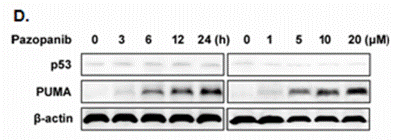
| Western blot | p53 / PUMA p-Akt / Akt p-VEGFR2 / p-c-Kit / p-PDGFRβ / FLT-3 |
|
27924057 |
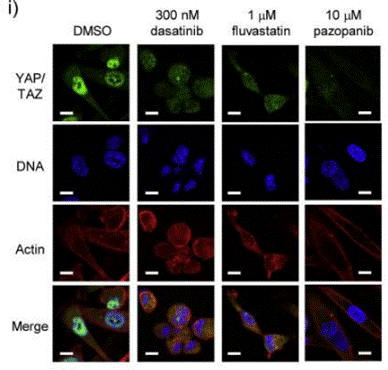
| Immunofluorescence | YAP/TAZ |
|
26199863 |
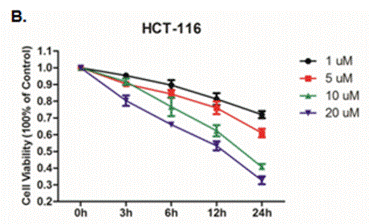
| Growth inhibition assay | Cell viability |
|
27924057 |
Clinical Trial Information
(data from https://clinicaltrials.gov, updated on 2026-08-03)
| NCT Number | Recruitment | Conditions | Sponsor/Collaborators | Start Date | Phases |
|---|---|---|---|---|---|
| NCT06239272 | RECRUITING | Adipocytic Neoplasm; Liposarcoma; Atypical Fibroxanthoma; Angiomatoid Fibrous Histiocytoma; Fibrosarcoma NOS; Myxofibrosarcoma; Angiosarcoma; Osteosarcoma, Extraskeletal; Dedifferentiated Liposarcoma; Myxoid Liposarcoma; Pleomorphic Liposarcoma; Myxoid Pleomorphic Liposarcoma; Low Grade Fibromyxoid Sarcoma; Sclerosing Epithelioid Fibrosarcoma; Malignant Tenosynovial Giant Cell Tumor of Soft Tissue; Epithelioid Hemangioendothelioma; Glomus Tumor; Inflammatory Leiomyosarcoma; Leiomyosarcoma; Ossifying Fibromyxoid Tumor, Malignant; Myoepithelioma; Synovial Sarcoma; Epithelioid Sarcoma; Perineurioma, Malignant; Clear Cell Sarcoma; Extraskeletal Myxoid Chondrosarcoma; Granular Cell Tumor, Malignant; Melanotic Malignant Nerve Sheath Tumor; Malignant Peripheral Nerve Sheath Tumor; Perivascular Epithelioid Tumor, Malignant; Intimal Sarcoma; Myoepithelial Carcinoma; Undifferentiated Sarcoma; Pleomorphic Sarcoma, Undifferentiated; Round Cell Sarcoma, Undifferentiated; NTRK-Rearranged Spindle Cell Neoplasm; Phosphaturic Mesenchymal Tumor, Malignant; Round Cell Sarcoma; Well Differentiated Liposarcoma; Giant Cell Tumor of Soft Parts NOS; Low Grade Myofibroblastic Sarcoma; Dermatofibrosarcoma Protuberans, Fibrosarcomatous |
St. Jude Children's Research Hospital |
2024-03-27 | PHASE1; PHASE2 |
| NCT07444619 | RECRUITING | Soft Tissue Sarcomas |
M.D. Anderson Cancer Center |
2026-06-12 | PHASE1 |
| NCT06726421 | RECRUITING | Renal Cell Carcinoma (Kidney Cancer); Kidney Cancer Metastatic; Renal Cell Carcinoma Metastatic |
Sun Yat-sen University |
2024-09-18 | PHASE3 |
| NCT04199026 | RECRUITING | Metastatic Sarcoma; Recurrent Sarcoma; Resectable Sarcoma |
M.D. Anderson Cancer Center |
2025-02-25 | |
| NCT01217931 | ACTIVE_NOT_RECRUITING | Kidney Cancer |
M.D. Anderson Cancer Center |
2011-01-19 | PHASE2 |
| NCT02029001 | RECRUITING | Malignant Solid Neoplasms |
Centre Leon Berard |
2014-03 | PHASE2 |
Read more about Clinical Trials
Tech Support
Tel: +1-832-582-8158 Ext:3
If you have any other enquiries, please leave a message.
Signaling Pathway Map

Products are for research use only. Not for human use. We do not sell to patients.
©Copyright 2013 Selleck Chemicals. All Rights Reserved.