
-
 Argentina
-
 Australia
-
 Austria
-
 Belgium
-
 Brazil
-
 Canada
-
 China
China
-
 Czech Republic
-
 Denmark
-
 Finland
-
 France
-
 Germany
-
 Greece
-
 Hong Kong
-
 Hungary
-
 Iceland
-
 India
India
-
 Ireland
-
 Israel
-
 Italy
Italy
-
 Japan
Japan
-
 Korea
Korea
-
 Luxembourg
-
 Malaysia
-
 Netherlands
-
 New Zealand
-
 Norway
-
 Poland
-
 Portugal
-
 Qatar
Qatar
-
 Romania
-
 Saudi Arabia
-
 Singapore
-
 Spain
Spain
-
 Sweden
-
 Switzerland
-
 Taiwan
-
 Turkey
-
 United Kingdom
-
 United States
research use only
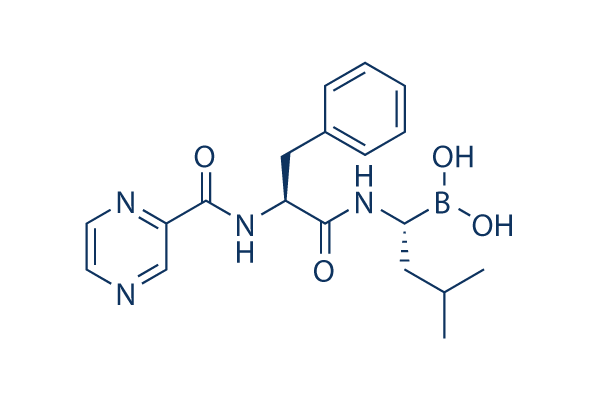
Bortezomib Proteasome inhibitor
Cat.No.S1013
Quality Control
| Related Targets | HDAC Caspase Secretase MMP HCV Protease Cysteine Protease Tyrosinase HIV Protease DPP Serine Protease |
|---|---|
| Other Proteasome Inhibitors | MG132 Epoxomicin (BU-4061T) ONX-0914 (PR-957) Oprozomib Delanzomib VR23 PI-1840 Marizomib (Salinosporamide A) MG-115 KSQ-4279 (USP1-IN-1) |
Cell Culture, Treatment & Working Concentration
| Cell Lines | Assay Type | Concentration | Incubation Time | Formulation | Activity Description | PMID |
|---|---|---|---|---|---|---|
| NCI-H1838 | Growth Inhibition Assay | IC50=4186.32 μM | SANGER | |||
| IMR-5 | Growth Inhibition Assay | IC50=3409.62 μM | SANGER | |||
| TE-441-T | Growth Inhibition Assay | IC50=2521.7 μM | SANGER | |||
| U-698-M | Growth Inhibition Assay | IC50=2262.15 μM | SANGER | |||
| COLO-824 | Growth Inhibition Assay | IC50=1261.78 μM | SANGER | |||
| P31-FUJ | Growth Inhibition Assay | IC50=1112.75 μM | SANGER | |||
| KY821 | Growth Inhibition Assay | IC50=1036.04 μM | SANGER | |||
| RPMI-8866 | Growth Inhibition Assay | IC50=1006.28 μM | SANGER | |||
| TC-YIK | Growth Inhibition Assay | IC50=781.01 nM | SANGER | |||
| MS-1 | Growth Inhibition Assay | IC50=759.42 nM | SANGER | |||
| DMS-153 | Growth Inhibition Assay | IC50=746.83 nM | SANGER | |||
| SUP-T1 | Growth Inhibition Assay | IC50=686.04 nM | SANGER | |||
| SCC-15 | Growth Inhibition Assay | IC50=667.47 nM | SANGER | |||
| MSTO-211H | Growth Inhibition Assay | IC50=574.26 nM | SANGER | |||
| J-RT3-T3-5 | Growth Inhibition Assay | IC50=532.57 nM | SANGER | |||
| NCI-H889 | Growth Inhibition Assay | IC50=461.92 nM | SANGER | |||
| CPC-N | Growth Inhibition Assay | IC50=403.77 nM | SANGER | |||
| COLO-668 | Growth Inhibition Assay | IC50=403.57 nM | SANGER | |||
| NCI-H226 | Growth Inhibition Assay | IC50=403.23 nM | SANGER | |||
| TUR | Growth Inhibition Assay | IC50=396.61 nM | SANGER | |||
| DEL | Growth Inhibition Assay | IC50=391.27 nM | SANGER | |||
| NCI-H1963 | Growth Inhibition Assay | IC50=386.19 nM | SANGER | |||
| CA46 | Growth Inhibition Assay | IC50=373.63 nM | SANGER | |||
| SNU-C1 | Growth Inhibition Assay | IC50=362.09 nM | SANGER | |||
| THP-1 | Growth Inhibition Assay | IC50=322.6 nM | SANGER | |||
| SCH | Growth Inhibition Assay | IC50=322.22 nM | SANGER | |||
| NCI-H1522 | Growth Inhibition Assay | IC50=307.05 nM | SANGER | |||
| LNCaP-Clone-FGC | Growth Inhibition Assay | IC50=295.26 nM | SANGER | |||
| NCI-H2171 | Growth Inhibition Assay | IC50=288.92 nM | SANGER | |||
| NCI-H187 | Growth Inhibition Assay | IC50=287.08 nM | SANGER | |||
| KASUMI-1 | Growth Inhibition Assay | IC50=283.05 nM | SANGER | |||
| SK-MEL-2 | Growth Inhibition Assay | IC50=281.9 nM | SANGER | |||
| EW-22 | Growth Inhibition Assay | IC50=263.75 nM | SANGER | |||
| NCI-H1299 | Growth Inhibition Assay | IC50=261.71 nM | SANGER | |||
| COR-L279 | Growth Inhibition Assay | IC50=252.17 nM | SANGER | |||
| NCI-H1155 | Growth Inhibition Assay | IC50=230.32 nM | SANGER | |||
| NCI-H1395 | Growth Inhibition Assay | IC50=210.13 nM | SANGER | |||
| KM-H2 | Growth Inhibition Assay | IC50=197.05 nM | SANGER | |||
| NCI-H209 | Growth Inhibition Assay | IC50=196.52 nM | SANGER | |||
| NCI-H510A | Growth Inhibition Assay | IC50=185.37 nM | SANGER | |||
| NCI-H1304 | Growth Inhibition Assay | IC50=169.21 nM | SANGER | |||
| SCLC-21H | Growth Inhibition Assay | IC50=159.41 nM | SANGER | |||
| NCI-H524 | Growth Inhibition Assay | IC50=159.1 nM | SANGER | |||
| MC116 | Growth Inhibition Assay | IC50=148.85 nM | SANGER | |||
| BV-173 | Growth Inhibition Assay | IC50=122.71 nM | SANGER | |||
| MHH-CALL-2 | Growth Inhibition Assay | IC50=115.7 nM | SANGER | |||
| NCI-H1650 | Growth Inhibition Assay | IC50=115.29 nM | SANGER | |||
| ST486 | Growth Inhibition Assay | IC50=114.06 nM | SANGER | |||
| GR-ST | Growth Inhibition Assay | IC50=113.34 nM | SANGER | |||
| SIG-M5 | Growth Inhibition Assay | IC50=105.06 nM | SANGER | |||
| NCI-H1770 | Growth Inhibition Assay | IC50=102.49 nM | SANGER | |||
| RH-1 | Growth Inhibition Assay | IC50=99.85 nM | SANGER | |||
| AM-38 | Growth Inhibition Assay | IC50=88.08 nM | SANGER | |||
| RL | Growth Inhibition Assay | IC50=86.09 nM | SANGER | |||
| CAL-148 | Growth Inhibition Assay | IC50=81.84 nM | SANGER | |||
| SK-N-FI | Growth Inhibition Assay | IC50=80.2 nM | SANGER | |||
| EW-11 | Growth Inhibition Assay | IC50=78.52 nM | SANGER | |||
| EW-13 | Growth Inhibition Assay | IC50=77.76 nM | SANGER | |||
| ALL-PO | Growth Inhibition Assay | IC50=77.66 nM | SANGER | |||
| KP-N-YS | Growth Inhibition Assay | IC50=76.74 nM | SANGER | |||
| KMS-12-PE | Growth Inhibition Assay | IC50=76.24 nM | SANGER | |||
| NCI-H128 | Growth Inhibition Assay | IC50=74.77 nM | SANGER | |||
| NCI-H322M | Growth Inhibition Assay | IC50=66.11 nM | SANGER | |||
| BT-474 | Growth Inhibition Assay | IC50=65 nM | SANGER | |||
| MRK-nu-1 | Growth Inhibition Assay | IC50=61.82 nM | SANGER | |||
| YT | Growth Inhibition Assay | IC50=61.8 nM | SANGER | |||
| LP-1 | Growth Inhibition Assay | IC50=61.28 nM | SANGER | |||
| P30-OHK | Growth Inhibition Assay | IC50=54.61 nM | SANGER | |||
| NCI-N87 | Growth Inhibition Assay | IC50=54.18 nM | SANGER | |||
| TALL-1 | Growth Inhibition Assay | IC50=53.91 nM | SANGER | |||
| MC-CAR | Growth Inhibition Assay | IC50=51.52 nM | SANGER | |||
| NCI-H720 | Growth Inhibition Assay | IC50=51.11 nM | SANGER | |||
| RS4-11 | Growth Inhibition Assay | IC50=50.88 nM | SANGER | |||
| DMS-79 | Growth Inhibition Assay | IC50=50.71 nM | SANGER | |||
| NCI-H716 | Growth Inhibition Assay | IC50=48.81 nM | SANGER | |||
| RPMI-6666 | Growth Inhibition Assay | IC50=45.89 nM | SANGER | |||
| L-428 | Growth Inhibition Assay | IC50=43.86 nM | SANGER | |||
| SKM-1 | Growth Inhibition Assay | IC50=42.63 nM | SANGER | |||
| NCI-H2227 | Growth Inhibition Assay | IC50=40.49 nM | SANGER | |||
| SHP-77 | Growth Inhibition Assay | IC50=38.03 nM | SANGER | |||
| D-283MED | Growth Inhibition Assay | IC50=37.79 nM | SANGER | |||
| MDA-MB-134-VI | Growth Inhibition Assay | IC50=35.87 nM | SANGER | |||
| C8166 | Growth Inhibition Assay | IC50=35.7 nM | SANGER | |||
| UACC-812 | Growth Inhibition Assay | IC50=35.44 nM | SANGER | |||
| ES3 | Growth Inhibition Assay | IC50=35.19 nM | SANGER | |||
| SK-MEL-1 | Growth Inhibition Assay | IC50=35.17 nM | SANGER | |||
| KARPAS-422 | Growth Inhibition Assay | IC50=35.04 nM | SANGER | |||
| NCI-H719 | Growth Inhibition Assay | IC50=34.31 nM | SANGER | |||
| NCI-H526 | Growth Inhibition Assay | IC50=32.54 nM | SANGER | |||
| EW-3 | Growth Inhibition Assay | IC50=30.59 nM | SANGER | |||
| OCI-AML2 | Growth Inhibition Assay | IC50=29.69 nM | SANGER | |||
| ECC4 | Growth Inhibition Assay | IC50=28.79 nM | SANGER | |||
| WSU-NHL | Growth Inhibition Assay | IC50=28.39 nM | SANGER | |||
| NH-12 | Growth Inhibition Assay | IC50=27.67 nM | SANGER | |||
| LU-165 | Growth Inhibition Assay | IC50=26.72 nM | SANGER | |||
| REH | Growth Inhibition Assay | IC50=26.41 nM | SANGER | |||
| LS-1034 | Growth Inhibition Assay | IC50=25.75 nM | SANGER | |||
| HDLM-2 | Growth Inhibition Assay | IC50=24.54 nM | SANGER | |||
| EC-GI-10 | Growth Inhibition Assay | IC50=24.23 nM | SANGER | |||
| IM-9 | Growth Inhibition Assay | IC50=23.54 nM | SANGER | |||
| DOHH-2 | Growth Inhibition Assay | IC50=23.45 nM | SANGER | |||
| SIMA | Growth Inhibition Assay | IC50=23.38 nM | SANGER | |||
| EW-12 | Growth Inhibition Assay | IC50=23.17 nM | SANGER | |||
| HCC2157 | Growth Inhibition Assay | IC50=23.13 nM | SANGER | |||
| NCI-H82 | Growth Inhibition Assay | IC50=23.02 nM | SANGER | |||
| IST-MES1 | Growth Inhibition Assay | IC50=22.77 nM | SANGER | |||
| NCI-H446 | Growth Inhibition Assay | IC50=21.18 nM | SANGER | |||
| SF539 | Growth Inhibition Assay | IC50=20.67 nM | SANGER | |||
| TE-6 | Growth Inhibition Assay | IC50=20.08 nM | SANGER | |||
| HCC2218 | Growth Inhibition Assay | IC50=19.5 nM | SANGER | |||
| DG-75 | Growth Inhibition Assay | IC50=18.61 nM | SANGER | |||
| NCCIT | Growth Inhibition Assay | IC50=18.36 nM | SANGER | |||
| EoL-1- | Growth Inhibition Assay | IC50=18.31 nM | SANGER | |||
| EB2 | Growth Inhibition Assay | IC50=18.08 nM | SANGER | |||
| NB14 | Growth Inhibition Assay | IC50=17.98 nM | SANGER | |||
| EW-18 | Growth Inhibition Assay | IC50=17.96 nM | SANGER | |||
| MFM-223 | Growth Inhibition Assay | IC50=17.91 nM | SANGER | |||
| COLO-800 | Growth Inhibition Assay | IC50=17.64 nM | SANGER | |||
| GOTO | Growth Inhibition Assay | IC50=17.06 nM | SANGER | |||
| NCI-H1436 | Growth Inhibition Assay | IC50=17.01 nM | SANGER | |||
| U-87-MG | Growth Inhibition Assay | IC50=16.76 nM | SANGER | |||
| TGW | Growth Inhibition Assay | IC50=16.48 nM | SANGER | |||
| JAR | Growth Inhibition Assay | IC50=16.13 nM | SANGER | |||
| NB7 | Growth Inhibition Assay | IC50=15.92 nM | SANGER | |||
| NCI-SNU-1 | Growth Inhibition Assay | IC50=13.19 nM | SANGER | |||
| JVM-3 | Growth Inhibition Assay | IC50=12.99 nM | SANGER | |||
| NCI-H1581 | Growth Inhibition Assay | IC50=12.28 nM | SANGER | |||
| NCI-H23 | Growth Inhibition Assay | IC50=12.12 nM | SANGER | |||
| HCC1599 | Growth Inhibition Assay | IC50=11.91 nM | SANGER | |||
| ES5 | Growth Inhibition Assay | IC50=10.38 nM | SANGER | |||
| NCI-H2081 | Growth Inhibition Assay | IC50=10.09 nM | SANGER | |||
| CTB-1 | Growth Inhibition Assay | IC50=9.67 nM | SANGER | |||
| DMS-114 | Growth Inhibition Assay | IC50=9.62 nM | SANGER | |||
| SK-NEP-1 | Growth Inhibition Assay | IC50=9.01 nM | SANGER | |||
| ATN-1 | Growth Inhibition Assay | IC50=8.89 nM | SANGER | |||
| MLMA | Growth Inhibition Assay | IC50=8.85 nM | SANGER | |||
| NB6 | Growth Inhibition Assay | IC50=8.48 nM | SANGER | |||
| MN-60 | Growth Inhibition Assay | IC50=8.14 nM | SANGER | |||
| KG-1 | Growth Inhibition Assay | IC50=7.94 nM | SANGER | |||
| L-363 | Growth Inhibition Assay | IC50=7.7 nM | SANGER | |||
| NCI-SNU-16 | Growth Inhibition Assay | IC50=7.65 nM | SANGER | |||
| NCI-H1694 | Growth Inhibition Assay | IC50=7.58 nM | SANGER | |||
| LU-134-A | Growth Inhibition Assay | IC50=7.39 nM | SANGER | |||
| JVM-2 | Growth Inhibition Assay | IC50=7.28 nM | SANGER | |||
| SU-DHL-1 | Growth Inhibition Assay | IC50=7.24 nM | SANGER | |||
| NCI-H345 | Growth Inhibition Assay | IC50=7.2 nM | SANGER | |||
| NB1 | Growth Inhibition Assay | IC50=6.88 nM | SANGER | |||
| NCI-H2196 | Growth Inhibition Assay | IC50=6.8 nM | SANGER | |||
| GDM-1 | Growth Inhibition Assay | IC50=6.77 nM | SANGER | |||
| BC-3 | Growth Inhibition Assay | IC50=6.61 nM | SANGER | |||
| D-502MG | Growth Inhibition Assay | IC50=6.37 nM | SANGER | |||
| LU-65 | Growth Inhibition Assay | IC50=5.84 nM | SANGER | |||
| NCI-H1417 | Growth Inhibition Assay | IC50=5.51 nM | SANGER | |||
| EW-1 | Growth Inhibition Assay | IC50=5.31 nM | SANGER | |||
| SW962 | Growth Inhibition Assay | IC50=5.21 nM | SANGER | |||
| NCI-SNU-5 | Growth Inhibition Assay | IC50=5.17 nM | SANGER | |||
| LU-139 | Growth Inhibition Assay | IC50=5.13 nM | SANGER | |||
| CHP-126 | Growth Inhibition Assay | IC50=5.06 nM | SANGER | |||
| SBC-1 | Growth Inhibition Assay | IC50=5.01 nM | SANGER | |||
| JiyoyeP-2003 | Growth Inhibition Assay | IC50=5 nM | SANGER | |||
| MHH-NB-11 | Growth Inhibition Assay | IC50=4.91 nM | SANGER | |||
| MHH-PREB-1 | Growth Inhibition Assay | IC50=4.86 nM | SANGER | |||
| IST-SL1 | Growth Inhibition Assay | IC50=4.68 nM | SANGER | |||
| HL-60 | Growth Inhibition Assay | IC50=4.67 nM | SANGER | |||
| NALM-6 | Growth Inhibition Assay | IC50=4.49 nM | SANGER | |||
| Raji | Growth Inhibition Assay | IC50=4.46 nM | SANGER | |||
| NOMO-1 | Growth Inhibition Assay | IC50=4.33 nM | SANGER | |||
| TE-12 | Growth Inhibition Assay | IC50=4.25 nM | SANGER | |||
| LB647-SCLC | Growth Inhibition Assay | IC50=4.22 nM | SANGER | |||
| OMC-1 | Growth Inhibition Assay | IC50=4.18 nM | SANGER | |||
| NCI-H1648 | Growth Inhibition Assay | IC50=4.13 nM | SANGER | |||
| K-562 | Growth Inhibition Assay | IC50=4.12 nM | SANGER | |||
| NCI-H2141 | Growth Inhibition Assay | IC50=4.05 nM | SANGER | |||
| HD-MY-Z | Growth Inhibition Assay | IC50=3.93 nM | SANGER | |||
| RCC10RGB | Growth Inhibition Assay | IC50=3.93 nM | SANGER | |||
| COLO-320-HSR | Growth Inhibition Assay | IC50=3.92 nM | SANGER | |||
| RL95-2 | Growth Inhibition Assay | IC50=3.79 nM | SANGER | |||
| LC-1F | Growth Inhibition Assay | IC50=3.74 nM | SANGER | |||
| NMC-G1 | Growth Inhibition Assay | IC50=3.68 nM | SANGER | |||
| COLO-684 | Growth Inhibition Assay | IC50=3.66 nM | SANGER | |||
| DJM-1 | Growth Inhibition Assay | IC50=3.63 nM | SANGER | |||
| EVSA-T | Growth Inhibition Assay | IC50=3.6 nM | SANGER | |||
| no-11 | Growth Inhibition Assay | IC50=3.55 nM | SANGER | |||
| MZ1-PC | Growth Inhibition Assay | IC50=3.54 nM | SANGER | |||
| HCC1187 | Growth Inhibition Assay | IC50=3.54 nM | SANGER | |||
| KARPAS-45 | Growth Inhibition Assay | IC50=3.54 nM | SANGER | |||
| RPMI-8402 | Growth Inhibition Assay | IC50=3.5 nM | SANGER | |||
| LOXIMVI | Growth Inhibition Assay | IC50=3.5 nM | SANGER | |||
| MEG-01 | Growth Inhibition Assay | IC50=3.49 nM | SANGER | |||
| LAMA-84 | Growth Inhibition Assay | IC50=3.49 nM | SANGER | |||
| COR-L88 | Growth Inhibition Assay | IC50=3.47 nM | SANGER | |||
| TE-15 | Growth Inhibition Assay | IC50=3.43 nM | SANGER | |||
| DB | Growth Inhibition Assay | IC50=3.41 nM | SANGER | |||
| LB996-RCC | Growth Inhibition Assay | IC50=3.4 nM | SANGER | |||
| NEC8 | Growth Inhibition Assay | IC50=3.35 nM | SANGER | |||
| SK-N-DZ | Growth Inhibition Assay | IC50=3.26 nM | SANGER | |||
| CW-2 | Growth Inhibition Assay | IC50=3.21 nM | SANGER | |||
| SK-PN-DW | Growth Inhibition Assay | IC50=3.14 nM | SANGER | |||
| CGTH-W-1 | Growth Inhibition Assay | IC50=3.1 nM | SANGER | |||
| MONO-MAC-6 | Growth Inhibition Assay | IC50=3.1 nM | SANGER | |||
| KARPAS-299 | Growth Inhibition Assay | IC50=3.06 nM | SANGER | |||
| HT | Growth Inhibition Assay | IC50=3.02 nM | SANGER | |||
| SW954 | Growth Inhibition Assay | IC50=2.9 nM | SANGER | |||
| MOLT-16 | Growth Inhibition Assay | IC50=2.89 nM | SANGER | |||
| C2BBe1 | Growth Inhibition Assay | IC50=2.89 nM | SANGER | |||
| ETK-1 | Growth Inhibition Assay | IC50=2.84 nM | SANGER | |||
| CTV-1 | Growth Inhibition Assay | IC50=2.8 nM | SANGER | |||
| EW-16 | Growth Inhibition Assay | IC50=2.75 nM | SANGER | |||
| Mo-T | Growth Inhibition Assay | IC50=2.74 nM | SANGER | |||
| EB-3 | Growth Inhibition Assay | IC50=2.66 nM | SANGER | |||
| LB1047-RCC | Growth Inhibition Assay | IC50=2.57 nM | SANGER | |||
| KNS-81-FD | Growth Inhibition Assay | IC50=2.48 nM | SANGER | |||
| NB69 | Growth Inhibition Assay | IC50=2.46 nM | SANGER | |||
| NCI-H64 | Growth Inhibition Assay | IC50=2.44 nM | SANGER | |||
| KU812 | Growth Inhibition Assay | IC50=2.42 nM | SANGER | |||
| NCI-H748 | Growth Inhibition Assay | IC50=2.39 nM | SANGER | |||
| ARH-77 | Growth Inhibition Assay | IC50=2.38 nM | SANGER | |||
| SCC-3 | Growth Inhibition Assay | IC50=2.37 nM | SANGER | |||
| RPMI-8226 | Growth Inhibition Assay | IC50=2.35 nM | SANGER | |||
| NB10 | Growth Inhibition Assay | IC50=2.32 nM | SANGER | |||
| BC-1 | Growth Inhibition Assay | IC50=2.31 nM | SANGER | |||
| NB5 | Growth Inhibition Assay | IC50=2.27 nM | SANGER | |||
| KMOE-2 | Growth Inhibition Assay | IC50=2.23 nM | SANGER | |||
| SJSA-1 | Growth Inhibition Assay | IC50=2.21 nM | SANGER | |||
| ES4 | Growth Inhibition Assay | IC50=2.16 nM | SANGER | |||
| KGN | Growth Inhibition Assay | IC50=2.15 nM | SANGER | |||
| EKVX | Growth Inhibition Assay | IC50=2.14 nM | SANGER | |||
| MOLT-4 | Growth Inhibition Assay | IC50=2.13 nM | SANGER | |||
| KE-37 | Growth Inhibition Assay | IC50=2.13 nM | SANGER | |||
| HH | Growth Inhibition Assay | IC50=2.13 nM | SANGER | |||
| GT3TKB | Growth Inhibition Assay | IC50=2.12 nM | SANGER | |||
| BL-70 | Growth Inhibition Assay | IC50=2.12 nM | SANGER | |||
| NOS-1 | Growth Inhibition Assay | IC50=2.11 nM | SANGER | |||
| EW-24 | Growth Inhibition Assay | IC50=2.08 nM | SANGER | |||
| LAN-6 | Growth Inhibition Assay | IC50=2.05 nM | SANGER | |||
| NB17 | Growth Inhibition Assay | IC50=2.04 nM | SANGER | |||
| LS-123 | Growth Inhibition Assay | IC50=2.02 nM | SANGER | |||
| NB13 | Growth Inhibition Assay | IC50=2 nM | SANGER | |||
| NKM-1 | Growth Inhibition Assay | IC50=2 nM | SANGER | |||
| 697 | Growth Inhibition Assay | IC50=1.99 nM | SANGER | |||
| BE-13 | Growth Inhibition Assay | IC50=1.93 nM | SANGER | |||
| MPP-89 | Growth Inhibition Assay | IC50=1.89 nM | SANGER | |||
| Becker | Growth Inhibition Assay | IC50=1.83 nM | SANGER | |||
| MV-4-11 | Growth Inhibition Assay | IC50=1.82 nM | SANGER | |||
| GB-1 | Growth Inhibition Assay | IC50=1.81 nM | SANGER | |||
| NCI-H1092 | Growth Inhibition Assay | IC50=1.8 nM | SANGER | |||
| NCI-H2126 | Growth Inhibition Assay | IC50=1.8 nM | SANGER | |||
| LC4-1 | Growth Inhibition Assay | IC50=1.79 nM | SANGER | |||
| U-266 | Growth Inhibition Assay | IC50=1.76 nM | SANGER | |||
| KURAMOCHI | Growth Inhibition Assay | IC50=1.72 nM | SANGER | |||
| TGBC1TKB | Growth Inhibition Assay | IC50=1.71 nM | SANGER | |||
| EHEB | Growth Inhibition Assay | IC50=1.67 nM | SANGER | |||
| GCIY | Growth Inhibition Assay | IC50=1.62 nM | SANGER | |||
| HEL | Growth Inhibition Assay | IC50=1.61 nM | SANGER | |||
| NB12 | Growth Inhibition Assay | IC50=1.56 nM | SANGER | |||
| NCI-H69 | Growth Inhibition Assay | IC50=1.54 nM | SANGER | |||
| LS-411N | Growth Inhibition Assay | IC50=1.53 nM | SANGER | |||
| PF-382 | Growth Inhibition Assay | IC50=1.47 nM | SANGER | |||
| CAS-1 | Growth Inhibition Assay | IC50=1.37 nM | SANGER | |||
| L-540 | Growth Inhibition Assay | IC50=1.37 nM | SANGER | |||
| ECC12 | Growth Inhibition Assay | IC50=1.37 nM | SANGER | |||
| DU-4475 | Growth Inhibition Assay | IC50=1.36 nM | SANGER | |||
| OPM-2 | Growth Inhibition Assay | IC50=1.33 nM | SANGER | |||
| IST-SL2 | Growth Inhibition Assay | IC50=1.31 nM | SANGER | |||
| Calu-6 | Growth Inhibition Assay | IC50=1.29 nM | SANGER | |||
| CMK | Growth Inhibition Assay | IC50=1.29 nM | SANGER | |||
| A3-KAW | Growth Inhibition Assay | IC50=1.28 nM | SANGER | |||
| K5 | Growth Inhibition Assay | IC50=1.28 nM | SANGER | |||
| KM12 | Growth Inhibition Assay | IC50=1.27 nM | SANGER | |||
| SR | Growth Inhibition Assay | IC50=1.25 nM | SANGER | |||
| BL-41 | Growth Inhibition Assay | IC50=1.25 nM | SANGER | |||
| Daudi | Growth Inhibition Assay | IC50=1.22 nM | SANGER | |||
| NCI-H1882 | Growth Inhibition Assay | IC50=1.2 nM | SANGER | |||
| TE-8 | Growth Inhibition Assay | IC50=1.19 nM | SANGER | |||
| HAL-01 | Growth Inhibition Assay | IC50=1.18 nM | SANGER | |||
| EM-2 | Growth Inhibition Assay | IC50=1.16 nM | SANGER | |||
| CCRF-CEM | Growth Inhibition Assay | IC50=1.13 nM | SANGER | |||
| D-392MG | Growth Inhibition Assay | IC50=1.1 nM | SANGER | |||
| MZ7-mel | Growth Inhibition Assay | IC50=1.09 nM | SANGER | |||
| VA-ES-BJ | Growth Inhibition Assay | IC50=1.09 nM | SANGER | |||
| SK-MM-2 | Growth Inhibition Assay | IC50=1.09 nM | SANGER | |||
| LC-2-ad | Growth Inhibition Assay | IC50=1.08 nM | SANGER | |||
| RKO | Growth Inhibition Assay | IC50=1.06 nM | SANGER | |||
| TE-10 | Growth Inhibition Assay | IC50=1.03 nM | SANGER | |||
| TE-1 | Growth Inhibition Assay | IC50=1.03 nM | SANGER | |||
| PSN1 | Growth Inhibition Assay | IC50=1.01 nM | SANGER | |||
| SW872 | Growth Inhibition Assay | IC50=0.996 nM | SANGER | |||
| HC-1 | Growth Inhibition Assay | IC50=0.975 nM | SANGER | |||
| KALS-1 | Growth Inhibition Assay | IC50=0.925 nM | SANGER | |||
| SF268 | Growth Inhibition Assay | IC50=0.923 nM | SANGER | |||
| IST-MEL1 | Growth Inhibition Assay | IC50=0.917 nM | SANGER | |||
| RXF393 | Growth Inhibition Assay | IC50=0.914 nM | SANGER | |||
| SNB75 | Growth Inhibition Assay | IC50=0.912 nM | SANGER | |||
| NCI-H1355 | Growth Inhibition Assay | IC50=0.895 nM | SANGER | |||
| TE-5 | Growth Inhibition Assay | IC50=0.865 nM | SANGER | |||
| QIMR-WIL | Growth Inhibition Assay | IC50=0.889 nM | SANGER | |||
| SK-LMS-1 | Growth Inhibition Assay | IC50=0.854 nM | SANGER | |||
| SW684 | Growth Inhibition Assay | IC50=0.821 nM | SANGER | |||
| ML-2 | Growth Inhibition Assay | IC50=0.821 nM | SANGER | |||
| D-263MG | Growth Inhibition Assay | IC50=0.807 nM | SANGER | |||
| LB2241-RCC | Growth Inhibition Assay | IC50=0.804 nM | SANGER | |||
| GI-1 | Growth Inhibition Assay | IC50=0.764 nM | SANGER | |||
| ES7 | Growth Inhibition Assay | IC50=0.766 nM | SANGER | |||
| LS-513 | Growth Inhibition Assay | IC50=0.739 nM | SANGER | |||
| KINGS-1 | Growth Inhibition Assay | IC50=0.722 nM | SANGER | |||
| UACC-257 | Growth Inhibition Assay | IC50=0.71 nM | SANGER | |||
| LB373-MEL-D | Growth Inhibition Assay | IC50=0.7 nM | SANGER | |||
| SF126 | Growth Inhibition Assay | IC50=0.701 nM | SANGER | |||
| Ramos-2G6-4C10 | Growth Inhibition Assay | IC50=0.693 nM | SANGER | |||
| TK10 | Growth Inhibition Assay | IC50=0.679 nM | SANGER | |||
| D-336MG | Growth Inhibition Assay | IC50=0.657 nM | SANGER | |||
| BB49-HNC | Growth Inhibition Assay | IC50=0.652 nM | SANGER | |||
| HOP-62 | Growth Inhibition Assay | IC50=0.647 nM | SANGER | |||
| LB831-BLC | Growth Inhibition Assay | IC50=0.641 nM | SANGER | |||
| GI-ME-N | Growth Inhibition Assay | IC50=0.634 nM | SANGER | |||
| A4-Fuk | Growth Inhibition Assay | IC50=0.623 nM | SANGER | |||
| HT-144 | Growth Inhibition Assay | IC50=0.576 nM | SANGER | |||
| COLO-829 | Growth Inhibition Assay | IC50=0.614 nM | SANGER | |||
| NCI-H747 | Growth Inhibition Assay | IC50=0.539 nM | SANGER | |||
| CESS | Growth Inhibition Assay | IC50=0.538 nM | SANGER | |||
| HUTU-80 | Growth Inhibition Assay | IC50=0.533 nM | SANGER | |||
| DSH1 | Growth Inhibition Assay | IC50=0.48 nM | SANGER | |||
| LB771-HNC | Growth Inhibition Assay | IC50=0.474 nM | SANGER | |||
| CP66-MEL | Growth Inhibition Assay | IC50=0.473 nM | SANGER | |||
| OCUB-M | Growth Inhibition Assay | IC50=0.447 nM | SANGER | |||
| MFH-ino | Growth Inhibition Assay | IC50=0.443 nM | SANGER | |||
| OS-RC-2 | Growth Inhibition Assay | IC50=0.44 nM | SANGER | |||
| HCE-T | Growth Inhibition Assay | IC50=0.439 nM | SANGER | |||
| ES1 | Growth Inhibition Assay | IC50=0.43 nM | SANGER | |||
| LB2518-MEL | Growth Inhibition Assay | IC50=0.425 nM | SANGER | |||
| ACN | Growth Inhibition Assay | IC50=0.417 nM | SANGER | |||
| D-247MG | Growth Inhibition Assay | IC50=0.413 nM | SANGER | |||
| HCC2998 | Growth Inhibition Assay | IC50=0.412 nM | SANGER | |||
| MZ2-MEL | Growth Inhibition Assay | IC50=0.407 nM | SANGER | |||
| ES8 | Growth Inhibition Assay | IC50=0.4 nM | SANGER | |||
| A388 | Growth Inhibition Assay | IC50=0.356 nM | SANGER | |||
| KS-1 | Growth Inhibition Assay | IC50=0.34 nM | SANGER | |||
| BB30-HNC | Growth Inhibition Assay | IC50=0.335 nM | SANGER | |||
| ONS-76 | Growth Inhibition Assay | IC50=0.33 nM | SANGER | |||
| D-542MG | Growth Inhibition Assay | IC50=0.329 nM | SANGER | |||
| BB65-RCC | Growth Inhibition Assay | IC50=0.304 nM | SANGER | |||
| LOUCY | Growth Inhibition Assay | IC50=0.293 nM | SANGER | |||
| OVCAR-4 | Growth Inhibition Assay | IC50=0.289 nM | SANGER | |||
| LXF-289 | Growth Inhibition Assay | IC50=0.269 nM | SANGER | |||
| KNS-42 | Growth Inhibition Assay | IC50=0.258 nM | SANGER | |||
| 8-MG-BA | Growth Inhibition Assay | IC50=0.25 nM | SANGER | |||
| NTERA-S-cl-D1 | Growth Inhibition Assay | IC50=0.243 nM | SANGER | |||
| A101D | Growth Inhibition Assay | IC50=0.225 nM | SANGER | |||
| MMAC-SF | Growth Inhibition Assay | IC50=0.216 nM | SANGER | |||
| no-10 | Growth Inhibition Assay | IC50=0.21 nM | SANGER | |||
| A253 | Growth Inhibition Assay | IC50=0.208 nM | SANGER | |||
| TE-9 | Growth Inhibition Assay | IC50=0.182 nM | SANGER | |||
| SH-4 | Growth Inhibition Assay | IC50=0.173 nM | SANGER | |||
| SK-UT-1 | Growth Inhibition Assay | IC50=0.163 nM | SANGER | |||
| ES6 | Growth Inhibition Assay | IC50=0.0021 nM | SANGER | |||
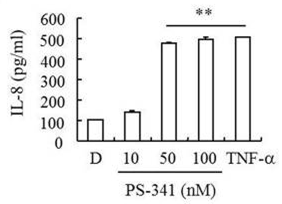
| human PBMC | Function Assay | 100 nM | 24 h | Induces IL-8 release | 25791477 | |
| U937 | Function Assay | 100 nM | 6 h | Induces IL-8 expression in LPS-stimulated U937 macrophages | 25791477 | |
| HH | Migration Assay | 100 nM | 24 h | DMSO | Reduces cell migration by 80–91% | 25681335 |
| Hut-78 | Migration Assay | 100 nM | 24 h | DMSO | Reduces cell migration by 80–90% | 25681335 |
| HH | Function Assay | 100 nM | 24 h | DMSO | downregulates TGF-β1 and IL-12 expression | 25681335 |
| H9 | Function Assay | 100 nM | 24 h | DMSO | Downregulates TGF-β1 and IL-11 expression | 25681335 |
| Hut-78 | Function Assay | 100 nM | 24 h | DMSO | Downregulates TGF-β1 and IL-10 expression | 25681335 |
| H1299 | Apoptosis Assay | 80 nM | 24 h | DMSO | Sensitizes NSCLC cells to MSC-derived iC9-induced apoptosis | 25323693 |
| BLM | Autophagy Assay | 10 nM | 12 h | Induces formation of autophagosomes | 23079083 | |
| A375 | Autophagy Assay | 10 nM | 12 h | Induces formation of autophagosomes | 23079083 | |
| BLM | Apoptosis Assay | 10 nM | 24 h | Induces cell apoptosis | 23079083 | |
| A375 | Apoptosis Assay | 10 nM | 24 h | Induces cell apoptosis | 23079083 | |
| RAW 264.7 | Growth Inhibition Assay | 100 nM | 48 h | Reduces cell viability | 22427154 | |
| SNK-6 | Antiviral Assay | 1 μM | 24 h | Induces lytic infection of EBV | 21170988 | |
| KAI-3 | Antiviral Assay | 1 μM | 24 h | Induces lytic infection of EBV | 21170988 | |
| SNT-16 | Antiviral Assay | 1 μM | 24 h | Induces lytic infection of EBV | 21170988 | |
| SNT-13 | Antiviral Assay | 1 μM | 24 h | Induces lytic infection of EBV | 21170988 | |
| KHYG-1 | Apoptosis Assay | 1 μM | 6 h | Induces cell apoptosis | 21170988 | |
| KAI-3 | Apoptosis Assay | 1 μM | 6 h | Induces cell apoptosis | 21170988 | |
| Jurkat | Apoptosis Assay | 1 μM | 6 h | Induces cell apoptosis | 21170988 | |
| SNT-16 | Apoptosis Assay | 1 μM | 6 h | Induces cell apoptosis | 21170988 | |
| KHYG-1 | Growth Inhibition Assay | 1 μM | 24 h | Reduces cell viability | 21170988 | |
| SNK-6 | Growth Inhibition Assay | 1 μM | 24 h | Reduces cell viability | 21170988 | |
| KAI-3 | Growth Inhibition Assay | 1 μM | 24 h | Reduces cell viability | 21170988 | |
| Jurkat | Growth Inhibition Assay | 1 μM | 24 h | Reduces cell viability | 21170988 | |
| SNT-16 | Growth Inhibition Assay | 1 μM | 24 h | Reduces cell viability | 21170988 | |
| SNT-13 | Growth Inhibition Assay | 1 μM | 24 h | Reduces cell viability | 21170988 | |
| BJAB | Growth Inhibition Assay | 1 μM | 24 h | Reduces cell viability | 21170988 | |
| LCL-2 | Growth Inhibition Assay | 1 μM | 24 h | Reduces cell viability | 21170988 | |
| LCL-1 | Growth Inhibition Assay | 1 μM | 24 h | Reduces cell viability | 21170988 | |
| Raji | Growth Inhibition Assay | 1 μM | 24 h | Reduces cell viability | 21170988 | |
| BaF/3-p210 | Function Assay | 6 nM | 24 h | Reduces the phosphorylation and the activity of Rb | 20305692 | |
| BaF/3-p210 | Function Assay | 6 nM | 48 h | Induces a slight G1 cell-cycle arrest | 20305692 | |
| BaF/3 | Function Assay | 6 nM | 48 h | Induces a great G1 cell-cycle arrest | 20305692 | |
| TCC-S | Growth Inhibition Assay | 100 nM | 48 h | IC50=2.8 nM | 20305692 | |
| BaF/3-p210 | Growth Inhibition Assay | 100 nM | 48 h | IC50=4.7 nM | 20305692 | |
| BaF/3 | Growth Inhibition Assay | 100 nM | 48 h | IC50=6.2 nM | 20305692 | |
| RPMI 8226 | Function Assay | 20 nM | 8 h | Induces DNA synthesis | 19436050 | |
| OPM2 | Function Assay | 20 nM | 8 h | Significantly enhances NF-κB activity | 19436050 | |
| INA6 | Function Assay | 20 nM | 8 h | Significantly enhances NF-κB activity | 19436050 | |
| OPM1 | Function Assay | 20 nM | 8 h | Significantly enhances NF-κB activity | 19436050 | |
| U266 | Function Assay | 20 nM | 8 h | Significantly enhances NF-κB activity | 19436050 | |
| MM.1S | Function Assay | 20 nM | 8 h | Significantly enhances NF-κB activity | 19436050 | |
| RPMI 8226 | Function Assay | 20 nM | 8 h | Significantly enhances NF-κB activity | 19436050 | |
| CHLA-255 | Function Assay | 10 nM | 24 h | Modestly reduces cells in the G0/G1 phase | 17689684 | |
| NB-1691 | Function Assay | 10 nM | 24 h | Significantly reduces cells in the G0/G1 phase | 17689684 | |
| SK-N-AS | Growth Inhibition Assay | 1 μM | 72 h | Inhibits cell proliferation to 10% | 17689684 | |
| CHLA-255 | Growth Inhibition Assay | 1 μM | 72 h | Inhibits cell proliferation to 2% | 17689684 | |
| NB-1691 | Growth Inhibition Assay | 1 μM | 72 h | Inhibits cell proliferation to 5% | 17689684 | |
| HKe-3 | Apoptosis Assay | 50 nM | 48 h | DMSO | Induces cell apoptosis | 16778179 |
| HCT116 | Apoptosis Assay | 50 nM | 48 h | DMSO | Induces cell apoptosis | 16778179 |
| T29Kt1 | Apoptosis Assay | 50 nM | 48 h | DMSO | Induces cell apoptosis | 16778179 |
| T29 | Apoptosis Assay | 50 nM | 48 h | DMSO | Induces cell apoptosis | 16778179 |
| LNCap-Pro5 | Function Assay | 1 μM | 4 h | DMSO | Stabilizes p53 | 14612532 |
| H460 | Function Assay | 100 nM | 24 h | DMSO | Induces G2-M-phase arrest and tubulin assembly-disassembly | 12631620 |
| H322 | Growth Inhibition Assay | 10 μM | 72 h | DMSO | IC50=620 nM | 12631620 |
| H358 | Growth Inhibition Assay | 10 μM | 72 h | DMSO | IC50=70 nM | 12631620 |
| H460 | Growth Inhibition Assay | 10 μM | 72 h | DMSO | IC50=100 nM | 12631620 |
| RPMI8226/LR5 | Growth Inhibition Assay | 500 ng/ml | 48 h | DMSO | Inhibits cell growth | 12631619 |
| U266/dox4 | Growth Inhibition Assay | 500 ng/ml | 48 h | DMSO | Inhibits cell growth | 12631619 |
| U266/LR7 | Growth Inhibition Assay | 500 ng/ml | 48 h | DMSO | Inhibits cell growth | 12631619 |
| WAD-1 | Growth Inhibition Assay | 500 ng/ml | 48 h | DMSO | Inhibits cell growth | 12631619 |
| ARH77 | Growth Inhibition Assay | 500 ng/ml | 48 h | DMSO | Inhibits cell growth | 12631619 |
| U266 | Growth Inhibition Assay | 500 ng/ml | 48 h | DMSO | Inhibits cell growth | 12631619 |
| H460 | Function Assay | 10 μM | 24 h | DMSO | Induces Bcl-2 phosphorylation and cleavage correlated with G2-M phase arrest | 12492117 |
| UM-SCC-11B | Growth Inhibition Assay | 100 nM | 72 h | DMSO | Inhibits cell viability | 11350913 |
| UM-SCC-9 | Growth Inhibition Assay | 100 nM | 72 h | DMSO | Inhibits cell viability | 11350913 |
| B7E3 | Growth Inhibition Assay | 100 nM | 72 h | DMSO | Inhibits cell viability | 11350913 |
| B4B8 | Growth Inhibition Assay | 100 nM | 72 h | DMSO | Inhibits cell viability | 11350913 |
| PAM-LY2 | Growth Inhibition Assay | 100 nM | 72 h | DMSO | Inhibits cell viability | 11350913 |
| PAM 212 | Growth Inhibition Assay | 100 nM | 72 h | DMSO | Inhibits cell viability | 11350913 |
| PAM-LY2 | Function Assay | 100 nM | 12 h | DMSO | Inhibits NF-κB activation | 11350913 |
| Hs Sultan | Growth Inhibition Assay | 100 nM | 48 h | DMSO | IC50=20 nM | 11306489 |
| IM-9 | Growth Inhibition Assay | 100 nM | 48 h | DMSO | IC50=6 nM | 11306489 |
| U266 | Growth Inhibition Assay | 100 nM | 48 h | DMSO | IC50=3 nM | 11306489 |
| LR5 | Growth Inhibition Assay | 100 nM | 48 h | DMSO | IC50=20 nM | 11306489 |
| MR20 | Growth Inhibition Assay | 100 nM | 48 h | DMSO | IC50=20 nM | 11306489 |
| Dox40 | Growth Inhibition Assay | 100 nM | 48 h | DMSO | IC50=40 nM | 11306489 |
| RPMI8226 | Growth Inhibition Assay | 100 nM | 48 h | DMSO | IC50=30 nM | 11306489 |
| OVCA 429 | Function Assay | 300 nM | 48 h | DMSO | Disrupts intact multicellular tumor spheroids | 10999766 |
| MCF-7 | Cytotoxic Assay | 50 μM | 48 h | DMSO | Kills cells by more than 99% | 10499643 |
| FSCLL | Cytotoxicity assay | 24 hrs | CC50 = 0.004 μM | 21634429 | ||
| HEK293 | Cytotoxicity assay | 24 hrs | CC50 = 0.347 μM | 21634429 | ||
| Glioma (HF2303) | Cytotoxicity assay | 72 hrs | EC50 = 0.0007 μM | 26288699 | ||
| Glioma (HF2476) | Cytotoxicity assay | 72 hrs | EC50 = 0.0007 μM | 26288699 | ||
| Glioma (HF2876) | Cytotoxicity assay | 72 hrs | EC50 = 0.0007 μM | 26288699 | ||
| Glioma (HF2885) | Cytotoxicity assay | 72 hrs | EC50 = 0.0007 μM | 26288699 | ||
| Glioma (HF3013) | Cytotoxicity assay | 72 hrs | EC50 = 0.0007 μM | 26288699 | ||
| Glioma (HF2381) | Cytotoxicity assay | 72 hrs | EC50 = 0.0007 μM | 26288699 | ||
| Glioma (HF2790) | Cytotoxicity assay | 72 hrs | EC50 = 0.0007 μM | 26288699 | ||
| HepG2 | Cytotoxicity assay | 48 hrs | EC50 = 0.01 μM | 29800827 | ||
| Molt4 | Function assay | EC50 = 0.021 μM | 18247547 | |||
| Molt4 | Function assay | EC50 = 0.021 μM | 22503349 | |||
| HL60 | Function assay | 10 mins | ED50 = 0.0025 μM | 19422206 | ||
| HL60 | Function assay | 10 mins | ED50 = 0.0025 μM | 21973101 | ||
| RPMI8226 | Growth inhibition assay | GI50 = 0.00023 μM | 24946214 | |||
| CCRF-CEM | Growth inhibition assay | GI50 = 0.00035 μM | 24946214 | |||
| MDA-MB-435 | Growth inhibition assay | GI50 = 0.00044 μM | 24946214 | |||
| MALME-3M | Growth inhibition assay | GI50 = 0.00045 μM | 24946214 | |||
| NCI-H226 | Growth inhibition assay | GI50 = 0.00046 μM | 24946214 | |||
| SK-MEL-28 | Growth inhibition assay | GI50 = 0.00046 μM | 24946214 | |||
| A498 | Growth inhibition assay | GI50 = 0.00048 μM | 24946214 | |||
| MOLT4 | Growth inhibition assay | GI50 = 0.00051 μM | 24946214 | |||
| OVCAR3 | Growth inhibition assay | GI50 = 0.00054 μM | 24946214 | |||
| SW620 | Growth inhibition assay | GI50 = 0.00055 μM | 24946214 | |||
| MCF7 | Growth inhibition assay | GI50 = 0.00055 μM | 24946214 | |||
| BT549 | Growth inhibition assay | GI50 = 0.00055 μM | 24946214 | |||
| UACC257 | Growth inhibition assay | GI50 = 0.00059 μM | 24946214 | |||
| SF539 | Growth inhibition assay | GI50 = 0.00059 μM | 24946214 | |||
| HCC2998 | Growth inhibition assay | GI50 = 0.0006 μM | 24946214 | |||
| HCT116 | Growth inhibition assay | GI50 = 0.0006 μM | 24946214 | |||
| T47D | Growth inhibition assay | GI50 = 0.0006 μM | 24946214 | |||
| CAKI-1 | Growth inhibition assay | GI50 = 0.00066 μM | 24946214 | |||
| SK-MEL-5 | Growth inhibition assay | GI50 = 0.00068 μM | 24946214 | |||
| RXF393 | Growth inhibition assay | GI50 = 0.00071 μM | 24946214 | |||
| LOXIMVI | Growth inhibition assay | GI50 = 0.00078 μM | 24946214 | |||
| ACHN | Growth inhibition assay | GI50 = 0.00079 μM | 24946214 | |||
| SR | Growth inhibition assay | GI50 = 0.00085 μM | 24946214 | |||
| UACC62 | Growth inhibition assay | GI50 = 0.00091 μM | 24946214 | |||
| M14 | Growth inhibition assay | GI50 = 0.00093 μM | 24946214 | |||
| HT-29 | Growth inhibition assay | GI50 = 0.00095 μM | 24946214 | |||
| HOP92 | Growth inhibition assay | GI50 = 0.001 μM | 24946214 | |||
| NCI-H23 | Growth inhibition assay | GI50 = 0.001 μM | 24946214 | |||
| TK10 | Growth inhibition assay | GI50 = 0.001 μM | 24946214 | |||
| CEM | Antiproliferative assay | 72 hrs | GI50 = 0.001 μM | 28441582 | ||
| U266 | Antiproliferative assay | 72 hrs | GI50 = 0.001 μM | 28441582 | ||
| Hs 578T | Growth inhibition assay | GI50 = 0.00102 μM | 24946214 | |||
| UO31 | Growth inhibition assay | GI50 = 0.00105 μM | 24946214 | |||
| SK-MEL-2 | Growth inhibition assay | GI50 = 0.00107 μM | 24946214 | |||
| SN12C | Growth inhibition assay | GI50 = 0.0011 μM | 24946214 | |||
| K562 | Growth inhibition assay | GI50 = 0.00117 μM | 24946214 | |||
| SF268 | Growth inhibition assay | GI50 = 0.00117 μM | 24946214 | |||
| COLO205 | Growth inhibition assay | GI50 = 0.00123 μM | 24946214 | |||
| MDA-MB-231 | Growth inhibition assay | GI50 = 0.00126 μM | 24946214 | |||
| NCI-H522 | Growth inhibition assay | GI50 = 0.00144 μM | 24946214 | |||
| 786-0 | Growth inhibition assay | GI50 = 0.00144 μM | 24946214 | |||
| MDA-MB-468 | Growth inhibition assay | GI50 = 0.00148 μM | 24946214 | |||
| HCT15 | Growth inhibition assay | GI50 = 0.00151 μM | 24946214 | |||
| U251 | Growth inhibition assay | GI50 = 0.00155 μM | 24946214 | |||
| OVCAR5 | Growth inhibition assay | GI50 = 0.00155 μM | 24946214 | |||
| KM12 | Growth inhibition assay | GI50 = 0.0017 μM | 24946214 | |||
| SF295 | Growth inhibition assay | GI50 = 0.0017 μM | 24946214 | |||
| DU145 | Growth inhibition assay | GI50 = 0.0017 μM | 24946214 | |||
| HL-60(TB) | Growth inhibition assay | GI50 = 0.0019 μM | 24946214 | |||
| OVCAR4 | Growth inhibition assay | GI50 = 0.00195 μM | 24946214 | |||
| SNB19 | Growth inhibition assay | GI50 = 0.00204 μM | 24946214 | |||
| SNB75 | Growth inhibition assay | GI50 = 0.00204 μM | 24946214 | |||
| IGROV1 | Growth inhibition assay | GI50 = 0.00224 μM | 24946214 | |||
| OVCAR8 | Growth inhibition assay | GI50 = 0.00263 μM | 24946214 | |||
| PC3 | Growth inhibition assay | GI50 = 0.00263 μM | 24946214 | |||
| EKVX | Growth inhibition assay | GI50 = 0.00302 μM | 24946214 | |||
| A549/ATCC | Growth inhibition assay | GI50 = 0.00309 μM | 24946214 | |||
| HOP62 | Growth inhibition assay | GI50 = 0.00447 μM | 24946214 | |||
| NCI-H460 | Growth inhibition assay | GI50 = 0.00447 μM | 24946214 | |||
| K562 | Antiproliferative assay | 72 hrs | GI50 = 0.007 μM | 28441582 | ||
| NCI-ADR-RES | Growth inhibition assay | GI50 = 0.0123 μM | 24946214 | |||
| SKOV3 | Growth inhibition assay | GI50 = 0.0138 μM | 24946214 | |||
| NCI-H322M | Growth inhibition assay | GI50 = 0.0178 μM | 24946214 | |||
| DLD1 | Function assay | 6 hrs | IC50 = 0.0002 μM | 22206869 | ||
| DLD1 | Function assay | 6 hrs | IC50 = 0.0009 μM | 22206869 | ||
| HCT116 | Cytotoxicity assay | 72 hrs | IC50 = 0.001 μM | 28634039 | ||
| HCT116 | Antiproliferative assay | 72 hrs | IC50 = 0.0014 μM | 27769033 | ||
| HepG2 | Antiproliferative assay | 72 hrs | IC50 = 0.00161 μM | 27769033 | ||
| SKOV3 | Antiproliferative assay | 72 hrs | IC50 = 0.00162 μM | 27769033 | ||
| A2780 | Cytotoxicity assay | IC50 = 0.0017 μM | 18247547 | |||
| DOGUM | Cytotoxicity assay | 72 hrs | IC50 = 0.002 μM | 23031590 | ||
| U266 | Cytotoxicity assay | 72 hrs | IC50 = 0.00245 μM | 19537716 | ||
| A549 | Antiproliferative assay | 72 hrs | IC50 = 0.0025 μM | 28182990 | ||
| HL60 | Antiproliferative assay | 72 hrs | IC50 = 0.0032 μM | 28182990 | ||
| RPMI18226 | Cytotoxicity assay | 72 hrs | IC50 = 0.0035 μM | 21077681 | ||
| HL60 | Cytotoxicity assay | 72 hrs | IC50 = 0.0035 μM | 21077681 | ||
| RPMI8226 | Cytotoxicity assay | 72 hrs | IC50 = 0.00388 μM | 26965867 | ||
| HL60 | Function assay | 2 hrs | IC50 = 0.004 μM | 27769033 | ||
| U266 | Function assay | 1 hr | IC50 = 0.004 μM | 28441582 | ||
| HL60 | Function assay | 2 hrs | IC50 = 0.004 μM | 28634039 | ||
| SEM | Function assay | 2 hrs | IC50 = 0.00443 μM | 30365892 | ||
| HL60 | Cytotoxicity assay | 72 hrs | IC50 = 0.0055 μM | 19537716 | ||
| U266 | Cytotoxicity assay | 72 hrs | IC50 = 0.00573 μM | 26965867 | ||
| MGC803 | Antiproliferative assay | 72 hrs | IC50 = 0.005782 μM | 27769033 | ||
| GUMBUS | Cytotoxicity assay | 72 hrs | IC50 = 0.006 μM | 23031590 | ||
| ARH77 | Cytotoxicity assay | 72 hrs | IC50 = 0.00607 μM | 26965867 | ||
| SW480 | Cytotoxicity assay | 72 hrs | IC50 = 0.0061 μM | 20158184 | ||
| MDA-MB-231 | Antiproliferative assay | 72 hrs | IC50 = 0.0065 μM | 28182990 | ||
| HL60 | Function assay | 2 hrs | IC50 = 0.00667 μM | 30365892 | ||
| A549 | Cytotoxicity assay | 72 hrs | IC50 = 0.0067 μM | 20158184 | ||
| RPMI8226 | Antiproliferative assay | 72 hrs | IC50 = 0.0067 μM | 28182990 | ||
| 5TGM1 | Cytotoxicity assay | 48 to 72 hrs | IC50 = 0.00678 μM | 24119559 | ||
| HL60 | Cytotoxicity assay | 72 hrs | IC50 = 0.0069 μM | 19747832 | ||
| PC3 | Cytotoxicity assay | 72 hrs | IC50 = 0.007 μM | 20158184 | ||
| DOGUM | Cytotoxicity assay | 72 hrs | IC50 = 0.007 μM | 23031590 | ||
| HL60 | Cytotoxicity assay | 72 hrs | IC50 = 0.0071 μM | 20158184 | ||
| MKN45 | Antiproliferative assay | 72 hrs | IC50 = 0.00715 μM | 27769033 | ||
| HepG2 | Cytotoxicity assay | 72 hrs | IC50 = 0.0075 μM | 20158184 | ||
| HL60 | Antiproliferative assay | 72 hrs | IC50 = 0.0076 μM | 27769033 | ||
| RPMI8226 | Cytotoxic activity against human | 72 hrs | IC50 = 0.00796 μM | 24767818 | ||
| HL60 | Cytotoxicity assay | 72 hrs | IC50 = 0.008 μM | 28634039 | ||
| MGC803 | Cytotoxicity assay | 72 hrs | IC50 = 0.008 μM | 28634039 | ||
| SKOV3/TR | Function assay | 4 days | IC50 = 0.008 μM | 29767973 | ||
| PC3 | Cytotoxicity assay | 72 hrs | IC50 = 0.0083 μM | 21077681 | ||
| U266 | Cytotoxicity assay | 72 hrs | IC50 = 0.0088 μM | 20158184 | ||
| RPMI8226 | Cytotoxicity assay | IC50 = 0.0088 μM | 20727746 | |||
| RPMI8226 | Cytotoxicity assay | 48 to 72 hrs | IC50 = 0.0095 μM | 24119559 | ||
| ARH77 | Cytotoxicity assay | 72 hrs | IC50 = 0.00957 μM | 29934218 | ||
| HEK293 | Function assay | 3 hrs | IC50 = 0.01 μM | 20875739 | ||
| HCT116 | Cytotoxicity assay | 72 hrs | IC50 = 0.01 μM | 23547757 | ||
| NCI-H929 | Cytotoxicity assay | 72 hrs | IC50 = 0.01085 μM | 24767818 | ||
| CCRF-CEM | Antiproliferative assay | 72 hrs | IC50 = 0.011 μM | 26231162 | ||
| RPMI8226 | Cytotoxicity assay | 72 hrs | IC50 = 0.0112 μM | 29934218 | ||
| U266B1 | Cytotoxicity assay | 72 hrs | IC50 = 0.01163 μM | 29934218 | ||
| BxPC3 | Cytotoxicity assay | 72 hrs | IC50 = 0.0118 μM | 19747832 | ||
| 293T | Antiproliferative assay | 72 hrs | IC50 = 0.012 μM | 28191850 | ||
| U266 | Cytotoxicity assay | 72 hrs | IC50 = 0.0122 μM | 19747832 | ||
| SW480 | Cytotoxicity assay | 72 hrs | IC50 = 0.0123 μM | 21077681 | ||
| SKOV3 | Cytotoxicity assay | 4 days | IC50 = 0.0129 μM | 29767973 | ||
| A549 | Cytotoxicity assay | 72 hrs | IC50 = 0.0139 μM | 21077681 | ||
| HEK293 | Function assay | 30 mins | IC50 = 0.014 μM | 21044847 | ||
| RPMI8266 | Antiproliferative assay | 72 hrs | IC50 = 0.0144 μM | 26231162 | ||
| BxPC3 | Cytotoxicity assay | 72 hrs | IC50 = 0.0162 μM | 20158184 | ||
| MDA-MB-231 | Antiproliferative assay | 72 hrs | IC50 = 0.01665 μM | 27769033 | ||
| TOV21G | Antiproliferative assay | 72 hrs | IC50 = 0.0167 μM | 26231162 | ||
| MDA-MB-231 | Cytotoxicity assay | 72 hrs | IC50 = 0.017 μM | 28634039 | ||
| BxPC3 | Cytotoxicity assay | 72 hrs | IC50 = 0.0194 μM | 21077681 | ||
| HeLa | Growth inhibition assay | 72 hrs | IC50 = 0.02 μM | 19428245 | ||
| RKO | Antiproliferative assay | 72 hrs | IC50 = 0.0208 μM | 26231162 | ||
| MCF7 | Antiproliferative assay | 3 days | IC50 = 0.025 μM | 28557430 | ||
| Bel7404 | Antiproliferative assay | 72 hrs | IC50 = 0.02504 μM | 27769033 | ||
| HepG2 | Cytotoxicity assay | 72 hrs | IC50 = 0.0252 μM | 21077681 | ||
| HEK293 | Function assay | 24 hrs | IC50 = 0.027 μM | 21634429 | ||
| HCT116 | Antiproliferative assay | 72 hrs | IC50 = 0.027 μM | 26231162 | ||
| SUP-B15 | Function assay | 2 hrs | IC50 = 0.02809 μM | 30365892 | ||
| A431 | Antiproliferative assay | 72 hrs | IC50 = 0.0282 μM | 26231162 | ||
| A2780 | Antiproliferative assay | 72 hrs | IC50 = 0.0289 μM | 28182990 | ||
| HL60 | Function assay | 2 hrs | IC50 = 0.03 μM | 27769033 | ||
| HL60 | Function assay | 2 hrs | IC50 = 0.03 μM | 28634039 | ||
| HEK293 | Function assay | 6 hrs | IC50 = 0.03 μM | 28919340 | ||
| WM266.4 | Cytotoxicity assay | 72 hrs | IC50 = 0.035 μM | 22206869 | ||
| GUMBUS | Cytotoxicity assay | 72 hrs | IC50 = 0.035 μM | 23031590 | ||
| HepG2 | Cytotoxicity assay | 72 hrs | IC50 = 0.0375 μM | 19537716 | ||
| 95-D | Cytotoxicity assay | 72 hrs | IC50 = 0.038 μM | 28634039 | ||
| 95-D | Antiproliferative assay | 72 hrs | IC50 = 0.03818 μM | 27769033 | ||
| SW480 | Cytotoxicity assay | 72 hrs | IC50 = 0.05 μM | 19537716 | ||
| KB | Cytotoxicity assay | 72 hrs | IC50 = 0.0595 μM | 19537716 | ||
| SKOV3 | Cytotoxicity assay | 72 hrs | IC50 = 0.0668 μM | 21077681 | ||
| SW1990 | Antiproliferative assay | 72 hrs | IC50 = 0.07906 μM | 27769033 | ||
| HeLa | Cytotoxicity assay | 72 hrs | IC50 = 0.092 μM | 19537716 | ||
| A549 | Antiproliferative assay | 72 hrs | IC50 = 0.092 μM | 28191850 | ||
| H460 | Cytotoxicity assay | 72 hrs | IC50 = 0.115 μM | 19537716 | ||
| SKOV3 | Cytotoxicity assay | 72 hrs | IC50 = 0.13 μM | 19537716 | ||
| SKOV3 | Cytotoxicity assay | 72 hrs | IC50 = 0.151 μM | 20158184 | ||
| A549 | Cytotoxicity assay | 72 hrs | IC50 = 0.255 μM | 19537716 | ||
| HL60 | Function assay | 2 hrs | IC50 = 0.44 μM | 27769033 | ||
| HL60 | Function assay | 2 hrs | IC50 = 0.44 μM | 28634039 | ||
| H460 | Cytotoxicity assay | 72 hrs | IC50 = 0.78 μM | 20158184 | ||
| BGC823 | Cytotoxicity assay | 72 hrs | IC50 = 0.88 μM | 19537716 | ||
| MCF7 | Antiproliferative assay | 72 hrs | IC50 = 18.37 μM | 29426629 | ||
| A549 | Antiproliferative assay | 72 hrs | IC50 = 2.13573 μM | 27769033 | ||
| A549 | Cytotoxicity assay | 72 hrs | IC50 = 2.14 μM | 28634039 | ||
| BGC823 | Cytotoxicity assay | 72 hrs | IC50 = 2.89 μM | 19747832 | ||
| MDA-MB-231 | Antiproliferative assay | 72 hrs | IC50 = 3.125 μM | 29426629 | ||
| BCG823 | Cytotoxicity assay | 72 hrs | IC50 = 3.29 μM | 20158184 | ||
| A549 | Antiproliferative assay | 72 hrs | IC50 = 9.318 μM | 29426629 | ||
| Calu6 | Cytotoxicity assay | 72 hrs | LC50 = 0.0061 μM | 20875739 | ||
| HEK293T | Antiproliferative assay | 48 hrs | LC50 = 0.016 μM | 29843100 | ||
| LO2 | Antiproliferative assay | 48 hrs | LC50 = 0.398 μM | 29843100 | ||
| NCI-H929 | Cytotoxicity assay | 48 hrs | LD50 = 0.0066 μM | 27994734 | ||
| U266 | Cytotoxicity assay | 48 hrs | LD50 = 0.018 μM | 27994734 | ||
| LCL | Cytotoxicity assay | 48 hrs | LD50 = 0.02 μM | 27994734 | ||
| MDA-MB-468 | Cytotoxicity assay | 48 hrs | LD50 = 0.037 μM | 27994734 | ||
| RD-ES | Cytotoxicity assay | 48 hrs | LD50 = 0.04 μM | 27994734 | ||
| WE68 | Cytotoxicity assay | 48 hrs | LD50 = 0.1 μM | 27994734 | ||
| IMR90 | Cytotoxicity assay | 48 hrs | LD50 = 0.13 μM | 27994734 | ||
| KGN | Cytotoxicity assay | 48 hrs | LD50 = 0.18 μM | 27994734 | ||
| HNDF | Cytotoxicity assay | 48 hrs | LD50 = 0.48 μM | 27994734 | ||
| MCF10A | Cytotoxicity assay | 48 hrs | LD50 = 1.5 μM | 27994734 | ||
| SKOV3 | Cytotoxicity assay | 48 hrs | LD50 = 1.6 μM | 27994734 | ||
| MCF7 | Cytotoxicity assay | 48 hrs | LD50 = 9.8 μM | 27994734 | ||
| HL60 | Function assay | 100 nM | Inhibition of chymotrypsin-like activity of proteasome in human HL60 cells at 100 nM | 19655762 | ||
| HeLa | Function assay | 5 nM | 8 hrs | Inhibition of proteasome activity in human HeLa cells assessed as induction of ubiquitinG76V-FL reporter level at 5 nM after 8 hrs by luciferase assay | 21186794 | |
| HeLa | Function assay | 1 uM | 8 hrs | Inhibition of proteasome activity in human HeLa cells assessed as induction of ubiquitinG76V-FL reporter level at 1 uM after 8 hrs by luciferase assay | 21186794 | |
| LN229 | Function assay | 100 nM | 1 hr | Inhibition of HIF1alpha expression in human LN229 cells assessed as reduction of HIF-1alpha accumulation at 100 nM preincubated for 1 hr under normoxia condition followed by 24 hrs incubation under hypoxia condition by Western blotting | 21831638 | |
| LN229 | Function assay | 20 uM | 1 hr | Inhibition of hypoxia-induced HIF1alpha accumulation in human LN229 cells at 20 uM after 1 hr preincubation measured after 24 hrs by Western blot analysis | 22032632 | |
| U1 | Function assay | 10 uM | 24 hr | Inhibition of NF-kappaB-mediated viral replication in Homo sapiens (human) U1 cells infected with X4 tropic HIV1 NL4-3 at 10 uM after 24 hr by RT-PCR analysis in presence of TNF-alpha | 23290051 | |
| Calu6 | Function assay | 10 uM | 18 hrs | Inhibition of His-tagged Frataxin (unknown origin)/Ubiquitin interaction expressed in human Calu6 cells assessed as increase in frataxin (1-210) precursor level at 10 uM after 18 hrs by Western blotting analysis | 23506486 | |
| HCT116 | Function assay | Inhibition of proteasome in human HCT116 cells assessed as accumulation of p53 by Western blotting analysis | 23547757 | |||
| HCT116 | Apoptosis assay | Induction of apoptosis in human HCT116 cells assessed as induction of PARP cleavage by Western blotting analysis | 23547757 | |||
| HCT116 | Cell cycle assay | 24 hrs | Cell cycle arrest in human HCT116 cells assessed as accumulation at G2/M phase after 24 hrs by propidium iodide staining-based flow cytometric analysis | 23547757 | ||
| HEK293 | Cytotoxicity assay | 0.0001 uM to 100 uM | 48 hrs | Cytotoxicity against human HEK293 cells expressing murine FAP at 0.0001 uM to 100 uM after 48 hrs by CellTiter-Blue assay | 23594271 | |
| A549 | Function assay | 0.025 to 0.5 uM | 24 hrs | Induction of cell death in human A549 cells assessed as accumulation of poly-ubiquitinated proteins at 0.025 to 0.5 uM after 24 hrs by immunoblot assay | 25639862 | |
| A549 | Function assay | 0.025 to 0.5 uM | 24 hrs | Induction of cell death in human A549 cells assessed as stabilization of p53 at 0.025 to 0.5 uM after 24 hrs by immunoblot assay | 25639862 | |
| A549 | Function assay | 0.025 to 0.1 uM | 24 hrs | Induction of cell death in human A549 cells assessed as accumulation of Noxa at 0.025 to 0.1 uM after 24 hrs by immunoblot assay | 25639862 | |
| AMO1 | Antitumor assay | 1 mg/kg | Antitumor activity against human AMO1 cells xenografted in nude SCID beige mouse assessed as tumor growth inhibition at 1 mg/kg, iv administered twice per week | 26565666 | ||
| MCF7 | Function assay | 35 nM | 4 hrs | Inhibition of 26S proteasome in human MCF7 cells assessed as accumulation of high molecular weight polyubiquitin-conjugated proteins at 35 nM after 4 hrs by Western blot analysis | 27994734 | |
| MDA-MB-468 | Function assay | 35 nM | 4 hrs | Inhibition of 26S proteasome in human MDA-MB-468 cells assessed as accumulation of high molecular weight polyubiquitin-conjugated proteins at 35 nM after 4 hrs by Western blot analysis | 27994734 | |
| MDA-MB-231 | Function assay | 1 uM | Inhibition of trypsin like activity of 26S proteasome derived from human MDA-MB-231 cells at 1 uM | 28291344 | ||
| MDA-MB-231 | Function assay | 1 uM | Inhibition of caspase like activity of 26S proteasome derived from human MDA-MB-231 cells at 1 uM | 28291344 | ||
| MDA-MB-231 | Function assay | 1 uM | Inhibition of chymotrypsin like activity of 26S proteasome derived from human MDA-MB-231 cells at 1 uM | 28291344 | ||
| SK-N-SH | Cytotoxicity assay | 0.1 to 1 uM | 24 hrs | Cytotoxicity against human SK-N-SH cells assessed as reduction in cell viability at 0.1 to 1 uM after 24 hrs by MTT assay | 29269255 | |
| MYCN2 | Cytotoxicity assay | 0.1 to 1 uM | 24 hrs | Cytotoxicity against human MYCN2 cells assessed as reduction in cell viability at 0.1 to 1 uM after 24 hrs by MTT assay | 29269255 | |
| U266 | Apoptosis assay | 2.5 nM | 24 hrs | Induction of apoptosis in human U266 cells at 2.5 nM after 24 hrs by Annexin V/propidium iodide staining based flow cytometry | 29304284 | |
| RPMI8226 | Apoptosis assay | 2.5 nM | 24 hrs | Induction of apoptosis in human RPMI8226 cells at 2.5 nM after 24 hrs by Annexin V/propidium iodide staining based flow cytometry | 29304284 | |
| NCI-H929 | Apoptosis assay | 2.5 nM | 24 hrs | Induction of apoptosis in human NCI-H929 cells at 2.5 nM after 24 hrs by Annexin V/propidium iodide staining based flow cytometry | 29304284 | |
| TC32 | qHTS assay | qHTS of pediatric cancer cell lines to identify multiple opportunities for drug repurposing: Primary screen for TC32 cells | 29435139 | |||
| U-2 OS | qHTS assay | qHTS of pediatric cancer cell lines to identify multiple opportunities for drug repurposing: Primary screen for U-2 OS cells | 29435139 | |||
| A673 | qHTS assay | qHTS of pediatric cancer cell lines to identify multiple opportunities for drug repurposing: Primary screen for A673 cells | 29435139 | |||
| DAOY | qHTS assay | qHTS of pediatric cancer cell lines to identify multiple opportunities for drug repurposing: Primary screen for DAOY cells | 29435139 | |||
| Saos-2 | qHTS assay | qHTS of pediatric cancer cell lines to identify multiple opportunities for drug repurposing: Primary screen for Saos-2 cells | 29435139 | |||
| BT-37 | qHTS assay | qHTS of pediatric cancer cell lines to identify multiple opportunities for drug repurposing: Primary screen for BT-37 cells | 29435139 | |||
| RD | qHTS assay | qHTS of pediatric cancer cell lines to identify multiple opportunities for drug repurposing: Primary screen for RD cells | 29435139 | |||
| SK-N-SH | qHTS assay | qHTS of pediatric cancer cell lines to identify multiple opportunities for drug repurposing: Primary screen for SK-N-SH cells | 29435139 | |||
| BT-12 | qHTS assay | qHTS of pediatric cancer cell lines to identify multiple opportunities for drug repurposing: Primary screen for BT-12 cells | 29435139 | |||
| MG 63 (6-TG R) | qHTS assay | qHTS of pediatric cancer cell lines to identify multiple opportunities for drug repurposing: Primary screen for MG 63 (6-TG R) cells | 29435139 | |||
| NB1643 | qHTS assay | qHTS of pediatric cancer cell lines to identify multiple opportunities for drug repurposing: Primary screen for NB1643 cells | 29435139 | |||
| OHS-50 | qHTS assay | qHTS of pediatric cancer cell lines to identify multiple opportunities for drug repurposing: Primary screen for OHS-50 cells | 29435139 | |||
| BT-12 | qHTS assay | qHTS of pediatric cancer cell lines to identify multiple opportunities for drug repurposing: Confirmatory screen for BT-12 cells | 29435139 | |||
| fibroblast | qHTS assay | qHTS of pediatric cancer cell lines to identify multiple opportunities for drug repurposing: Primary screen for control Hh wild type fibroblast cells | 29435139 | |||
| LAN-5 | qHTS assay | qHTS of pediatric cancer cell lines to identify multiple opportunities for drug repurposing: Confirmatory screen for LAN-5 cells | 29435139 | |||
| DAOY | qHTS assay | qHTS of pediatric cancer cell lines to identify multiple opportunities for drug repurposing: Confirmatory screen for DAOY cells | 29435139 | |||
| NB-EBc1 | qHTS assay | qHTS of pediatric cancer cell lines to identify multiple opportunities for drug repurposing: Confirmatory screen for NB-EBc1 cells | 29435139 | |||
| Rh41 | qHTS assay | qHTS of pediatric cancer cell lines to identify multiple opportunities for drug repurposing: Primary screen for Rh41 cells | 29435139 | |||
| SK-N-SH | qHTS assay | qHTS of pediatric cancer cell lines to identify multiple opportunities for drug repurposing: Confirmatory screen for SK-N-SH cells | 29435139 | |||
| Rh30 | qHTS assay | qHTS of pediatric cancer cell lines to identify multiple opportunities for drug repurposing: Primary screen for Rh30 cells | 29435139 | |||
| A673 | qHTS assay | qHTS of pediatric cancer cell lines to identify multiple opportunities for drug repurposing: Confirmatory screen for A673 cells) | 29435139 | |||
| BT-37 | qHTS assay | qHTS of pediatric cancer cell lines to identify multiple opportunities for drug repurposing: Confirmatory screen for BT-37 cells | 29435139 | |||
| MG 63 (6-TG R) | qHTS assay | qHTS of pediatric cancer cell lines to identify multiple opportunities for drug repurposing: Confirmatory screen for MG 63 (6-TG R) cells | 29435139 | |||
| Rh30 | qHTS assay | qHTS of pediatric cancer cell lines to identify multiple opportunities for drug repurposing: Confirmatory screen for Rh30 cells | 29435139 | |||
| fibroblast | qHTS assay | qHTS of pediatric cancer cell lines to identify multiple opportunities for drug repurposing: Confirmatory screen for control Hh wild type fibroblast cells | 29435139 | |||
| U-2 OS | qHTS assay | qHTS of pediatric cancer cell lines to identify multiple opportunities for drug repurposing: Confirmatory screen for U-2 OS cells | 29435139 | |||
| OHS-50 | qHTS assay | qHTS of pediatric cancer cell lines to identify multiple opportunities for drug repurposing: Confirmatory screen for OHS-50 cells | 29435139 | |||
| SK-N-SH | qHTS assay | qHTS of pediatric cancer cell lines to identify multiple opportunities for drug repurposing: Orthogonal 3D viability screen for SK-N-SH cells | 29435139 | |||
| Rh41 | qHTS assay | qHTS of pediatric cancer cell lines to identify multiple opportunities for drug repurposing: Confirmatory screen for Rh41 cells | 29435139 | |||
| RD | qHTS assay | qHTS of pediatric cancer cell lines to identify multiple opportunities for drug repurposing: Confirmatory screen for RD cells | 29435139 | |||
| Daoy | qHTS assay | qHTS of pediatric cancer cell lines to identify multiple opportunities for drug repurposing: Orthogonal 3D viability screen for Daoy cells | 29435139 | |||
| TC32 | qHTS assay | qHTS of pediatric cancer cell lines to identify multiple opportunities for drug repurposing: Orthogonal 3D caspase screen for TC32 cells | 29435139 | |||
| TC32 | qHTS assay | qHTS of pediatric cancer cell lines to identify multiple opportunities for drug repurposing: Orthogonal 3D viability screen for TC32 cells | 29435139 | |||
| MG 63 (6-TG R) | qHTS assay | qHTS of pediatric cancer cell lines to identify multiple opportunities for drug repurposing: Orthogonal 3D viability screen for MG 63 (6-TG R) cells | 29435139 | |||
| SJ-GBM2 | qHTS assay | qHTS of pediatric cancer cell lines to identify multiple opportunities for drug repurposing: Primary screen for SJ-GBM2 cells | 29435139 | |||
| SK-N-MC | qHTS assay | qHTS of pediatric cancer cell lines to identify multiple opportunities for drug repurposing: Primary screen for SK-N-MC cells | 29435139 | |||
| NB-EBc1 | qHTS assay | qHTS of pediatric cancer cell lines to identify multiple opportunities for drug repurposing: Primary screen for NB-EBc1 cells | 29435139 | |||
| LAN-5 | qHTS assay | qHTS of pediatric cancer cell lines to identify multiple opportunities for drug repurposing: Primary screen for LAN-5 cells | 29435139 | |||
| Rh18 | qHTS assay | qHTS of pediatric cancer cell lines to identify multiple opportunities for drug repurposing: Primary screen for Rh18 cells | 29435139 | |||
| NB1643 | qHTS assay | qHTS of pediatric cancer cell lines to identify multiple opportunities for drug repurposing: Confirmatory screen for NB1643 cells | 29435139 | |||
| SK-N-MC | qHTS assay | qHTS of pediatric cancer cell lines to identify multiple opportunities for drug repurposing: Confirmatory screen for SK-N-MC cells | 29435139 | |||
| SJ-GBM2 | qHTS assay | qHTS of pediatric cancer cell lines to identify multiple opportunities for drug repurposing: Confirmatory screen for SJ-GBM2 cells | 29435139 | |||
| TC32 | qHTS assay | qHTS of pediatric cancer cell lines to identify multiple opportunities for drug repurposing: Confirmatory screen for TC32 cells | 29435139 | |||
| Rh18 | qHTS assay | qHTS of pediatric cancer cell lines to identify multiple opportunities for drug repurposing: Confirmatory screen for Rh18 cells | 29435139 | |||
| Saos-2 | qHTS assay | qHTS of pediatric cancer cell lines to identify multiple opportunities for drug repurposing: Confirmatory screen for Saos-2 cells | 29435139 | |||
| SJ-GBM2 | qHTS assay | qHTS of pediatric cancer cell lines to identify multiple opportunities for drug repurposing: Orthogonal 3D viability screen for SJ-GBM2 cells | 29435139 | |||
| RD | qHTS assay | qHTS of pediatric cancer cell lines to identify multiple opportunities for drug repurposing: Orthogonal 3D viability screen for RD cells | 29435139 | |||
| HL60 | Function assay | 1 to 100 nM | 24 hrs | Inhibition of proteasome in human HL60 cells assessed as increase in cleaved PARP expression at 1 to 100 nM after 24 hrs by immunoblot assay | 30365892 | |
| SUP-B15 | Function assay | 1 to 100 nM | 24 hrs | Inhibition of proteasome in imatinib-resistant human SUP-B15 cells assessed as increase in cleaved PARP expression at 1 to 100 nM after 24 hrs by immunoblot assay | 30365892 | |
| SEM | Function assay | 1 to 100 nM | 24 hrs | Inhibition of proteasome in human SEM cells assessed as increase in cleaved PARP expression at 1 to 100 nM after 24 hrs by immunoblot assay | 30365892 | |
| SEM | Function assay | 10 nM | 18 hrs | Inhibition of proteasome in human SEM cells assessed as increase in aggresome accumulation at 10 nM after 18 hrs by by FACS analysis | 30365892 | |
| SEM | Function assay | 10 nM | 18 hrs | Inhibition of proteasome in human SEM cells assessed as increase in aggresome accumulation at 10 nM after 18 hrs by fluorescence microscopic method | 30365892 | |
| HepG2 | Cell viability assay | HepG2 cells viability qHTS for Zika virus inhibitors | 33229545 | |||
| Click to View More Cell Line Experimental Data | ||||||
Solubility
|
In vitro |
DMSO
: 77 mg/mL
(200.39 mM)
Water : Insoluble Ethanol : Insoluble |
Molarity Calculator
|
In vivo |
|||||
In vivo Formulation Calculator (Clear solution)
Step 1: Enter information below (Recommended: An additional animal making an allowance for loss during the experiment)
Step 2: Enter the in vivo formulation (This is only the calculator, not formulation. Please contact us first if there is no in vivo formulation at the solubility Section.)
Calculation results:
Working concentration: mg/ml;
Method for preparing DMSO master liquid: mg drug pre-dissolved in μL DMSO ( Master liquid concentration mg/mL, Please contact us first if the concentration exceeds the DMSO solubility of the batch of drug. )
Method for preparing in vivo formulation: Take μL DMSO master liquid, next addμL PEG300, mix and clarify, next addμL Tween 80, mix and clarify, next add μL ddH2O, mix and clarify.
Method for preparing in vivo formulation: Take μL DMSO master liquid, next add μL Corn oil, mix and clarify.
Note: 1. Please make sure the liquid is clear before adding the next solvent.
2. Be sure to add the solvent(s) in order. You must ensure that the solution obtained, in the previous addition, is a clear solution before proceeding to add the next solvent. Physical methods such
as vortex, ultrasound or hot water bath can be used to aid dissolving.
Chemical Information, Storage & Stability
| Molecular Weight | 384.24 | Formula | C19H25BN4O4 |
Storage (From the date of receipt) | 3 years-20°C (in the dark)powder |
|---|---|---|---|---|---|
| CAS No. | 179324-69-7 | Download SDF | Storage of Stock Solutions | Solutions are unstable. Prepare fresh or purchase small, pre-packaged sizes. Repackage upon receipt. | |
| Synonyms | LDP-341, MLM341, NSC 681239,PS-341, BTZ | SMILES | B(C(CC(C)C)NC(=O)C(CC1=CC=CC=C1)NC(=O)C2=NC=CN=C2)(O)O | ||
Read more about storage stability CAS number SMILES
Mechanism of Action
| Targets/IC50/Ki |
NF-κB
20S proteasome
(Cell-free assay) 0.6 nM(Ki)
|
|---|---|
| In vitro |
Bortezomib, a boronic acid dipeptide, is a highly selective, reversible inhibitor of the 26S proteasome which primarily functions in the degradation of mis-folded proteins and is essential for the regulation of the cell cycle. Exposure to this compound has been shown to stabilize p21, p27, and p53, as well as the proapoptotic Bid and Bax proteins, caveolin-1, and inhibitor κB-α, which prevents activation of nuclear factor κB-induced cell survival pathways. It also promotes the activation of the proapoptotic c-Jun-NH2 terminal kinase, as well as the endoplasmic reticulum stress response. Alteration of the levels of these cellular proteins leads to inhibition of proliferation, migration, and promotion of apoptosis of cancer cells. This chemical is shown to penetrate into cells and inhibit proteasome-mediated intracellular proteolysis of long-lived proteins with a concentration that inhibits 50% of the proteolysis of ∼0.1 μM. The average growth inhibition of 50% value for this compound across the entire panel of 60 cancer cell lines derived from multiple human tumors from the US National Cancer Institute (NCI) is 7 nM. Treatment of PC-3 cells with it (100 nM) for 8 h results in the accumulation of cells in G2-M, with a corresponding decrease in the number of cells in G1. It kills PC-3 cells at 24 and 48 hr with IC50 of 100 and 20 nM, respectively. This agent induces nuclear condensation at 16–24 hr after treatment. Its treatment leads to PARP cleavage in a time-dependent manner with concentrations as low as 100 nM being effective at 24 hr. |
| Kinase Assay |
Kinetic Methods
|
|
In a typical kinetic run, 2.00 mL of assay buffer (20 mM HEPES, 0.5 mM EDTA, 0.035% SDS, pH 7.8) and Suc-Leu-Leu-Val-Tyr-AMC in DMSO are added to a 3 mL fluorescence cuvette, and the cuvette is placed in the jacketed cell holder of a fluorescence spectrophotometer. Reaction temperature is maintained at 37℃ by a circulating water bath. After the reaction solution has reached thermal equilibrium (5 minutes), 1 μL−10 μL of the stock enzyme solution is added to the cuvette. Reaction progress is monitored by the increase in fluorescence emission at 440 nm (λex= 380 nm) that accompanies cleavage of AMC from peptide-AMC substrates.
|
|
| In vivo |
The anticancer effects of bortezomib as a single agent have been demonstrated in xenograft models of multiple myeloma, adult T-cell leukemia, lung, breast, prostate, pancreatic, head and neck, and colon cancer, and in melanoma. Oral administration of this compound at 1.0 mg/ kg daily for 18 days causes tumor growth delays, as well as a decrease in the number of metastases in the Lewis lung cancer model. This compound at a single dose of up to 5 mg/kg significantly decreased the surviving fraction of breast tumor cells. Administration of this chemical weekly at 1.0 mg/kg for 4 weeks reduces tumor growth by 60% in murine xenograft models of prostate cancer. Treatment with this agent at 1.0 mg/kg for 4 weeks results in a 72% or 84% reduction in pancreatic cancer murine xenografts growth, as well as an increase in tumor cell apoptosis. This compound at 1.0 mg/kg results in significant inhibition of human plasmacytoma xenograft growth, increase in tumor cells apoptosis and overall survival, and a decrease in tumor angiogenesis. |
References |
|
Applications
| Methods | Biomarkers | Images | PMID |
|---|---|---|---|
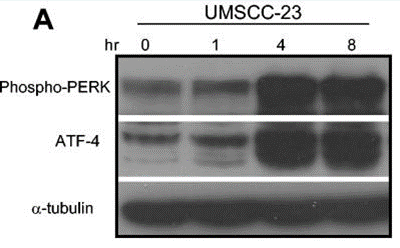
| Western blot | phospho-PERK / ATF-4 GRP-78 / GADD-34 pro-caspase-12 / pro-caspase-3 pro-caspase-9 p-IκBα / IκBα COX-2 / cIAP2 |
|
15509775 |
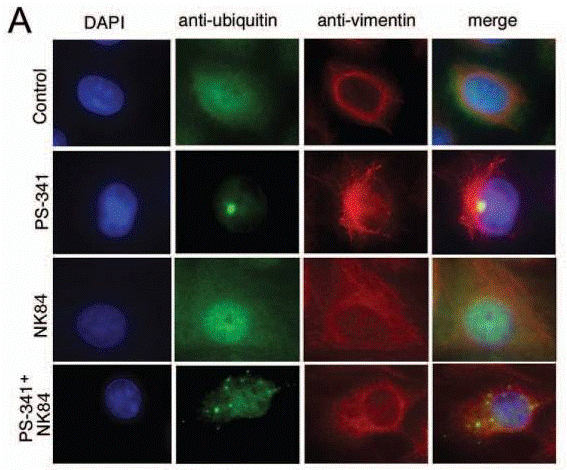
| Immunofluorescence | Vimentin Ubiquitin |
|
19010849 |
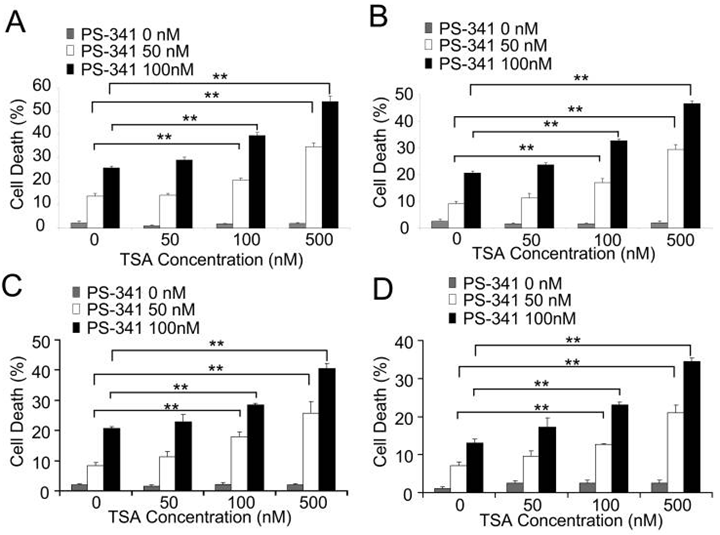
| Growth inhibition assay | Cell viability |
|
20571067 |
| ELISA | IL-8 |
|
24085292 |
Clinical Trial Information
(data from https://clinicaltrials.gov, updated on 2026-06-18)
| NCT Number | Recruitment | Conditions | Sponsor/Collaborators | Start Date | Phases |
|---|---|---|---|---|---|
| NCT07428369 | WITHDRAWN | Multiple Myeloma (MM) |
Regeneron Pharmaceuticals |
2026-06-05 | PHASE2; PHASE3 |
| NCT07072585 | NOT_YET_RECRUITING | Stage II T Lymphoblastic Leukemia/Lymphoma; Stage III T Lymphoblastic Leukemia/Lymphoma; Stage IV T Lymphoblastic Leukemia/Lymphoma; T Acute Lymphoblastic Leukemia; T Lymphoblastic Lymphoma |
Children's Oncology Group |
2026-08-28 | PHASE2; PHASE3 |
| NCT07793422 | NOT_YET_RECRUITING | Amyloid Light Chain (AL) Amyloidosis |
AbbVie |
2026-11-29 | PHASE3 |
| NCT07624513 | NOT_YET_RECRUITING | Multiple Myeloma |
Dana-Farber Cancer Institute |
2026-06-08 | PHASE3 |
| NCT05257083 | ACTIVE_NOT_RECRUITING | Multiple Myeloma |
Stichting European Myeloma Network |
2023-10-10 | PHASE3 |
| NCT07285239 | RECRUITING | Multiple Myeloma |
PrECOG, LLC. |
2026-09 | PHASE3 |
Read more about Clinical Trials
Tech Support
Tel: +1-832-582-8158 Ext:3
If you have any other enquiries, please leave a message.
Frequently Asked Questions
Question 1:
On your website, it is mentioned that it should be prepared at a concentration of 5 mg/ml in 2% DMSO/30% PEG300/ddH2O for in vivo use. But on the product sheet we received with the compound, it is mentioned: 5mg/ml in 0.5% methylcellulose, 0.2% tween 80. So which is the correct preparation buffer?
Answer:
S1013 This compound in 2% DMSO+30% PEG 300+ddH2O at 5 mg/ml is a clear solution, and it in 0.5% methylcellulose+0.2% Tween 80 is a suspension. Please choose the suitable vehicle according to your administration route. When you prepare the clear solution, please dissolve it in DMSO first, make sure it dissolves well, warm it up to 45 degree and/or sonicate if necessary, then add PEG, mix well, and finally add water.
Signaling Pathway Map

Products are for research use only. Not for human use. We do not sell to patients.
©Copyright 2013 Selleck Chemicals. All Rights Reserved.