
-
 Australia
-
 Austria
-
 Belgium
-
 Brazil
-
 Canada
-
 China
China
-
 Czech Republic
-
 Denmark
-
 Finland
-
 France
-
 Germany
-
 Greece
-
 Hong Kong
-
 Hungary
-
 Iceland
-
 India
India
-
 Ireland
-
 Israel
-
 Italy
Italy
-
 Japan
Japan
-
 Korea
Korea
-
 Luxembourg
-
 Malaysia
-
 Netherlands
-
 New Zealand
-
 Norway
-
 Poland
-
 Qatar
Qatar
-
 Romania
-
 Saudi Arabia
-
 Singapore
-
 Spain
Spain
-
 Sweden
-
 Switzerland
-
 Taiwan
-
 Turkey
-
 United Kingdom
-
 United States
research use only
Saracatinib (AZD0530) Src inhibitor
Cat.No.S1006
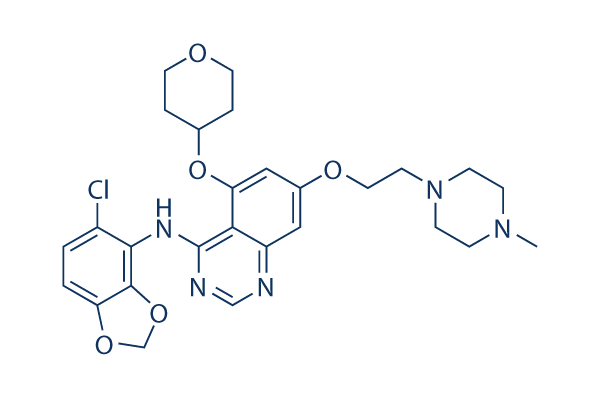
Chemical Structure
Molecular Weight: 542.03
Quality Control
| Related Targets | EGFR VEGFR JAK FGFR PDGFR HIF FLT3 FLT HER2 Bcr-Abl |
|---|---|
| Other Src Inhibitors | WH-4-023 PP2 (AGL 1879) SU6656 PP1 Src Inhibitor 1 UM-164 RK 24466 eCF506 Tolimidone (MLR-1023) 1-Naphthyl PP1(1-NA-PP1) |
Cell Culture, Treatment & Working Concentration
| Cell Lines | Assay Type | Concentration | Incubation Time | Formulation | Activity Description | PMID |
|---|---|---|---|---|---|---|
| CTV-1 | Growth Inhibition Assay | IC50=0.06143 μM | SANGER | |||
| LAMA-84 | Growth Inhibition Assay | IC50=0.1599 μM | SANGER | |||
| MEG-01 | Growth Inhibition Assay | IC50=0.23688 μM | SANGER | |||
| EM-2 | Growth Inhibition Assay | IC50=0.265 μM | SANGER | |||
| TE-15 | Growth Inhibition Assay | IC50=0.27412 μM | SANGER | |||
| NCI-H1648 | Growth Inhibition Assay | IC50=0.28116 μM | SANGER | |||
| TE-12 | Growth Inhibition Assay | IC50=0.3268 μM | SANGER | |||
| LB996-RCC | Growth Inhibition Assay | IC50=0.44196 μM | SANGER | |||
| K-562 | Growth Inhibition Assay | IC50=0.44967 μM | SANGER | |||
| D-336MG | Growth Inhibition Assay | IC50=0.50304 μM | SANGER | |||
| NOS-1 | Growth Inhibition Assay | IC50=0.60529 μM | SANGER | |||
| EW-24 | Growth Inhibition Assay | IC50=0.62693 μM | SANGER | |||
| BV-173 | Growth Inhibition Assay | IC50=0.65249 μM | SANGER | |||
| NCCIT | Growth Inhibition Assay | IC50=0.73218 μM | SANGER | |||
| NCI-H1436 | Growth Inhibition Assay | IC50=0.79049 μM | SANGER | |||
| BB30-HNC | Growth Inhibition Assay | IC50=0.86203 μM | SANGER | |||
| TE-8 | Growth Inhibition Assay | IC50=0.87275 μM | SANGER | |||
| A704 | Growth Inhibition Assay | IC50=0.8921 μM | SANGER | |||
| TK10 | Growth Inhibition Assay | IC50=0.90669 μM | SANGER | |||
| KS-1 | Growth Inhibition Assay | IC50=1.19779 μM | SANGER | |||
| C2BBe1 | Growth Inhibition Assay | IC50=1.20507 μM | SANGER | |||
| RXF393 | Growth Inhibition Assay | IC50=1.2436 μM | SANGER | |||
| KGN | Growth Inhibition Assay | IC50=1.27687 μM | SANGER | |||
| NB69 | Growth Inhibition Assay | IC50=1.37497 μM | SANGER | |||
| TE-11 | Growth Inhibition Assay | IC50=1.43418 μM | SANGER | |||
| TE-1 | Growth Inhibition Assay | IC50=1.44105 μM | SANGER | |||
| ST486 | Growth Inhibition Assay | IC50=1.45852 μM | SANGER | |||
| HOP-62 | Growth Inhibition Assay | IC50=1.50246 μM | SANGER | |||
| EW-16 | Growth Inhibition Assay | IC50=1.55083 μM | SANGER | |||
| LB1047-RCC | Growth Inhibition Assay | IC50=1.55453 μM | SANGER | |||
| TE-10 | Growth Inhibition Assay | IC50=1.66252 μM | SANGER | |||
| RL95-2 | Growth Inhibition Assay | IC50=1.66902 μM | SANGER | |||
| DOHH-2 | Growth Inhibition Assay | IC50=1.71782 μM | SANGER | |||
| MFH-ino | Growth Inhibition Assay | IC50=1.7787 μM | SANGER | |||
| GB-1 | Growth Inhibition Assay | IC50=1.79833 μM | SANGER | |||
| SK-N-DZ | Growth Inhibition Assay | IC50=1.84688 μM | SANGER | |||
| OS-RC-2 | Growth Inhibition Assay | IC50=1.88574 μM | SANGER | |||
| SW982 | Growth Inhibition Assay | IC50=1.92093 μM | SANGER | |||
| KALS-1 | Growth Inhibition Assay | IC50=1.98722 μM | SANGER | |||
| TGBC24TKB | Growth Inhibition Assay | IC50=2.05958 μM | SANGER | |||
| GI-1 | Growth Inhibition Assay | IC50=2.16084 μM | SANGER | |||
| SW962 | Growth Inhibition Assay | IC50=2.17178 μM | SANGER | |||
| SW872 | Growth Inhibition Assay | IC50=2.18507 μM | SANGER | |||
| NCI-H747 | Growth Inhibition Assay | IC50=2.25714 μM | SANGER | |||
| MZ1-PC | Growth Inhibition Assay | IC50=2.29356 μM | SANGER | |||
| MSTO-211H | Growth Inhibition Assay | IC50=2.35723 μM | SANGER | |||
| BL-70 | Growth Inhibition Assay | IC50=2.47422 μM | SANGER | |||
| SW954 | Growth Inhibition Assay | IC50=2.57408 μM | SANGER | |||
| SNB75 | Growth Inhibition Assay | IC50=2.68594 μM | SANGER | |||
| IST-SL2 | Growth Inhibition Assay | IC50=2.72379 μM | SANGER | |||
| GCIY | Growth Inhibition Assay | IC50=2.87005 μM | SANGER | |||
| KU812 | Growth Inhibition Assay | IC50=3.05299 μM | SANGER | |||
| LXF-289 | Growth Inhibition Assay | IC50=3.12109 μM | SANGER | |||
| ETK-1 | Growth Inhibition Assay | IC50=3.20767 μM | SANGER | |||
| SF126 | Growth Inhibition Assay | IC50=3.31174 μM | SANGER | |||
| LC-2-ad | Growth Inhibition Assay | IC50=3.557 μM | SANGER | |||
| KNS-42 | Growth Inhibition Assay | IC50=3.65 μM | SANGER | |||
| OVCAR-4 | Growth Inhibition Assay | IC50=3.73433 μM | SANGER | |||
| PF-382 | Growth Inhibition Assay | IC50=3.83698 μM | SANGER | |||
| SH-4 | Growth Inhibition Assay | IC50=4.25259 μM | SANGER | |||
| KM12 | Growth Inhibition Assay | IC50=4.32416 μM | SANGER | |||
| NB5 | Growth Inhibition Assay | IC50=4.41864 μM | SANGER | |||
| KURAMOCHI | Growth Inhibition Assay | IC50=4.65256 μM | SANGER | |||
| Becker | Growth Inhibition Assay | IC50=4.66416 μM | SANGER | |||
| MV-4-11 | Growth Inhibition Assay | IC50=4.81344 μM | SANGER | |||
| KINGS-1 | Growth Inhibition Assay | IC50=4.82373 μM | SANGER | |||
| LS-123 | Growth Inhibition Assay | IC50=5.49684 μM | SANGER | |||
| SF268 | Growth Inhibition Assay | IC50=5.61262 μM | SANGER | |||
| A388 | Growth Inhibition Assay | IC50=5.63667 μM | SANGER | |||
| NMC-G1 | Growth Inhibition Assay | IC50=6.01811 μM | SANGER | |||
| CGTH-W-1 | Growth Inhibition Assay | IC50=6.02075 μM | SANGER | |||
| ES4 | Growth Inhibition Assay | IC50=6.53074 μM | SANGER | |||
| SR | Growth Inhibition Assay | IC50=6.58807 μM | SANGER | |||
| BB49-HNC | Growth Inhibition Assay | IC50=6.73206 μM | SANGER | |||
| KLE | Growth Inhibition Assay | IC50=6.78377 μM | SANGER | |||
| HUTU-80 | Growth Inhibition Assay | IC50=6.98466 μM | SANGER | |||
| SNU-C2B | Growth Inhibition Assay | IC50=7.82737 μM | SANGER | |||
| BB65-RCC | Growth Inhibition Assay | IC50=7.94904 μM | SANGER | |||
| QIMR-WIL | Growth Inhibition Assay | IC50=8.42808 μM | SANGER | |||
| GDM-1 | Growth Inhibition Assay | IC50=8.97292 μM | SANGER | |||
| LC4-1 | Growth Inhibition Assay | IC50=9.00911 μM | SANGER | |||
| MLMA | Growth Inhibition Assay | IC50=9.15006 μM | SANGER | |||
| EoL-1-cell | Growth Inhibition Assay | IC50=9.30192 μM | SANGER | |||
| BOKU | Growth Inhibition Assay | IC50=9.96466 μM | SANGER | |||
| EVSA-T | Growth Inhibition Assay | IC50=10.6568 μM | SANGER | |||
| D-283MED | Growth Inhibition Assay | IC50=10.9176 μM | SANGER | |||
| NB1 | Growth Inhibition Assay | IC50=11.0242 μM | SANGER | |||
| RPMI-8402 | Growth Inhibition Assay | IC50=11.178 μM | SANGER | |||
| NCI-H1355 | Growth Inhibition Assay | IC50=11.1806 μM | SANGER | |||
| NB7 | Growth Inhibition Assay | IC50=11.3297 μM | SANGER | |||
| RPMI-6666 | Growth Inhibition Assay | IC50=12.9567 μM | SANGER | |||
| 697 | Growth Inhibition Assay | IC50=13.2701 μM | SANGER | |||
| CTB-1 | Growth Inhibition Assay | IC50=13.5948 μM | SANGER | |||
| VA-ES-BJ | Growth Inhibition Assay | IC50=13.9234 μM | SANGER | |||
| BE-13 | Growth Inhibition Assay | IC50=14.3915 μM | SANGER | |||
| SKM-1 | Growth Inhibition Assay | IC50=14.4499 μM | SANGER | |||
| TE-6 | Growth Inhibition Assay | IC50=14.7591 μM | SANGER | |||
| LB771-HNC | Growth Inhibition Assay | IC50=14.7898 μM | SANGER | |||
| ECC4 | Growth Inhibition Assay | IC50=17.0277 μM | SANGER | |||
| ES3 | Growth Inhibition Assay | IC50=17.4655 μM | SANGER | |||
| LB647-SCLC | Growth Inhibition Assay | IC50=17.4949 μM | SANGER | |||
| NB10 | Growth Inhibition Assay | IC50=18.5256 μM | SANGER | |||
| L-540 | Growth Inhibition Assay | IC50=18.8109 μM | SANGER | |||
| NCI-H2126 | Growth Inhibition Assay | IC50=19.51 μM | SANGER | |||
| HH | Growth Inhibition Assay | IC50=20.0099 μM | SANGER | |||
| MPP-89 | Growth Inhibition Assay | IC50=23.2289 μM | SANGER | |||
| IST-MEL1 | Growth Inhibition Assay | IC50=23.8658 μM | SANGER | |||
| KP-N-YS | Growth Inhibition Assay | IC50=23.9255 μM | SANGER | |||
| EC-GI-10 | Growth Inhibition Assay | IC50=24.5989 μM | SANGER | |||
| EKVX | Growth Inhibition Assay | IC50=26.0203 μM | SANGER | |||
| TGBC1TKB | Growth Inhibition Assay | IC50=26.434 μM | SANGER | |||
| Daudi | Growth Inhibition Assay | IC50=27.0773 μM | SANGER | |||
| ALL-PO | Growth Inhibition Assay | IC50=27.081 μM | SANGER | |||
| NB6 | Growth Inhibition Assay | IC50=27.488 μM | SANGER | |||
| ES6 | Growth Inhibition Assay | IC50=27.9123 μM | SANGER | |||
| COLO-320-HSR | Growth Inhibition Assay | IC50=28.0373 μM | SANGER | |||
| K5 | Growth Inhibition Assay | IC50=28.1287 μM | SANGER | |||
| ES1 | Growth Inhibition Assay | IC50=28.7773 μM | SANGER | |||
| LC-1F | Growth Inhibition Assay | IC50=29.7346 μM | SANGER | |||
| SCLC-21H | Growth Inhibition Assay | IC50=30.7317 μM | SANGER | |||
| SK-PN-DW | Growth Inhibition Assay | IC50=32.5598 μM | SANGER | |||
| D-247MG | Growth Inhibition Assay | IC50=32.9773 μM | SANGER | |||
| TE-5 | Growth Inhibition Assay | IC50=33.0362 μM | SANGER | |||
| MONO-MAC-6 | Growth Inhibition Assay | IC50=33.5048 μM | SANGER | |||
| LB2518-MEL | Growth Inhibition Assay | IC50=33.7666 μM | SANGER | |||
| LOXIMVI | Growth Inhibition Assay | IC50=33.7928 μM | SANGER | |||
| NCI-H209 | Growth Inhibition Assay | IC50=35.144 μM | SANGER | |||
| A253 | Growth Inhibition Assay | IC50=35.7429 μM | SANGER | |||
| HCC1599 | Growth Inhibition Assay | IC50=36.7053 μM | SANGER | |||
| EB-3 | Growth Inhibition Assay | IC50=36.9518 μM | SANGER | |||
| GOTO | Growth Inhibition Assay | IC50=37.3224 μM | SANGER | |||
| SW684 | Growth Inhibition Assay | IC50=41.8495 μM | SANGER | |||
| DEL | Growth Inhibition Assay | IC50=42.0522 μM | SANGER | |||
| HT-144 | Growth Inhibition Assay | IC50=42.1676 μM | SANGER | |||
| TE-9 | Growth Inhibition Assay | IC50=43.4596 μM | SANGER | |||
| KARPAS-45 | Growth Inhibition Assay | IC50=44.3925 μM | SANGER | |||
| HAL-01 | Growth Inhibition Assay | IC50=44.5034 μM | SANGER | |||
| RCC10RGB | Growth Inhibition Assay | IC50=44.7392 μM | SANGER | |||
| CP67-MEL | Growth Inhibition Assay | IC50=45.6241 μM | SANGER | |||
| NB17 | Growth Inhibition Assay | IC50=45.6643 μM | SANGER | |||
| SK-UT-1 | Growth Inhibition Assay | IC50=45.9464 μM | SANGER | |||
| JiyoyeP-2003 | Growth Inhibition Assay | IC50=46.0119 μM | SANGER | |||
| HCE-4 | Growth Inhibition Assay | IC50=46.5968 μM | SANGER | |||
| NCI-H720 | Growth Inhibition Assay | IC50=46.7682 μM | SANGER | |||
| KARPAS-422 | Growth Inhibition Assay | IC50=47.0895 μM | SANGER | |||
| Ramos-2G6-4C10 | Growth Inhibition Assay | IC50=47.1622 μM | SANGER | |||
| HCE-T | Growth Inhibition Assay | IC50=47.6828 μM | SANGER | |||
| PSN1 | Growth Inhibition Assay | IC50=47.7813 μM | SANGER | |||
| NIH3T3 | Function assay | Inhibition of human c-Src in NIH3T3 cells, IC50 = 0.0027 μM. | 17064066 | |||
| HEK293 | Function assay | 1 hr | Inhibition of human full length PKMYT1 expressed in HEK293 cells using EFS (247 to 259 residues) as substrate after 1 hr by fluorescence polarization immunoasay, Ki = 0.0398 μM. | 29941193 | ||
| HEK293 | Function assay | 1 hr | Inhibition of human full length PKMYT1 expressed in HEK293 cells using EFS (247 to 259 residues) as substrate after 1 hr by fluorescence polarization immunoasay, IC50 = 0.418 μM. | 29941193 | ||
| Rh30 | Antiproliferative assay | 48 hrs | Antiproliferative activity against human Rh30 cells after 48 hrs by CellTiter-Glo luminescent assay, IC50 = 10.1 μM. | 23787099 | ||
| Huh7 | Antiviral assay | 2.5 uM | 5 days | Inhibition of viral spread in Dengue virus-infected human Huh7 cells assessed as accumulation of viral envelope protein within perinuclear region at 2.5 uM after 5 days by immunofluorescence assay relative to control | 17360676 | |
| Huh7 | Antiviral assay | 2.5 uM | 6 days | Inhibition of viral spread in Dengue virus-infected human Huh7 cells assessed as accumulation of viral envelope protein within perinuclear region at 2.5 uM after 6 days by immunofluorescence assay relative to control | 17360676 | |
| Vero | Antiviral assay | 2.5 uM | 4 days | Inhibition of viral spread in Dengue virus-infected african green monkey Vero cells assessed as accumulation of viral envelope protein within perinuclear region at 2.5 uM after 4 days by immunofluorescence assay relative to control | 17360676 | |
| Vero | Antiviral assay | 2.5 uM | 6 days | Inhibition of viral spread in Dengue virus-infected african green monkey Vero cells assessed as accumulation of viral envelope protein within perinuclear region at 2.5 uM after 6 days by immunofluorescence assay relative to control | 17360676 | |
| C6/36 | Antiviral assay | 2.5 uM | 4 days | Inhibition of viral spread in Dengue virus-infected asian tiger mosquito C6/36 cells assessed as accumulation of viral envelope protein within perinuclear region at 2.5 uM after 4 days by immunofluorescence assay relative to control | 17360676 | |
| C6/36 | Antiviral assay | 2.5 uM | 5 days | Inhibition of viral spread in Dengue virus-infected asian tiger mosquito C6/36 cells assessed as accumulation of viral envelope protein within perinuclear region at 2.5 uM after 5 days by immunofluorescence assay relative to control | 17360676 | |
| Vero | Antiviral assay | 3 days | Antiviral activity against Dengue virus infected in african green monkey Vero cells administered after viral challenge after 3 days by viral plaque assay | 17360676 | ||
| Vero | Antiviral assay | 2.5 uM | 5 days | Inhibition of viral spread in Dengue virus-infected african green monkey Vero cells assessed as accumulation of viral envelope protein within perinuclear region at 2.5 uM after 5 days by immunofluorescence assay relative to control | 17360676 | |
| Huh7 | Antiviral assay | 2.5 uM | 4 days | Inhibition of viral spread in Dengue virus-infected human Huh7 cells assessed as accumulation of viral envelope protein within perinuclear region at 2.5 uM after 4 days by immunofluorescence assay relative to control | 17360676 | |
| C6/36 | Antiviral assay | 2.5 uM | 6 days | Inhibition of viral spread in Dengue virus-infected asian tiger mosquito C6/36 cells assessed as accumulation of viral envelope protein within perinuclear region at 2.5 uM after 6 days by immunofluorescence assay relative to control | 17360676 | |
| HEK293 | Function assay | 0.1 to 1 uM | 16 hrs | Inhibition of collagen I-induced DDR2 (unknown origin) phosphorylation expressed in HEK293 cells at 0.1 to 1 uM after 16 hrs by Western blotting | 26191369 | |
| A673 | qHTS assay | qHTS of pediatric cancer cell lines to identify multiple opportunities for drug repurposing: Primary screen for A673 cells | 29435139 | |||
| DAOY | qHTS assay | qHTS of pediatric cancer cell lines to identify multiple opportunities for drug repurposing: Primary screen for DAOY cells | 29435139 | |||
| BT-37 | qHTS assay | qHTS of pediatric cancer cell lines to identify multiple opportunities for drug repurposing: Primary screen for BT-37 cells | 29435139 | |||
| RD | qHTS assay | qHTS of pediatric cancer cell lines to identify multiple opportunities for drug repurposing: Primary screen for RD cells | 29435139 | |||
| SK-N-SH | qHTS assay | qHTS of pediatric cancer cell lines to identify multiple opportunities for drug repurposing: Primary screen for SK-N-SH cells | 29435139 | |||
| OHS-50 | qHTS assay | qHTS of pediatric cancer cell lines to identify multiple opportunities for drug repurposing: Primary screen for OHS-50 cells | 29435139 | |||
| SJ-GBM2 | qHTS assay | qHTS of pediatric cancer cell lines to identify multiple opportunities for drug repurposing: Primary screen for SJ-GBM2 cells | 29435139 | |||
| SK-N-MC | qHTS assay | qHTS of pediatric cancer cell lines to identify multiple opportunities for drug repurposing: Primary screen for SK-N-MC cells | 29435139 | |||
| LAN-5 | qHTS assay | qHTS of pediatric cancer cell lines to identify multiple opportunities for drug repurposing: Primary screen for LAN-5 cells | 29435139 | |||
| HEK293 | Function assay | 0.1 to 1 uM | 16 hrs | Inhibition of collagen I-induced DDR2 I638F mutant (unknown origin) phosphorylation expressed in HEK293 cells at 0.1 to 1 uM after 16 hrs by Western blotting | 26191369 | |
| Click to View More Cell Line Experimental Data | ||||||
Solubility
|
In vitro |
DMSO
: 100 mg/mL
(184.49 mM)
Ethanol : 100 mg/mL Water : Insoluble |
Molarity Calculator
|
In vivo |
|||||
In vivo Formulation Calculator (Clear solution)
Step 1: Enter information below (Recommended: An additional animal making an allowance for loss during the experiment)
Step 2: Enter the in vivo formulation (This is only the calculator, not formulation. Please contact us first if there is no in vivo formulation at the solubility Section.)
Calculation results:
Working concentration: mg/ml;
Method for preparing DMSO master liquid: mg drug pre-dissolved in μL DMSO ( Master liquid concentration mg/mL, Please contact us first if the concentration exceeds the DMSO solubility of the batch of drug. )
Method for preparing in vivo formulation: Take μL DMSO master liquid, next addμL PEG300, mix and clarify, next addμL Tween 80, mix and clarify, next add μL ddH2O, mix and clarify.
Method for preparing in vivo formulation: Take μL DMSO master liquid, next add μL Corn oil, mix and clarify.
Note: 1. Please make sure the liquid is clear before adding the next solvent.
2. Be sure to add the solvent(s) in order. You must ensure that the solution obtained, in the previous addition, is a clear solution before proceeding to add the next solvent. Physical methods such
as vortex, ultrasound or hot water bath can be used to aid dissolving.
Chemical Information, Storage & Stability
| Molecular Weight | 542.03 | Formula | C27H32ClN5O5 |
Storage (From the date of receipt) | |
|---|---|---|---|---|---|
| CAS No. | 379231-04-6 | Download SDF | Storage of Stock Solutions |
|
|
| Synonyms | N/A | Smiles | CN1CCN(CC1)CCOC2=CC3=C(C(=C2)OC4CCOCC4)C(=NC=N3)NC5=C(C=CC6=C5OCO6)Cl | ||
Mechanism of Action
| Features |
The 1st Src inhibitor to show inhibition of the Src pathway in human tumor tissue.
|
|---|---|
| Targets/IC50/Ki |
c-Src
(Cell-free assay) 2.7 nM
LCK
(Cell-free assay) <4 nM
c-YES
(Cell-free assay) 4 nM
EGFR (L861Q)
(Cell-free assay) 4 nM
Lyn
(Cell-free assay) 5 nM
EGFR (L858R)
(Cell-free assay) 5 nM
Fyn
(Cell-free assay) 10 nM
FGR
(Cell-free assay) 10 nM
BLK
(Cell-free assay) 11 nM
v-Abl
(Cell-free assay) 30 nM
EGFR
(Cell-free assay) 66 nM
c-Kit
(Cell-free assay) 200 nM
EphA2
(Cell-free assay) 236 nM
|
| In vitro |
Saracatinib (AZD0530) also potently inhibits other Src tyrosine kinase family members including c-Yes, Fyn, Lyn, Blk, Fgr, and Lck with IC50 from 4-10 nM. It sensitively inhibits Src Y530F NIH 3T3 with IC50 of 80 nM. This compound significantly impairs the invasion of HT1080 cells through a 3-dimensional collagen matrix and completely inhibits EGF-induced cell scattering in NBT-II bladder cancer cells. It potent inhibits Src activation in DU145 and PC3 cells, which through inhibition of Y419 phosphorylation. It inhibits the growth of prostate cancer including PC3, DU145, CWR22Rv1 and LNCaP, while showing low activity in LAPC-4, PZ-HPV7 and RWPE-1 cells. It induces cell cycle arrest at G1/S but not caspase 3 cleavages. It also significantly inhibits DU145 and PC3 migration in the Boyden chamber. It gives a potent and sustained blockage of AKT and enhances the sensitivity to irradiation in A549 and Calu-6 cells. It inhibits osteoclast in activity, resorption and formation. It also reversibly prevents osteoclast precursor migration. |
| Kinase Assay |
Kinase Assay
|
|
IC50 of tyrosine kinase activity is measured by an enzyme-linked immunosorbent assay (ELISA) with recombinant catalytic domains of a panel of receptor and non-receptor tyrosine kinases (in some cases only part of the catalytic domain is used). This compound dose ranges from 0.001-10 mM. Specificity assays against a panel of serine/threonine kinases are performed using a filter capture assay with 32P. Briefly, multidrop 384 plates containing 0.5 μL Saracatinib (AZD0530) or controls (DMSO alone or pH 3.0 buffer controls) are incubated with 15 μL of enzyme plus peptide/protein substrate for 5 min before the reaction is initiated by the addition of 10 μL of 20 mM Mg-ATP. For all enzymes the final concentration is approximated to the Michaelis constant (Km). Assays are carried out for 30min at room temperature before termination by the addition of 5 μL orthophosphoric acid. After mixing, the well contents are harvested onto a P81 Unifilter plate, using orthophosphoric acid as the wash buffer. Then IC50 is calculated.
|
|
| In vivo |
Saracatinib (AZD0530) shows great tumor growth inhibition in Src3T3 allografts and a moderate growth delay in Calu-6, MDA-MB-231, AsPc-1 and BT474C xenografts. This compound also shows great antitumor activity in orthotopic DU145 xenograft mice at a dose of 25mg/kg (orally administered, daily). |
References |
|
Applications
| Methods | Biomarkers | Images | PMID |
|---|---|---|---|
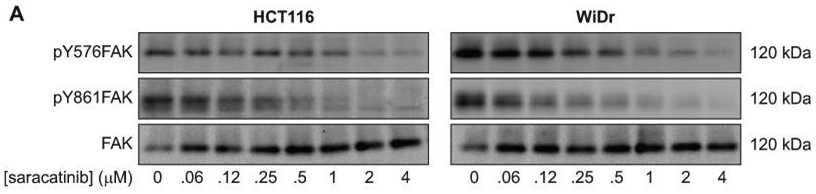
| Western blot | pY576-FAK / pY861-FAK / FAK pY418 Src / Src / pY410 CAS / CAS / Py421 Cortactin / Cortactin p-Akt / p-mTOR / Akt / mTOR / p-S6 / S6 / p-AMPKα / AMPKα |
|
20551056 |
| Growth inhibition assay | Cell number |

|
24349321 |
Clinical Trial Information
(data from https://clinicaltrials.gov, updated on 2024-05-22)
| NCT Number | Recruitment | Conditions | Sponsor/Collaborators | Start Date | Phases |
|---|---|---|---|---|---|
| NCT04598919 | Active not recruiting | Idiopathic Pulmonary Fibrosis (IPF) |
National Jewish Health|Yale University|Icahn School of Medicine at Mount Sinai|AstraZeneca|National Center for Advancing Translational Sciences (NCATS)|Baylor University|International Center for Health Outcomes and Innovation Research |
November 12 2020 | Phase 1|Phase 2 |
| NCT04307953 | Recruiting | Fibrodysplasia Ossificans Progressiva |
Amsterdam UMC location VUmc|Royal National Orthopaedic Hospital NHS Trust|Klinikum Garmisch-Patenkirchen|University of Oxford|Brigham and Women''s Hospital|AstraZeneca|Innovative Medicines Initiative |
August 5 2020 | Phase 2 |
| NCT02085603 | Completed | Cancer |
Sheffield Teaching Hospitals NHS Foundation Trust|AstraZeneca |
March 2014 | Phase 2 |
| NCT01864655 | Completed | Alzheimer''s Disease |
Stephen M. Strittmatter|National Institute of Neurological Disorders and Stroke (NINDS)|Yale University |
July 2013 | Phase 1 |
| NCT01000896 | Withdrawn | Cancer|Non Small Cell Lung Cancer|Epithelial Ovarian Cancer |
AstraZeneca |
January 2010 | Phase 1 |
Tech Support
Tel: +1-832-582-8158 Ext:3
If you have any other enquiries, please leave a message.
Frequently Asked Questions
Question 1:
What is its half-life?
Answer:
Based on the following paper, its half-life in vivo is around 40 hours and it reaches its peak level around 2–4 hours after dosing: http://clincancerres.aacrjournals.org/content/16/19/4876.long
Signaling Pathway Map

Products are for research use only. Not for human use. We do not sell to patients.
©Copyright 2013 Selleck Chemicals. All Rights Reserved.