JNK inhibitors/activators

JNK inhibitors are a class of bioactive molecules that specifically target the c-Jun N-terminal kinases (JNKs), a subfamily of mitogen-activated protein kinases (MAPKs) involved in regulating a wide range of cellular processes, including cell proliferation, differentiation, apoptosis, and stress responses. In the field of scientific research, the exploration of JNK inhibitors has become a focus due to their potential in intervening in various pathological processes, especially those driven by abnormal MAPK signaling and excessive inflammation.

Isoform-selective Products

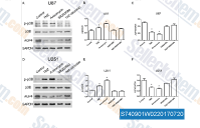
  • All (43)
  • JNK Inhibitors (32)
  • JNK Activators (10)
  • New JNK Products
Cat.No. Product Name Information Product Use Citations Product Validations
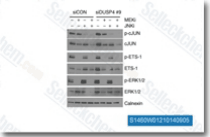
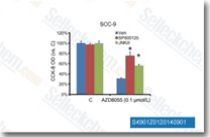
S1460 SP600125 SP600125 (Nsc75890) is a broad-spectrum JNK inhibitor for JNK1, JNK2 and JNK3 with IC50 of 40 nM, 40 nM and 90 nM in cell-free assays, respectively; 10-fold greater selectivity against MKK4, 25-fold greater selectivity against MKK3, MKK6, PKB, and PKCα, and 100-fold selectivity against ERK2, p38, Chk1, EGFR etc. This compound is also a broad‐spectrum inhibitor of serine/threonine kinases including Aurora kinase AFLT3 and TRKA with of IC50 of 60 nM, 90 nM and 70 nM. It inhibits autophagy and activates apoptosis.
Nat Commun, 2025, 16(1):7156
J Exp Clin Cancer Res, 2025, 44(1):159
J Adv Res, 2025, S2090-1232(25)00038-4
Verified customer review of SP600125
S4901 JNK-IN-8 JNK-IN-8 (JNK Inhibitor XVI) is the first irreversible JNK inhibitor for JNK1, JNK2 and JNK3 with IC50 of 4.7 nM, 18.7 nM and 1 nM, >10-fold selectivity against MNK2, Fms and no inhibition to c-Kit, Met, PDGFRβin A375 cell line.
Cancer Cell, 2025, S1535-6108(25)00271-5
Cell Res, 2025, 10.1038/s41422-025-01085-9
Mol Cell, 2025, S1097-2765(25)00042-5
Verified customer review of JNK-IN-8
S7508 JNK Inhibitor IX JNK inhibitor IX (TCS JNK 5a) is a selective and potent JNK inhibitor with pIC50 of 6.5 and 6.7 for JNK2 and JNK3, respectively.
Res Sq, 2025, rs.3.rs-6150649
Sci Adv, 2024, 10(50):eadq4274
Cell Mol Immunol, 2023, 20(8):908-923
Verified customer review of JNK Inhibitor IX
S8490 Tanzisertib HCl(CC-930) Tanzisertib HCl (CC-930, JNK-930, JNKI-1) is kinetically competitive with ATP in the JNK-dependent phosphorylation of the protein substrate c-Jun. This compound is potent against all isoforms of JNK (Ki(JNK1) = 44 ± 3 nM, IC50(JNK1) = 61 nM, Ki(JNK2) = 6.2 ± 0.6 nM, IC50(JNK2) = 5 nM, IC50(JNK3) = 5 nM) and selective against MAP kinases ERK1 and p38a with IC50 of 0.48 and 3.4 μM respectively.
Nature, 2025, 644(8076):516-526
J Neuroinflammation, 2025, 22(1):32
Cancer Cell, 2024, 42(4):535-551.e8
S7794 JNK Inhibitor VIII JNK Inhibitor VIII (TCS JNK 6o) is an inhibitor of c-Jun N-terminal kinases with IC50 of 45 nM and 160 nM for JNK-1 and JNK-2, respectively. This compound inhibits JNK-1, JNK-2, and JNK-3 with Ki of 2 nM, 4 nM and 52 nM, respectively.
Cell, 2024, 187(14):3652-3670.e40
Cell Death Discov, 2022, 8(1):113
Molecules, 2021, 26(8)2141
S8867 Bentamapimod (AS602801) Bentamapimod (AS602801) is a novel, orally active JNK inhibitor, with IC50 values of 80 nM, 90 nM and 230 nM for JNK1, JNK2 and JNK3 respectively.
Front Oncol, 2022, 12:1006131
Nat Biomed Eng, 2018, 2(8):578-588
S8201 BI-78D3 BI-78D3 is a competitive JNK inhibitor with IC50 of 280 nM that displays > 100 fold selectivity over p38α and no activity at mTOR and PI-3K.
Neoplasia, 2021, 23(7):718-730
Cell Discov, 2019, 5:2
E1391 SP 600125, negative control SP 600125, negative control (JNK inhibitor II, negative control) is a methylated analog of SP 600125 and inhibits JNK2 and JNK3 with IC50 of 18 µM and 24 µM, respectively.
Cell Death Dis, 2023, 14(8):537
S7637 DTP3 DTP3 is a selective GADD45β/MKK7 (growth arrest and DNA-damage-inducible β/mitogen-activated protein kinase kinase 7) inhibitor and is able to restore MKK7/JNK activation. This compound inhibits cancer-selective NF-κB survival pathway.
Life Sci Alliance, 2024, 7(8)e202302555
MedComm (2020), 2023, 4(3):e269
S6730 CC-401 Hydrochloride CC-401 is a potent inhibitor of JNK with at least 40-fold selectivity against other related kinases.
Insect Biochem Mol Biol, 2016, 73:55-61
S9114 Polyphyllin I Polyphyllin I, a small molecular monomer extracted from Rhizoma of Paris polyphyllin, is used in the treatment of infectious disease and cancer. This compound inhibits proliferation and induces apoptotic cell death in U251 cells. It is an activator of the JNK signaling pathway with a potential anti-glioma effect.
Discov Oncol, 2025, 16(1):941
Mol Med, 2024, 30(1):59
Oxid Med Cell Longev, 2022, 2022:4031008
S6740 DB07268 DB07268 is a potent and selective JNK1 inhibitor with an IC50 value of 9 nM and exhibits at least 70- to 90-fold greater potency against JNK1 than CHK1, CK2, and PLK.
E2653 JNK-IN-7 JNK-IN-7 is a strong  JNK inhibitor with IC50 of 1.5, 2 and 0.7 nM for JNK1, JNK2 and JNK3, which inhibits phosphorylation of c-Jun, direct substrate of JNK kinase.
S9614 CC-90001 CC-90001 is an orally administered inhibitor of c-Jun N-terminal kinase (JNK) with bias for JNK1 over JNK2. It exhibits antifibrotic efficacy and can be used for the research of idiopathic pulmonary fibrosis.
E2252 SU3327 SU3327 is a potent, selective and substrate-competitive c-Jun N-terminal kinase (JNK) inhibitor with an IC50 of 0.7 μM.
S7409 Anisomycin (Flagecidin) Anisomycin (Flagecidin, Wuningmeisu C) is a bacterial antibiotic isolated from Streptomyces griseolus, which inhibits protein synthesis, and also act as a JNK activator. Anisomycin upregulates autophagy and increases apoptosis.
J Exp Med, 2025, 222(6)e20240272
Cell Rep Med, 2025, 6(2):101927
Theranostics, 2025, 15(10):4398-4415
Verified customer review of Anisomycin (Flagecidin)
E1656 AS601245 AS601245 is an orally active, selective, ATP-competitive JNK (c-Jun NH2-terminal protein kinase) inhibitor with IC50 of 150, 220, and 70 nM for three JNK human isoforms hJNK1, hJNK2, and hJNK3, respectively.
E3640 Dendrobii caulis Extract Dendrobii Caulis Extract is extracted from Dendrobii Caulis, which can protect fibroblasts against UVA-induced photoaging via JNK/c-Jun/MMPs pathway.
E2682 RPI-1 RPI-1 inhibits proliferation of human papillary thyroid carcinoma cell line TPC-1 by inducing accumulation of cells at the G2 cell cycle phase, abolishes Ret/Ptc1 tyrosine phosphorylation along with its binding to Shc and phospholipase Cg, also abolishes the activation of JNK2 and AKT.
S6711 IQ-1S IQ-1S is a JNK3 inhibitor with Kd values of 87, 360 and 390 nM for JNK3, JNK2 and JNK1, respectively.
S1574 Doramapimod (BIRB 796) Doramapimod (BIRB 796) is a pan-p38 MAPK inhibitor with IC50 of 38 nM, 65 nM, 200 nM and 520 nM for p38α/β/γ/δ in cell-free assays. It binds p38α with Kd of 0.1 nM in THP-1 cells, showing 330-fold greater selectivity versus JNK2, weak inhibition for c-RAF, Fyn and Lck, and insignificant inhibition of ERK-1, SYK, IKK2.
Nat Cancer, 2025, 6(2):259-277
Nat Commun, 2025, 16(1):3319
Nat Commun, 2025, 16(1):1834
Verified customer review of Doramapimod (BIRB 796)
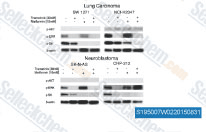
S1950 Metformin Hydrochloride Metformin Hydrochloride (1,1-Dimethylbiguanide Hydrochloride) is a highly effective Antihyperglycemic Agent, which primarily decreases hyperglycemia in hepatocytes by suppressing hepatic gluconeogenesis (glucose production by the liver). It also promotes mitophagy in mononuclear cells and induces apoptosis of lung cancer cells through activating the JNK/p38 MAPK pathway and GADD153.
Cell Biosci, 2025, 15(1):156
mBio, 2025, e0063425
Placenta, 2025, 165:50-61
Verified customer review of Metformin Hydrochloride
S1396 Resveratrol (trans-Resveratrol) Resveratrol has a wide spectrum of targets including cyclooxygenases(i.e. COX, IC50=1.1 μM), lipooxygenases(LOX, IC50=2.7 μM), kinases, sirtuins and other proteins. It has anti-cancer, anti-inflammatory, blood-sugar-lowering and other beneficial cardiovascular effects. Resveratrol induces mitophagy/autophagy and autophagy-dependent apoptosis.
Aging Cell, 2025, e70075
Biomed Pharmacother, 2025, 190:118393
Breast Cancer Res, 2025, 27(1):186
Verified customer review of Resveratrol (trans-Resveratrol)
S3901 Astragaloside IV Astragaloside IV (AST-IV, AS-IV) is a bioactive saponin first isolated from the dried plant roots of the genus Astragalus, which is used in traditional Chinese medicine. It has various effect on the cardiovascular, immune, digestive, and nervous systems. AS-IV suppresses activation of p-Akt, p-mTOR, p-NF-κB and p-Erk1/2.
Cell Transplant, 2023, 32:9636897231198167
Cell Cycle, 2022, 1-14
S3811 Ginsenoside Re Ginsenoside Re (Ginsenoside B2, Panaxoside Re, Sanchinoside Re, Chikusetsusaponin Ivc), an extract from Panax notoginseng, is a major ginsenoside in ginseng and belongs to 20(S)-protopanaxatriol group. It has diverse in vitro and in vivo effects, including vasorelaxant, antioxidant, antihyperlipidemic, and angiogenic actions. This compound decreases the β-amyloid protein (Aβ). It plays a role in antiinflammation through inhibition of JNK and NF-κB.
J Ethnopharmacol, 2021, S0378-8741(21)00169-0
S3940 3'-Hydroxypterostilbene 3'-Hydroxypterostilbene (3'-HPT) is one of the active constituents of Sphaerophysa salsula and Pterocarpus marsupium which may be useful in treating different types of haematological malignancies. This compound, a natural pterostilbene analogue, effectively inhibits the growth of human colon cancer cells (IC50s of 9.0, 40.2, and 70.9 µM for COLO 205, HCT-116, and HT-29 cells, respectively) by inducing apoptosis and autophagy. It inhibits the PI3K/Akt/mTOR/p70S6K, and p38MAPK pathways and activates the ERK1/2, JNK1/2 MAPK pathways.
Int J Mol Sci, 2024, 25(18)9990
S4643 KB-R7943 mesylate KB-R7943 mesylate is a widely used inhibitor of the reverse Na+/Ca2+ exchanger (NCX(rev)) with IC50 of 5.7 μM. This compound promotes prostate cancer cell death by activating the JNK pathway and blocking autophagic flux.
E8271New Sanguinarine citrate Sanguinarine (gluconate) is a benzophenanthridine alkaloid derived from the root of Sanguinaria canadensis. It activates reactive oxygen species (ROS), c-Jun N-terminal kinase (JNK), and nuclear factor-kappaB (NF-κB) signaling pathways to induce apoptosis in head and neck tumor cells and animal models. It also exhibits potent anti-bacterial and anti-inflammatory activities.
S3242 Loureirin B Loureirin B (LB, LrB), a flavonoid extracted from Dracaena cochinchinensis, is an inhibitor of PAI-1 with IC50 of 26.10 μM. This compound downregulates p-ERK and p-JNK in TGF-β1-stimulated fibroblasts. It promotes insulin secretion mainly through increasing Pdx-1, MafA, intracellular ATP level, inhibiting the KATP current, influx of Ca2+ to the intracellular.
S0949 Cucurbitacin IIb Cucurbitacin IIb (CuIIb, Dihydrocucurbitacin F, 25-deacetyl hemslecin A) inhibits phosphorylation of STAT3, JNK and Erk1/2, enhances the phosphorylation of IκB and NF-κB, blocks nuclear translocation of NF-κB and decreases mRNA levels of IκBα and TNF-α. This compound exhibits anti-inflammatory activity and induces apoptosis. It is isolated from Hemsleya amabilis.
S4884 Trans-Zeatin Trans-Zeatin ((E)-Zeatin) is the member of the plant growth hormone family known as cytokinins, which regulate cell division, development, and nutrient processing. This compound inhibits UVB-induced MMP-1 expression, c-Jun activation and phosphorylation of ERK, JNK and p38 MAP kinases (MAPKs) dose-dependently.
S9698 Ezatiostat Ezatiostat, a tripeptide analog of glutathione, is a peptidomimetic inhibitor of Glutathione S-transferase P1-1 (GSTP1-1). This compound activates c-Jun NH2 terminal kinase (JNK1) and ERK1/ERK2 and induces apoptosis.
S0781 IQ 3 IQ 3 is a specific c-Jun N-terminal kinase (JNK) inhibitor with Kd of 66 nM, 240 nM and 290 nM for JNK3, JNK1 and JNK2, respectively. This compound inhibits LPS-induced NF-κB/AP1 transcriptional activity in THP1-Blue cells with IC50 of 1.4 μM. It also inhibits TNF-α and IL-6 production in vitro.
Int J Biol Sci, 2024, 20(6):2323-2338
S2271 Berberine chloride Berberine chloride is a quaternary ammonium salt from the group of isoquinoline alkaloids. This compound activates caspase 3 and caspase 8, cleavage of poly ADP-ribose polymerase (PARP) and the release of cytochrome c. It decreases the expression of c-IAP1, Bcl-2 and Bcl-XL. This chemical induces apoptosis with sustained phosphorylation of JNK and p38 MAPK, as well as generation of the ROS. It is a dual topoisomerase I and II inhibitor. It is also a potential autophagy modulator.
J Cardiovasc Dev Dis, 2025, 12(7)278
Adv Healthc Mater, 2023, e2300591.
Transl Oncol, 2023, 35:101712
S5958 Metformin Metformin (1,1-Dimethylbiguanide), a widely used drug for treatment of type 2 diabetes, activates AMP-activated protein kinase (AMPK) in hepatocytes. Metformin promotes mitophagy in mononuclear cells. Metformin induces apoptosis of lung cancer cells through activating JNK/p38 MAPK pathway and GADD153.
Signal Transduct Target Ther, 2025, 10(1):271
Theranostics, 2025, 15(17):9029-9046
Int J Biol Sci, 2025, 21(9):4231-4251
E0072 Indirubin-3′-oxime Indirubin-3′-oxime (IDR3O, I3O) is an indirubin analogue that shows favorable inhibitory activity targeting GSK-3β and CDKs. This compound also inhibits JNKs with IC50s of 0.8 μM, 1.4 μM, and 1.0 μM for JNK1, JNK2, and JNK3, respectively. It activates Wnt/β-catenin signaling and inhibits adipocyte differentiation and obesity.
S3292 (3R,8S)-Falcarindiol Falcarindiol (FAD, (3R,8S)-Falcarindiol, FaDOH) is a natural polyacetylene compound found rich in many plants of the Umbelliferae family. Falcarindiol suppresses LPS-stimulated expression of inducible nitric oxide synthase (iNOS), tumor necrosis factor alpha (TNFα), interleukin-6 (IL-6), and interleukin-1 beta (IL-1β). Falcarindiol attenuates the LPS-induced activation of JNK, ERK, STAT1, and STAT3 signaling molecules.
Antioxidants (Basel), 2024, 13(12)1533
Front Cell Infect Microbiol, 2023, 13:1128000
Front Pharmacol, 2021, 12:656697
E1955New TNG348 TNG348 is an orally bioavailable allosteric inhibitor targeting the ubiquitin-specific protease USP1. It selectively and potently blocks USP1 activity, preventing deubiquitination of proliferative PCNA and FANCD2, which disrupts DNA repair mechanisms. TNG348 demonstrates inhibitory effects against BRCA1/2-mutated and homologous recombination-deficient (HRD) breast and ovarian cancers .
S0844 NDMC101 NDMC101 inhibits osteoclastogenesis which also ameliorates paw swelling and inflammatory bone destruction, associating with the inhibition of such transcription factors as NF-κB and NFATc1 as well as multiple protein kinases, including p38, ERK, and JNK.
S9075 Mulberroside A Mulberroside A, isolated from the ethanol extract of Morus alba roots, is widely employed as an active ingredient in cosmetic products due to its anti-tyrosinase and anti-oxidant activities. This compound decreases the expressions of TNF-α, IL-1β and IL-6 and inhibits the activation of NALP3, caspase-1 and NF-κB and the phosphorylation of ERK, JNK and p38.
S4460 IMM-H007 IMM-H007, an adenosine derivative, is an activator of AMP-Activated Protein Kinase (AMPK). This compound is a potential drug for treating cardiac dysfunction. It negatively regulates endothelium inflammation through inactivating NF-κB and JNK/AP1 signaling. This chemical inhibits ABCA1 (ATP binding cassette subfamily a member 1) degradation and facilitates its cell-surface localization in macrophages, thereby promotes cholesterol efflux.
S6347 5'-N-Ethylcarboxamidoadenosine (NECA) 5'-N-Ethylcarboxamidoadenosine (NECA, 5'-(N-Ethylcarboxamido)adenosine, Adenosine-5'N-ethylcarboxamide, 5'-Ethylcarboxamidoadenosine) is a stable, nonselective adenosine receptor agonist. It acts via multiple mechanisms including: reducing diabetes-induced oxidative stress, inhibiting gene expression of IL-18, TNF-α and ICAM-1 (intercellular adhesion molecule 1 (CD54)), and blocking activation of the JNK-MAPK pathway.
S1321 Urolithin B Urolithin B inhibits NF-κB activity by reducing the phosphorylation and degradation of IκBα. This compound suppresses the phosphorylation of JNK, ERK, and Akt, and enhances the phosphorylation of AMPK. It is also a regulator of skeletal muscle mass.
PLoS Pathog, 2025, 21(8):e1013401
S1460 SP600125 SP600125 (Nsc75890) is a broad-spectrum JNK inhibitor for JNK1, JNK2 and JNK3 with IC50 of 40 nM, 40 nM and 90 nM in cell-free assays, respectively; 10-fold greater selectivity against MKK4, 25-fold greater selectivity against MKK3, MKK6, PKB, and PKCα, and 100-fold selectivity against ERK2, p38, Chk1, EGFR etc. This compound is also a broad‐spectrum inhibitor of serine/threonine kinases including Aurora kinase AFLT3 and TRKA with of IC50 of 60 nM, 90 nM and 70 nM. It inhibits autophagy and activates apoptosis.
Nat Commun, 2025, 16(1):7156
J Exp Clin Cancer Res, 2025, 44(1):159
J Adv Res, 2025, S2090-1232(25)00038-4
Verified customer review of SP600125
S4901 JNK-IN-8 JNK-IN-8 (JNK Inhibitor XVI) is the first irreversible JNK inhibitor for JNK1, JNK2 and JNK3 with IC50 of 4.7 nM, 18.7 nM and 1 nM, >10-fold selectivity against MNK2, Fms and no inhibition to c-Kit, Met, PDGFRβin A375 cell line.
Cancer Cell, 2025, S1535-6108(25)00271-5
Cell Res, 2025, 10.1038/s41422-025-01085-9
Mol Cell, 2025, S1097-2765(25)00042-5
Verified customer review of JNK-IN-8
S7508 JNK Inhibitor IX JNK inhibitor IX (TCS JNK 5a) is a selective and potent JNK inhibitor with pIC50 of 6.5 and 6.7 for JNK2 and JNK3, respectively.
Res Sq, 2025, rs.3.rs-6150649
Sci Adv, 2024, 10(50):eadq4274
Cell Mol Immunol, 2023, 20(8):908-923
Verified customer review of JNK Inhibitor IX
S8490 Tanzisertib HCl(CC-930) Tanzisertib HCl (CC-930, JNK-930, JNKI-1) is kinetically competitive with ATP in the JNK-dependent phosphorylation of the protein substrate c-Jun. This compound is potent against all isoforms of JNK (Ki(JNK1) = 44 ± 3 nM, IC50(JNK1) = 61 nM, Ki(JNK2) = 6.2 ± 0.6 nM, IC50(JNK2) = 5 nM, IC50(JNK3) = 5 nM) and selective against MAP kinases ERK1 and p38a with IC50 of 0.48 and 3.4 μM respectively.
Nature, 2025, 644(8076):516-526
J Neuroinflammation, 2025, 22(1):32
Cancer Cell, 2024, 42(4):535-551.e8
S7794 JNK Inhibitor VIII JNK Inhibitor VIII (TCS JNK 6o) is an inhibitor of c-Jun N-terminal kinases with IC50 of 45 nM and 160 nM for JNK-1 and JNK-2, respectively. This compound inhibits JNK-1, JNK-2, and JNK-3 with Ki of 2 nM, 4 nM and 52 nM, respectively.
Cell, 2024, 187(14):3652-3670.e40
Cell Death Discov, 2022, 8(1):113
Molecules, 2021, 26(8)2141
S8867 Bentamapimod (AS602801) Bentamapimod (AS602801) is a novel, orally active JNK inhibitor, with IC50 values of 80 nM, 90 nM and 230 nM for JNK1, JNK2 and JNK3 respectively.
Front Oncol, 2022, 12:1006131
Nat Biomed Eng, 2018, 2(8):578-588
S8201 BI-78D3 BI-78D3 is a competitive JNK inhibitor with IC50 of 280 nM that displays > 100 fold selectivity over p38α and no activity at mTOR and PI-3K.
Neoplasia, 2021, 23(7):718-730
Cell Discov, 2019, 5:2
E1391 SP 600125, negative control SP 600125, negative control (JNK inhibitor II, negative control) is a methylated analog of SP 600125 and inhibits JNK2 and JNK3 with IC50 of 18 µM and 24 µM, respectively.
Cell Death Dis, 2023, 14(8):537
S6730 CC-401 Hydrochloride CC-401 is a potent inhibitor of JNK with at least 40-fold selectivity against other related kinases.
Insect Biochem Mol Biol, 2016, 73:55-61
S6740 DB07268 DB07268 is a potent and selective JNK1 inhibitor with an IC50 value of 9 nM and exhibits at least 70- to 90-fold greater potency against JNK1 than CHK1, CK2, and PLK.
E2653 JNK-IN-7 JNK-IN-7 is a strong  JNK inhibitor with IC50 of 1.5, 2 and 0.7 nM for JNK1, JNK2 and JNK3, which inhibits phosphorylation of c-Jun, direct substrate of JNK kinase.
S9614 CC-90001 CC-90001 is an orally administered inhibitor of c-Jun N-terminal kinase (JNK) with bias for JNK1 over JNK2. It exhibits antifibrotic efficacy and can be used for the research of idiopathic pulmonary fibrosis.
E2252 SU3327 SU3327 is a potent, selective and substrate-competitive c-Jun N-terminal kinase (JNK) inhibitor with an IC50 of 0.7 μM.
E1656 AS601245 AS601245 is an orally active, selective, ATP-competitive JNK (c-Jun NH2-terminal protein kinase) inhibitor with IC50 of 150, 220, and 70 nM for three JNK human isoforms hJNK1, hJNK2, and hJNK3, respectively.
E3640 Dendrobii caulis Extract Dendrobii Caulis Extract is extracted from Dendrobii Caulis, which can protect fibroblasts against UVA-induced photoaging via JNK/c-Jun/MMPs pathway.
E2682 RPI-1 RPI-1 inhibits proliferation of human papillary thyroid carcinoma cell line TPC-1 by inducing accumulation of cells at the G2 cell cycle phase, abolishes Ret/Ptc1 tyrosine phosphorylation along with its binding to Shc and phospholipase Cg, also abolishes the activation of JNK2 and AKT.
S6711 IQ-1S IQ-1S is a JNK3 inhibitor with Kd values of 87, 360 and 390 nM for JNK3, JNK2 and JNK1, respectively.
S1574 Doramapimod (BIRB 796) Doramapimod (BIRB 796) is a pan-p38 MAPK inhibitor with IC50 of 38 nM, 65 nM, 200 nM and 520 nM for p38α/β/γ/δ in cell-free assays. It binds p38α with Kd of 0.1 nM in THP-1 cells, showing 330-fold greater selectivity versus JNK2, weak inhibition for c-RAF, Fyn and Lck, and insignificant inhibition of ERK-1, SYK, IKK2.
Nat Cancer, 2025, 6(2):259-277
Nat Commun, 2025, 16(1):3319
Nat Commun, 2025, 16(1):1834
Verified customer review of Doramapimod (BIRB 796)
S1396 Resveratrol (trans-Resveratrol) Resveratrol has a wide spectrum of targets including cyclooxygenases(i.e. COX, IC50=1.1 μM), lipooxygenases(LOX, IC50=2.7 μM), kinases, sirtuins and other proteins. It has anti-cancer, anti-inflammatory, blood-sugar-lowering and other beneficial cardiovascular effects. Resveratrol induces mitophagy/autophagy and autophagy-dependent apoptosis.
Aging Cell, 2025, e70075
Biomed Pharmacother, 2025, 190:118393
Breast Cancer Res, 2025, 27(1):186
Verified customer review of Resveratrol (trans-Resveratrol)
S3901 Astragaloside IV Astragaloside IV (AST-IV, AS-IV) is a bioactive saponin first isolated from the dried plant roots of the genus Astragalus, which is used in traditional Chinese medicine. It has various effect on the cardiovascular, immune, digestive, and nervous systems. AS-IV suppresses activation of p-Akt, p-mTOR, p-NF-κB and p-Erk1/2.
Cell Transplant, 2023, 32:9636897231198167
Cell Cycle, 2022, 1-14
S3811 Ginsenoside Re Ginsenoside Re (Ginsenoside B2, Panaxoside Re, Sanchinoside Re, Chikusetsusaponin Ivc), an extract from Panax notoginseng, is a major ginsenoside in ginseng and belongs to 20(S)-protopanaxatriol group. It has diverse in vitro and in vivo effects, including vasorelaxant, antioxidant, antihyperlipidemic, and angiogenic actions. This compound decreases the β-amyloid protein (Aβ). It plays a role in antiinflammation through inhibition of JNK and NF-κB.
J Ethnopharmacol, 2021, S0378-8741(21)00169-0
S3242 Loureirin B Loureirin B (LB, LrB), a flavonoid extracted from Dracaena cochinchinensis, is an inhibitor of PAI-1 with IC50 of 26.10 μM. This compound downregulates p-ERK and p-JNK in TGF-β1-stimulated fibroblasts. It promotes insulin secretion mainly through increasing Pdx-1, MafA, intracellular ATP level, inhibiting the KATP current, influx of Ca2+ to the intracellular.
S0949 Cucurbitacin IIb Cucurbitacin IIb (CuIIb, Dihydrocucurbitacin F, 25-deacetyl hemslecin A) inhibits phosphorylation of STAT3, JNK and Erk1/2, enhances the phosphorylation of IκB and NF-κB, blocks nuclear translocation of NF-κB and decreases mRNA levels of IκBα and TNF-α. This compound exhibits anti-inflammatory activity and induces apoptosis. It is isolated from Hemsleya amabilis.
S4884 Trans-Zeatin Trans-Zeatin ((E)-Zeatin) is the member of the plant growth hormone family known as cytokinins, which regulate cell division, development, and nutrient processing. This compound inhibits UVB-induced MMP-1 expression, c-Jun activation and phosphorylation of ERK, JNK and p38 MAP kinases (MAPKs) dose-dependently.
S0781 IQ 3 IQ 3 is a specific c-Jun N-terminal kinase (JNK) inhibitor with Kd of 66 nM, 240 nM and 290 nM for JNK3, JNK1 and JNK2, respectively. This compound inhibits LPS-induced NF-κB/AP1 transcriptional activity in THP1-Blue cells with IC50 of 1.4 μM. It also inhibits TNF-α and IL-6 production in vitro.
Int J Biol Sci, 2024, 20(6):2323-2338
E0072 Indirubin-3′-oxime Indirubin-3′-oxime (IDR3O, I3O) is an indirubin analogue that shows favorable inhibitory activity targeting GSK-3β and CDKs. This compound also inhibits JNKs with IC50s of 0.8 μM, 1.4 μM, and 1.0 μM for JNK1, JNK2, and JNK3, respectively. It activates Wnt/β-catenin signaling and inhibits adipocyte differentiation and obesity.
S3292 (3R,8S)-Falcarindiol Falcarindiol (FAD, (3R,8S)-Falcarindiol, FaDOH) is a natural polyacetylene compound found rich in many plants of the Umbelliferae family. Falcarindiol suppresses LPS-stimulated expression of inducible nitric oxide synthase (iNOS), tumor necrosis factor alpha (TNFα), interleukin-6 (IL-6), and interleukin-1 beta (IL-1β). Falcarindiol attenuates the LPS-induced activation of JNK, ERK, STAT1, and STAT3 signaling molecules.
Antioxidants (Basel), 2024, 13(12)1533
Front Cell Infect Microbiol, 2023, 13:1128000
Front Pharmacol, 2021, 12:656697
E1955New TNG348 TNG348 is an orally bioavailable allosteric inhibitor targeting the ubiquitin-specific protease USP1. It selectively and potently blocks USP1 activity, preventing deubiquitination of proliferative PCNA and FANCD2, which disrupts DNA repair mechanisms. TNG348 demonstrates inhibitory effects against BRCA1/2-mutated and homologous recombination-deficient (HRD) breast and ovarian cancers .
S9075 Mulberroside A Mulberroside A, isolated from the ethanol extract of Morus alba roots, is widely employed as an active ingredient in cosmetic products due to its anti-tyrosinase and anti-oxidant activities. This compound decreases the expressions of TNF-α, IL-1β and IL-6 and inhibits the activation of NALP3, caspase-1 and NF-κB and the phosphorylation of ERK, JNK and p38.
S4460 IMM-H007 IMM-H007, an adenosine derivative, is an activator of AMP-Activated Protein Kinase (AMPK). This compound is a potential drug for treating cardiac dysfunction. It negatively regulates endothelium inflammation through inactivating NF-κB and JNK/AP1 signaling. This chemical inhibits ABCA1 (ATP binding cassette subfamily a member 1) degradation and facilitates its cell-surface localization in macrophages, thereby promotes cholesterol efflux.
S6347 5'-N-Ethylcarboxamidoadenosine (NECA) 5'-N-Ethylcarboxamidoadenosine (NECA, 5'-(N-Ethylcarboxamido)adenosine, Adenosine-5'N-ethylcarboxamide, 5'-Ethylcarboxamidoadenosine) is a stable, nonselective adenosine receptor agonist. It acts via multiple mechanisms including: reducing diabetes-induced oxidative stress, inhibiting gene expression of IL-18, TNF-α and ICAM-1 (intercellular adhesion molecule 1 (CD54)), and blocking activation of the JNK-MAPK pathway.
S1321 Urolithin B Urolithin B inhibits NF-κB activity by reducing the phosphorylation and degradation of IκBα. This compound suppresses the phosphorylation of JNK, ERK, and Akt, and enhances the phosphorylation of AMPK. It is also a regulator of skeletal muscle mass.
PLoS Pathog, 2025, 21(8):e1013401
S7637 DTP3 DTP3 is a selective GADD45β/MKK7 (growth arrest and DNA-damage-inducible β/mitogen-activated protein kinase kinase 7) inhibitor and is able to restore MKK7/JNK activation. This compound inhibits cancer-selective NF-κB survival pathway.
Life Sci Alliance, 2024, 7(8)e202302555
MedComm (2020), 2023, 4(3):e269
S9114 Polyphyllin I Polyphyllin I, a small molecular monomer extracted from Rhizoma of Paris polyphyllin, is used in the treatment of infectious disease and cancer. This compound inhibits proliferation and induces apoptotic cell death in U251 cells. It is an activator of the JNK signaling pathway with a potential anti-glioma effect.
Discov Oncol, 2025, 16(1):941
Mol Med, 2024, 30(1):59
Oxid Med Cell Longev, 2022, 2022:4031008
S7409 Anisomycin (Flagecidin) Anisomycin (Flagecidin, Wuningmeisu C) is a bacterial antibiotic isolated from Streptomyces griseolus, which inhibits protein synthesis, and also act as a JNK activator. Anisomycin upregulates autophagy and increases apoptosis.
J Exp Med, 2025, 222(6)e20240272
Cell Rep Med, 2025, 6(2):101927
Theranostics, 2025, 15(10):4398-4415
Verified customer review of Anisomycin (Flagecidin)
S1950 Metformin Hydrochloride Metformin Hydrochloride (1,1-Dimethylbiguanide Hydrochloride) is a highly effective Antihyperglycemic Agent, which primarily decreases hyperglycemia in hepatocytes by suppressing hepatic gluconeogenesis (glucose production by the liver). It also promotes mitophagy in mononuclear cells and induces apoptosis of lung cancer cells through activating the JNK/p38 MAPK pathway and GADD153.
Cell Biosci, 2025, 15(1):156
mBio, 2025, e0063425
Placenta, 2025, 165:50-61
Verified customer review of Metformin Hydrochloride
S3940 3'-Hydroxypterostilbene 3'-Hydroxypterostilbene (3'-HPT) is one of the active constituents of Sphaerophysa salsula and Pterocarpus marsupium which may be useful in treating different types of haematological malignancies. This compound, a natural pterostilbene analogue, effectively inhibits the growth of human colon cancer cells (IC50s of 9.0, 40.2, and 70.9 µM for COLO 205, HCT-116, and HT-29 cells, respectively) by inducing apoptosis and autophagy. It inhibits the PI3K/Akt/mTOR/p70S6K, and p38MAPK pathways and activates the ERK1/2, JNK1/2 MAPK pathways.
Int J Mol Sci, 2024, 25(18)9990
S4643 KB-R7943 mesylate KB-R7943 mesylate is a widely used inhibitor of the reverse Na+/Ca2+ exchanger (NCX(rev)) with IC50 of 5.7 μM. This compound promotes prostate cancer cell death by activating the JNK pathway and blocking autophagic flux.
E8271New Sanguinarine citrate Sanguinarine (gluconate) is a benzophenanthridine alkaloid derived from the root of Sanguinaria canadensis. It activates reactive oxygen species (ROS), c-Jun N-terminal kinase (JNK), and nuclear factor-kappaB (NF-κB) signaling pathways to induce apoptosis in head and neck tumor cells and animal models. It also exhibits potent anti-bacterial and anti-inflammatory activities.
S9698 Ezatiostat Ezatiostat, a tripeptide analog of glutathione, is a peptidomimetic inhibitor of Glutathione S-transferase P1-1 (GSTP1-1). This compound activates c-Jun NH2 terminal kinase (JNK1) and ERK1/ERK2 and induces apoptosis.
S2271 Berberine chloride Berberine chloride is a quaternary ammonium salt from the group of isoquinoline alkaloids. This compound activates caspase 3 and caspase 8, cleavage of poly ADP-ribose polymerase (PARP) and the release of cytochrome c. It decreases the expression of c-IAP1, Bcl-2 and Bcl-XL. This chemical induces apoptosis with sustained phosphorylation of JNK and p38 MAPK, as well as generation of the ROS. It is a dual topoisomerase I and II inhibitor. It is also a potential autophagy modulator.
J Cardiovasc Dev Dis, 2025, 12(7)278
Adv Healthc Mater, 2023, e2300591.
Transl Oncol, 2023, 35:101712
S5958 Metformin Metformin (1,1-Dimethylbiguanide), a widely used drug for treatment of type 2 diabetes, activates AMP-activated protein kinase (AMPK) in hepatocytes. Metformin promotes mitophagy in mononuclear cells. Metformin induces apoptosis of lung cancer cells through activating JNK/p38 MAPK pathway and GADD153.
Signal Transduct Target Ther, 2025, 10(1):271
Theranostics, 2025, 15(17):9029-9046
Int J Biol Sci, 2025, 21(9):4231-4251
E8271New Sanguinarine citrate Sanguinarine (gluconate) is a benzophenanthridine alkaloid derived from the root of Sanguinaria canadensis. It activates reactive oxygen species (ROS), c-Jun N-terminal kinase (JNK), and nuclear factor-kappaB (NF-κB) signaling pathways to induce apoptosis in head and neck tumor cells and animal models. It also exhibits potent anti-bacterial and anti-inflammatory activities.
E1955New TNG348 TNG348 is an orally bioavailable allosteric inhibitor targeting the ubiquitin-specific protease USP1. It selectively and potently blocks USP1 activity, preventing deubiquitination of proliferative PCNA and FANCD2, which disrupts DNA repair mechanisms. TNG348 demonstrates inhibitory effects against BRCA1/2-mutated and homologous recombination-deficient (HRD) breast and ovarian cancers .

Signaling Pathway Map

Core Concepts of JNK Inhibitors and Their Target Biological Molecules

Concepts of JNK Inhibitors: Definition, Classification and Design Principles

The concept of JNK inhibitors is rooted in the specific inhibition of JNK activity to disrupt aberrant signaling transduction pathways. JNKs, also known as stress-activated protein kinases (SAPKs), are serine/threonine kinases that are activated by a variety of extracellular stimuli, such as oxidative stress, cytokines, and DNA damage. JNK inhibitors are designed to bind to JNKs through different mechanisms, including competitive binding to the ATP -binding pocket, allosteric inhibition, or binding to the substrate-binding domain, thereby preventing JNK activation or its interaction with downstream substrates. Based on their chemical properties, JNK inhibitors can be classified into small-molecule inhibitors, peptide inhibitors, and antibody-based inhibitors. Small-molecule inhibitors are the most widely studied due to their advantages of good membrane permeability and easy synthesis. The design principles of JNK inhibitors focus on improving specificity to avoid off-target effects on other kinases (such as p38 MAPK and ERK, which are also members of the MAPK family) and enhancing bioavailability to ensure effective concentration at the target site.

JNK Protein: Structure, Isoforms and Functional Characteristics

The JNK protein family consists of three isoforms encoded by different genes: JNK1 (MAPK8), JNK2 (MAPK9), and JNK3 (MAPK10). JNK1 and JNK2 are widely expressed in various tissues and organs, while JNK3 is mainly expressed in the brain, heart, and testis. The structural characteristics of JNK proteins include a conserved kinase domain, which contains the ATP-binding site and the catalytic site, as well as a regulatory domain that mediates interactions with upstream activators and downstream substrates. The activation of JNK proteins requires dual phosphorylation of threonine and tyrosine residues in the activation loop (Thr183/Tyr185 for JNK1/2/3) by upstream MAPK kinases (MKK4 and MKK7). Different JNK isoforms exhibit functional redundancy in some cellular processes but also have specific roles. For example, JNK1 and JNK2 are involved in the regulation of inflammatory responses and cell proliferation, while JNK3 is closely associated with neuronal apoptosis and neurodegenerative diseases. The structural and functional differences among JNK isoforms provide important targets for the development of isoform-specific JNK inhibitors.

The Role of JNK Inhibitors in MAPK Pathway Regulation

MAPK Pathway: Composition and JNK-Mediated Signaling Cascade

The MAPK pathway is a highly conserved signaling pathway in eukaryotes that transmits extracellular signals to the nucleus to regulate gene expression. The classic MAPK pathway consists of a three-tier kinase cascade: MAPK kinase kinases (MAP3Ks), MAPK kinases (MAP2Ks), and MAPKs. In the JNK-mediated MAPK pathway, upstream stimuli activate MAP3Ks (such as ASK 1, MEKK1-4), which in turn phosphorylate and activate MAP2Ks (MKK4 and MKK7). Activated MKK4 and MKK7 then phosphorylate and activate JNKs. Activated JNKs translocate from the cytoplasm to the nucleus, where they phosphorylate downstream transcription factors, such as c-Jun, ATF2, and Elk-1. These phosphorylated transcription factors form dimers and bind to specific DNA response elements (such as AP-1) to regulate the expression of target genes involved in inflammation, apoptosis, and cell cycle progression. The JNK-mediated MAPK pathway is tightly regulated under physiological conditions, but its aberrant activation is closely related to the pathogenesis of many diseases, such as inflammatory bowel disease, rheumatoid arthritis, and cancer.

Mechanisms of JNK Inhibitors in Regulating MAPK Pathway and Gene Expression

JNK inhibitors exert their regulatory effects on the MAPK pathway by blocking the activation of JNKs or their downstream signaling events. Small-molecule JNK inhibitors that target the ATP-binding pocket compete with ATP for binding to JNKs, thereby inhibiting the phosphorylation of JNKs by upstream MKKs or the phosphorylation of downstream substrates by JNKs. Allosteric JNK inhibitors bind to a site outside the ATP-binding pocket, inducing conformational changes in JNKs that prevent their activation or interaction with substrates. By inhibiting JNK activity, JNK inhibitors can downregulate the expression of downstream target genes. For example, in inflammatory responses, activated JNKs promote the expression of pro-inflammatory cytokines (such as TNF-α, IL -6, and IL-1β) by phosphorylating c-Jun and activating the AP-1 transcription factor. JNK inhibitors can inhibit the production of these pro-inflammatory cytokines by blocking JNK-mediated AP-1 activation. In addition, JNK inhibitors can also regulate the expression of genes involved in cell apoptosis, such as Bcl-2 family members, by inhibiting JNK signaling, thereby exerting anti-apoptotic effects in certain pathological conditions.

Research Progress of JNK Inhibitors in Inflammatory Diseases

The Role of JNK Kinase in Inflammatory Responses

Inflammatory response is a complex physiological and pathological process that is initiated by the recognition of pathogen-associated molecular patterns (PAMPs) or damage-associated molecular patterns (DAMPs) by immune cells. JNK kinase plays a key role in the regulation of inflammatory responses. When immune cells are stimulated by PAMPs or DAMPs, the JNK-mediated MAPK pathway is rapidly activated, which promotes the production and release of pro-inflammatory cytokines, chemokines, and inflammatory mediators (such as nitric oxide and prostaglandins). These inflammatory factors further recruit immune cells to the site of inflammation, amplifying the inflammatory response. Abnormal activation of JNK kinase can lead to excessive inflammatory responses, which are involved in the pathogenesis of various chronic inflammatory diseases, such as rheumatoid arthritis, psoriasis, and inflammatory bowel disease. For example, in rheumatoid arthritis, the synovial tissue of patients shows high levels of JNK activation, and the production of pro-inflammatory cytokines (such as TNF-α and IL-6) mediated by JNK signaling promotes synovial hyperplasia, cartilage destruction, and bone erosion.

Preclinical and Clinical Research of JNK Inhibitors in Inflammatory Diseases

Due to the important role of JNK kinase in inflammatory responses, JNK inhibitors have become potential therapeutic agents for inflammatory diseases, and a large number of preclinical and clinical studies have been carried out. In preclinical studies, various JNK inhibitors have been shown to exert anti-inflammatory effects in animal models of inflammatory diseases. For example, in a mouse model of collagen-induced arthritis (CIA), administration of JNK inhibitors can significantly reduce the severity of arthritis, inhibit synovial hyperplasia and bone destruction, and reduce the levels of pro-inflammatory cytokines in serum and synovial tissue. In a mouse model of dextran sulfate sodium (DSS)-induced colitis, JNK inhibitors can alleviate intestinal inflammation, reduce intestinal mucosal damage, and improve the survival rate of mice. In clinical studies, some JNK inhibitors have entered phase I and phase II clinical trials for the treatment of inflammatory diseases. For example, AS601245, a small-molecule JNK inhibitor, has been tested in clinical trials for the treatment of rheumatoid arthritis, and the results show that it can reduce the levels of pro-inflammatory cytokines in patients and improve clinical symptoms. However, some JNK inhibitors have shown certain side effects in clinical trials, such as liver toxicity and hematological abnormalities, which limit their clinical application. Therefore, the development of isoform-specific JNK inhibitors with higher specificity and lower toxicity is the focus of current research.
In conclusion, JNK inhibitors, as important regulators of the MAPK pathway, have important scientific research value and broad therapeutic prospects in the field of inflammatory diseases. In-depth exploration of the concepts, mechanisms of action, and interaction with JNK proteins, kinases, and downstream genes of JNK inhibitors will help to optimize the design of JNK inhibitors and improve their therapeutic efficacy and safety. With the continuous progress of research, it is expected that JNK inhibitors will become a new class of therapeutic drugs for the treatment of inflammatory diseases and other diseases related to abnormal JNK signaling.