
-
 Argentina
-
 Australia
-
 Austria
-
 Belgium
-
 Brazil
-
 Canada
-
 China
China
-
 Czech Republic
-
 Denmark
-
 Finland
-
 France
-
 Germany
-
 Greece
-
 Hong Kong
-
 Hungary
-
 Iceland
-
 India
India
-
 Ireland
-
 Israel
-
 Italy
Italy
-
 Japan
Japan
-
 Korea
Korea
-
 Luxembourg
-
 Malaysia
-
 Netherlands
-
 New Zealand
-
 Norway
-
 Poland
-
 Portugal
-
 Qatar
Qatar
-
 Romania
-
 Saudi Arabia
-
 Singapore
-
 Spain
Spain
-
 Sweden
-
 Switzerland
-
 Taiwan
-
 Turkey
-
 United Kingdom
-
 United States
research use only
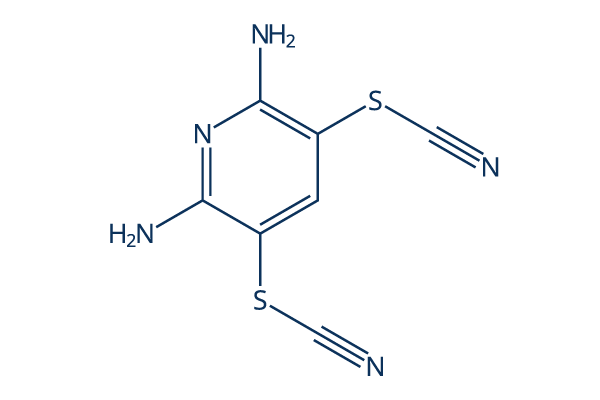
PR-619 DUB inhibitor
Cat.No.S7130
Quality Control
| Related Targets | Proteasome E1 Activating E3 Ligase SUMO p97 E2 conjugating |
|---|---|
| Other DUB Inhibitors | P5091 (P005091) IU1 b-AP15 P22077 ML323 LDN-57444 TCID EOAI3402143 VLX1570 ML364 |
Solubility
|
In vitro |
DMSO
: 3 mg/mL
(13.43 mM)
Water : Insoluble Ethanol : Insoluble |
Molarity Calculator
|
In vivo |
|||||
In vivo Formulation Calculator (Clear solution)
Step 1: Enter information below (Recommended: An additional animal making an allowance for loss during the experiment)
Step 2: Enter the in vivo formulation (This is only the calculator, not formulation. Please contact us first if there is no in vivo formulation at the solubility Section.)
Calculation results:
Working concentration: mg/ml;
Method for preparing DMSO master liquid: mg drug pre-dissolved in μL DMSO ( Master liquid concentration mg/mL, Please contact us first if the concentration exceeds the DMSO solubility of the batch of drug. )
Method for preparing in vivo formulation: Take μL DMSO master liquid, next addμL PEG300, mix and clarify, next addμL Tween 80, mix and clarify, next add μL ddH2O, mix and clarify.
Method for preparing in vivo formulation: Take μL DMSO master liquid, next add μL Corn oil, mix and clarify.
Note: 1. Please make sure the liquid is clear before adding the next solvent.
2. Be sure to add the solvent(s) in order. You must ensure that the solution obtained, in the previous addition, is a clear solution before proceeding to add the next solvent. Physical methods such
as vortex, ultrasound or hot water bath can be used to aid dissolving.
Chemical Information, Storage & Stability
| Molecular Weight | 223.28 | Formula | C7H5N5S2 |
Storage (From the date of receipt) | |
|---|---|---|---|---|---|
| CAS No. | 2645-32-1 | Download SDF | Storage of Stock Solutions |
|
|
| Synonyms | N/A | SMILES | C1=C(C(=NC(=C1SC#N)N)N)SC#N | ||
Read more about storage stability stock solution CAS number SMILES
Mechanism of Action
| Targets/IC50/Ki |
JOSD2
(Cell-free assay) 1.17 μM(EC50)
SENP6 core
(Cell-free assay) 2.37 μM(EC50)
UCH-L3
(Cell-free assay) 2.95 μM(EC50)
USP4
(Cell-free assay) 3.93 μM(EC50)
USP8
(Cell-free assay) 4.90 μM(EC50)
DEN1
(Cell-free assay) 4.98 μM(EC50)
USP20
(Cell-free assay) 5.10 μM(EC50)
USP28
(Cell-free assay) 6.24 μM(EC50)
USP7
(Cell-free assay) 6.86 μM(EC50)
USP2 core
(Cell-free assay) 7.20 μM(EC50)
USP15
(Cell-free assay) 8.23 μM(EC50)
USP5
(Cell-free assay) 8.61 μM(EC50)
USP47
(Cell-free assay) 8.87 μM(EC50)
UCH-L5
(Cell-free assay) 9.26 μM(EC50)
UCH-L1
(Cell-free assay) 12.8 μM(EC50)
Plpro
(Cell-free assay) 14.2 μM(EC50)
PLA2
(Cell-free assay) >50 μM(EC50)
Calpain 1
(Cell-free assay) >50 μM(EC50)
CT-L
(Cell-free assay) >50 μM(EC50)
Cathepsin D
(Cell-free assay) >50 μM(EC50)
MMP13
(Cell-free assay) >50 μM(EC50)
Trypsin
(Cell-free assay) >50 μM(EC50)
|
|---|---|
| In vitro |
PR-619 is a cell-permeable pyridinamine class broad-spectrum DUB inhibitor whose known targets include ATXN3, BAP1, JOSD2, OTUD5, UCH-L1, UCH-L3, UCH-L5/UCH37, USP1, 2, 4, 5, 7, 8, 9X, 10, 14, 15, 16, 19, 20, 22, 24, 28, 47, 48, VCIP135, YOD1, as well as deISGylase PLpro, deNEDDylase DEN1, and deSUMOlyase SENP6. This compound is shown to increase overall protein polyubiquitination in HEK293T cells in a dose- and time-dependent manner (20 to 150 μM, 0.5 to 20 h). Treatment with this chemical results in upregulation of both K 48 - and K63-linked polyUb chains. It induces HCT116 cell death with EC50 values of 6.3 μM. |
| Kinase Assay |
Ub-PLA2 assay
|
|
Recombinant enzymes in 20 mM Tris-HCl, pH 8.0, 2 mM CaCl2 and 2 mM β-mercaptoethanol (DUB assay buffer) are preincubated with single doses or dose ranges of PR-619 or P22077 for 30 minutes in a 96 well plate before the addition of Ub-PLA2 and NBD C6-HPC. The liberation of a fluorescent product within the linear range of the assay is monitored at room temperature using a fluorescence plate reader. Vehicle (2%(v/v) DMSO) and 10 mM N-ethylmaleimide are included as controls. Where ≥60% inhibition is observed, EC50 values are determined using a sigmoidal dose response equation.
|
|
| In vivo |
PR-619 enhances the antitumor effect on UC xenograft of nude mice. |
References |
|
Applications
| Methods | Biomarkers | Images | PMID |
|---|---|---|---|
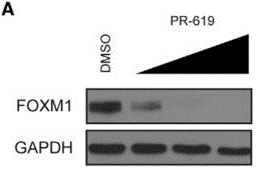
| Western blot | FOXM1 |
|
30865895 |
Tech Support
Tel: +1-832-582-8158 Ext:3
If you have any other enquiries, please leave a message.
Signaling Pathway Map

Products are for research use only. Not for human use. We do not sell to patients.
©Copyright 2013 Selleck Chemicals. All Rights Reserved.