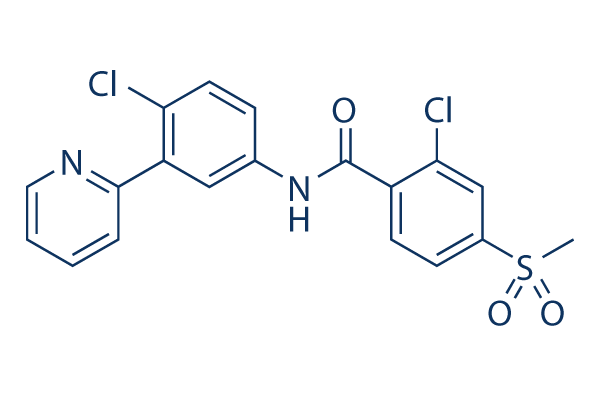
Vismodegib (GDC-0449)

GDC-0449 (Vismodegib, HhAntag691) is a potent, novel and specific hedgehog inhibitor with IC50 of 3 nM and also inhibits P-gp with IC50 of 3.0 μM.

Catalog No.S1082
5 5 14 Reviews 13 Product Citations
Price Stock Quantity  
USD 90 In stock
USD 170 In stock
USD 370 In stock
USD 970 In stock

Free Overnight Delivery on all orders over $ 500.

Order now and get it on

Vismodegib (GDC-0449) Chemical Structure
Molecular Weight: 421.3

Validation & Quality Control

Customer Reviews(14)

Quality Control & MSDS

Related Compound Libraries

Product Information

  • Compare Hedgehog Inhibitors
    Compare Hedgehog Inhibitors
  • Research Area

Product Description

Biological Activity

Description GDC-0449 (Vismodegib, HhAntag691) is a potent, novel and specific hedgehog inhibitor with IC50 of 3 nM and also inhibits P-gp with IC50 of 3.0 μM.
Targets Hedgehog
IC50 3 nM [1]
In vitro GDC-0449 targets the Hedgehog signaling pathway, blocking the activities of the Hedgehog-ligand cell surface receptors PTCH and/or SMO and suppressing Hedgehog signaling. GDC-0449 prevents multiple ATP-binding cassette (ABC) transporters. GDC-0449 also blocks ABCG2, Pgp, and MRP1-important ABC transporters associated with MDR. GDC-0449 is a potent inhibitor of ABC transporters, ABCG2/BCRP and ABCB1/Pgp, and is a mild inhibitor of ABCC1/MRP1. In ABCG2-overexpressing HEK293 cells, GDC-0449 increases retention of the fluorescent ABCG2 substrate BODIPY-prazosin and resensitizes these cells to mitoxantrone. In Madin-Darby canine kidney II cells engineered to overexpress Pgp or MRP1, GDC-0449 increases the retention of calcein-AM and resensitizes them to colchicine. GDC-0449 also resensitizes human non-small cell lung carcinoma cells NCI-H460/par and NCI-H460/MX20, which overexpress ABCG2 in response to mitoxantrone, to mitoxantrone, and to topotecan or SN-38. The IC50 values of GDC-0449 for prevention of ABCG2 and Pgp are about 1.4 μM and 3.0 μM, respectively. [2] GDC-0449 alters intracellular Ca2+ homeostasis and inhibits cell growth in cisplatin-resistant lung cancer cells. [3]
In vivo GDC-0449 has been used to treat medulloblastoma in animal models. [2] GDC-0449 prevents the growth of primary pancreatic xenografts without non-specifically inhibiting pancreatic cell proliferation. Oral dosing of GDC-0449 causes tumor regressions in the Ptch(+/-) allograft model of medulloblastoma at doses ≥25 mg/kg and tumor growth inhibition at doses up to 92 mg/kg dosed twice daily in two ligand-dependent colorectal cancer models, D5123, and 1040830. Analysis of Hh pathway activity and PK/PD modeling reveals that GDC-0449 inhibits Gli1 with a similar IC50 in both the medulloblastoma and D5123 models (0.165 μM and 0.267 μM, respectively). Pathway modulation is linked to efficacy using an integrated PK/PD model revealing a steep relationship where > 50% of the activity of GDC-0449 is associated with >80% repression of the Hh pathway. [4]
Clinical Trials GDC-0449 has entered into a phase II clinical trials in the treatment of basal cell carcinoma.
Features

Protocol(Only for Reference)

Cell Assay: [2]

Cell lines MDCKII cells
Concentrations 20 μM
Incubation Time 2 hours
Method MDCKII cells are seeded into 24-well plates at a density of 3 × 10⁵ cells per well and are allowed to attach. Medium is then changed to that containing different drugs (50 μM VP, 50 μM indomethacin, or 20 μM GDC-0449 in DMSO or DMSO alone as control, and nonfluorescent calcein-AM is added to a final concentration of 1.0 μM and incubated at 37 °C for 2 hours. Cells are then washed twice with Ca2+, Mg2+-containing Hank's balanced salt solution buffer and lysed by shaking in 0.01% Triton X-100 in PBS buffer for 1 hour at room temperature or overnight at 4 °C. The lysate is then transferred into 96-well plates, and the fluorescence signal caused by the cell-derived calcein is quantified spectrophotometrically with a SpectraMax M5 Multi-Detection Readerusing an excitation wavelength of 495 nm and an emission wavelength of 515 nm. All manipulations are performed in the dark. All readings are expressed as mean ± SEM normalized to the control.

Animal Study: [4]

Animal Models Ptch(+/-) allograft model, D5123 and 1040830
Formulation In 0.5% methyl-cellulose, 0.2% tween-80
Dosages ~ 100 mg/kg
Administration Orally
1

References

Chemical Information

Download Vismodegib (GDC-0449) SDF
Molecular Weight (MW) 421.3
Formula

C19H14Cl2N2O3S

CAS No. 879085-55-9
Synonyms N/A
Solubility (25°C)
  • DMSO 84 mg/mL
  • Water <1 mg/mL
  • Ethanol 4 mg/mL
Storage 2 years -20°CPowder
2 weeks4°Cin DMSO
6 months-80°Cin DMSO
Chemical Name 2-chloro-N-(4-chloro-3-(pyridin-2-yl)phenyl)-4-(methylsulfonyl)benzamide

Research Area

Customer Reviews (14)


Click to enlarge
Rating
Source Gut, 2013, 62(2), 299-309. Vismodegib (GDC-0449) purchased from Selleck
Method Immunohistochemistry
Cell Lines Mdr2 -/- mice/hepatectomised mice
Concentrations
Incubation Time
Results Treatment of Mdr2 -/- mice with GDC-0449 (Hh signalling antagonist) significantly reduced the number of Gli2 and CD31 (a commonly used capillarisation marker in vivo) double-positive cells in the liver (figure A,B). Similar results were observed in partial hepatectomised mice treated with cyclopamine ( figure C).

Click to enlarge
Rating
Source Gastroenterology, 2012, 143(5), 1319-29.e1-11. Vismodegib (GDC-0449) purchased from Selleck
Method Immunohistochemistry
Cell Lines MDR2 -/- mice
Concentrations 1 μM
Incubation Time 4 d
Results We found that treating year-old MDR2 -/- mice with a 9-day course of GDC-0449 substantially reduced the numbers of PKM2-positive cells despite the ongoing genetic stimulus for liver repair.

Click to enlarge
Rating
Source PLoS One, 2011, 6(9), e23943.. Vismodegib (GDC-0449) purchased from Selleck
Method Immunohistochemistry/qRT-PCR
Cell Lines MDR2 -/- mice
Concentrations 40 mg/kg
Incubation Time 9 d
Results Overall survival between the two groups in the second cohort was equal, with no deaths in the DMSO treatment group and 1 death in the GDC-0449 treatment group secondary to iatrogenic injury. Both the liver parenchyma and tumors of treated mice showed decreased expression of the Hh pathway target Gli2 ( Figures A–B). Real-time PCR analysis of resected tumors revealed that GDC-0449 treatment released the inhibitory effects of Hh signaling on PPARa ˜ , causing a significant increase in its gene expression ( Figure C). Treatment with GDC-0449 also caused a significant decrease in expression of Gli1, another Hh target gene (Figure D ).

Click to enlarge
Rating
Source PLoS One, 2011, 6(9), e23943.. Vismodegib (GDC-0449) purchased from Selleck
Method Immunohistochemistry
Cell Lines MDR2 -/- mice
Concentrations 40 mg/kg
Incubation Time 9 d
Results Treatment with GDC-0449 decreased α-sma-expressing myofibroblastic cells, hepatic expression of TGF- β andPDGF- β, Sirius red staining, and hydroxyproline content, demonstrating that Hh pathway inhibition reduced liver fibrosis.

Click to enlarge
Rating
Source PLoS One, 2011, 6(9), e23943.. Vismodegib (GDC-0449) purchased from Selleck
Method Immunohistochemistry/QRT-PCR analysis
Cell Lines MDR2 -/- mice
Concentrations 40 mg/kg
Incubation Time 9 d
Results Immunohistochemistry and quantitative morphometry demonstrated that inhibition of the Hh pathway with GDC-0449 significantly decreased osteopontin staining within primary liver tumors ( Figure A ). Similar treatment-related decreases in CD44 + tumor cells were also noted (Figure B). Gene expression analysis showed that expression of both osteopontin and CD44 mRNAs also tended to decrease in GDC-0449-treated mice ( Figure C ).

Click to enlarge
Rating
Source Gut, 2013, 62(2), 299-309.?. Vismodegib (GDC-0449) purchased from Selleck
Method Immunohistochemistry
Cell Lines MDR2 -/- mice
Concentrations
Incubation Time
Results Treatment of Mdr2 -/- mice with GDC-0449 (Hh signalling antagonist) significantly reduced the number of Gli2 and CD31 (a commonly used capillarisation marker in vivo) double-positive cells in the liver (figure A,B). Similar results were observed in partial hepatectomised mice treated with cyclopamine ( figure C).

Click to enlarge
Rating
Source Cancer Res, 2012, 72(22), 5912-20. Vismodegib (GDC-0449) purchased from Selleck
Method Western blot/Immunohistochemistry
Cell Lines Twelve-month-old mice
Concentrations
Incubation Time
Results Untreated 12-month-old HBxTg had multiple tumors on the surface of their livers (Fig. A) although most GDC-0449-treated m ice had fewer tumors. These differences were statistically significant (Fig. B). Excised tumors showed lower levels of Gli2 in GDC- 0449-treated mice compared with controls(Fig. C).The latter was confirmed by staining , where no Gli2 was observed in treated compared with untreated mice (Fig . D).

Click to enlarge
Rating
Source Chem Biol, 2012, 19(8), 972-82.. Vismodegib (GDC-0449) purchased from Selleck
Method Hh Activity Assays
Cell Lines ShhLightII cells/SmoM2 cells
Concentrations 0-10 μM
Incubation Time 6 h
Results Hh pathway inhibition by GDC0449, Cyc and SANT-1, as measured by both Gliluciferase induction (Figure A) and Smo ciliary localization ( Figures B and C), was dramatically reduced in vitro in the presence of FA. Thus, FA cotreatment leads to a drug-dependent alteration of cellular response to chemical inhibitors of Smo. This may occur through competition, or the requirement for a higher level of GDC-0449 to inhibit Hh-driven pathway activity in the presence of GC, but the outcome resembles the genetic resistance seen with a dominant active Smo mutation SmoM2) (Figure A).

Click to enlarge
Rating
Source Chem Biol, 2012, 19(8):972-82.. Vismodegib (GDC-0449) purchased from Selleck
Method Hh Activity Assays
Cell Lines Smo::EGFP/Iv s::tagRFPT cells
Concentrations 0-1000 nM
Incubation Time
Results Bud enhanced GDC0449’s activity to block Smo accumulation at the PC and Hh pathway inhibition.

Click to enlarge
Rating
Source Gastroenterology, 2012, 143(5), 1319-29.e1-11. Vismodegib (GDC-0449) purchased from Selleck
Method qRT-PCR/immunostaining
Cell Lines MF-HSCs
Concentrations 1 μM
Incubation Time 4 d
Results Conditional deletion of SMO in MF-HSCs recapitulated the effects of GDC-0449, causing significant down-regulation of glyco-lytic genes and MF genes.

Click to enlarge
Rating
Source Hepatology, 2011, 54(5), 1580-90. Vismodegib (GDC-0449) purchased from Selleck
Method qRT-PCR/Western blot
Cell Lines Huh7.5 cells
Concentrations 0-5 μM
Incubation Time 72 h
Results GDC-0449, a preclinical Hh pathway inhibitor, inhibits replication of JFH1 HCV in a dose-response manner.

Click to enlarge
Rating
Source Cancer Res, 2012, 72(22), 5912-20. Vismodegib (GDC-0449) purchased from Selleck
Method qRT-PCR/Western blot
Cell Lines HepG2/Huh7 cells
Concentrations 1 μmol/L
Incubation Time
Results GDC-0449 treatment of HepG2X cells decreased mRNA levels of Shh by 2.6-fold (61%, P < 0.005), PTCH1 by 6.8-fold (85%, P < 0.05), and Gli2 by 2.4-fold (58%, P < 0.05). GDC-0449 reduced Gli2 in HepG2X cells (2.2-fold; 55%, P < 0.02) and in Huh7X cells (3.8-fold; 74%, P < 0.02), but not in treated compared with untreated control cells (Fig. 1). GDC-0449 also reduced PTCH1 in HepG2X (1.8-fold; 44%, P < 0.02) and Huh7X cells (2.6-fold; 61%, P < 0.01), but not in the HBx negative cultures. Hence, HBx stimulates expression of Hhcomponents in human liver cancer cells.

Click to enlarge
Rating
Source Cancer Res, 2012, 72(22), 5912-20. Vismodegib (GDC-0449) purchased from Selleck
Method Phenotypic assays
Cell Lines HBx positive/negative cells
Concentrations 1 μmol/L
Incubation Time
Results GDC-0449 decreased the clonability of Huh7X cells by 2.2-fold compared with untreated cells (P < 0.01), and of HepG2X cells by 1.8-fold compared with untreated cells.

Click to enlarge
Rating
Source J Neurooncol , 2011, 105(3), 475-483. Vismodegib (GDC-0449) purchased from Selleck
Method Quantitative RT-PCR
Cell Lines Mouse medulloblastoma primary cells (U51669)
Concentrations 0-100 nM
Incubation Time
Results GDC-0449 effectively suppressed Gli1, which is a Shh pathway target gene.

Product Citations (13)

  • Hedgehog Controls Hepatic Stellate Cell Fate by Regulating Metabolism. [Chen Y, et al. Gastroenterology 2012;143(5):1319-29.e1-11]

    PubMed: 22885334
  • Up‐regulation of Hedgehog pathway is associated with cellular permissiveness for hepatitis C virus replication. [Choi SS, et al. Hepatology 2011;54(5):1580-90]

    PubMed: 21793033
  • NKT-associated hedgehog and osteopontin drive fibrogenesis in non-alcoholic fatty liver disease. [Syn WK, et al. Gut 2012;61(9):1323-9]

    PubMed: 22427237
  • Hedgehog signalling regulates liver sinusoidal endothelial cell capillarisation. [Xie G, et al. Gut 2012;62(2):299-309]

    PubMed: 22362915
  • Hedgehog signaling blockade delays hepatocarcinogenesis induced by Hepatitis B virus X protein (HBx). [Arzumanyan A, et al. Cancer Res 2012;72(22):5912-20]

    PubMed: 22986746
  • Selective Identification of Hedgehog Pathway Antagonists By Direct Analysis of Smoothened Ciliary Translocation. [Wang Y, et al. ACS Chem Biol 2012;7(6):1040-8]

    PubMed: 22554036
  • Glucocorticoid Compounds Modify Smoothened Localization and Hedgehog Pathway Activity. [Wang Y, et al. Chem Biol 2012;19(8):972-82]

    PubMed: 22921064
  • Inhibition of glycogen synthase kinase-3 activity triggers an apoptotic response in pancreatic cancer cells through JNK-dependent mechanisms. [Marchand B, et al. Carcinogenesis 2012;33(3), 529-537]

    PubMed: 22201186
  • Identification of an ABCB1 (P-glycoprotein)-positive carfilzomib-resistant myeloma subpopulation by the pluripotent stem cell fluorescent dye CDy1. [Teresa S, et al. Hematology 2013;]

  • Effects of the hedgehog inhibitor GDC-0449, alone or in combination with dasatinib, on BCR-ABL-positive leukemia cells. [Okabe S, et al. Stem Cells Dev 2012;21(16):2939-48]

    PubMed: 22642671
  • Hedgehog signaling antagonist promotes regression of both liver fibrosis and hepatocellular carcinoma in a murine model of primary liver cancer. [Philips GM, et al. PLoS One 2011;6(9):e23943]

    PubMed: 21912653
  • Ribosomal Protein S6 Kinase (RSK)-2 as a central effector molecule in RON receptor tyrosine kinase mediated epithelial to mesenchymal transition induced by macrophage-stimulating protein. [Ma Q, et al. Mol Cancer 2011;10, 66]

    PubMed: 21619683
  • Bortezomib stabilizes NOXA and triggers ROS-associated apoptosis in medulloblastoma. [Ohshima-Hosoyama S, et al. J Neurooncol 2011;105(3), 475-483]

    PubMed: 21633906

Tech Support & FAQs

Answers to questions you may have can be found in the inhibitor handling instructions. Topics include how to prepare stock solutions, how to store inhibitors, and issues that need special attention for cell-based assays and animal experiments.

Tel: +1-832-582-8158 Ext:3Monday–Friday 9:00 AM–5:00 PM (Central Time)

If you have any other enquiries, please leave a message.

* Indicates a Required Field

Related Hedgehog Inhibitors & Chemicals

  • Cyclopamine

    Cyclopamine is a specific Hedgehog (Hh) signaling pathway antagonist of Smoothened (Smo) with IC50 of 46 nM.

  • LY335979 (Zosuquidar 3HCl)

    LY335979 (Zosuquidar) is a potent modulator of P-glycoprotein-mediated multidrug resistance with Ki of 60 nM.

  • LY2940680

    LY2940680 binds to the Smo receptor and potently inhibits Hh signaling.

  • Tariquidar

  • XAV-939

    XAV-939 is a selective Wnt β-catenin-mediated transcription inhibitor for TNKS1 and TNKS2 with IC50 of 11 nM and 4 nM, respectively.

  • LDE225 (NVP-LDE225, Erismodegib)

    LDE225 (NVP-LDE225) is a smoothened antagonist with IC50 of 1.3 nM (mouse) and 2.5 nM (human), respectively.

  • ICG-001

    ICG-001 specifically binds to CBP with IC50 of 3 μM.

  • PF-5274857

    PF-5274857 is a potent and selective Smoothened (Smo) antagonist with IC50 and Ki of 5.8 nM and 4.6 nM, respectively.

  • IWP-2

    IWP-2 is an inhibitor of Wnt processing and secretion with IC50 of 27 nM.

  • IWR-1-endo

    IWR-1 (endo-IWR 1) is a Wnt pathway inhibitor with IC50 of 180 nM.

Recently Viewed Items

Tags: buy Vismodegib (GDC-0449) | Vismodegib (GDC-0449) ic50 | Vismodegib (GDC-0449) price | Vismodegib (GDC-0449) cost | Vismodegib (GDC-0449) solubility dmso | Vismodegib (GDC-0449) purchase | Vismodegib (GDC-0449) manufacturer | Vismodegib (GDC-0449) research buy | Vismodegib (GDC-0449) order | Vismodegib (GDC-0449) mouse | Vismodegib (GDC-0449) chemical structure | Vismodegib (GDC-0449) mw | Vismodegib (GDC-0449) molecular weight | Vismodegib (GDC-0449) datasheet | Vismodegib (GDC-0449) supplier | Vismodegib (GDC-0449) in vitro | Vismodegib (GDC-0449) cell line | Vismodegib (GDC-0449) concentration | Vismodegib (GDC-0449) nmr
Contact Us