
-
 Australia
-
 Austria
-
 Belgium
-
 Brazil
-
 Canada
-
 China
China
-
 Czech Republic
-
 Denmark
-
 Finland
-
 France
-
 Germany
-
 Greece
-
 Hong Kong
-
 Hungary
-
 Iceland
-
 India
India
-
 Ireland
-
 Israel
-
 Italy
Italy
-
 Japan
Japan
-
 Korea
Korea
-
 Luxembourg
-
 Malaysia
-
 Netherlands
-
 New Zealand
-
 Norway
-
 Poland
-
 Qatar
Qatar
-
 Romania
-
 Saudi Arabia
-
 Singapore
-
 Spain
Spain
-
 Sweden
-
 Switzerland
-
 Taiwan
-
 Turkey
-
 United Kingdom
-
 United States
research use only
Dasatinib (BMS-354825) Tyrosine Kinase inhibitor
Cat.No.S1021
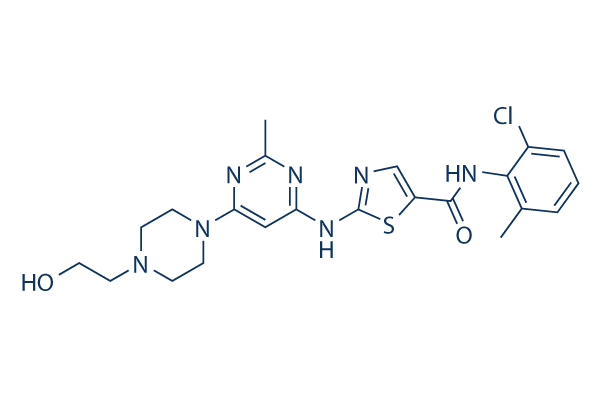
Chemical Structure
Molecular Weight: 488.01
Quality Control
Products Often Used Together with Dasatinib (BMS-354825)
| Related Targets | EGFR VEGFR JAK PDGFR FGFR HIF FLT3 FLT HER2 Bcr-Abl |
|---|---|
| Other Src Inhibitors | WH-4-023 Saracatinib (AZD0530) PP2 (AGL 1879) SU6656 PP1 Src Inhibitor 1 UM-164 RK 24466 eCF506 Tolimidone (MLR-1023) |
Cell Culture, Treatment & Working Concentration
| Cell Lines | Assay Type | Concentration | Incubation Time | Formulation | Activity Description | PMID |
|---|---|---|---|---|---|---|
| M07ep210 | Growth Inhibition Assay | 72 h | DMSO | IC50=0.00007 μM | 17956080 | |
| K562 | Growth Inhibition Assay | 72 h | DMSO | IC50=0.001 μM | 17956080 | |
| M07e | Growth Inhibition Assay | 72 h | DMSO | IC50=0.0012 μM | 17956080 | |
| ALL3 | Cytotoxic Assay | 0.1μM | 72 h | DMSO | IC50=0.0004 μM | 19889540 |
| CML | Growth Inhibition Assay | 20 min | DMSO | IC50=0.001 μM | 19219016 | |
| BA/F3 | Growth Inhibition Assay | 72 h | DMSO | IC50=6.589 μM | 23088644 | |
| BA/F3 | Growth Inhibition Assay | 72 h | DMSO | Induces antiproliferative activity against mouse BA/F3 cells expressing Bcr-Abl M351T mutant with IC50 of 0.00083μM | 23088644 | |
| BA/F3 | Growth Inhibition Assay | 72 h | DMSO | Induces antiproliferative activity against mouse BA/F3 cells expressing wild type Bcr-Abl with IC50 of 0.0045μM | 23088644 | |
| BA/F3 | Growth Inhibition Assay | 72 h | DMSO | Induces antiproliferative activity against mouse BA/F3 cells expressing Bcr-Abl T315I mutant with IC50 of 1.714μM | 23088644 | |
| BA/F3 | Growth Inhibition Assay | 72 h | DMSO | Induces cytotoxicity against mouse BA/F3 cells expressing BCR-ABL F486S mutant assessed as growth Inhibition with IC50 of 0.0009μM | 23301703 | |
| BA/F3 | Growth Inhibition Assay | 72 h | DMSO | Induces cytotoxicity against mouse BA/F3 cells expressing BCR-ABL E255K mutant assessed as growth Inhibition with IC50 of 0.0032μM | 23301703 | |
| BA/F3 | Growth Inhibition Assay | 72 h | DMSO | Induces cytotoxicity against mouse BA/F3 cells expressing BCR-ABL G250E mutant assessed as growth Inhibition with IC50 of 0.0051μM | 23301703 | |
| BA/F3 | Growth Inhibition Assay | 72 h | DMSO | Induces cytotoxicity against mouse BA/F3 cells expressing BCR-ABL Q252H mutant assessed as growth Inhibition with IC50 of 0.008μM | 23301703 | |
| BA/F3 | Growth Inhibition Assay | 72 h | DMSO | Induces cytotoxicity against mouse BA/F3 cells expressing BCR-ABL E359V mutant assessed as growth Inhibition with IC50 of 0.0013μM | 23301703 | |
| BA/F3 | Growth Inhibition Assay | 72 h | DMSO | Induces cytotoxicity against mouse BA/F3 cells expressing wild type BCR-ABL assessed as growth Inhibition with IC50 of 0.0019μM | 23301703 | |
| BA/F3 | Growth Inhibition Assay | 72 h | DMSO | Induces cytotoxicity against mouse BA/F3 cells expressing BCR-ABL Y253H mutant assessed as growth Inhibition with IC50 of 0.0023μM | 23301703 | |
| BA/F3 | Growth Inhibition Assay | 72 h | DMSO | Induces cytotoxicity against mouse BA/F3 cells expressing BCR-ABL T315I mutant assessed as growth Inhibition with IC50 of 3.6μM | 23301703 | |
| BA/F3 | Growth Inhibition Assay | 72 h | DMSO | Induces cytotoxicity against mouse BA/F3 cells assessed as growth Inhibition with IC50 of 2.5μM | 23301703 | |
| T cell | Growth Inhibition Assay | 72 h | DMSO | Inhibits anti CD3- and anti CD28-induced T cell proliferation with IC50 of 0.003μM | 17154512 | |
| WiDr | Growth Inhibition Assay | 72 h | DMSO | IC50=0.052 μM | 15615512 | |
| PC3 | Growth Inhibition Assay | 72 h | DMSO | IC50=0.0094 μM | 15615512 | |
| MDA-MB-231 | Growth Inhibition Assay | 72 h | DMSO | IC50=0.012 μM | 15615512 | |
| Hs578T | Cytotoxic Assay | 72 h | DMSO | GI50=0.03 μM | 24015327 | |
| HMEC | Cytotoxic Assay | 72 h | DMSO | GI50=1.8 μM | 24015327 | |
| DU145 | Cytotoxic Assay | 72 h | DMSO | GI50=0.16 μM | 24015327 | |
| U251 | Cytotoxic Assay | 72 h | DMSO | GI50=2.81 μM | 24015327 | |
| NCI60 | Cytotoxic Assay | 72 h | DMSO | GI50=5.7 μM | 24015327 | |
| MALME-3M | Cytotoxic Assay | 72 h | DMSO | GI50=6.61 μM | 24015327 | |
| KM12 | Cytotoxic Assay | 72 h | DMSO | GI50=7.44 μM | 24015327 | |
| SW620 | Cytotoxic Assay | 72 h | DMSO | GI50=8.43 μM | 24015327 | |
| RXF 393NL | Cytotoxic Assay | 4 days | DMSO | IC50=0.0217 μM | 23253074 | |
| LXFA 983L | Cytotoxic Assay | 4 days | DMSO | IC50=0.0565 μM | 23253074 | |
| PRXF DU145 | Cytotoxic Assay | 4 days | DMSO | IC50=0.0623 μM | 23253074 | |
| PAXF 1657L | Cytotoxic Assay | 4 days | DMSO | IC50=0.121 μM | 23253074 | |
| CXF 1103L | Cytotoxic Assay | 4 days | DMSO | IC50=4.36 μM | 23253074 | |
| GXF251L | Cytotoxic Assay | 4 days | DMSO | IC50=2.25 μM | 23253074 | |
| NCI-H23 | Growth Inhibition Assay | 72 h | DMSO | IC50=2.27 μM | 23521020 | |
| HCT116 | Growth Inhibition Assay | 72 h | DMSO | IC50=2.3 μM | 23521020 | |
| MCF7 | Growth Inhibition Assay | 72 h | DMSO | IC50=2.57 μM | 23521020 | |
| NCI-H460 | Growth Inhibition Assay | 72 h | DMSO | IC50=8.99 μM | 23521020 | |
| DLD1 | Growth Inhibition Assay | 72 h | DMSO | IC50=4.6 μM | 23567960 | |
| NCI-H661 | Growth Inhibition Assay | 72 h | DMSO | IC50=7.8 μM | 23567960 | |
| A549 | Growth Inhibition Assay | 72 h | DMSO | IC50=8.2 μM | 23567960 | |
| U937 | Growth Inhibition Assay | 72 h | DMSO | IC50=12.2 μM | 23567960 | |
| HEK293 | Function Assay | 10 μM | DMSO | Induces binding affinity to human full-length His-tagged Myt1 kinase expressed in HEK293 cells with IC50 of 0.063μM | 22770610 | |
| HUVEC | Growth Inhibition Assay | 0.15 μM | 72 h | DMSO | Induces antiangiogenic activity in HUVEC co-cultured with vascular smooth muscle cells assessed as Inhibition of cell growth at 0.15 uM | 22853993 |
| HUVEC | Function Assay | 15 μM | 72 h | DMSO | Induces antiangiogenic activity in HUVEC co-cultured with vascular smooth muscle cells assessed as Inhibition of network formation at 1.8 to 15 uM | 22853993 |
| Plasmodium falciparum | Function Assay | 10 μM | 15 min | DMSO | Inhibits Plasmodium falciparum proliferation by inhibiting the Function of PfCDPK1 protein with IC50 of 1.17μM | 24550330 |
| PC3 | Function Assay | 0.1 μM | 5 h | DMSO | Inhibits human PC3 cell adhesion at 100 nM | 19462975 |
| DU145 | Function Assay | 0.1 μM | 5 h | DMSO | Inhibits human DU145 cell adhesion at 100 nM | 19462975 |
| PC3 | Kinase Assay | 0.1 μM | 5 h | DMSO | Inhibits cSrc in human PC3 cells assessed as reduction of phosphorylated Src Y416 level at 100 nM | 19462975 |
| DU145 | Kinase Assay | 0.1 μM | 5 h | DMSO | Inhibits cSrc in human DU145 cells assessed as reduction of phosphorylated Src Y416 level at 100 nM | 19462975 |
| PC3 | Kinase Assay | 0.1 μM | 5 h | DMSO | Inhibits cSrc in human PC3 cells assessed as reduction of phosphorylated FAK Y576/Y577 level at 100 nM | 19462975 |
| DU145 | Kinase Assay | 0.1 μM | 5 h | DMSO | Inhibits cSrc in human DU145 cells assessed as reduction of phosphorylated FAK Y576/Y577 level at 100 nM | 19462975 |
| Huh7 | Antiviral Assay | 2.5 μM | 4 days | DMSO | Inhibits viral spread in Dengue virus-infected human Huh7 cells assessed as accumulation of viral envelope protein within perinuclear region at 2.5 uM | 17360676 |
| C6/36 | Antiviral Assay | 2.5 μM | 4 days | DMSO | Inhibits viral spread in Dengue virus-infected asian tiger mosquito C6/36 cells assessed as accumulation of viral envelope protein within perinuclear region at 2.5 uM | 17360676 |
| U937 | Function Assay | 1 μM | 1 h | DMSO | Reduces basal TNFalpha release in human U937 cells | 17684099 |
| U937 | Function Assay | 1 μM | 1 h | DMSO | Reduces LPS-induced TNFalpha release in human U937 cells | 17684099 |
| murine mast cell | Function Assay | 1 μM | 24 h | DMSO | Inhibits antigen-induced IL6 secretion in IgE primed mouse mast cells at 1 uM | 17684099 |
| FDC-P1 | Function assay | 48 hrs | IC50 = 0.0074 μM | 20156689 | ||
| K562 | Cytotoxicity assay | 72 hrs | IC50 = 12.83 μM | 22217877 | ||
| U937 | Cytotoxicity assay | 72 hrs | IC50 = 13.63 μM | 22217877 | ||
| Sf21 | Function assay | 5 mins | IC50 = 10 μM | 22961681 | ||
| Ba/F3 | Function assay | 1 hr | Inhibition of Bcr-Abl T315I mutant (unknown origin) transfected in mouse Ba/F3 cells assessed as reduction of phosphorylated STAT5 level after 1 hr by Western blot analysis | 23600806 | ||
| Ba/F3 | Function assay | 1 hr | Inhibition of Bcr-Abl T315I mutant (unknown origin) transfected in mouse Ba/F3 cells assessed as reduction of phosphorylated CrkL level after 1 hr by Western blot analysis | 23600806 | ||
| Ba/F3 | Function assay | 1 hr | Inhibition of Bcr-Abl T315I mutant (unknown origin) phosphorylation transfected in mouse Ba/F3 cells after 1 hr by Western blot analysis | 23600806 | ||
| Sf9 | Function assay | 15 to 20 mins | IC50 = 13.1 μM | 23956101 | ||
| Sf9 | Function assay | 20 mins | IC50 = 27.3 μM | 23956101 | ||
| HMC-1.2 | Antiproliferative assay | IC50 = 0.82 μM | 25004409 | |||
| RXF 393NL | Antiproliferative assay | 4 days | GI50 = 0.0217 μM | 25076195 | ||
| LXFA 983L | Antiproliferative assay | 4 days | GI50 = 0.0565 μM | 25076195 | ||
| PRXF DU145 | Antiproliferative assay | 4 days | GI50 = 0.0623 μM | 25076195 | ||
| PAXF 1657L | Antiproliferative assay | 4 days | GI50 = 0.121 μM | 25076195 | ||
| GXF251L | Antiproliferative assay | 4 days | GI50 = 2.25 μM | 25076195 | ||
| CXF 1103L | Antiproliferative assay | 4 days | GI50 = 4.36 μM | 25076195 | ||
| SH-SY5Y | Apoptosis assay | 0.1 uM | 24 hrs | Induction of apoptosis in human SH-SY5Y cells assessed as accumulation of hypodiploid cells at 0.1 uM after 24 hrs by propidium iodide staining-based cytofluorimetry | 25469771 | |
| ECRF24 | Cytotoxicity assay | 72 hrs | IC50 = 5.7 μM | 25815152 | ||
| A2780 | Cytotoxicity assay | 72 hrs | IC50 = 8.7 μM | 25815152 | ||
| HEK293 | Cytotoxicity assay | 72 hrs | IC50 = 14.3 μM | 25815152 | ||
| MDA-MB-231 | Cytotoxicity assay | 72 hrs | IC50 = 0.178 μM | 25835317 | ||
| MDA-MB-231 | Antiinvasive assay | 0.1 uM | 24 hrs | Antiinvasive activity against human MDA-MB-231 cells at 0.1 uM after 24 hrs by transwell assay | 25835317 | |
| MDA-MB-231 | Cell cycle assay | 0.3 uM | 24 to 48 hrs | Cell cycle arrest in human MDA-MB-231 cells assessed as accumulation at G0/G1 phase at 0.3 uM after 24 to 48 hrs by flow cytometric analysis | 25835317 | |
| MDA-MB-231 | Function assay | >0.03 uM | 20 hrs | Inhibition of Src in human MDA-MB-231 cells assessed as reduction of FAK phosphorylation at >0.03 uM after 20 hrs by Western blot analysis | 25835317 | |
| MDA-MB-231 | Antimigratory assay | 0.03 to 0.3 uM | 20 hrs | Antimigratory activity against human MDA-MB-231 cells at 0.03 to 0.3 uM after 20 hrs by wound healing assay | 25835317 | |
| MDA-MB-231 | Function assay | 0.001 to 1 uM | 20 hrs | Inhibition of Src phosphorylation in human MDA-MB-231 cells at 0.001 to 1 uM after 20 hrs by Western blot analysis | 25835317 | |
| MDA-MB-231 | Antiproliferative assay | >0.01 uM | 12 days | Antiproliferative activity against human MDA-MB-231 cells assessed as inhibition of colony formation at >0.01 uM after 12 days by crystal violet staining-based assay | 25835317 | |
| MDA-MB-231 | Antitumor assay | 40 mg/kg/day | 18 days | Antitumor activity against human MDA-MB-231 cells xenografted in SCID mouse assessed as tumor growth inhibition at 40 mg/kg/day administered for 18 days measured every 3 days during compound dosing | 25835317 | |
| MDA-MB-231 | Cytotoxicity assay | 48 hrs | IC50 = 1.12 μM | 25899332 | ||
| MCF7 | Cytotoxicity assay | 48 hrs | IC50 = 8.05 μM | 25899332 | ||
| HCC366 | Antiproliferative assay | 72 hrs | IC50 = 0.029 μM | 26191369 | ||
| NCI-H2286 | Antiproliferative assay | 72 hrs | IC50 = 0.032 μM | 26191369 | ||
| K562 | Antiproliferative assay | 72 hrs | IC50 = 0.001 μM | 26195136 | ||
| K562 | Cytotoxicity assay | IC50 = 0.08 μM | 26264503 | |||
| IR-K562 | Cytotoxicity assay | IC50 = 1.9 μM | 26264503 | |||
| THP1 | Cytotoxicity assay | IC50 = 6 μM | 26264503 | |||
| HEK293 | Cytotoxicity assay | CC50 = 16 μM | 26264503 | |||
| K562 | Cytotoxicity assay | 48 hrs | IC50 = 0.45 μM | 26451772 | ||
| K562 | Antiproliferative assay | 72 hrs | GI50 = 0.0003 μM | 26789553 | ||
| BA/F3 | Function assay | 72 hrs | GI50 = 0.0003 μM | 26789553 | ||
| KU812 | Antiproliferative assay | 72 hrs | GI50 = 0.0003 μM | 26789553 | ||
| MEG01 | Antiproliferative assay | 72 hrs | GI50 = 0.0003 μM | 26789553 | ||
| BA/F3 | Function assay | 72 hrs | GI50 = 0.001 μM | 26789553 | ||
| BA/F3 | Function assay | 72 hrs | GI50 = 0.001 μM | 26789553 | ||
| BA/F3 | Function assay | 72 hrs | GI50 = 0.001 μM | 26789553 | ||
| BA/F3 | Function assay | 72 hrs | GI50 = 0.003 μM | 26789553 | ||
| BA/F3 | Function assay | 72 hrs | GI50 = 0.003 μM | 26789553 | ||
| BA/F3 | Function assay | 72 hrs | GI50 = 0.003 μM | 26789553 | ||
| BA/F3 | Function assay | 72 hrs | GI50 = 0.003 μM | 26789553 | ||
| BA/F3 | Function assay | 72 hrs | GI50 = 0.004 μM | 26789553 | ||
| BA/F3 | Function assay | 72 hrs | GI50 = 0.004 μM | 26789553 | ||
| BA/F3 | Function assay | 72 hrs | GI50 = 0.005 μM | 26789553 | ||
| BA/F3 | Function assay | 72 hrs | GI50 = 0.008 μM | 26789553 | ||
| BA/F3 | Function assay | 72 hrs | GI50 = 0.008 μM | 26789553 | ||
| BA/F3 | Function assay | 72 hrs | GI50 = 0.01 μM | 26789553 | ||
| BA/F3 | Function assay | 72 hrs | GI50 = 0.014 μM | 26789553 | ||
| BA/F3 | Function assay | 72 hrs | GI50 = 0.014 μM | 26789553 | ||
| BA/F3 | Function assay | 72 hrs | GI50 = 0.017 μM | 26789553 | ||
| BA/F3 | Function assay | 72 hrs | GI50 = 0.039 μM | 26789553 | ||
| CHL | Antiproliferative assay | 72 hrs | GI50 = 0.27 μM | 26789553 | ||
| MOLM14 | Antiproliferative assay | 72 hrs | GI50 = 2.3 μM | 26789553 | ||
| BA/F3 | Function assay | 72 hrs | GI50 = 3 μM | 26789553 | ||
| BA/F3 | Function assay | 72 hrs | GI50 = 3 μM | 26789553 | ||
| MV4-11 | Antiproliferative assay | 72 hrs | GI50 = 3.6 μM | 26789553 | ||
| HEL | Antiproliferative assay | 72 hrs | GI50 = 5.3 μM | 26789553 | ||
| BA/F3 | Function assay | 72 hrs | GI50 = 9.94 μM | 26789553 | ||
| KU812 | Function assay | 0.1 uM | 1 hr | Inhibition of BCR/ABL in human KU812 cells assessed as downregulation of CrkL phosphorylation at T207 site at 0.1 uM after 1 hr by immunoblotting method | 26789553 | |
| KU812 | Function assay | 0.1 uM | 1 hr | Inhibition of BCR/ABL in human KU812 cells assessed as downregulation of CrkL phosphorylation at T207 site at 0.1 uM after 1 hr by immunoblotting method | 26789553 | |
| MEG01 | Function assay | 0.1 uM | 1 hr | Inhibition of BCR/ABL in human MEG01 cells assessed as downregulation of CrkL phosphorylation at T207 site at 0.1 uM after 1 hr by immunoblotting method | 26789553 | |
| MEG01 | Function assay | 0.1 uM | 1 hr | Inhibition of BCR/ABL in human MEG01 cells assessed as downregulation of CrkL phosphorylation at T207 site at 0.1 uM after 1 hr by immunoblotting method | 26789553 | |
| K562 | Function assay | 0.1 uM | 1 hr | Inhibition of BCR/ABL in human K562 cells assessed as downregulation of CrkL phosphorylation at T207 site at 0.1 uM after 1 hr by immunoblotting method | 26789553 | |
| K562 | Function assay | 0.1 uM | 1 hr | Inhibition of BCR/ABL in human K562 cells assessed as downregulation of CrkL phosphorylation at T207 site at 0.1 uM after 1 hr by immunoblotting method | 26789553 | |
| K562 | Cytotoxicity assay | 72 hrs | IC50 = 0.00025 μM | 26814890 | ||
| BA/F3 | Cytotoxicity assay | 72 hrs | IC50 = 0.09 μM | 26814890 | ||
| BAF3 | Function assay | 72 hrs | EC50 = 0.00004 μM | 27010810 | ||
| BAF3 | Function assay | 72 hrs | EC50 = 0.00004 μM | 27010810 | ||
| BxPC3 | Antiproliferative assay | 72 hrs | EC50 = 0.033 μM | 27010810 | ||
| MDA-MB-231 | Antiproliferative assay | 72 hrs | EC50 = 0.044 μM | 27010810 | ||
| Caki2 | Antiproliferative assay | 72 hrs | EC50 = 0.055 μM | 27010810 | ||
| NCI-H1975 | Antiproliferative assay | 72 hrs | EC50 = 0.173 μM | 27010810 | ||
| PC3 | Antiproliferative assay | 72 hrs | EC50 = 0.232 μM | 27010810 | ||
| insect | Function assay | 20 mins | IC50 = 0.0005 μM | 27115835 | ||
| MDA-MB-231 | Antiproliferative assay | 5 days | Antiproliferative activity against human MDA-MB-231 cells assessed as reduction in cell viability after 5 days by PrestoBlue assay | 27115835 | ||
| MDA-MB-231 | Function assay | 3 to 100 nM | 1.5 hrs | Inhibition of SRC phosphorylation at tyrosine 416 in human MDA-MB-231 cells at 3 to 100 nM preincubated for 1.5 hrs followed by serum stimulation for 1 hr by Western blot analysis | 27115835 | |
| MDA-MB-231 | Function assay | 3 to 100 nM | 1.5 hrs | Inhibition of FAK phosphorylation at tyrosine 861 in human MDA-MB-231 cells at 3 to 100 nM preincubated for 1.5 hrs followed by serum stimulation for 1 hr by Western blot analysis | 27115835 | |
| MDA-MB-231 | Antimigratory assay | 10 nM | 6 hrs | Antimigratory activity in human MDA-MB-231 cells assessed as reduction in cell motility at 10 nM at 6 hrs by microscopy based scratch-wound cell migration assay | 27115835 | |
| MCF7 | Antiproliferative assay | 0.03 to 300 uM | 5 days | Antiproliferative activity against human MCF7 cells assessed as reduction in cell viability at 0.03 to 300 uM after 5 days by PrestoBlue assay | 27115835 | |
| HCT116 | Cytotoxicity assay | 96 hrs | IC50 = 5.23 μM | 27155464 | ||
| A549 | Cytotoxicity assay | 96 hrs | IC50 = 8.37 μM | 27155464 | ||
| U937 | Cytotoxicity assay | 96 hrs | IC50 = 10.23 μM | 27155464 | ||
| K562 | Cytotoxicity assay | 96 hrs | IC50 = 11.95 μM | 27155464 | ||
| K562 | Cytotoxicity assay | CC50 = 0.25 μM | 27474918 | |||
| K562 | Antiproliferative assay | GI50 = 0.001 μM | 28435526 | |||
| K562 | Function assay | IC50 = 0.000069 μM | 29395973 | |||
| HL60 | Function assay | IC50 = 0.00011 μM | 29395973 | |||
| KG1a | Function assay | IC50 = 8.98 μM | 29395973 | |||
| B16-BL6 | Function assay | 8.13 uM | 24 to 48 hrs | Inhibition of cell migration of mouse B16-BL6 cells at 8.13 uM incubated for 24 to 48 hrs by cell wound scratch assay | 29395973 | |
| MCF7 | Function assay | 7.5 uM | 10 days | Inhibition of colony formation in human MCF7 cells at 7.5 uM incubated for 10 days by crystal violet staining based plate cloning test | 29395973 | |
| U-2 OS | qHTS assay | qHTS of pediatric cancer cell lines to identify multiple opportunities for drug repurposing: Primary screen for U-2 OS cells | 29435139 | |||
| A673 | qHTS assay | qHTS of pediatric cancer cell lines to identify multiple opportunities for drug repurposing: Primary screen for A673 cells | 29435139 | |||
| DAOY | qHTS assay | qHTS of pediatric cancer cell lines to identify multiple opportunities for drug repurposing: Primary screen for DAOY cells | 29435139 | |||
| MG 63 (6-TG R) | qHTS assay | qHTS of pediatric cancer cell lines to identify multiple opportunities for drug repurposing: Primary screen for MG 63 (6-TG R) cells | 29435139 | |||
| OHS-50 | qHTS assay | qHTS of pediatric cancer cell lines to identify multiple opportunities for drug repurposing: Primary screen for OHS-50 cells | 29435139 | |||
| BT-12 | qHTS assay | qHTS of pediatric cancer cell lines to identify multiple opportunities for drug repurposing: Confirmatory screen for BT-12 cells | 29435139 | |||
| DAOY | qHTS assay | qHTS of pediatric cancer cell lines to identify multiple opportunities for drug repurposing: Confirmatory screen for DAOY cells | 29435139 | |||
| SK-N-SH | qHTS assay | qHTS of pediatric cancer cell lines to identify multiple opportunities for drug repurposing: Confirmatory screen for SK-N-SH cells | 29435139 | |||
| A673 | qHTS assay | qHTS of pediatric cancer cell lines to identify multiple opportunities for drug repurposing: Confirmatory screen for A673 cells) | 29435139 | |||
| Rh30 | qHTS assay | qHTS of pediatric cancer cell lines to identify multiple opportunities for drug repurposing: Confirmatory screen for Rh30 cells | 29435139 | |||
| U-2 OS | qHTS assay | qHTS of pediatric cancer cell lines to identify multiple opportunities for drug repurposing: Confirmatory screen for U-2 OS cells | 29435139 | |||
| Rh41 | qHTS assay | qHTS of pediatric cancer cell lines to identify multiple opportunities for drug repurposing: Confirmatory screen for Rh41 cells | 29435139 | |||
| SJ-GBM2 | qHTS assay | qHTS of pediatric cancer cell lines to identify multiple opportunities for drug repurposing: Primary screen for SJ-GBM2 cells | 29435139 | |||
| SK-N-MC | qHTS assay | qHTS of pediatric cancer cell lines to identify multiple opportunities for drug repurposing: Primary screen for SK-N-MC cells | 29435139 | |||
| Rh18 | qHTS assay | qHTS of pediatric cancer cell lines to identify multiple opportunities for drug repurposing: Primary screen for Rh18 cells | 29435139 | |||
| Rh18 | qHTS assay | qHTS of pediatric cancer cell lines to identify multiple opportunities for drug repurposing: Confirmatory screen for Rh18 cells | 29435139 | |||
| HEK293 | Function assay | 1 hr | Ki = 0.0005 μM | 29941193 | ||
| HEK293 | Function assay | 1 hr | IC50 = 0.006 μM | 29941193 | ||
| Ba/F3 | Function assay | 48 hrs | GI50 = 0.00021 μM | 30137981 | ||
| Ba/F3 | Function assay | 48 hrs | GI50 = 0.00025 μM | 30137981 | ||
| Ba/F3 | Function assay | 48 hrs | GI50 = 0.00029 μM | 30137981 | ||
| Ba/F3 | Function assay | 48 hrs | GI50 = 0.0003 μM | 30137981 | ||
| Ba/F3 | Function assay | 48 hrs | GI50 = 0.00033 μM | 30137981 | ||
| Ba/F3 | Function assay | 48 hrs | GI50 = 0.00042 μM | 30137981 | ||
| Ba/F3 | Function assay | 48 hrs | GI50 = 0.00077 μM | 30137981 | ||
| Ba/F3 | Function assay | 48 hrs | GI50 = 0.00098 μM | 30137981 | ||
| Ba/F3 | Function assay | 48 hrs | GI50 = 0.00144 μM | 30137981 | ||
| Ba/F3 | Function assay | 48 hrs | GI50 = 2.562 μM | 30137981 | ||
| Vero | qHTS assay | Vero cells viability qHTS for Zika virus inhibitors | 33229545 | |||
| HepG2 | qHTS assay | HepG2 cells viability qHTS for Zika virus inhibitors | 33229545 | |||
| BV-173 | Growth Inhibition Assay | IC50=0.000000109 μM | SANGER | |||
| K-562 | Growth Inhibition Assay | IC50=0.000000266 μM | SANGER | |||
| BL-70 | Growth Inhibition Assay | IC50=0.000000822 μM | SANGER | |||
| EM-2 | Growth Inhibition Assay | IC50=0.00000108 μM | SANGER | |||
| LAMA-84 | Growth Inhibition Assay | IC50=0.00000321 μM | SANGER | |||
| MEG-01 | Growth Inhibition Assay | IC50=0.0000098 μM | SANGER | |||
| EoL-1-cell | Growth Inhibition Assay | IC50=0.0000131 μM | SANGER | |||
| CTV-1 | Growth Inhibition Assay | IC50=0.0000404 μM | SANGER | |||
| TE-15 | Growth Inhibition Assay | IC50=0.00589 μM | SANGER | |||
| NOS-1 | Growth Inhibition Assay | IC50=0.00613 μM | SANGER | |||
| D-336MG | Growth Inhibition Assay | IC50=0.0063 μM | SANGER | |||
| LB1047-RCC | Growth Inhibition Assay | IC50=0.00989 μM | SANGER | |||
| LB996-RCC | Growth Inhibition Assay | IC50=0.00991 μM | SANGER | |||
| SW982 | Growth Inhibition Assay | IC50=0.01115 μM | SANGER | |||
| TK10 | Growth Inhibition Assay | IC50=0.01174 μM | SANGER | |||
| A704 | Growth Inhibition Assay | IC50=0.01491 μM | SANGER | |||
| TE-8 | Growth Inhibition Assay | IC50=0.01576 μM | SANGER | |||
| DOHH-2 | Growth Inhibition Assay | IC50=0.01719 μM | SANGER | |||
| HOP-62 | Growth Inhibition Assay | IC50=0.01834 μM | SANGER | |||
| TE-12 | Growth Inhibition Assay | IC50=0.01861 μM | SANGER | |||
| KGN | Growth Inhibition Assay | IC50=0.01942 μM | SANGER | |||
| NCI-H1648 | Growth Inhibition Assay | IC50=0.02011 μM | SANGER | |||
| OS-RC-2 | Growth Inhibition Assay | IC50=0.0203 μM | SANGER | |||
| GB-1 | Growth Inhibition Assay | IC50=0.02157 μM | SANGER | |||
| RXF393 | Growth Inhibition Assay | IC50=0.02357 μM | SANGER | |||
| LC-2-ad | Growth Inhibition Assay | IC50=0.02586 μM | SANGER | |||
| KS-1 | Growth Inhibition Assay | IC50=0.0273 μM | SANGER | |||
| ETK-1 | Growth Inhibition Assay | IC50=0.02832 μM | SANGER | |||
| SW954 | Growth Inhibition Assay | IC50=0.02927 μM | SANGER | |||
| Becker | Growth Inhibition Assay | IC50=0.03003 μM | SANGER | |||
| MZ1-PC | Growth Inhibition Assay | IC50=0.03119 μM | SANGER | |||
| ES6 | Growth Inhibition Assay | IC50=0.03193 μM | SANGER | |||
| KURAMOCHI | Growth Inhibition Assay | IC50=0.03487 μM | SANGER | |||
| CGTH-W-1 | Growth Inhibition Assay | IC50=0.03548 μM | SANGER | |||
| VA-ES-BJ | Growth Inhibition Assay | IC50=0.03902 μM | SANGER | |||
| LXF-289 | Growth Inhibition Assay | IC50=0.03956 μM | SANGER | |||
| MPP-89 | Growth Inhibition Assay | IC50=0.04049 μM | SANGER | |||
| SW872 | Growth Inhibition Assay | IC50=0.04161 μM | SANGER | |||
| SNB75 | Growth Inhibition Assay | IC50=0.04435 μM | SANGER | |||
| PSN1 | Growth Inhibition Assay | IC50=0.04474 μM | SANGER | |||
| LB831-BLC | Growth Inhibition Assay | IC50=0.04609 μM | SANGER | |||
| MFH-ino | Growth Inhibition Assay | IC50=0.04724 μM | SANGER | |||
| TGBC24TKB | Growth Inhibition Assay | IC50=0.04761 μM | SANGER | |||
| A388 | Growth Inhibition Assay | IC50=0.05095 μM | SANGER | |||
| BB30-HNC | Growth Inhibition Assay | IC50=0.05437 μM | SANGER | |||
| GI-ME-N | Growth Inhibition Assay | IC50=0.06118 μM | SANGER | |||
| TGBC1TKB | Growth Inhibition Assay | IC50=0.06164 μM | SANGER | |||
| TE-10 | Growth Inhibition Assay | IC50=0.06357 μM | SANGER | |||
| A498 | Growth Inhibition Assay | IC50=0.07284 μM | SANGER | |||
| TE-11 | Growth Inhibition Assay | IC50=0.07858 μM | SANGER | |||
| BB65-RCC | Growth Inhibition Assay | IC50=0.08227 μM | SANGER | |||
| C2BBe1 | Growth Inhibition Assay | IC50=0.08308 μM | SANGER | |||
| NCI-H747 | Growth Inhibition Assay | IC50=0.08362 μM | SANGER | |||
| IST-MES1 | Growth Inhibition Assay | IC50=0.08552 μM | SANGER | |||
| KALS-1 | Growth Inhibition Assay | IC50=0.0949 μM | SANGER | |||
| GCIY | Growth Inhibition Assay | IC50=0.09656 μM | SANGER | |||
| RL95-2 | Growth Inhibition Assay | IC50=0.1038 μM | SANGER | |||
| TE-1 | Growth Inhibition Assay | IC50=0.1054 μM | SANGER | |||
| NCI-H1355 | Growth Inhibition Assay | IC50=0.11028 μM | SANGER | |||
| SW962 | Growth Inhibition Assay | IC50=0.11292 μM | SANGER | |||
| KLE | Growth Inhibition Assay | IC50=0.11317 μM | SANGER | |||
| MC116 | Growth Inhibition Assay | IC50=0.1141 μM | SANGER | |||
| NMC-G1 | Growth Inhibition Assay | IC50=0.11606 μM | SANGER | |||
| KU812 | Growth Inhibition Assay | IC50=0.11883 μM | SANGER | |||
| COLO-829 | Growth Inhibition Assay | IC50=0.12213 μM | SANGER | |||
| NTERA-S-cl-D1 | Growth Inhibition Assay | IC50=0.12283 μM | SANGER | |||
| IST-MEL1 | Growth Inhibition Assay | IC50=0.1345 μM | SANGER | |||
| MLMA | Growth Inhibition Assay | IC50=0.14032 μM | SANGER | |||
| LS-123 | Growth Inhibition Assay | IC50=0.14064 μM | SANGER | |||
| LB2518-MEL | Growth Inhibition Assay | IC50=0.14162 μM | SANGER | |||
| NB69 | Growth Inhibition Assay | IC50=0.14436 μM | SANGER | |||
| 8-MG-BA | Growth Inhibition Assay | IC50=0.15458 μM | SANGER | |||
| K5 | Growth Inhibition Assay | IC50=0.16489 μM | SANGER | |||
| KINGS-1 | Growth Inhibition Assay | IC50=0.16666 μM | SANGER | |||
| SF268 | Growth Inhibition Assay | IC50=0.17404 μM | SANGER | |||
| PF-382 | Growth Inhibition Assay | IC50=0.17678 μM | SANGER | |||
| SH-4 | Growth Inhibition Assay | IC50=0.18413 μM | SANGER | |||
| NALM-6 | Growth Inhibition Assay | IC50=0.19295 μM | SANGER | |||
| CP66-MEL | Growth Inhibition Assay | IC50=0.19531 μM | SANGER | |||
| 697 | Growth Inhibition Assay | IC50=0.19987 μM | SANGER | |||
| CP67-MEL | Growth Inhibition Assay | IC50=0.20488 μM | SANGER | |||
| DSH1 | Growth Inhibition Assay | IC50=0.24001 μM | SANGER | |||
| HCE-4 | Growth Inhibition Assay | IC50=0.26439 μM | SANGER | |||
| MZ2-MEL | Growth Inhibition Assay | IC50=0.28537 μM | SANGER | |||
| BL-41 | Growth Inhibition Assay | IC50=0.29123 μM | SANGER | |||
| HUTU-80 | Growth Inhibition Assay | IC50=0.3142 μM | SANGER | |||
| LOXIMVI | Growth Inhibition Assay | IC50=0.31503 μM | SANGER | |||
| no-10 | Growth Inhibition Assay | IC50=0.31931 μM | SANGER | |||
| KARPAS-422 | Growth Inhibition Assay | IC50=0.33997 μM | SANGER | |||
| SW684 | Growth Inhibition Assay | IC50=0.3498 μM | SANGER | |||
| SF126 | Growth Inhibition Assay | IC50=0.3541 μM | SANGER | |||
| D-263MG | Growth Inhibition Assay | IC50=0.36224 μM | SANGER | |||
| OVCAR-4 | Growth Inhibition Assay | IC50=0.37433 μM | SANGER | |||
| BB49-HNC | Growth Inhibition Assay | IC50=0.38599 μM | SANGER | |||
| ONS-76 | Growth Inhibition Assay | IC50=0.42951 μM | SANGER | |||
| MZ7-mel | Growth Inhibition Assay | IC50=0.47911 μM | SANGER | |||
| RCC10RGB | Growth Inhibition Assay | IC50=0.4911 μM | SANGER | |||
| BOKU | Growth Inhibition Assay | IC50=0.49133 μM | SANGER | |||
| no-11 | Growth Inhibition Assay | IC50=0.50228 μM | SANGER | |||
| IST-SL2 | Growth Inhibition Assay | IC50=0.50302 μM | SANGER | |||
| RKO | Growth Inhibition Assay | IC50=0.52966 μM | SANGER | |||
| HT-144 | Growth Inhibition Assay | IC50=0.53609 μM | SANGER | |||
| NCI-H446 | Growth Inhibition Assay | IC50=0.6276 μM | SANGER | |||
| QIMR-WIL | Growth Inhibition Assay | IC50=0.70629 μM | SANGER | |||
| MHH-PREB-1 | Growth Inhibition Assay | IC50=0.74469 μM | SANGER | |||
| EW-16 | Growth Inhibition Assay | IC50=0.76178 μM | SANGER | |||
| EW-24 | Growth Inhibition Assay | IC50=0.78165 μM | SANGER | |||
| LB373-MEL-D | Growth Inhibition Assay | IC50=0.82508 μM | SANGER | |||
| TE-9 | Growth Inhibition Assay | IC50=0.87532 μM | SANGER | |||
| A3-KAW | Growth Inhibition Assay | IC50=0.98452 μM | SANGER | |||
| A101D | Growth Inhibition Assay | IC50=1.03043 μM | SANGER | |||
| OCUB-M | Growth Inhibition Assay | IC50=1.04412 μM | SANGER | |||
| ES4 | Growth Inhibition Assay | IC50=1.05145 μM | SANGER | |||
| TE-6 | Growth Inhibition Assay | IC50=1.21226 μM | SANGER | |||
| D-502MG | Growth Inhibition Assay | IC50=1.23376 μM | SANGER | |||
| KNS-42 | Growth Inhibition Assay | IC50=1.24412 μM | SANGER | |||
| SNU-C2B | Growth Inhibition Assay | IC50=1.30589 μM | SANGER | |||
| NCI-H1838 | Growth Inhibition Assay | IC50=1.30733 μM | SANGER | |||
| NKM-1 | Growth Inhibition Assay | IC50=1.30859 μM | SANGER | |||
| GI-1 | Growth Inhibition Assay | IC50=1.3622 μM | SANGER | |||
| NB5 | Growth Inhibition Assay | IC50=1.39827 μM | SANGER | |||
| CAS-1 | Growth Inhibition Assay | IC50=1.40992 μM | SANGER | |||
| HCE-T | Growth Inhibition Assay | IC50=1.56714 μM | SANGER | |||
| SBC-1 | Growth Inhibition Assay | IC50=1.57984 μM | SANGER | |||
| JiyoyeP-2003 | Growth Inhibition Assay | IC50=1.73466 μM | SANGER | |||
| TE-5 | Growth Inhibition Assay | IC50=1.79139 μM | SANGER | |||
| CAN | Growth Inhibition Assay | IC50=1.82252 μM | SANGER | |||
| SK-UT-1 | Growth Inhibition Assay | IC50=2.16693 μM | SANGER | |||
| JVM-2 | Growth Inhibition Assay | IC50=2.36284 μM | SANGER | |||
| LB771-HNC | Growth Inhibition Assay | IC50=2.57551 μM | SANGER | |||
| NCCIT | Growth Inhibition Assay | IC50=2.86616 μM | SANGER | |||
| NCI-H2126 | Growth Inhibition Assay | IC50=2.87552 μM | SANGER | |||
| Calu-6 | Growth Inhibition Assay | IC50=3.05741 μM | SANGER | |||
| SK-LMS-1 | Growth Inhibition Assay | IC50=3.11886 μM | SANGER | |||
| ARH-77 | Growth Inhibition Assay | IC50=3.46915 μM | SANGER | |||
| NB17 | Growth Inhibition Assay | IC50=3.63847 μM | SANGER | |||
| A253 | Growth Inhibition Assay | IC50=3.73246 μM | SANGER | |||
| OPM-2 | Growth Inhibition Assay | IC50=4.27685 μM | SANGER | |||
| MV-4-11 | Growth Inhibition Assay | IC50=4.36454 μM | SANGER | |||
| SR | Growth Inhibition Assay | IC50=4.49954 μM | SANGER | |||
| KG-1 | Growth Inhibition Assay | IC50=4.60845 μM | SANGER | |||
| OCI-AML2 | Growth Inhibition Assay | IC50=5.86154 μM | SANGER | |||
| D-247MG | Growth Inhibition Assay | IC50=6.12519 μM | SANGER | |||
| DJM-1 | Growth Inhibition Assay | IC50=6.48558 μM | SANGER | |||
| RPMI-6666 | Growth Inhibition Assay | IC50=7.27067 μM | SANGER | |||
| KARPAS-45 | Growth Inhibition Assay | IC50=7.51671 μM | SANGER | |||
| LP-1 | Growth Inhibition Assay | IC50=7.54782 μM | SANGER | |||
| RS4-11 | Growth Inhibition Assay | IC50=7.65787 μM | SANGER | |||
| DU-4475 | Growth Inhibition Assay | IC50=8.21652 μM | SANGER | |||
| MONO-MAC-6 | Growth Inhibition Assay | IC50=8.27066 μM | SANGER | |||
| NCI-SNU-16 | Growth Inhibition Assay | IC50=8.56128 μM | SANGER | |||
| SJSA-1 | Growth Inhibition Assay | IC50=8.72805 μM | SANGER | |||
| MMAC-SF | Growth Inhibition Assay | IC50=8.79307 μM | SANGER | |||
| SK-NEP-1 | Growth Inhibition Assay | IC50=8.89155 μM | SANGER | |||
| J-RT3-T3-5 | Growth Inhibition Assay | IC50=8.96529 μM | SANGER | |||
| SKM-1 | Growth Inhibition Assay | IC50=9.01734 μM | SANGER | |||
| LB2241-RCC | Growth Inhibition Assay | IC50=9.02012 μM | SANGER | |||
| SIG-M5 | Growth Inhibition Assay | IC50=9.02493 μM | SANGER | |||
| EVSA-T | Growth Inhibition Assay | IC50=9.27793 μM | SANGER | |||
| GT3TKB | Growth Inhibition Assay | IC50=9.35546 μM | SANGER | |||
| NB6 | Growth Inhibition Assay | IC50=9.92259 μM | SANGER | |||
| EHEB | Growth Inhibition Assay | IC50=10.0656 μM | SANGER | |||
| HEL | Growth Inhibition Assay | IC50=10.4776 μM | SANGER | |||
| ALL-PO | Growth Inhibition Assay | IC50=10.7938 μM | SANGER | |||
| TGW | Growth Inhibition Assay | IC50=11.2828 μM | SANGER | |||
| BC-3 | Growth Inhibition Assay | IC50=12.1138 μM | SANGER | |||
| IA-LM | Growth Inhibition Assay | IC50=12.4445 μM | SANGER | |||
| UACC-257 | Growth Inhibition Assay | IC50=12.9198 μM | SANGER | |||
| KP-N-YS | Growth Inhibition Assay | IC50=12.9283 μM | SANGER | |||
| Raji | Growth Inhibition Assay | IC50=13.7497 μM | SANGER | |||
| SF539 | Growth Inhibition Assay | IC50=13.8557 μM | SANGER | |||
| DMS-153 | Growth Inhibition Assay | IC50=14.0028 μM | SANGER | |||
| L-540 | Growth Inhibition Assay | IC50=15.0672 μM | SANGER | |||
| MN-60 | Growth Inhibition Assay | IC50=15.1979 μM | SANGER | |||
| RPMI-8866 | Growth Inhibition Assay | IC50=17.4454 μM | SANGER | |||
| NCI-H510A | Growth Inhibition Assay | IC50=19.3973 μM | SANGER | |||
| NB13 | Growth Inhibition Assay | IC50=19.4877 μM | SANGER | |||
| HAL-01 | Growth Inhibition Assay | IC50=19.7543 μM | SANGER | |||
| NCI-H720 | Growth Inhibition Assay | IC50=20.2733 μM | SANGER | |||
| REH | Growth Inhibition Assay | IC50=20.6357 μM | SANGER | |||
| KNS-81-FD | Growth Inhibition Assay | IC50=23.146 μM | SANGER | |||
| HC-1 | Growth Inhibition Assay | IC50=24.5551 μM | SANGER | |||
| NCI-H2141 | Growth Inhibition Assay | IC50=24.7754 μM | SANGER | |||
| MOLT-4 | Growth Inhibition Assay | IC50=26.6753 μM | SANGER | |||
| OMC-1 | Growth Inhibition Assay | IC50=27.1422 μM | SANGER | |||
| LC-1F | Growth Inhibition Assay | IC50=27.3245 μM | SANGER | |||
| NCI-H1304 | Growth Inhibition Assay | IC50=28.1628 μM | SANGER | |||
| BC-1 | Growth Inhibition Assay | IC50=28.651 μM | SANGER | |||
| NCI-H64 | Growth Inhibition Assay | IC50=29.6253 μM | SANGER | |||
| MOLT-16 | Growth Inhibition Assay | IC50=29.6292 μM | SANGER | |||
| U-87-MG | Growth Inhibition Assay | IC50=30.766 μM | SANGER | |||
| GAK | Growth Inhibition Assay | IC50=31.2686 μM | SANGER | |||
| ES8 | Growth Inhibition Assay | IC50=32.1252 μM | SANGER | |||
| HCC1599 | Growth Inhibition Assay | IC50=32.3325 μM | SANGER | |||
| EB-3 | Growth Inhibition Assay | IC50=34.3117 μM | SANGER | |||
| HCC1187 | Growth Inhibition Assay | IC50=35.8052 μM | SANGER | |||
| SK-PN-DW | Growth Inhibition Assay | IC50=36.1943 μM | SANGER | |||
| JVM-3 | Growth Inhibition Assay | IC50=37.2338 μM | SANGER | |||
| HCC2157 | Growth Inhibition Assay | IC50=37.9946 μM | SANGER | |||
| A4-Fuk | Growth Inhibition Assay | IC50=38.1009 μM | SANGER | |||
| COR-L279 | Growth Inhibition Assay | IC50=40.2851 μM | SANGER | |||
| DEL | Growth Inhibition Assay | IC50=41.9086 μM | SANGER | |||
| NCI-H1395 | Growth Inhibition Assay | IC50=42.0163 μM | SANGER | |||
| MHH-NB-11 | Growth Inhibition Assay | IC50=43.0818 μM | SANGER | |||
| NCI-H2107 | Growth Inhibition Assay | IC50=43.4846 μM | SANGER | |||
| NEC8 | Growth Inhibition Assay | IC50=44.336 μM | SANGER | |||
| COLO-684 | Growth Inhibition Assay | IC50=46.2258 μM | SANGER | |||
| LS-411N | Growth Inhibition Assay | IC50=48.4748 μM | SANGER | |||
| Click to View More Cell Line Experimental Data | ||||||
Solubility
|
In vitro |
DMSO
: 98 mg/mL
(200.81 mM)
Water : Insoluble Ethanol : Insoluble |
Molarity Calculator
|
In vivo |
|||||
In vivo Formulation Calculator (Clear solution)
Step 1: Enter information below (Recommended: An additional animal making an allowance for loss during the experiment)
Step 2: Enter the in vivo formulation (This is only the calculator, not formulation. Please contact us first if there is no in vivo formulation at the solubility Section.)
Calculation results:
Working concentration: mg/ml;
Method for preparing DMSO master liquid: mg drug pre-dissolved in μL DMSO ( Master liquid concentration mg/mL, Please contact us first if the concentration exceeds the DMSO solubility of the batch of drug. )
Method for preparing in vivo formulation: Take μL DMSO master liquid, next addμL PEG300, mix and clarify, next addμL Tween 80, mix and clarify, next add μL ddH2O, mix and clarify.
Method for preparing in vivo formulation: Take μL DMSO master liquid, next add μL Corn oil, mix and clarify.
Note: 1. Please make sure the liquid is clear before adding the next solvent.
2. Be sure to add the solvent(s) in order. You must ensure that the solution obtained, in the previous addition, is a clear solution before proceeding to add the next solvent. Physical methods such
as vortex, ultrasound or hot water bath can be used to aid dissolving.
Chemical Information, Storage & Stability
| Molecular Weight | 488.01 | Formula | C22H26ClN7O2S |
Storage (From the date of receipt) | |
|---|---|---|---|---|---|
| CAS No. | 302962-49-8 | Download SDF | Storage of Stock Solutions |
|
|
| Synonyms | BMS-354825 | Smiles | CC1=C(C(=CC=C1)Cl)NC(=O)C2=CN=C(S2)NC3=CC(=NC(=N3)C)N4CCN(CC4)CCO | ||
Mechanism of Action
| Targets/IC50/Ki |
LCK
Abl
(Cell-free assay) 0.6 nM
Src
(Cell-free assay) 0.8 nM
c-Kit (D816V)
(Cell-free assay) 37 nM
c-Kit (wt)
(Cell-free assay) 79 nM
|
|---|---|
| In vitro |
Dasatinib is more effective in inhibiting the proliferation of Ba/F3 cells expressing wild-type Bcr-Abl and Bcr-Abl mutants, with the exception of T315I. This compound has a two-log (∼325-fold) increased potency. It potently inhibits wild-type Abl kinase and all mutants except T315I over a narrow range. This agent directly targets wild-type and mutant Abl kinase domains and inhibits autophosphorylation and substrate phosphorylation in a concentration-dependent manner. It displays 325-fold greater potency against cells expressing wild-type Bcr-Abl. The percent of colonies of TgE bone marrow cells are decreased from 100% in untreated wells to 4.12% in this compound treated wells. In the presence of this chemical, the difference in the percentage of colonies formed by WT and TgE bone marrow cells is statistically significant. Expression of LMP2A is able to promote B lymphocyte survival and proliferation, which can be inhibited by targeting Lyn and/or c-Abl kinases through this agent. Its treatment inhibits Src signaling, decreases growth, and induces cell cycle arrest and apoptosis in a subset of thyroid cancer cells. Treatment with increasing doses of this compound (0.019 μM to 1.25 μM) for 3 days inhibits the growth of the C643, TPC1, BCPAP, and SW1736 cell lines by about 50% at low nanomolar concentrations, while higher concentrations are required to inhibit the growth of the K1 cell line. Treatment with 10 nM or 50 nM this chemical results in a 9-22% increase of cells in the G1 population among BCPAP and SW1736 and K1 cells, and a corresponding 7-18% decrease in the percentage of cells in the S phase. |
| Kinase Assay |
Kinase autophosphorylation assays
|
|
Kinase assays using wild-type and mutant glutathione S-transferase (GST)-Abl fusion proteins (c-Abl amino acids 220-498) are done. GST-Abl fusion proteins are released from glutathione-Sepharose beads before use; the concentration of ATP is 5 μM. Immediately before use in kinase autophosphorylation and in vitro peptide substrate phosphorylation assays, GST-Abl kinase domain fusion proteins are treated with LAR tyrosine phosphatase. After 1-hour incubation at 30 °C, LAR phosphatase is inactivated by addition of sodium vanadate (1 mM). Immunoblot analysis comparing untreated GST-Abl kinase to dephosphorylated GST-Abl kinase is routinely done using phosphotyrosine-specific antibody 4G10 to confirm complete (>95%) dephosphorylation of tyrosine residues and c-Abl antibody CST 2862 to confirm equal loading of GST-Abl kinase. The Dasatinib concentration range is extended to 1,000 nM for mutant T315I. These same inhibitor concentrations are used for the in vitro peptide substrate phosphorylation assays. The three inhibitors are tested over these same concentration ranges against GST-Src kinase and GST-Lyn kinase.
|
|
| In vivo |
Dasatinib reverses splenomegaly in LMP2A/MYC double transgenic mice. This compound specifically prevents colony formation by LMP2A expressing bone marrow B cells and decreased spleen size in the TgE mice. Spleen mass is significantly decreased among this compound treated Tg6/λ-MYC mice when compared to the control group. It inhibits lymphadenopathy in LMP2A/MYC double transgenic mice. This chemical reverses splenomegaly in Rag1KO mice engrafted with tumor cells from LMP2A/MYC double transgenic mice. Its therapy inhibits Lyn phosphorylation in B lymphocyte tumors expressing LMP2A. |
References |
|
Applications
| Methods | Biomarkers | Images | PMID |
|---|---|---|---|
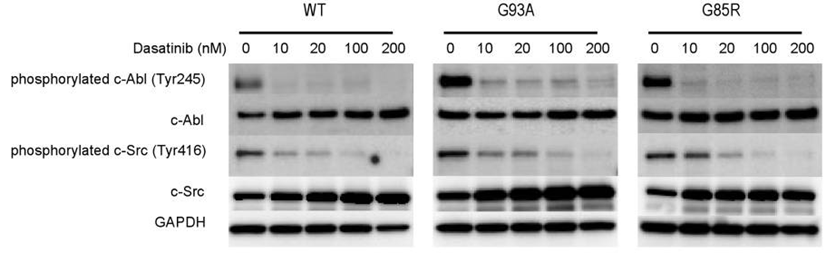
| Western blot | phospho-c-Abl(Tyr245) / phospho-c-Src(Tyr416) p27 / p21 p-FAK / p-STAT3 cleaved caspase 3 |
|
23049975 |
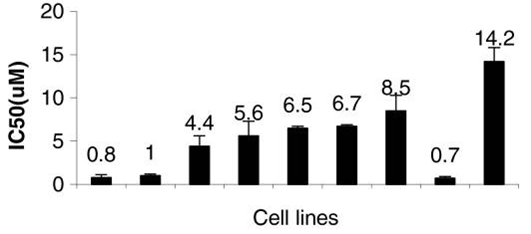
| Growth inhibition assay | IC50 |
|
23721490 |
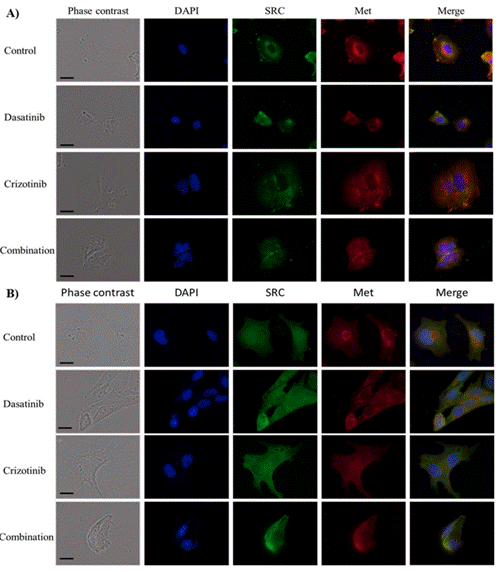
| Immunofluorescence | SRC / Met F-actin / Actinin-4 / Paxillin α-tubulin |
|
26517812 |
| ELISA | TNF-α E-selectin VCAM-1 |
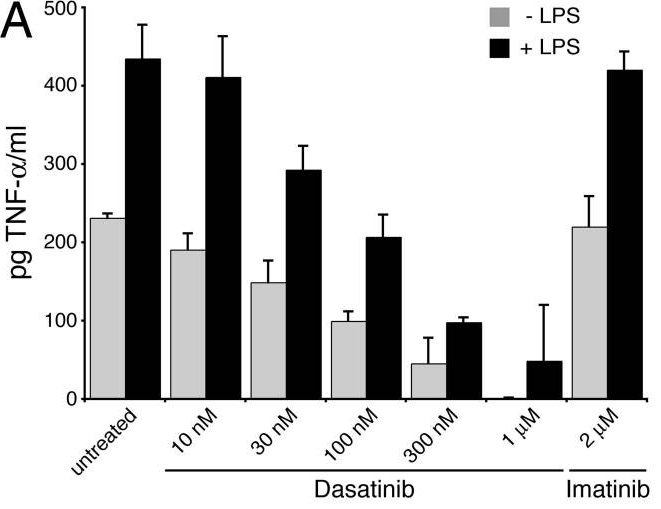
|
17684099 |
Clinical Trial Information
(data from https://clinicaltrials.gov, updated on 2024-05-22)
| NCT Number | Recruitment | Conditions | Sponsor/Collaborators | Start Date | Phases |
|---|---|---|---|---|---|
| NCT05527418 | Recruiting | Recent HIV-1 Infection |
Eva Bonfill|Institut d''Investigacions Biomèdiques August Pi i Sunyer |
January 26 2024 | Phase 2 |
| NCT05993949 | Recruiting | Lymphoblastic Leukemia |
Stanford University|Kite Pharma |
October 2 2023 | Phase 1 |
| NCT05780073 | Recruiting | HIV Infection Primary |
Fundació Institut Germans Trias i Pujol|Fundación FLS de Lucha Contra el Sida Enfermedades Infecciosas y Promoción de la Salud y Ciencia|Spanish Clinical Research Network - SCReN|IrsiCaixa|University of Turin Italy|Instituto de Salud Carlos III|Germans Trias i Pujol Hospital |
October 16 2023 | Phase 2 |
| NCT05198843 | Terminated | Anatomic Stage IV Breast Cancer AJCC v8|Metastatic Triple-Negative Breast Inflammatory Carcinoma |
National Cancer Institute (NCI) |
November 8 2022 | Phase 1|Phase 2 |
| NCT04925648 | Recruiting | Metastatic Prostate Cancer |
St Vincent''s Hospital Sydney |
October 18 2021 | Phase 2 |
Tech Support
Tel: +1-832-582-8158 Ext:3
If you have any other enquiries, please leave a message.
Frequently Asked Questions
Question 1:
What’s the difference between S1021 and S7782? Which one is better for in vivo studies?
Answer:
Usually, hydrate will be more stable and dissolve better than free base. But it (S1021) dissolves better in DMSO than hydrate one (S7782).
Question 2:
Can I give it to mice by oral gavage? If so, how to dissolve this compound?
Answer:
Our S1021 in 1% DMSO+30% PEG 300+1% Tween 80 at 30 mg/ml is a suspension which you can administrate to mice via oral gavage. If you want a clear solution, it can be dissolved in 4% DMSO+30% PEG 300+5% Tween 80+ddH2O at 5 mg/ml clearly.
Signaling Pathway Map

Products are for research use only. Not for human use. We do not sell to patients.
©Copyright 2013 Selleck Chemicals. All Rights Reserved.