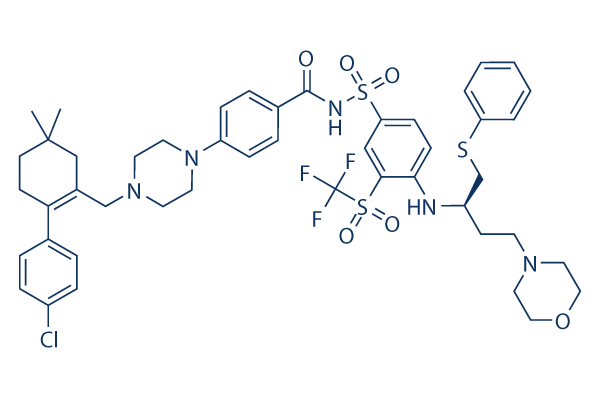
ABT-263 (Navitoclax)

ABT-263 (Navitoclax) is a potent inhibitor of Bcl-xL, Bcl-2 and Bcl-w with Ki of ≤ 0.5 nM, ≤1 nM and ≤ 1 nM, respectively.

Catalog No.S1001
5 5 10 Reviews 13 Product Citations
Price Stock Quantity  
USD 120 In stock
USD 200 In stock
USD 260 In stock
USD 370 In stock
USD 970 In stock

Free Overnight Delivery on all orders over $ 500.

Order now and get it on

ABT-263 (Navitoclax) Chemical Structure

ABT-263 (Navitoclax) Chemical Structure
Molecular Weight: 974.61

Validation & Quality Control

Customer Reviews(10)

Quality Control & MSDS

Related Compound Libraries

ABT-263 (Navitoclax) is available in the following compound libraries:

Product Information

  • Compare Bcl-2 Inhibitors
    Compare Bcl-2 Inhibitors
  • Research Area

Product Description

Biological Activity

Description ABT-263 (Navitoclax) is a potent inhibitor of Bcl-xL, Bcl-2 and Bcl-w with Ki of ≤ 0.5 nM, ≤1 nM and ≤ 1 nM, respectively.
Targets

Bcl-xL

Bcl-2

Bcl-w

IC50

≤ 0.5 nM (Ki)

≤1 nM (Ki)

≤ 1 nM (Ki)[1]

In vitro ABT-263 is structurally related to ABT-737; it is a disruptor of Bcl-2/Bcl-xL interactions with pro-apoptotic proteins. Overexpression of the prosurvival Bcl-2 family members is commonly associated with tumor maintenance, progression, and chemoresistance. [1] ABT-263 displays the protection afforded by overexpression of Bcl-2 or Bcl-xL with EC50 values of 60 nM and 20 nM, respectively. [1] A wide range of cellular activity is observed with ABT-263 having a 50% growth inhibition (EC50) of 110 nM against the most sensitive line (H146), whereas its activity in the least sensitive line (H82) results in an EC50 at 22 μM. All four cell lines with EC50 values of <400 nM (H146, H889, H1963, and H1417) are also highly sensitive to ABT-737, and the two most resistant lines (H1048 and H82) are similarly resistant to ABT-263. [2]
In vivo When ABT-263 is administered at 100 mg/kg/day in the H345 xenograft model, significant antitumor efficacy is observed with 80% TGI and 20% of treated tumors indicating at least a 50% reduction in tumor volume. [2] Oral administration of ABT-263 alone causes complete tumor regressions in xenograft models of small-cell lung cancer and acute lymphoblastic leukemia. In xenograft models of aggressive B-cell lymphoma and multiple myeloma where ABT-263 displays modest or no single agent activity, it significantly enhances the efficacy of clinically relevant therapeutic regimens. [2]
Clinical Trials ABT-263 is currently in Phase II clinical trial for the treatments of chronic lymphocytic leukemia.
Features

Protocol(Only for Reference)

Kinase Assay:

[1]

Affinity determination Binding affinities (Ki or IC50) of ABT-263 against different isoforms of Bcl-2 family are determined with competitive fluorescence polarization assays. The following peptide probe/protein pairs are used: f-bad (1 nM) and Bcl-xL (6 nM), f-Bax (1 nM) and Bcl-2 (10 nM), f-Bax (1 nM) and Bcl-w (40 nM), f-Noxa (2 nM) and Mcl-1 (40 nM), and f-Bax (1 nM) and Bcl-2-A1 (15 nM). Binding affinities for Bcl-xL are also determined using a time-resolved fluorescence resonance energy transfer assay. Bcl-xL (1 nM, His tagged) is mixed with 200 nM f-Bak, 1 nM Tb-labeled anti-His antibody, and ABT-263 at room temperature for 30 min. Fluorescence is measured on an Envision plate reader using a 340/35 nm excitation filter and 520/525 (f-Bak) and 495/510 nm (Tb-labeled anti-His antibody) emission filters.

Cell Assay:

[1]

Cell lines SCLC cell lines
Concentrations 0-1 μM
Incubation Time 48 hours
Method

Human tumor cell lines SCLC cell lines are maintained at 37 °C containing 5% CO2. SCLC cell lines are cultured in RPMI 1640 with 10% fetal bovine serum (FBS), 1% sodium pyruvate, 25 mM HEPES, 4.5 g/L glucose, and 1% penicillin/streptomycin. Leukemia and lymphoma cell lines are cultured in RPMI 1640 supplemented with 10% FBS and 1% penicillin/streptomycin. Cells (1-5×10 4) are treated by ABT-263 for 48 hours in 96-well culture plates in a final volume of 100 μL and cytotoxicity is assessed with the CellTiter Glo assay. In vitro cyto toxicity of ABT-263 is assayed.

Animal Study:

[1]

Animal Models C.B.-17 scid-bg or C.B.-17 scid mice
Formulation Formulated in 10% ethanol, 30% polyethylene glycol 400, and 60% Phosal 50 PG
Dosages 100 mg/kd/d
Administration Administered via p.o.
1

References

Chemical Information

Download ABT-263 (Navitoclax) SDF
Molecular Weight (MW) 974.61
Formula

C47H55ClF3N5O6S3

CAS No. 923564-51-6
Synonyms N/A
Solubility (25°C)
  • DMSO 195 mg/mL
  • Water <1 mg/mL
  • Ethanol <1 mg/mL
Storage 2 years -20°CPowder
2 weeks4°Cin DMSO
6 months-80°Cin DMSO
Chemical Name

Research Area

Customer Reviews (10)


Click to enlarge
Rating
Source Biochem Biophys Res Commun, 2011, 408(2), 344-9. ABT-263 (Navitoclax) purchased from Selleck
Method Flow cytometry
Cell Lines MDCKII wild type cells/MDR1 cells
Concentrations 50 nM
Incubation Time 24 h
Results MDCKII cells transfected with MDR1 showed significantly less apoptosis inducedby ABT-737 (Fig. C) and ABT-263 (Fig. D) than wild type cells.

Click to enlarge
Rating
Source PLoS One , 2011, 6, e21980. ABT-263 (Navitoclax) purchased from Selleck
Method Hoechst staining/western blot
Cell Lines LH86 cells/Huh7 cells
Concentrations 0–20 μM
Incubation Time 24 h
Results The higher dose of ABT-263 (10–20 μM) treatment for 24 h induced significant DNA fragmentation and caspase 9 or 3 cleavage activation in HCC cells, whereas lower concentrations of ABT-263 (0–2.5 μM) had no apoptotic toxicity to HCC cells. These results suggest that HCC cells are relatively resistant to low doses of ABT-263.

Click to enlarge
Rating
Source Clin Cancer Res, 2010, 16, 4217-4225. ABT-263 (Navitoclax) purchased from Selleck
Method Fluorescein-dextran release assay/western blot
Cell Lines CLL cells
Concentrations 0-5 μmol/L
Incubation Time 1-2.5 h
Results One possible explanation for the reduced potency of ABT-263 compared with ABT-737 could be due to the former being inherently less potent. To investigate this possibility we compared their activities in a model biochemical system, using liposomes loaded with fluorescein-conjugated 10 kD dextran.The BCL-XL-mediated inhibition of liposome permeabilization was reversed in an a lmost identical concentration-dependent manner by both ABT-263 and ABT-737 (Fig. A). These results showed that both ABT-263 and ABT-737 targe t antiapoptotic BCL-XL with similar efficiency in this model liposome system containing only BCL2 family members but devoid of extraneous proteins. Another explanation for the lower potency of ABT-263 could be a lower plasma membrane permeability.we investigated the potential of ABT-737 and ABT-263 to induce cytochromec release from permeabilized CLL cells(Fig. B). ABT-737 was clearly more potentin inducing cytochrome c release from permeabilized cells.Taken together these results indicate that the reduced potential of ABT-263 to induce apoptosis cannot be explained solely by either differential plasma membrane permeability or by a lower potency of ABT-263 compared with ABT-737 to inhibit antiapoptotic BCL2 family members.

Click to enlarge
Rating
Source Clin Cancer Res, 2010, 16, 4217-4225. ABT-263 (Navitoclax) purchased from Selleck
Method Mitochondrial membrane potential assay/Immunoprecipitation/electron microscopy/apoptosis assays
Cell Lines CLL cells/murine embryonic fibroblasts
Concentrations 10-100 nmol/L/0.3-30 μmol/L
Incubation Time 2-48 h
Results To gain in sight into the mechanism of ABT-263-induced cell death, we asked whether ABT-263 induced activation of apoptotic signaling pathways. ABT-263 induced a rapid cleavage of caspase-3 and loss of mitochondrial membrane potential, but was a gain less potent than ABT-737 ( Fig.A).To investigate the activity of both compounds at the level of BCL2 inhibition, we immunoprecipitated BCL2 upon drug treatment and measured the levels of BAK displaced by ABT-737 and ABT-263.BAK was shown to be associated with BCL2 (Fig. B). ABT-737 (10 or 100 nmol/L) efficiently d isplaced BAK from BCL2, whereas higher concentrations of ABT-263 (100 nmol /L) were required to induce release of BAK (Fig. B).ABT-263 (100 nmol/L) induced similar ultrastructural changes to ABT-737 (10 nmol/L), including condensed chromatin, rupture of the outer mitochondrial membrane, and loss of mitochondrial matrix d ensity (Fig. C).Finally, ABT-263-induced apoptosis was compl et ely inhibited in murine embryonic fibroblasts deficient for Bax and Bak (Fig. D), suggesting that ABT-263, like ABT-737 is a specific inhibitor of BCL2 proteins.

Click to enlarge
Rating
Source Clin Cancer Res, 2010, 16, 4217-4225. ABT-263 (Navitoclax) purchased from Selleck
Method Apoptosis assays
Cell Lines CLL cells
Concentrations 1-1000 nmol/L
Incubation Time 4 h
Results In our study we identify two factors that affect the efficacy of the ABT-263: high cell density and plasma protein binding. In leukemic patients, the high circulating cell densities might contribute to the resistance of CLL cells to ABT-263 that we observed in whole blood as compared with standard cell culture (Fig. B).We also describe that the ABT-263 is extensively bound to albumin and that in the presence of albumin higher drug concentrations are required for apoptosis induction (Fig. D)

Click to enlarge
Rating
Source Cancer Res, 2011, 71, 4518-4526. ABT-263 (Navitoclax) purchased from Selleck
Method Time-lapse microscopy
Cell Lines HeLa cell lines/U2OS cell lines/OVCAR-5 cell lines/A549 cell lines
Concentrations 1 μmol/L
Incubation Time
Results Navitoclax accelerates apoptosis during mitotic arrest.In navitoclax alone proliferation continued normally in HeLa, OVCAR-5, and A549 cells, and we observed less than 5% cell death in these 3 cell lines after 60 hours of drug treatment (gray lines in the top panel). In U2OS cells, navitoclax alone was cytotoxic.When navitoclax was combined with an antimitotic drug, we observed strong enhance-ment of cell death for all 4 cell lines. MOMP was observed to precede death in more than 95% of single cell death events, confirming that antimitotics + navitoclax trigger cell death mainly through the mitochondria-dependent apoptosis path-way. Moreover, in antimitotic alone, or antimitotic + navitoclax, no apoptosis occurred before cells entered mitotic arrest.Evidently, navitoclax enhances the proapoptotic signaling that initiates when cells enter mitotic arrest instead of at time of drug addition.cell blebbing and lysing, and plotted cumulative survival curves that pro-vide a metric for the rate of apoptosis induction during and after mitotic arrest.

Click to enlarge
Rating
Source PLoS One, 2011, 6, e21980. ABT-263 (Navitoclax) purchased from Selleck
Method Western blot/Hoechst staining/Apoptosis assays
Cell Lines LH86 cells
Concentrations 1 μM
Incubation Time 1-6 h
Results As shown in Figure A, the combination treatment of HCC cells with ABT-263 (1 μM) and YM-155 (1μM) for up to 6 h has no effects on the expressions of either anti-apoptotic protein Bcl-xL or pro-apoptotic proteins including Bad, Bak, and Bax. However, as expected, the presence of YM-155 significantly decreased survivin protein expression (Figure B, left third lane). Co-treatment of cells with ABT-263 (1 μM) and YM-155 (1μM) induced an even greater decrease in survivin protein expression (Figure B, right two lanes) than that of YM-155 itself did. However, we indeed observed that ABT-263 single treatment for 3 h resulted in survivin increase (Figure B). To further determine survivin inhibition plays a critical role in sensitizing ABT-263 to induce apoptosis in HCC cells, we down-regulated survivin expression in HCC cells by siRNA duplexes targeted against human survivin mRNA, and then examined the expression of survivin by Western blotting (Figure C) and apoptotic events after ABT-263 treatments. The results demonstrated that ABT-263 induced significant apoptosis in the survivin siRNA-transfected cells, but not in siRNA Random-transfected (control) cells (Figure D, E, and F).

Click to enlarge
Rating
Source PLoS One, 2011, 6, e21980. ABT-263 (Navitoclax) purchased from Selleck
Method Western blot/Hoechst staining
Cell Lines LH86 cells
Concentrations 1-2.5 μM
Incubation Time 1-24 h
Results Treatment of cells with ABT-263 (1-2.5 μM) for 1 h could result in the increase of phosphorylated ERK (p-ERK) but not ERK (Figure A). On the other hand, as shown in Figure B, ABT-263 (1 μM) administration could result in survivin expression increase. Thus, in an attempt to know if ERK-survivin activation could protect cells against ABT-263 toxicity, cells were untreated or treated with ABT-263 (1 μM), PD98059 (50 μM), or pre-treated with PD98059 (50 μM) followed by ABT-263 (1 μM). As shown in Figure C and D, blocking ERK activation with specific inhibitor PD98059 enhanced ABT-263-indcued apoptosis in HCC cells. To further determine ERK anti-apoptotic effects on ABT-263 treated HCC cells, we knocked down ERK expression through siRNA mediated gene silencing (Figure E) and then administrated ABT-263. Similar results revealed that ERK depletion sensitized ABT-263-induced apoptosis (Figure F). These results suggest the activation of ERK-survivin may render cells to be resistant to low dose ABT-263-induced apoptosis.

Click to enlarge
Rating
Source Clin Cancer Res, 2010, 16, 4217-4225. ABT-263 (Navitoclax) purchased from Selleck
Method Apoptosis assays
Cell Lines CLL cells
Concentrations 1-1000 nmol/L
Incubation Time 4 h
Results We compared the in vitro efficacy of two very closely related BCL2 antagon ists, ABT-737 and ABT-263. A direct comparison of the susceptibility of freshly isolated CLL cells to ABT-737 and ABT-263 in RPMI supplemented with 10% FCS revealed that both compounds induced efficient apoptosis but ABT-737 was∼4-fold more potent.

Click to enlarge
Rating
Source Clin Cancer Res , 2010, 16, 4217-4225. ABT-263 (Navitoclax) purchased from Selleck
Method Fluorescence polarization assay
Cell Lines
Concentrations 0.1-10 μmol/L
Incubation Time 4-12 h
Results To further characterize the nature of the binding of ABT-737 and ABT-263 to albumin, we used a fluorescence polarization assay.There are two main drug-binding sites on HSA: site 1 on subdomain IIA and site 2 on subdomain IIIA.Interestingly, ABT-263 displayed a markedly higher binding affinity to site 2 on HSA-III A than did ABT-737 (Fig. A). Whereas ABT-737 showed no binding to site 1, ABT-263 also bound to site 1 on HSA-IIA with an IC50 of 145 μmol/L (positive control phenylbutazone: 49 μmol/L; ref. 18; Fig. B) . These data show that ABT-263 has a higher albumin-binding capacity than does ABT-737, thus limiting the amount of free drug that is available to interact with the intended target, BCL2.

Product Citations (13)

  • BCL2/BCL-XL inhibition induces apoptosis, disrupts cellular calcium homeostasis, and prevents platelet activation. [Vogler M, et al. Blood 2011;117(26):7145-54]

    PubMed: 21562047
  • Both TMEM16F-dependent and TMEM16F-independent pathways contribute to phosphatidylserine exposure in platelet apoptosis and platelet activation. [van Kruchten R, et al. Blood 2013;ahead of print]

    PubMed: 23303820
  • In vivo imaging of drug-induced mitochondrial outer membrane permeabilization at single-cell resolution. [Earley S, et al. Cancer Res 2012;72(12):2949-56]

    PubMed: 22505651
  • Diminished sensitivity of chronic lymphocytic leukemia cells to ABT-737 and ABT-263 due to albumin binding in blood. [Vogler M, et al. Clin Cancer Res 2010;16(16):4217-25]

    PubMed: 20601444
  • Azacytidine and erlotinib exert synergistic effects against acute myeloid leukemia. [Lainey E, et al. Oncogene 2012;ahead of print]

    PubMed: 23085751
  • Combination treatments with ABT‐263 and an immunotoxin produce synergistic killing of ABT‐263‐resistant small cell lung cancer cell lines. [Mattoo AR, et al. Int J Cancer 2013;132(4):978-87]

    PubMed: 22821746
  • Copy number aberrations of BCL2 and CDKN2A/B identified by array-CGH in thymic epithelial tumors. [Petrini I, et al. Cell Death Dis 2012;3:e351]

    PubMed: 22825469
  • Cell survival, DNA damage, and oncogenic transformation after a transient and reversible apoptotic response. [Tang HL, et al. Mol Biol Cell 2012;23(12):2240-52]

    PubMed: 22535522
  • Distinct regulation of cytoplasmic calcium signals and cell death pathways by different plasma membrane calcium ATPase isoforms in MDA-MB-231 breast cancer. … [Curry MC, et al. J Biol Chem 2012;287(34):28598-608]

    PubMed: 22733819
  • Concurrent inhibition of PI3-Kinase and mTOR induces cell death in diffuse large B cell lymphomas, a mechanism involving down regulation of Mcl-1. [Zang C, et al. Cancer Lett 2012;ahead of print]

    PubMed: 23200668
  • All-trans retinoic acid promotes TGF-β-induced Tregs via histone modification but not DNA demethylation on Foxp3 gene locus. [Lu L, et al. PLoS One 2011;6(9):e24590]

    PubMed: 21931768
  • Pathogen reduction treatment of buffy coat platelet concentrates in additive solution induces proapoptotic signaling. [Reid S, et al. Transfusion 2012;52(10):2094-103]

    PubMed: 22320126
  • The B-cell lymphoma 2 (BCL2)-inhibitors, ABT-737 and ABT-263, are substrates for P-glycoprotein. [Vogler M, et al. Biochem Biophys Res Commun. 2011;408(2):344-9]

    PubMed: 21514278

Tech Support & FAQs

Answers to questions you may have can be found in the inhibitor handling instructions. Topics include how to prepare stock solutions, how to store inhibitors, and issues that need special attention for cell-based assays and animal experiments.

Tel: +1-832-582-8158 Ext:3Monday–Friday 9:00 AM–5:00 PM (Central Time)

If you have any other enquiries, please leave a message.

* Indicates a Required Field

Related Bcl-2 Inhibitors

  • ABT-737

    ABT-737 is a BH3 mimetic inhibitor of Bcl-xL, Bcl-2 and Bcl-w with EC50 of 78.7 nM, 30.3 nM and 197.8 nM, respectively.

  • Obatoclax mesylate (GX15-070)

    Obatoclax (GX15-070) is an inhibitor of Bcl-2 with Ki of 0.22 μM.

  • HA14-1

    HA14-1 is a nonpeptidic ligand of a Bcl-2 surface pocket with IC50 of~9 μM.

  • TW-37

    TW-37 is a novel nonpeptide inhibitor to recombinant Bcl-2, Bcl-xL and Mcl-1 with Ki of 0.29 μM, 1.11 μM and 0.26 μM, respectively.

  • AT101

    AT-101 is a BH3 mimetic known to be a potent inhibitor of antiapoptotic Bcl-2 family members.

  • BM-1074

    BM-1074 is a potent and efficacious Bcl-2/Bcl-xL inhibitor with Ki of <1 nM.

  • ABT-199 (GDC-0199 )

    ABT-199 is a Bcl-2-selective inhibitor with Ki of < 0.010 nM.

  • Sabutoclax

    Sabutoclax(BI-97C1) is a pan-Bcl-2 inhibitor, including Bcl-xL, Bcl-2, Mcl-1 and Bfl-1 with IC50 of 0.31 μM, 0.32 μM, 0.20 μM and 0.62 μM, respectively.

  • Nutlin-3

    Nutlin-3 is a potent and selective Mdm2 (RING finger-dependent ubiquitin protein ligase for itself and p53) antagonist with IC50 of 90 nM.

  • YM155

    YM155 is a potent IAP (inhibitor of apoptosis protein via E3 ubiquitin ligase) inhibitor for survivin with IC50 of 0.54 nM.

Recently Viewed Items

Tags: buy ABT-263 (Navitoclax) | ABT-263 (Navitoclax) supplier | purchase ABT-263 (Navitoclax) | ABT-263 (Navitoclax) cost | ABT-263 (Navitoclax) manufacturer | order ABT-263 (Navitoclax) | ABT-263 (Navitoclax) distributor
Contact Us