- Inhibitors
- Antibodies
- Compound Libraries
- New Products
- Contact Us

-
 Australia
-
 Austria
-
 Belgium
-
 Brazil
-
 Canada
-
 China
China
-
 Czech Republic
-
 Denmark
-
 Finland
-
 France
-
 Germany
-
 Greece
-
 Hong Kong
-
 Hungary
-
 Iceland
-
 India
India
-
 Ireland
-
 Israel
-
 Italy
Italy
-
 Japan
Japan
-
 Korea
Korea
-
 Luxembourg
-
 Malaysia
-
 Netherlands
-
 New Zealand
-
 Norway
-
 Poland
-
 Qatar
Qatar
-
 Romania
-
 Saudi Arabia
-
 Singapore
-
 Spain
Spain
-
 Sweden
-
 Switzerland
-
 Taiwan
-
 Turkey
-
 United Kingdom
-
 United States
For research use only. Not for use in humans.
Cetuximab (anti-EGFR)
Synonyms: C225
Cetuximab, a novel molecular-targeted agent,is an inhibitor of EGFR monoclonal humanized antibody interacting with the extracellular binding site of EGFR to block ligand stimulation. MW:145.781 KD.
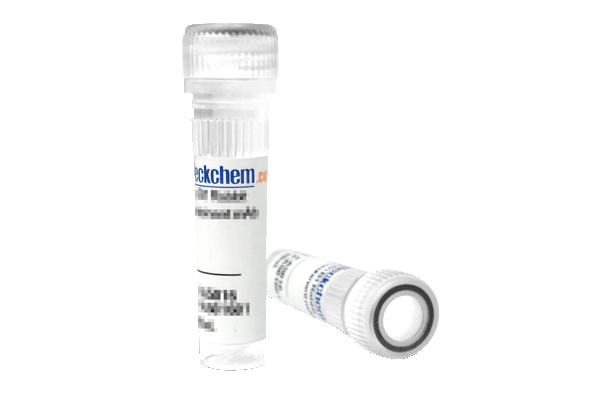
Click to purchase the isotype control of Cetuximab (anti-EGFR)
58 Citations

17 Nobel Prize winners have used Selleck products
Shimon Sakaguchi
Nature Communications 2025,16, Article number:1325
David Baker
Dev Cell 2023, 58(20):2163-2180.e9.
David Julius
Cell 2017, 185-198.e16
Michael Houghton
Cell Chem Biol, 2020, 27(7):780-792.e5
Charles M. Rice
Cell 2018, 172(3):423-438.e25
Quality Control
Batch:
Purity:
99.81%
Protein concentration: 3.63 mg/ml
Endotoxin Level: <1 EU/mg
99.81
Specificity
| Name | Citation | EGFR/ErbB1 | HER2/ErbB2 | ErbB3 | ErbB4 | mutant EGFR | Others |
|---|---|---|---|---|---|---|---|
| Saracatinib (AZD0530) | 307 | c-Src,c-YES,LCK | |||||
| Canertinib (CI-1033) | 48 | ||||||
| AG-490 | 132 | JAK2 (V617F) | |||||
| CP-724714 | 109 | ||||||
| WZ4002 | 34 | ||||||
| Sapitinib (AZD8931) | 50 | ||||||
| CUDC-101 | 23 | HDAC,HDAC1,HDAC6 | |||||
| AG-1478 | 99 | ||||||
| PD153035 HCl | 17 | ||||||
| Pelitinib (EKB-569) | 11 | Src,MEK/ERK,Raf | |||||
| AEE788 (NVP-AEE788) | 13 | c-Abl,FLT1,c-Fms | |||||
| AC480 (BMS-599626) | 10 | ||||||
| AP26113-analog (ALK-IN-1) | 4 | ALK,IGF1R,INSR | |||||
| WZ3146 | 2 | ||||||
| Allitinib tosylate | 18 | ||||||
| Rociletinib (CO-1686) | 37 | ||||||
| Varlitinib | 8 | ||||||
| Icotinib (BPI-2009H) | 10 | ||||||
| TAK-285 | 4 | MEK1,Aurora B,LCK | |||||
| WHI-P154 | 11 | Src,VEGFR,JAK3 | |||||
| Daphnetin | 4 | PKA,PKC | |||||
| PD168393 | 6 | ||||||
| CNX-2006 | 2 | ||||||
| Tyrphostin 9 | 1 | PDGFR | |||||
| AG-18 | 1 | ||||||
| Icotinib Hydrochloride | 0 | ||||||
| HS-10296 hydrochloride | 0 | ||||||
| MTX-531 | 0 | PI3Kα | |||||
| Avitinib maleate | 0 | BTK | |||||
| limertinib | 0 | ||||||
| AG 825 | 0 | PDGFR | |||||
| 4-AMino-1-phenylpyrazolo[3,4-d]pyriMidine | 0 | ||||||
| AST-1306 | 2 | ||||||
| ErbB2 inhibitor | 0 | ||||||
| Tuxobertinib (BDTX-189) | 2 | RIPK2,BLK | |||||
| Epertinib hydrochloride | 0 | ||||||
| JND3229 | 0 | EGFR C797S | |||||
| BI-4020 | 1 | ||||||
| Tyrphostin AG-528 | 0 | ||||||
| AG 556 | 0 | ||||||
| Canertinib dihydrochloride | 8 | ||||||
| EGFR Inhibitor | 3 | Microtubules | |||||
| SU5214 | 0 | VEGFR2 | |||||
| RG 13022 | 0 | ||||||
| TQB3804 | 1 | ||||||
| zipalertinib (TAS6417) | 3 | TXK,BMX | |||||
| Pyrotinib dimaleate | 4 | ||||||
| PD153035 | 14 | ||||||
| AG 494 | 0 | ||||||
| AG 555 | 0 | ||||||
| Theliatinib (HMPL-309) | 0 | ||||||
| Avitinib (Abivertinib) | 3 | JAK3,BTK | |||||
| Lazertinib (YH25448) | 9 | Del19,L85R | |||||
| Lifirafenib (BGB-283) | 6 | WT A-RAF,C-RAF (Y340/341D),BRAF(V600E) | |||||
| Nazartinib (EGF816) | 6 | ||||||
| Zorifertinib (AZD3759) | 6 | ||||||
| CL-387785 (EKI-785) | 5 | ||||||
| Poziotinib (HM781-36B) | 35 | ||||||
| AZ5104 | 4 | ACK1,BLK,BRK | |||||
| AV-412 free base | 0 | ||||||
| HER2-Inhibitor-1 | 1 | ||||||
| WZ8040 | 3 | ||||||
| Genistein | 35 | topo II | |||||
| Rezivertinib | 1 | ||||||
| BDTX-1535 | 0 | ||||||
| Falnidamol | 0 | ||||||
| BLU-945 | 1 | ||||||
| (S)-Sunvozertinib ((S)-DZD9008) | 1 | ||||||
| CH7233163 | 1 | ||||||
| Licochalcone D | 0 | NF-κB,PARP,Caspase | |||||
| Alflutinib (Furmonertinib) mesylate | 3 | CYP3A4 | |||||
| (Rac)-JBJ-04-125-02 | 0 | ||||||
| Tyrphostin AG30 (AG30) | 0 | ||||||
| AG-1557 | 0 | ||||||
| AG99 | 0 | ||||||
| MTX-211 | 2 | PI3K | |||||
| RG14620 | 0 | ABCG2 | |||||
| Almonertinib (HS-10296) | 4 | ||||||
| Cyasterone | 1 | ||||||
| Norcantharidin | 3 | c-Met | |||||
| Naquotinib(ASP8273) | 1 | ||||||
| EAI045 | 2 | ||||||
| Olmutinib (BI 1482694) | 6 | BTK | |||||
| Butein | 2 | ||||||
| Chrysophanic Acid | 3 | mTOR | |||||
| EGCG ((-)-Epigallocatechin Gallate) | 42 | DNMT,telomerase,FASN |
Expand to Check More
1. "+" indicates inhibitory effect. Increased inhibition is marked by a higher "+" designation. 2. "✔" indicates inhibitory effect, but without specific value.
Mechanism of Action
| Description |
Cetuximab, a novel molecular-targeted agent,is an inhibitor of EGFR monoclonal humanized antibody interacting with the extracellular binding site of EGFR to block ligand stimulation. MW:145.781 KD.
|
|---|---|
| Features |
Human IgG1
|
| In vitro |
Cetuximab treatment increases mitochondrial priming of EGFR-expressing HeLa cells but not in EGFR-expressing MDA-MD-231 cells. |
| Cell Research |
Cells were lysed at a density of 1 x 10⁶/50 μL in lysis buffer (0.25 M Tris-HCl, 2% sodium dodecylsulfate, 4% β-mercaptoethanol, 10% glycerol, 0.02% bromophenol blue) supplemented with 1 X protease/phosphatase inhibitor cocktail. Cell lysates were then loaded onto polyacrylamide gels with sodium dodecyl sulfate. After electrophoresis, proteins were transferred to polyvinylidene difluoride (PVDF) membranes. The transblotted membranes were blocked for 1 hr and then probed with appropriate primary antibodies overnight at 4 ℃. Next day, the membranes were washed three times for a total of 30 min and then incubated with IRDye 680RD Donkey anti-Rabbit IgG (H + L) or IRDye 800CW Donkey anti-Mouse IgG (H + L) in darkness at room temperature for 1 h. After another three washes, scan immunoblot membranes and quantify band intensity. |
| In vivo |
C225 enhanced the antitumor activity of several chemotherapeutic drugs in mouse xenograft models. Cetuximab, exerts its antitumor efficacy by multiple mechanisms that include the inhibition of cell cycle progression by arrest in the G1- phase and decreased cell number in the S-phase. Cell cycle arrest in the G1-phase also induces apoptosis by the induction and activation of proapoptotic molecules. cetuximab alone and in synergy with carboplatin resulted in decreases of tumor size, metastatic spread, and MVD in NCI-N87 tumors with EGFR cell surface expression and absence of mutations in BRAF and K-ras, whereas cetuximab had minimal in vitro effect and no in vivo treatment efficacy in tumors derived from MKN-45, in which the phenotype was also BRAF and K-ras wildtype, but which had only weak cytoplasmic EGFR protein expression. |
| Animal Research |
Objective: Antitumor activity of cetuximab in murine gastric cancer model |
References |
|
Product Details
| CAS No. | 205923-56-4 |
|---|---|
| Isotype | Human IgG1 |
| Source | CHO cells |
| Formulation | 100 mM Pro-Ac, 20 mM Arg, pH5.0 |
| Storage (From the date of receipt) |
Store the undiluted solution at 4°C in the dark to avoid freeze-thaw cycles |
Comparison of Clones for
*Literature analysis of various clone (for this target) products available on the market shows that Selleck's selected clones are more frequently applied. (data until September 2024)
Tech Support
Tel: +1-832-582-8158 Ext:3
If you have any other enquiries, please leave a message.
Frequently Asked Questions
Question 1:
How to store the antibody?
Answer:
Store the undiluted solution at 4 °C in the dark. Freezing antibodies can result in a loss of activity caused by the freezing/thawing process. Diluting antibodies to working concentrations and storing at 4°C for more than a day should be avoided. Additionally, make sure to keep the antibody sterile. Under these storage conditions, your antibodies should remain active for up to one year and oftentimes longer.

Products are for research use only. Not for human use. We do not sell to patients.
©Copyright 2013 Selleck Chemicals. All Rights Reserved.