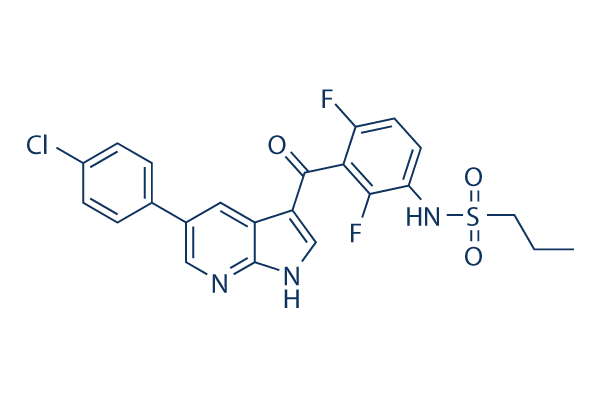
Vemurafenib (PLX4032)

PLX4032 (Vemurafenib, RG7204, Zelboraf, RO5185426) is a novel and potent inhibitor of B-RafV600E with IC50 of 31 nM.

Catalog No.S1267
5 5 6 Reviews 16 Product Citations
Price Stock Quantity  
USD 70 In stock
USD 270 In stock
USD 770 In stock

Free Overnight Delivery on all orders over $ 500.

Order now and get it on

Vemurafenib (PLX4032) Chemical Structure
Molecular Weight: 489.92

Validation & Quality Control

Customer Reviews(6)

Quality Control & MSDS

Related Compound Libraries

Products used with Vemurafenib (PLX4032) in previous publications

Product Information

  • Compare Raf Inhibitors
    Compare Raf Inhibitors
  • Research Area
  • Vemurafenib (PLX4032) Mechanism
  • Combination Therapy
    Combination Therapy

Product Description

Biological Activity

Description PLX4032 (Vemurafenib, RG7204, Zelboraf, RO5185426) is a novel and potent inhibitor of B-RafV600E with IC50 of 31 nM.
Targets B-RafV600E C-Raf MAP4K5 (KHS1) SRMS ACK1 FGR
IC50 31 nM 48 nM 51 nM 18 nM 19 nM 63 nM [1]
In vitro PLX4032 inhibits B-RAFV600E, C-RAF, as well as wildtype B-RAF, with IC50 of 31 nM, 48 nM and 100 nM, respectively. PLX4032 also inhibits several non-RAF kinases, including ACK1, KHS1, and SRMS, with IC50 of 18 nM to 51 nM. [1] In melanoma cell lines, the inhibitory effect by PLX4032 depends on B-RAF mutational status, because PLX4032 potently inhibits those harboring B-RAF V600 mutants, including V600E, V600D, V600K, and V600R, but not wildtype or other mutants. The IC50 values of PLX4032 on these cells, including MALME-3M, Colo829, Colo38, A375, SK-MEL28, and A2058, ranges from 20 nM to 1 μM. In these cells, PLX4032 (0.1 μM to 30 μM) also inhibits the phosphorylation of both MEK1/2 and ERK1/2. [2] PLX4032 is highly effective in the treatment of melanoma, for its ability of inhibiting B-RAFV600E. However, PLX4032 displays limited effect in colon cancer patients that also carrying B-RAFV600E oncoprotein. The reason for this is that, in colon cancer cells, B-RAFV600E inhibition by PLX4032 results in a rapid feedback EGFR activation, which compensates for the PLX4032-inhibited cell proliferation. [3]
In vivo In B-RAFV600E-mutant mice xenograft models, PLX4032 (6 mg/kg–20 mg/kg) inhibits tumor growth. [1] In mice xenograft models of LOX, Colo829, and A375 cells, PLX4032 (12.5 mg/kg–100 mg/kg) inhibits tumor growth and prolongs mice survival. [2]
Clinical Trials PLX4032 has recently been approved by US Food and Drug Administration (FDA) for the treatment of advanced metastatic melanoma with a B-RAFV600E mutation.
Features PLX4032 is a novel and potent inhibitor of B-RAFV600E oncoprotein.

Protocol(Only for Reference)

Kinase Assay: [1]

RAF kinase activity measurements The kinase activities of wild-type RAF and mutants are determined by measuring phosphorylation of biotinylated-BAD protein. For each enzyme (0.01 ng), 20 μL reactions are carried out in 20 mM Hepes (pH 7.0), 10 mM MgCl2, 1 mM DTT, 0.01% (v/v) Tween-20, 50 nM biotin-BAD protein, and 1 mM ATP at room temperature. Reactions are stopped at 5 min with 5 μL of a solution containing 20 mM Hepes (pH 7.0), 200 mM NaCl, 80 mM EDTA, 0.3% (w/v) bovine serum albumin (BSA). The stop solution also includes phospho-BAD (Ser112) antibody, streptavidin-coated donor beads, and protein A acceptor beads. The antibody and beads are pre-incubated in stop solution in the dark at room temperature for 30 min. The final dilution of antibody is 1/2000 and the final concentration of each bead is 10 μg/mL. The assay plates are incubated at room temperature for one hour and then are read on a PerkinElmer AlphaQuest reader. Mutant activities are the average of two different batches of purified protein assayed in duplicate in three different experiments.

Cell Assay: [2]

Cell lines MALME-3M, Colo829, Colo38, A375, SK-MEL28, and A2058 cells
Concentrations 0–10 μM , dissolved in DMSO
Incubation Time 5 days
Method Cellular proliferation is evaluated by MTT assay. Briefly, cells are plated in 96-well microtiter plates at a density of 1000 to 5000 cells per well in a volume of 180 μL. PLX4032 is prepared at 10 times the final assay concentration in media containing 1% DMSO. Twenty-four hours after cell plating, 20 μL of the appropriate dilution of PLX4032 are added to plates in duplicate. The plates are assayed for proliferation 6 days after the cells are plated. Percent inhibition is calculated and the IC50 is determined from the regression of a plot of the logarithm of the concentration versus percent inhibition.

Animal Study: [2]

Animal Models Mice (athymic nude) xenograft models of LOX, Colo829, and A375 cells
Formulation Formulated as microprecipitated bulk powder (MBP), suspended at the desired concentration in an aqueous vehicle containing 2% Klucel LF, and adjusted to pH 4 with dilute HCl
Dosages 12.5 mg/kg–100 mg/kg
Administration Oral gavage twice daily
1

References

Chemical Information

Download Vemurafenib (PLX4032) SDF
Molecular Weight (MW) 489.92
Formula

C23H18ClF2N3O3S

CAS No. 918504-65-1
Synonyms RG7204
Solubility (25°C)
  • DMSO 98 mg/mL
  • Water <1 mg/mL
  • Ethanol <1 mg/mL
Storage 2 years -20°CPowder
2 weeks4°Cin DMSO
6 months-80°Cin DMSO
Chemical Name

Research Area

Customer Reviews (6)


Click to enlarge
Rating
Source J Invest Dermatol, 2013, ahead of print. Vemurafenib (PLX4032) purchased from Selleck
Method Western blot
Cell Lines A375 melanoma cells
Concentrations 0-10 μM
Incubation Time 6 h
Results The activation of Stat3 and the protein expression of PAX3 were both repressed in vemurafenib-sensitive (parental) A375 and UACC62 melanoma cells, but higher vemurafenib concentration were required in resistant A375 and UACC62 melanoma cells. Specifically, vemurafenib at 1 μM inhibited the expression of phospho-Stat3 in sensitive cells, but not in resistant cells. These results suggest that inhibition of Stat3 signaling represents a potential therapeutic strategy to overcome the acquired resistance to vemurafenib in melanoma cells.

Click to enlarge
Rating
Source Oncoimmunology, 2012, 1(9), 1476-1483. Vemurafenib (PLX4032) purchased from Selleck
Method flow cytometry
Cell Lines tumor-infiltrating lymphocytes
Concentrations 100-250 nM
Incubation Time 72 h
Results Treatment with Vem significantly increased the frequency of TILs recognizing autologous melanoma cells and responding to them by producing Type 1 helper cytokines (Fig. A ) or by mobilizing cytotoxic granules (Fig. B ), confirming the polyfunctionality of newly-induced responses.

Click to enlarge
Rating
Source J Invest Dermatol, 2011, 131(10), 2087-95.. Vemurafenib (PLX4032) purchased from Selleck
Method Clonogenic assays
Cell Lines VM21/VM1 (c) cells
Concentrations 0.1 μM
Incubation Time 14 d
Results Combination of PD166866 with the V600E BRAF-specific inhibitor RG7204 (PLX4032) potently reduced clonogenic growth of VM21 and VM1 cells.

Click to enlarge
Rating
Source Dr Zhe-Sheng Chen of St. John's University. Vemurafenib (PLX4032) purchased from Selleck
Method Cell cytotoxicity assay
Cell Lines HEK293 cells, HEK293/MRP7 cells
Concentrations 20 μM
Incubation Time
Results

Click to enlarge
Rating
Source Dr Zhe-Sheng Chen of St. John's University. Vemurafenib (PLX4032) purchased from Selleck
Method Cell cytotoxicity assay
Cell Lines H460 cells, H460/MX20 cells
Concentrations 20 μM
Incubation Time
Results

Click to enlarge
Rating
Source Dr Zhe-Sheng Chen of St. John's University. Vemurafenib (PLX4032) purchased from Selleck
Method [3H]-Mitoxantrone accumulation analysis
Cell Lines H460 cells, H460/MX20 cells
Concentrations 20 μM
Incubation Time 96 h
Results Vemurafenib increased the intra-cellular accumulation of Mitoxantrone in ABCG2 overexpressing H460/MX20 cells compared with parental H460 cells.

Product Citations (16)

  • Unresponsiveness of colon cancer to BRAF(V600E) inhibition through feedback activation of EGFR. [Prahallad A, et al. Nature 2012;483(7387), 100-103]

    PubMed: 22281684
  • MED12 controls the response to multiple cancer drugs through regulation of TGF-β receptor signaling. [Huang S, et al. Cell 2012;151(5):937-50]

    PubMed: 23178117
  • MDM4 is a key therapeutic target in cutaneous melanoma. [Gembarska A, et al. Nat Med 2012;ahead of print]

    PubMed: 22820643
  • Lung cancers with acquired resistance to EGFR inhibitors occasionally harbor BRAF gene mutations but lack mutations in KRAS, NRAS, or MEK1. [Ohashi K, et al. Proc Natl Acad Sci U S A 2012;109(31), E2127-33]

    PubMed: 22773810
  • Colloidal Aggregation Affects the Efficacy of Anticancer Drugs in Cell Culture. [Owen SC, et al. ACS Chem Biol 2012;7(8):1429-35]

    PubMed: 22625864
  • Oncogenic B-RAF(V600E) Signaling Induces the T-Box3 Transcriptional Repressor to Repress E-Cadherin and Enhance Melanoma Cell Invasion. [Boyd SC, et al. J Invest Dermatol 2012;ahead of print]

    PubMed: 23190890
  • Fibroblast growth factor receptors as therapeutic targets in human melanoma: synergism with BRAF inhibition. [Metzner T, et al. J Invest Dermatol 2011;131(10):2087-95]

    PubMed: 21753785
  • Stat3-Targeted Therapies Overcome the Acquired Resistance to Vemurafenib in Melanomas [Liu F, et al. J Invest Dermatol 2013;ahead of print]

    PubMed: 23344460
  • A genome-scale RNA interference screen implicates NF1 loss in resistance to RAF inhibition. [Whittaker SR, et al. Cancer Discov 2013;ahead of print]

    PubMed: 23288408
  • Aurora B is regulated by the mitogen-activated protein kinase/extracellular signal-regulated kinase (MAPK/ERK) signaling pathway and is a valuable potential target in melanoma cells. [Bonet C, et al. J Biol Chem 2012;287(35):29887-98]

    PubMed: 22767597
  • Melanoma Chemotherapy Leads to the Selection of ABCB5-Expressing Cells. [Chartrain M, et al. PLoS One 2012;7(5):e36762]

    PubMed: 22675422
  • Functional profiling of live melanoma samples using a novel automated platform. [Schayowitz A, et al. PLoS One 2012;7(12), e52760]

    PubMed: 23285177
  • Anti-Cancer Drugs Elicit Re-Expression of UDP-Glucuronosyltransferases in Melanoma Cells. [Dellinger RW, et al. PLoS One 2012;7(10), e47696]

    PubMed: 23110092
  • Specifically targeting ERK1 or ERK2 kills Melanoma cells. [Qin J, et al. J Transl Med 2012;10, 15]

    PubMed: 22277029
  • Preexisting MEK1 Exon 3 mutations in V600E/KBRAF melanomas do not confer resistance to BRAF inhibitors. [Shi H, et al. Cancer Discov 2012;2(5):414-24]

    PubMed: 22588879
  • BRAF inhibition improves tumor recognition by the immune system: Potential implications for combinatorial therapies against melanoma involving adoptive T-cell transfer. [Donia M, et al. Oncoimmunology 2012;1(9):1476-1483]

    PubMed: 23264894

Tech Support & FAQs

Answers to questions you may have can be found in the inhibitor handling instructions. Topics include how to prepare stock solutions, how to store inhibitors, and issues that need special attention for cell-based assays and animal experiments.

Tel: +1-832-582-8158 Ext:3Monday–Friday 9:00 AM–5:00 PM (Central Time)

If you have any other enquiries, please leave a message.

* Indicates a Required Field

Related Raf Inhibitors

  • GDC-0879

    GDC-0879 is a novel potent, selective B-Raf inhibitor for B-RafV600E with IC50 of 0.13 nM.

  • PLX-4720

    PLX-4720 is a potent and selective inhibitor of B-RafV600E and c-Raf-1Y340D/Y341D with IC50 of 13 nM and 6.7 nM, respectively.

  • RAF265 (CHIR-265)

    RAF265 (CHIR-265) is a selective and potent inhibitor of B-Raf and VEGFR2 with IC50 of 3-60 nM and EC50 of 30 nM, respectively.

  • Raf265 derivative

    A derivative of Raf265. But the effects of this derivative is not known.

  • NVP-BHG712

    NVP-BHG712 is a specific inhibitor of c-Raf, c-Src and c-Abl with IC50 of 0.395 μM, 1.266 μM and 1.667 μM and also inhibits EphB4 and VEGFR2 with ED50 of 25 nM and 4.2 μM, respectively.

  • SB590885

    SB590885 is a potent B-Raf inhibitor with Ki of 0.16 nM.

  • ZM 336372

    ZM 336372 is a potent and selective c-Raf inhibitor with IC50 of 70 nM.

  • AZ628

    AZ628 is a potent inhibitor for wild-type CRAF and BRAFV600E with IC50 of 29 nM and 34 nM, respectively.

  • Dabrafenib (GSK2118436)

    Dabrafenib (GSK2118436) is a potent ATP-competitive inhibitor of B-Raf, B-RafV600E and c-Raf with IC50 of 3.2 nM, 0.8 nM and 5.0 nM, respectively.

  • GW5074

    GW5074 is a potent and selective c-Raf inhibitor with IC50 of 9 nM.

Recently Viewed Items

Tags: buy Vemurafenib (PLX4032) | Vemurafenib (PLX4032) ic50 | Vemurafenib (PLX4032) price | Vemurafenib (PLX4032) cost | Vemurafenib (PLX4032) solubility dmso | Vemurafenib (PLX4032) purchase | Vemurafenib (PLX4032) manufacturer | Vemurafenib (PLX4032) research buy | Vemurafenib (PLX4032) order | Vemurafenib (PLX4032) mouse | Vemurafenib (PLX4032) chemical structure | Vemurafenib (PLX4032) mw | Vemurafenib (PLX4032) molecular weight | Vemurafenib (PLX4032) datasheet | Vemurafenib (PLX4032) supplier | Vemurafenib (PLX4032) in vitro | Vemurafenib (PLX4032) cell line | Vemurafenib (PLX4032) concentration | Vemurafenib (PLX4032) nmr
Contact Us