
-
 Argentina
-
 Australia
-
 Austria
-
 Belgium
-
 Brazil
-
 Canada
-
 China
-
 Czech Republic
-
 Denmark
-
 Finland
-
 France
-
 Germany
-
 Greece
-
 Hong Kong
-
 Hungary
-
 Iceland
-
 India
-
 Ireland
-
 Israel
-
 Italy
-
 Japan
-
 Korea
-
 Luxembourg
-
 Malaysia
-
 Netherlands
-
 New Zealand
-
 Norway
-
 Poland
-
 Portugal
-
 Qatar
-
 Romania
-
 Saudi Arabia
-
 Singapore
-
 Spain
-
 Sweden
-
 Switzerland
-
 Taiwan
-
 Turkey
-
 United Kingdom
-
 United States
research use only
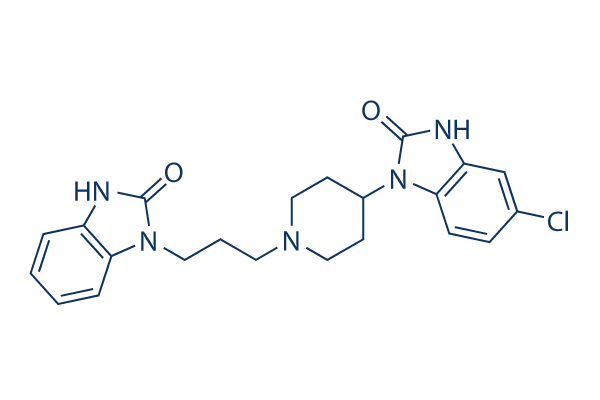
Domperidone Dopamine Receptor inhibitor
Cat.No.S2461
Quality Control
| Related Targets | Adrenergic Receptor AChR 5-HT Receptor COX Calcium Channel Histamine Receptor GABA Receptor TRP Channel Cholinesterase (ChE) GluR |
|---|---|
| Other Dopamine Receptor Inhibitors | MPTP Hydrochloride Trifluoperazine Trifluoperazine 2HCl Penfluridol Rotundine Sulpiride Azaperone ONC206 SCH-23390 hydrochloride Levosulpiride |
Solubility
|
In vitro |
DMSO
: 48 mg/mL
(112.69 mM)
Ethanol : 1 mg/mL Water : Insoluble |
Molarity Calculator
|
In vivo |
|||||
In vivo Formulation Calculator (Clear solution)
Step 1: Enter information below (Recommended: An additional animal making an allowance for loss during the experiment)
Step 2: Enter the in vivo formulation (This is only the calculator, not formulation. Please contact us first if there is no in vivo formulation at the solubility Section.)
Calculation results:
Working concentration: mg/ml;
Method for preparing DMSO master liquid: mg drug pre-dissolved in μL DMSO ( Master liquid concentration mg/mL, Please contact us first if the concentration exceeds the DMSO solubility of the batch of drug. )
Method for preparing in vivo formulation: Take μL DMSO master liquid, next addμL PEG300, mix and clarify, next addμL Tween 80, mix and clarify, next add μL ddH2O, mix and clarify.
Method for preparing in vivo formulation: Take μL DMSO master liquid, next add μL Corn oil, mix and clarify.
Note: 1. Please make sure the liquid is clear before adding the next solvent.
2. Be sure to add the solvent(s) in order. You must ensure that the solution obtained, in the previous addition, is a clear solution before proceeding to add the next solvent. Physical methods such
as vortex, ultrasound or hot water bath can be used to aid dissolving.
Chemical Information, Storage & Stability
| Molecular Weight | 425.91 | Formula | C22H24ClN5O2 |
Storage (From the date of receipt) | |
|---|---|---|---|---|---|
| CAS No. | 57808-66-9 | Download SDF | Storage of Stock Solutions |
|
|
| Synonyms | N/A | SMILES | C1CN(CCC1N2C3=C(C=C(C=C3)Cl)NC2=O)CCCN4C5=CC=CC=C5NC4=O | ||
Read more about storage stability stock solution CAS number SMILES
Mechanism of Action
| Targets/IC50/Ki |
Dopamine D2 receptor
|
|---|---|
| In vitro |
Domperidone (a D2R antagonist) inhibits Equilibrative NT1 (ENT1) activity more in the presence than in the absence of Bromocriptine and displays an IC50 value lower than that of Bromocriptine or Ergovaline in Madin-Darby bovine kidney (MDBK) cells.
|
| In vivo |
Domperidone (0.1 mg/kg) results in a significant decrease in feeding behavior and stimulation of basal metabolism, but has no effect on locomotor activity of rats in a Phenomaster system. This compound (1.1 mg/kg and 5.5 mg/kg, oral) significantly increases laminar microvascular blood flow (LMBF) in horses, compared with baseline values, beginning 4 hours after administration, and this effect persisted for at least 8 hours. It (0.2 mg/kg, i.v.) significantly increases laminar microvascular blood flow (LMBF) in horses, compared with baseline values, at 10 and 12 hours after administration. This chemical can ameliorate deleterious reproductive effects and reduce weight gain associated with fescue toxicosis in heifers. Domperidone-treated mares have shorter gestation duration and foaled closer to their expected parturition date than did control mares. They have higher Mammary gland scores and serum prolactin concentration. It (5 mg/kg, oral) increases peak plasma acetaminophen concentration and area under the curve in rats, indicating increased gastric emptying. This compound decreases the dopamine-induced contractile activity of midjejunal longitudinal muscle strips in rats.
|
References |
|
Clinical Trial Information
(data from https://clinicaltrials.gov, updated on 2026-03-24)
| NCT Number | Recruitment | Conditions | Sponsor/Collaborators | Start Date | Phases |
|---|---|---|---|---|---|
| NCT04699591 | RECRUITING | GERD; Gastroesophageal Reflux; Gastroparesis |
Jose Cocjin |
2013-04 | |
| NCT06695962 | NOT_YET_RECRUITING | Type 1 Diabetic |
University Hospital, Rouen |
2026-03-01 | PHASE3 |
| NCT01696734 | RECRUITING | Digestive System Disorder; Dyspepsia; Esophagitis; Gastroesophageal Reflux Disease; Gastroparesis; Heartburn; Nausea and Vomiting |
M.D. Anderson Cancer Center |
2012-10-23 | PHASE3 |
| NCT07578402 | NOT_YET_RECRUITING | Dyspepsia; Functioanl Dyspepsia; Epigastric Pain Syndrome; Epigastric Fullness |
Rakibul Mostafa |
2026-05-15 | PHASE4 |
| NCT06590805 | RECRUITING | Physical Therapy; Electrotherapy; Dietary Modification |
Haytham Ibrahim Morsi |
2024-09-01 | |
| NCT05570292 | COMPLETED | Gastric Residual Volume |
Ain Shams University |
2022-10-10 | PHASE3 |
Read more about Clinical Trials
Tech Support
Tel: +1-832-582-8158 Ext:3
If you have any other enquiries, please leave a message.
Signaling Pathway Map

Products are for research use only. Not for human use. We do not sell to patients.
©Copyright 2013 Selleck Chemicals. All Rights Reserved.