
-
 Argentina
-
 Australia
-
 Austria
-
 Belgium
-
 Brazil
-
 Canada
-
 China
China
-
 Czech Republic
-
 Denmark
-
 Finland
-
 France
-
 Germany
-
 Greece
-
 Hong Kong
-
 Hungary
-
 Iceland
-
 India
India
-
 Ireland
-
 Israel
-
 Italy
Italy
-
 Japan
Japan
-
 Korea
Korea
-
 Luxembourg
-
 Malaysia
-
 Netherlands
-
 New Zealand
-
 Norway
-
 Poland
-
 Portugal
-
 Qatar
Qatar
-
 Romania
-
 Saudi Arabia
-
 Singapore
-
 Spain
Spain
-
 Sweden
-
 Switzerland
-
 Taiwan
-
 Turkey
-
 United Kingdom
-
 United States
Ferroptosis Inhibitors
| Cat.No. | Product Name | Information | Product Use Citations | Product Validations |
|---|---|---|---|---|
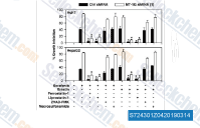
| S7243 | Ferrostatin-1 (Fer-1) | Ferrostatin-1 (Fer-1) is a potent and selective inhibitor of ferroptosis with EC50 of 60 nM. |
|
|
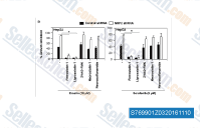
| S7699 | Liproxstatin-1 | Liproxstatin-1 is a potent ferroptosis inhibitor with an IC50 of 22 nM. |
|
|
| S5742 | Deferoxamine mesylate | Deferoxamine mesylate is the mesylate salt of Deferoxamine, which forms iron complexes and is used as a chelating agent. Deferoxamine is a ferroptosis inhibitor that stabilizes HIF-1α expression and improves HIF-1α transactivity in hypoxic and hyperglycemic states in vitro. Deferoxamine decreases beta-amyloid (Aβ) deposition and induces autophagy.Please do not prepare stock solutions with normal saline or PBS, as precipitation may occur. |
|
|
| S8792 | UAMC-3203 | UAMC-3203 is an improved ferroptosis inhibitor with an IC50 value of 10 nM in IMR-32 Neuroblastoma Cells. |
|
|
| S9839 | SRS11-92 | SRS11-92 (AA9), a Ferrostatin-1 (Fer-1) analogue, is a potent inhibitor of ferroptosis. This compound inhibits ferroptotic cell death induced by Erastin in HT-1080 human fibrosarcoma cells with EC50 of 6 nM. |
|
|
| E1535 | icFSP1 | icFSP1 is a potent, selective human ferroptosis suppressor protein-1 (hFSP1) inhibitor, promotes ferroptosis and indirectly inhibits FSP1 by inducing condensate formation. |
|
|
| S9840 | SRS16-86 | SRS16-86, a novel third-generation ferrostatin, is an inhibitor of ferroptosis. |
|
|
| S0910New | Bufotalin | Bufotalin is a bufadienolide from Venenum bufonis that acts as a novel inhibitor of GPX4 and induces iron-dependent ferroptosis in non-small cell lung cancer (NSCLC) cells, significantly reducing proliferation by accelerating GPX4 degradation and increasing intracellular Fe2+. | ||
| E1874 | Erastin2 | Erastin2 is an inducer of ferroptosis. It also selectively inhibits xc(-) cystine/glutamate transporter. It induces ferroptosis in HT-1080, T98G, and A549 cells with the potential to treat neurodegenerative diseases. | ||
| E1867 | NPD4928 | NPD4928 is an inhibitor of Ferroptosis Suppressor Protein 1 (FSP1) that enhances ferroptosis. It enhances the cytotoxic effects on various cell types when combined with GPX4 antagonists. | ||
| E4676New | viFSP1 | viFSP1 is a species-independent FSP1 inhibitor that directly targets the highly conserved NAD(P)H-binding pocket of FSP1. viFSP1 induces lipid peroxidation and ferroptotic cell death in FSP1-dependent cells. viFSP1 is a useful research compound for ferroptosis and renal or breast cancer studies. | ||
| E1925 | Butylhydroxyanisole | Butylhydroxyanisole (Butylated hydroxyanisole, BHA, E320) is an inhibitor of ferroptosis, a food preservative and antioxidant that prevents the formation of harmful compounds, extending shelf life. However, it's associated with liver toxicity, reproductive organ development issues, learning delays, and sleep problems. | ||
| E1574 | FSEN1 | FSEN1 is a potent and non-competitive FSP1 inhibitor with an IC50 value of 313 nM. It triggers iron death in cancer cells by inhibiting FSP1 and can be used in research of cancer. | ||
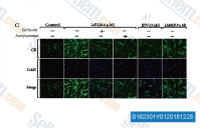
| S1623 | N-Acetylcysteine (NAC chemical, N-Acetyl-L-Cysteine) | Acetylcysteine (N-acetyl-l-cysteine, NAC,N-acetylcysteine) is a ROS(reactive oxygen species) inhibitor that antagonizes the activity of proteasome inhibitors. It is also a tumor necrosis factor production inhibitor. Acetylcysteine(N-acetyl-l-cysteine) suppresses TNF-induced NF-κB activation through inhibition of IκB kinases. Acetylcysteine(N-acetyl-l-cysteine) induces apoptosis via the mitochondria-dependent pathway. Acetylcysteine(N-acetyl-l-cysteine) inhibits ferroptosis and virus replication.Solutions are unstable and should be fresh-prepared. |
|
|
| S1077 | SB202190 | SB202190 is a potent p38 MAPK inhibitor targeting p38α/β with IC50 of 50 nM/100 nM in cell-free assays, sometimes used instead of SB 203580 to investigate potential roles for SAPK2a/p38 in vivo. This compound inhibits endothelial cell apoptosis via induction of autophagy and heme oxygenase-1. It significantly suppresses Erastin‐dependent ferroptosis. |
|

|
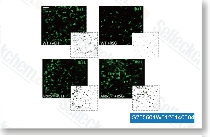
| S2556 | Rosiglitazone (BRL 49653) | Rosiglitazone is a potent antihyperglycemic agent and a potent thiazolidinedione insulin sensitizer with IC50 of 12, 4 and 9 nM for rat, 3T3-L1 and human adipocytes, respectively. Rosiglitazone is a pure ligand of PPAR-gamma, and has no PPAR-alpha-binding action. Rosiglitazone modulates TRP channels and induces autophagy. Rosiglitazone prevents ferroptosis. |
|
|
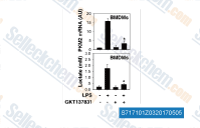
| S7171 | Setanaxib (GKT137831) | Setanaxib (GKT137831, GKT831) is a potent, dual NADPH oxidase NOX1/NOX4 inhibitor with Ki of 110 nM and 140 nM, respectively. This compound suppresses reactive oxygen species (ROS) production and partly inhibits ferroptosis. |
|
|
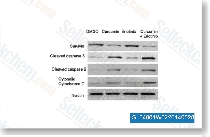
| S1848 | Curcumin (Diferuloylmethane) | Curcumin (Diferuloylmethane, Natural Yellow 3, Turmeric yellow) is the principal curcuminoid of the popular Indian spice turmeric, which is a member of the ginger family (Zingiberaceae). It is an inhibitor of p300 histone acetylatransferase(IC50~25 μM)and Histone deacetylase (HDAC); activates Nrf2 pathway and supresses the activation of NF-κB. Curcumin induces mitophagy, autophagy, apoptosis, and cell cycle arrest with antitumor activity. Curcumin reduces renal damage associated with rhabdomyolysis by decreasing ferroptosis-mediated cell death. Curcumin exhibits anti-infective properties against various human pathogens like the influenza virus, hepatitis C virus, HIV and so on. |
|
|
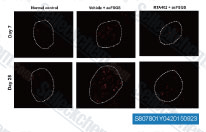
| S8078 | Bardoxolone Methyl (RTA 402) | Bardoxolone Methyl (RTA 402, TP-155, NSC 713200, CDDO Methyl Ester, CDDO-Me) is an IKK inhibitor, showing potent proapoptotic and anti-inflammatory activities; Also a potent Nrf2 activator and nuclear factor-κB (NF-κB) inhibitor. Bardoxolone Methyl abrogates ferroptosis. Bardoxolone methyl induces apoptosis and autophagy in cancer cells. |
|
|
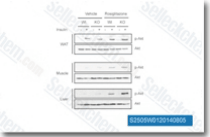
| S2505 | Rosiglitazone maleate | Rosiglitazone maleate, a member of the thiazolidinedione class of antihyperglycaemic agents, is a high-affinity selective agonist of the peroxisome proliferator-activated receptor-γ (PPAR-γ) with IC50 of 42 nM. This compound also modulates TRP channels and induces autophagy. It prevents ferroptosis. |
|
|
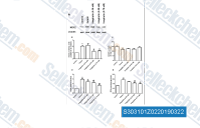
| S3031 | Linagliptin | Linagliptin is a highly potent, selective DPP-4 inhibitor with IC50 of 1 nM and exhibits a 10,000-fold higher selectivity for DPP-4 than for other dipeptidyl peptidases such as DPP-2, DPP-8, and DPP-9. Linagliptin activates glomerular autophagy in a model of type 2 diabetes. DPP4 mediates ferroptosis in TP53-deficient CRC cells. |
|
|
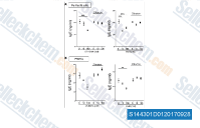
| S1443 | Zileuton | Zileuton is an orally active inhibitor of 5-lipoxygenase, and thus inhibits leukotrienes (LTB4, LTC4, LTD4, and LTE4) formation, used to decrease the symptoms of asthma. This compound induces apoptosis while inhibits ferroptosis. |
|
|
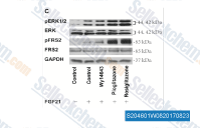
| S2046 | Pioglitazone HCl | Pioglitazone HCl (AD-4833, U-72107E) is an inhibitor of cytochrome P450 (CYP)2C8 and CYP3A4 enzymes. This compound inhibits CYP2C8, CYP3A4 and CYP2C9 with Ki of 1.7 μM, 11.8 μM and 32.1 μM, respectively. It is also a selective peroxisome proliferator-activated receptor-gamma (PPARγ) agonist with EC50 of 0.93 μM and 0.99 μM for human PPARγ and mouse PPARγ, respectively. This chemical inhibits mitochondrial iron uptake, lipid peroxidation, and subsequent ferroptosis. |
|
|
| S8432 | Troglitazone (CS-045) | Troglitazone is a potent agonist for the peroxisome proliferator-activated receptor-(PPAR) that is a ligand activated transcription factor regulating cell differentiation and growth. Troglitazone induces autophagy, apoptosis and necroptosis in bladder cancer cells. Troglitazone prevents RSL3-induced ferroptosis and lipid peroxidation in Pfa1 cells. |
|
|
| S3984 | Nordihydroguaiaretic acid (NDGA) | Nordihydroguaiaretic acid (NDGA) is a phenolic antioxidant found in the leaves and twigs of the evergreen desert shrub, Larrea tridentata (Sesse and Moc. ex DC) Coville (creosote bush). It is a recognized inhibitor of lipoxygenase (LOX) and has antioxidant and free radical scavenging properties. Nordihydroguaiaretic acid (NDGA) is a cytotoxic insulin-like growth factor-I receptor (IGF-1R)/HER2 inhibitor and induces apoptosis. |
|
|

Products are for research use only. Not for human use. We do not sell to patients.
©Copyright 2013 Selleck Chemicals. All Rights Reserved.