
- Bioactive Compounds
- By Signaling Pathways
- PI3K/Akt/mTOR
- Epigenetics
- Methylation
- Immunology & Inflammation
- Protein Tyrosine Kinase
- Angiogenesis
- Apoptosis
- Autophagy
- ER stress & UPR
- JAK/STAT
- MAPK
- Cytoskeletal Signaling
- Cell Cycle
- TGF-beta/Smad
- DNA Damage/DNA Repair
- Compound Libraries
- Antibodies
- Bioreagents
- qPCR
- 2x SYBR Green qPCR Master Mix
- 2x SYBR Green qPCR Master Mix(Low ROX)
- 2x SYBR Green qPCR Master Mix(High ROX)
- Protein Assay
- Protein A/G Magnetic Beads for IP
- Anti-Flag magnetic beads
- Anti-Flag Affinity Gel
- Anti-Myc magnetic beads
- Anti-HA magnetic beads
- Poly DYKDDDDK Tag Peptide lyophilized powder
- Protease Inhibitor Cocktail
- Protease Inhibitor Cocktail (EDTA-Free, 100X in DMSO)
- Phosphatase Inhibitor Cocktail (2 Tubes, 100X)
- Cell Biology
- Cell Counting Kit-8 (CCK-8)
- Animal Experiment
- Mouse Direct PCR Kit (For Genotyping)
- New Products
- Contact Us
-
 Australia
-
 Austria
-
 Belgium
-
 Canada
-
 China
China
-
 Czech Republic
-
 Denmark
-
 Finland
-
 France
-
 Germany
-
 Greece
-
 Hong Kong
-
 Hungary
-
 Iceland
-
 India
India
-
 Ireland
-
 Israel
-
 Italy
Italy
-
 Japan
Japan
-
 Korea
Korea
-
 Luxembourg
-
 Malaysia
-
 Netherlands
-
 New Zealand
-
 Norway
-
 Poland
-
 Qatar
Qatar
-
 Romania
-
 Saudi Arabia
-
 Singapore
-
 Spain
Spain
-
 Sweden
-
 Switzerland
-
 Taiwan
-
 Turkey
-
 United Kingdom
-
 United States
-
Fidaxomicin of Selleck (Japan)

research use only
Fidaxomicin DNA/RNA Synthesis inhibitor
Fidaxomicin is a narrow spectrum macrocyclic antibiotic that inhibits RNA polymerase sigma subunit.
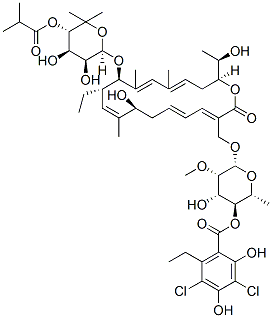
Chemical Structure
Molecular Weight: 1058.04
Purity & Quality Control
Batch:
Purity:
99.76%
99.76
Related Products
| Related Targets | tRNA synthetase RdRp DNA synthesis helicase ribonucleotide reductase | Click to Expand |
|---|---|---|
| Related Products | CX-5461 (Pidnarulex) SCR7 Favipiravir (T-705) RK-33 Carmofur Triapine (3-AP) B02 BMH-21 YK-4-279 Bergapten Tegafur (FT-207) Azaguanine-8 Halofuginone Adenine HCl Mizoribine Cyclocytidine HCl Thymidine APX-3330 Nedaplatin 6-Thio-dG | Click to Expand |
| Related Compound Libraries | FDA-approved Drug Library Natural Product Library Apoptosis Compound Library DNA Damage/DNA Repair compound Library Cell Cycle compound library | Click to Expand |
Signaling Pathway
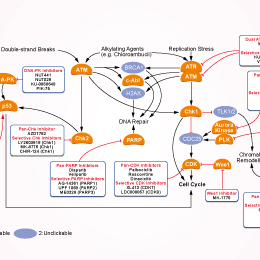
Mechanism of Action
| Targets |
|
|---|
In vitro |
||||
| In vitro | Fidaxomicin acts as a RNA polymerase inhibitor by binding to the DNA template–RNA polymerase (RNAP) complex prior to the formation of the open RNAP-DNA complex in which transcription is initiated. Therefore this compound will inhibit protein synthesis. As a result, apoptosis is triggered in susceptible organisms such as C. difficile. [1] |
|||
|---|---|---|---|---|
In Vivo |
||
| In vivo | The minimum inhibitory concentration for 90% of organisms for fidaxomicin against C. difficile is 0.9978 to 2 μg/mL. This compound is not systemically absorbed as shown by a plasma concentrations below the lower limit of quantification after single-dose or multiple-dose. In contrast, fecal concentrations of this chemical are much higher and are concentration-dependent. Cmax = 2 hours; Tmax = 5.2 ng/mL; AUC = 14 ng•hr/mL. It is hydrolyzed by gastric acid or intestinal microsomes into a less active metabolite (OP-1118). The cytochrome enzyme system are not involved in the metabolism of this compound. [1] |
|
|---|---|---|
| NCT Number | Recruitment | Conditions | Sponsor/Collaborators | Start Date | Phases |
|---|---|---|---|---|---|
| NCT04138706 | Recruiting | Clostridium Difficile Infection |
McGill University Health Centre/Research Institute of the McGill University Health Centre|Canadian Institutes of Health Research (CIHR) |
November 19 2020 | Phase 3 |
| NCT02437591 | Completed | Inflammatory Bowel Disease (IBD)|Clostridium Difficile Infection (CDI) |
Astellas Pharma Europe Ltd.|Astellas Pharma Inc |
August 13 2015 | Phase 4 |
| NCT02395848 | Terminated | Clostridium Difficile Infection |
McMaster University |
July 2015 | Phase 3 |
References |
|
Chemical Information
| Molecular Weight | 1058.04 | Formula | C52H74Cl2O18 |
| CAS No. | 873857-62-6 | SDF | Download SDF |
| Synonyms | OPT-80, PAR-101 | ||
| Smiles | CCC1C=C(C(CC=CC=C(C(=O)OC(CC=C(C=C(C1OC2C(C(C(C(O2)(C)C)OC(=O)C(C)C)O)O)C)C)C(C)O)COC3C(C(C(C(O3)C)OC(=O)C4=C(C(=C(C(=C4O)Cl)O)Cl)CC)O)OC)O)C | ||
Storage and Stability
| Storage (From the date of receipt) | |||
|
In vitro |
DMSO : 100 mg/mL ( (94.51 mM) Moisture-absorbing DMSO reduces solubility. Please use fresh DMSO.) Ethanol : 6 mg/mL Water : Insoluble |
Molecular Weight Calculator |
|
In vivo Add solvents to the product individually and in order. |
In vivo Formulation Calculator |
|||||
Preparing Stock Solutions
Molarity Calculator
In vivo Formulation Calculator (Clear solution)
Step 1: Enter information below (Recommended: An additional animal making an allowance for loss during the experiment)
mg/kg
g
μL
Step 2: Enter the in vivo formulation (This is only the calculator, not formulation. Please contact us first if there is no in vivo formulation at the solubility Section.)
% DMSO
%
% Tween 80
% ddH2O
%DMSO
%
Calculation results:
Working concentration: mg/ml;
Method for preparing DMSO master liquid: mg drug pre-dissolved in μL DMSO ( Master liquid concentration mg/mL, Please contact us first if the concentration exceeds the DMSO solubility of the batch of drug. )
Method for preparing in vivo formulation: Take μL DMSO master liquid, next addμL PEG300, mix and clarify, next addμL Tween 80, mix and clarify, next add μL ddH2O, mix and clarify.
Method for preparing in vivo formulation: Take μL DMSO master liquid, next add μL Corn oil, mix and clarify.
Note: 1. Please make sure the liquid is clear before adding the next solvent.
2. Be sure to add the solvent(s) in order. You must ensure that the solution obtained, in the previous addition, is a clear solution before proceeding to add the next solvent. Physical methods such
as vortex, ultrasound or hot water bath can be used to aid dissolving.
Tech Support
Answers to questions you may have can be found in the inhibitor handling instructions. Topics include how to prepare stock solutions, how to store inhibitors, and issues that need special attention for cell-based assays and animal experiments.
Tel: +1-832-582-8158 Ext:3
If you have any other enquiries, please leave a message.
* Indicates a Required Field



Products are for research use only. Not for human use. We do not sell to patients.
©Copyright 2013 Selleck Chemicals. All Rights Reserved.