
- Bioactive Compounds
- By Signaling Pathways
- PI3K/Akt/mTOR
- Epigenetics
- Methylation
- Immunology & Inflammation
- Protein Tyrosine Kinase
- Angiogenesis
- Apoptosis
- Autophagy
- ER stress & UPR
- JAK/STAT
- MAPK
- Cytoskeletal Signaling
- Cell Cycle
- TGF-beta/Smad
- Compound Libraries
- Antibodies
- Bioreagents
- qPCR
- 2x SYBR Green qPCR Master Mix
- 2x SYBR Green qPCR Master Mix(Low ROX)
- 2x SYBR Green qPCR Master Mix(High ROX)
- Protein Assay
- Protein A/G Magnetic Beads for IP
- Anti-Flag magnetic beads
- Anti-Flag Affinity Gel
- Anti-Myc magnetic beads
- Anti-HA magnetic beads
- Poly FLAG Peptide lyophilized powder
- Protease Inhibitor Cocktail
- Protease Inhibitor Cocktail (EDTA-Free, 100X in DMSO)
- Phosphatase Inhibitor Cocktail (2 Tubes, 100X)
- Cell Biology
- Cell Counting Kit-8 (CCK-8)
- Animal Experiment
- Mouse Direct PCR Kit (For Genotyping)
- New Products
- Contact Us
-
 Australia
-
 Austria
-
 Belgium
-
 Brazil
-
 Canada
-
 China
China
-
 Czech Republic
-
 Denmark
-
 Finland
-
 France
-
 Germany
-
 Greece
-
 Hong Kong
-
 Hungary
-
 Iceland
-
 India
India
-
 Ireland
-
 Israel
-
 Italy
Italy
-
 Japan
Japan
-
 Korea
Korea
-
 Luxembourg
-
 Malaysia
-
 Netherlands
-
 New Zealand
-
 Norway
-
 Poland
-
 Qatar
Qatar
-
 Romania
-
 Saudi Arabia
-
 Singapore
-
 Spain
Spain
-
 Sweden
-
 Switzerland
-
 Taiwan
-
 Turkey
-
 United Kingdom
-
 United States
-
 Other Countries

TAE684 (NVP-TAE684)
TAE684 (NVP-TAE684) is a potent and selective ALK inhibitor which blocked the growth of ALCL-derived and ALK-dependent cell lines with IC50 values between 2 and 10 nM, 100-fold more sensitive for ALK than InsR. TAE684 (NVP-TAE684) induces cell cycle arrest and apoptosis.
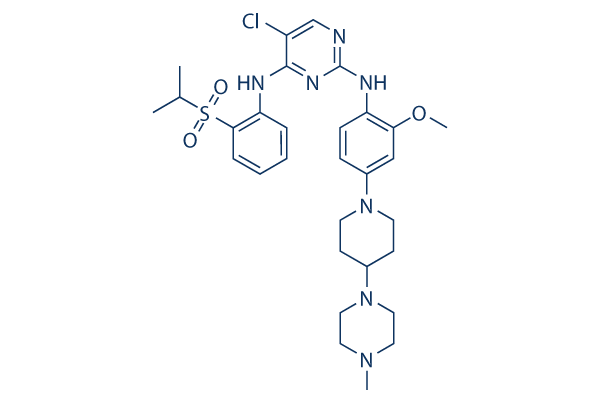
TAE684 (NVP-TAE684) Chemical Structure
CAS: 761439-42-3
Selleck's TAE684 (NVP-TAE684) has been cited by 81 publications
Purity & Quality Control
Batch:
Purity:
99.73%
99.73
TAE684 (NVP-TAE684) Related Products
| Related Compound Libraries | Kinase Inhibitor Library Tyrosine Kinase Inhibitor Library PI3K/Akt Inhibitor Library Cell Cycle compound library Angiogenesis Related compound Library | Click to Expand |
|---|
Signaling Pathway
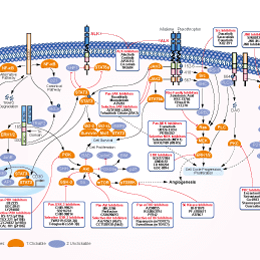
Choose Selective ALK Inhibitors
Cell Data
| Cell Lines | Assay Type | Concentration | Incubation Time | Formulation | Activity Description | PMID |
|---|---|---|---|---|---|---|
| SCC-3 | Growth Inhibition Assay | IC50=0.0000603 μM | SANGER | |||
| SF539 | Growth Inhibition Assay | IC50=0.000564 μM | SANGER | |||
| DEL | Growth Inhibition Assay | IC50=0.000927 μM | SANGER | |||
| NB1 | Growth Inhibition Assay | IC50=0.00162 μM | SANGER | |||
| SR | Growth Inhibition Assay | IC50=0.00277 μM | SANGER | |||
| KARPAS-299 | Growth Inhibition Assay | IC50=0.02384 μM | SANGER | |||
| MHH-CALL-2 | Growth Inhibition Assay | IC50=0.02952 μM | SANGER | |||
| SU-DHL-1 | Growth Inhibition Assay | IC50=0.04865 μM | SANGER | |||
| A4-Fuk | Growth Inhibition Assay | IC50=0.05565 μM | SANGER | |||
| EW-1 | Growth Inhibition Assay | IC50=0.10256 μM | SANGER | |||
| NOS-1 | Growth Inhibition Assay | IC50=0.10294 μM | SANGER | |||
| EW-16 | Growth Inhibition Assay | IC50=0.10568 μM | SANGER | |||
| TE-11 | Growth Inhibition Assay | IC50=0.16096 μM | SANGER | |||
| SW982 | Growth Inhibition Assay | IC50=0.16478 μM | SANGER | |||
| LAN-6 | Growth Inhibition Assay | IC50=0.17443 μM | SANGER | |||
| MZ1-PC | Growth Inhibition Assay | IC50=0.17835 μM | SANGER | |||
| KS-1 | Growth Inhibition Assay | IC50=0.19343 μM | SANGER | |||
| PSN1 | Growth Inhibition Assay | IC50=0.19631 μM | SANGER | |||
| LC-2-ad | Growth Inhibition Assay | IC50=0.19692 μM | SANGER | |||
| COLO-320-HSR | Growth Inhibition Assay | IC50=0.19776 μM | SANGER | |||
| OPM-2 | Growth Inhibition Assay | IC50=0.22669 μM | SANGER | |||
| SK-NEP-1 | Growth Inhibition Assay | IC50=0.23524 μM | SANGER | |||
| ALL-PO | Growth Inhibition Assay | IC50=0.24524 μM | SANGER | |||
| CMK | Growth Inhibition Assay | IC50=0.2553 μM | SANGER | |||
| NCI-H1648 | Growth Inhibition Assay | IC50=0.27855 μM | SANGER | |||
| SIG-M5 | Growth Inhibition Assay | IC50=0.29159 μM | SANGER | |||
| TGBC24TKB | Growth Inhibition Assay | IC50=0.30218 μM | SANGER | |||
| DOHH-2 | Growth Inhibition Assay | IC50=0.31204 μM | SANGER | |||
| NB69 | Growth Inhibition Assay | IC50=0.31787 μM | SANGER | |||
| MFH-ino | Growth Inhibition Assay | IC50=0.32523 μM | SANGER | |||
| KP-N-RT-BM-1 | Growth Inhibition Assay | IC50=0.33123 μM | SANGER | |||
| MONO-MAC-6 | Growth Inhibition Assay | IC50=0.33291 μM | SANGER | |||
| ATN-1 | Growth Inhibition Assay | IC50=0.33303 μM | SANGER | |||
| NTERA-S-cl-D1 | Growth Inhibition Assay | IC50=0.33396 μM | SANGER | |||
| L-540 | Growth Inhibition Assay | IC50=0.36988 μM | SANGER | |||
| GB-1 | Growth Inhibition Assay | IC50=0.38867 μM | SANGER | |||
| MV-4-11 | Growth Inhibition Assay | IC50=0.39446 μM | SANGER | |||
| KG-1 | Growth Inhibition Assay | IC50=0.39561 μM | SANGER | |||
| OVCAR-4 | Growth Inhibition Assay | IC50=0.40569 μM | SANGER | |||
| NEC8 | Growth Inhibition Assay | IC50=0.41292 μM | SANGER | |||
| SK-MM-2 | Growth Inhibition Assay | IC50=0.41609 μM | SANGER | |||
| TE-8 | Growth Inhibition Assay | IC50=0.4288 μM | SANGER | |||
| 697 | Growth Inhibition Assay | IC50=0.43215 μM | SANGER | |||
| NB14 | Growth Inhibition Assay | IC50=0.43826 μM | SANGER | |||
| GDM-1 | Growth Inhibition Assay | IC50=0.47116 μM | SANGER | |||
| HUTU-80 | Growth Inhibition Assay | IC50=0.47375 μM | SANGER | |||
| HL-60 | Growth Inhibition Assay | IC50=0.48142 μM | SANGER | |||
| OCI-AML2 | Growth Inhibition Assay | IC50=0.48328 μM | SANGER | |||
| ML-2 | Growth Inhibition Assay | IC50=0.49031 μM | SANGER | |||
| ES4 | Growth Inhibition Assay | IC50=0.49109 μM | SANGER | |||
| NCI-H747 | Growth Inhibition Assay | IC50=0.4989 μM | SANGER | |||
| RL95-2 | Growth Inhibition Assay | IC50=0.50112 μM | SANGER | |||
| TE-15 | Growth Inhibition Assay | IC50=0.51124 μM | SANGER | |||
| TE-12 | Growth Inhibition Assay | IC50=0.53349 μM | SANGER | |||
| LB1047-RCC | Growth Inhibition Assay | IC50=0.54549 μM | SANGER | |||
| LB831-BLC | Growth Inhibition Assay | IC50=0.55023 μM | SANGER | |||
| NCI-H1355 | Growth Inhibition Assay | IC50=0.55184 μM | SANGER | |||
| CTV-1 | Growth Inhibition Assay | IC50=0.55624 μM | SANGER | |||
| RXF393 | Growth Inhibition Assay | IC50=0.55794 μM | SANGER | |||
| SW872 | Growth Inhibition Assay | IC50=0.56724 μM | SANGER | |||
| MPP-89 | Growth Inhibition Assay | IC50=0.57884 μM | SANGER | |||
| RPMI-8226 | Growth Inhibition Assay | IC50=0.63526 μM | SANGER | |||
| LS-1034 | Growth Inhibition Assay | IC50=0.6358 μM | SANGER | |||
| SJSA-1 | Growth Inhibition Assay | IC50=0.63725 μM | SANGER | |||
| HOP-62 | Growth Inhibition Assay | IC50=0.65033 μM | SANGER | |||
| KGN | Growth Inhibition Assay | IC50=0.66168 μM | SANGER | |||
| D-336MG | Growth Inhibition Assay | IC50=0.66169 μM | SANGER | |||
| LS-411N | Growth Inhibition Assay | IC50=0.67462 μM | SANGER | |||
| TE-1 | Growth Inhibition Assay | IC50=0.69074 μM | SANGER | |||
| LB996-RCC | Growth Inhibition Assay | IC50=0.69389 μM | SANGER | |||
| TE-10 | Growth Inhibition Assay | IC50=0.71496 μM | SANGER | |||
| NCI-SNU-16 | Growth Inhibition Assay | IC50=0.72664 μM | SANGER | |||
| ES8 | Growth Inhibition Assay | IC50=0.74975 μM | SANGER | |||
| COLO-800 | Growth Inhibition Assay | IC50=0.76695 μM | SANGER | |||
| ES6 | Growth Inhibition Assay | IC50=0.77559 μM | SANGER | |||
| L-363 | Growth Inhibition Assay | IC50=0.82375 μM | SANGER | |||
| NMC-G1 | Growth Inhibition Assay | IC50=0.83233 μM | SANGER | |||
| LU-134-A | Growth Inhibition Assay | IC50=0.83912 μM | SANGER | |||
| SF268 | Growth Inhibition Assay | IC50=0.84042 μM | SANGER | |||
| KARPAS-45 | Growth Inhibition Assay | IC50=0.84263 μM | SANGER | |||
| TGW | Growth Inhibition Assay | IC50=0.85863 μM | SANGER | |||
| CHP-126 | Growth Inhibition Assay | IC50=0.85957 μM | SANGER | |||
| MOLT-16 | Growth Inhibition Assay | IC50=0.87589 μM | SANGER | |||
| LB771-HNC | Growth Inhibition Assay | IC50=0.89757 μM | SANGER | |||
| NALM-6 | Growth Inhibition Assay | IC50=0.90739 μM | SANGER | |||
| GCIY | Growth Inhibition Assay | IC50=0.95526 μM | SANGER | |||
| IST-MES1 | Growth Inhibition Assay | IC50=0.98824 μM | SANGER | |||
| LB2241-RCC | Growth Inhibition Assay | IC50=0.9884 μM | SANGER | |||
| BL-70 | Growth Inhibition Assay | IC50=0.99535 μM | SANGER | |||
| NB17 | Growth Inhibition Assay | IC50=1.00639 μM | SANGER | |||
| LXF-289 | Growth Inhibition Assay | IC50=1.03076 μM | SANGER | |||
| TK10 | Growth Inhibition Assay | IC50=1.05063 μM | SANGER | |||
| K5 | Growth Inhibition Assay | IC50=1.06274 μM | SANGER | |||
| NCI-H716 | Growth Inhibition Assay | IC50=1.07259 μM | SANGER | |||
| HCE-T | Growth Inhibition Assay | IC50=1.08819 μM | SANGER | |||
| GI-1 | Growth Inhibition Assay | IC50=1.09798 μM | SANGER | |||
| KARPAS-422 | Growth Inhibition Assay | IC50=1.10022 μM | SANGER | |||
| TE-9 | Growth Inhibition Assay | IC50=1.11328 μM | SANGER | |||
| SF126 | Growth Inhibition Assay | IC50=1.11568 μM | SANGER | |||
| BB30-HNC | Growth Inhibition Assay | IC50=1.13112 μM | SANGER | |||
| NCI-H1304 | Growth Inhibition Assay | IC50=1.13338 μM | SANGER | |||
| HEL | Growth Inhibition Assay | IC50=1.14895 μM | SANGER | |||
| HAL-01 | Growth Inhibition Assay | IC50=1.15283 μM | SANGER | |||
| SK-LMS-1 | Growth Inhibition Assay | IC50=1.15974 μM | SANGER | |||
| SW954 | Growth Inhibition Assay | IC50=1.19567 μM | SANGER | |||
| D-283MED | Growth Inhibition Assay | IC50=1.22379 μM | SANGER | |||
| NCI-H1882 | Growth Inhibition Assay | IC50=1.2389 μM | SANGER | |||
| GI-ME-N | Growth Inhibition Assay | IC50=1.25208 μM | SANGER | |||
| SK-PN-DW | Growth Inhibition Assay | IC50=1.26348 μM | SANGER | |||
| C2BBe1 | Growth Inhibition Assay | IC50=1.29117 μM | SANGER | |||
| A704 | Growth Inhibition Assay | IC50=1.32689 μM | SANGER | |||
| KALS-1 | Growth Inhibition Assay | IC50=1.3408 μM | SANGER | |||
| ETK-1 | Growth Inhibition Assay | IC50=1.34489 μM | SANGER | |||
| LB647-SCLC | Growth Inhibition Assay | IC50=1.34986 μM | SANGER | |||
| OCUB-M | Growth Inhibition Assay | IC50=1.36143 μM | SANGER | |||
| NCI-H720 | Growth Inhibition Assay | IC50=1.36378 μM | SANGER | |||
| NB13 | Growth Inhibition Assay | IC50=1.37293 μM | SANGER | |||
| GR-ST | Growth Inhibition Assay | IC50=1.38757 μM | SANGER | |||
| DU-4475 | Growth Inhibition Assay | IC50=1.45853 μM | SANGER | |||
| HCC2157 | Growth Inhibition Assay | IC50=1.46659 μM | SANGER | |||
| RKO | Growth Inhibition Assay | IC50=1.49922 μM | SANGER | |||
| LS-123 | Growth Inhibition Assay | IC50=1.51594 μM | SANGER | |||
| NCI-H69 | Growth Inhibition Assay | IC50=1.55811 μM | SANGER | |||
| SW962 | Growth Inhibition Assay | IC50=1.5613 μM | SANGER | |||
| PF-382 | Growth Inhibition Assay | IC50=1.5696 μM | SANGER | |||
| A101D | Growth Inhibition Assay | IC50=1.57113 μM | SANGER | |||
| NB10 | Growth Inhibition Assay | IC50=1.57392 μM | SANGER | |||
| NB5 | Growth Inhibition Assay | IC50=1.58476 μM | SANGER | |||
| HCE-4 | Growth Inhibition Assay | IC50=1.6085 μM | SANGER | |||
| HT-144 | Growth Inhibition Assay | IC50=1.6319 μM | SANGER | |||
| NCI-H524 | Growth Inhibition Assay | IC50=1.64307 μM | SANGER | |||
| NKM-1 | Growth Inhibition Assay | IC50=1.6866 μM | SANGER | |||
| KURAMOCHI | Growth Inhibition Assay | IC50=1.69573 μM | SANGER | |||
| NCI-H187 | Growth Inhibition Assay | IC50=1.70036 μM | SANGER | |||
| U-266 | Growth Inhibition Assay | IC50=1.73842 μM | SANGER | |||
| BL-41 | Growth Inhibition Assay | IC50=1.76272 μM | SANGER | |||
| SK-N-DZ | Growth Inhibition Assay | IC50=1.78309 μM | SANGER | |||
| Daudi | Growth Inhibition Assay | IC50=1.78967 μM | SANGER | |||
| CPC-N | Growth Inhibition Assay | IC50=1.85096 μM | SANGER | |||
| EM-2 | Growth Inhibition Assay | IC50=1.851 μM | SANGER | |||
| HCC1187 | Growth Inhibition Assay | IC50=1.86241 μM | SANGER | |||
| LP-1 | Growth Inhibition Assay | IC50=1.87143 μM | SANGER | |||
| CAS-1 | Growth Inhibition Assay | IC50=1.98299 μM | SANGER | |||
| NB7 | Growth Inhibition Assay | IC50=2.00555 μM | SANGER | |||
| VA-ES-BJ | Growth Inhibition Assay | IC50=2.01513 μM | SANGER | |||
| SNU-C2B | Growth Inhibition Assay | IC50=2.03351 μM | SANGER | |||
| LOXIMVI | Growth Inhibition Assay | IC50=2.06786 μM | SANGER | |||
| NCI-H1581 | Growth Inhibition Assay | IC50=2.11559 μM | SANGER | |||
| IST-SL2 | Growth Inhibition Assay | IC50=2.12445 μM | SANGER | |||
| NOMO-1 | Growth Inhibition Assay | IC50=2.17683 μM | SANGER | |||
| TE-6 | Growth Inhibition Assay | IC50=2.1905 μM | SANGER | |||
| NCI-H526 | Growth Inhibition Assay | IC50=2.19141 μM | SANGER | |||
| MSTO-211H | Growth Inhibition Assay | IC50=2.20041 μM | SANGER | |||
| LS-513 | Growth Inhibition Assay | IC50=2.22269 μM | SANGER | |||
| NCI-SNU-1 | Growth Inhibition Assay | IC50=2.33256 μM | SANGER | |||
| BB65-RCC | Growth Inhibition Assay | IC50=2.37493 μM | SANGER | |||
| GT3TKB | Growth Inhibition Assay | IC50=2.39972 μM | SANGER | |||
| OS-RC-2 | Growth Inhibition Assay | IC50=2.42341 μM | SANGER | |||
| NCI-H2126 | Growth Inhibition Assay | IC50=2.43674 μM | SANGER | |||
| SK-UT-1 | Growth Inhibition Assay | IC50=2.47467 μM | SANGER | |||
| DMS-114 | Growth Inhibition Assay | IC50=2.61524 μM | SANGER | |||
| ONS-76 | Growth Inhibition Assay | IC50=2.63641 μM | SANGER | |||
| 8-MG-BA | Growth Inhibition Assay | IC50=2.65414 μM | SANGER | |||
| BOKU | Growth Inhibition Assay | IC50=2.72764 μM | SANGER | |||
| LAMA-84 | Growth Inhibition Assay | IC50=2.79912 μM | SANGER | |||
| ES1 | Growth Inhibition Assay | IC50=2.81804 μM | SANGER | |||
| NCI-H1395 | Growth Inhibition Assay | IC50=2.82012 μM | SANGER | |||
| A388 | Growth Inhibition Assay | IC50=2.9617 μM | SANGER | |||
| NCCIT | Growth Inhibition Assay | IC50=3.08862 μM | SANGER | |||
| HD-MY-Z | Growth Inhibition Assay | IC50=3.13203 μM | SANGER | |||
| NCI-H510A | Growth Inhibition Assay | IC50=3.18943 μM | SANGER | |||
| NCI-N87 | Growth Inhibition Assay | IC50=3.2002 μM | SANGER | |||
| SCLC-21H | Growth Inhibition Assay | IC50=3.26859 μM | SANGER | |||
| SH-4 | Growth Inhibition Assay | IC50=3.28797 μM | SANGER | |||
| QIMR-WIL | Growth Inhibition Assay | IC50=3.32849 μM | SANGER | |||
| KM12 | Growth Inhibition Assay | IC50=3.33544 μM | SANGER | |||
| ST486 | Growth Inhibition Assay | IC50=3.53883 μM | SANGER | |||
| HC-1 | Growth Inhibition Assay | IC50=3.62028 μM | SANGER | |||
| BV-173 | Growth Inhibition Assay | IC50=3.64088 μM | SANGER | |||
| EW-24 | Growth Inhibition Assay | IC50=3.66434 μM | SANGER | |||
| LU-65 | Growth Inhibition Assay | IC50=3.6871 μM | SANGER | |||
| ECC4 | Growth Inhibition Assay | IC50=3.7756 μM | SANGER | |||
| ARH-77 | Growth Inhibition Assay | IC50=4.11067 μM | SANGER | |||
| BC-3 | Growth Inhibition Assay | IC50=4.13068 μM | SANGER | |||
| SNB75 | Growth Inhibition Assay | IC50=4.2619 μM | SANGER | |||
| MEG-01 | Growth Inhibition Assay | IC50=4.27419 μM | SANGER | |||
| NCI-H1417 | Growth Inhibition Assay | IC50=4.28443 μM | SANGER | |||
| MDA-MB-134-VI | Growth Inhibition Assay | IC50=4.30601 μM | SANGER | |||
| Becker | Growth Inhibition Assay | IC50=4.47336 μM | SANGER | |||
| DMS-153 | Growth Inhibition Assay | IC50=4.66475 μM | SANGER | |||
| TGBC1TKB | Growth Inhibition Assay | IC50=4.68515 μM | SANGER | |||
| EW-3 | Growth Inhibition Assay | IC50=4.76248 μM | SANGER | |||
| KE-37 | Growth Inhibition Assay | IC50=4.86196 μM | SANGER | |||
| NCI-H23 | Growth Inhibition Assay | IC50=4.87227 μM | SANGER | |||
| MC116 | Growth Inhibition Assay | IC50=4.94126 μM | SANGER | |||
| NH-12 | Growth Inhibition Assay | IC50=4.96439 μM | SANGER | |||
| CTB-1 | Growth Inhibition Assay | IC50=4.97721 μM | SANGER | |||
| KM-H2 | Growth Inhibition Assay | IC50=5.05323 μM | SANGER | |||
| MOLT-4 | Growth Inhibition Assay | IC50=5.1183 μM | SANGER | |||
| NCI-H2141 | Growth Inhibition Assay | IC50=5.14268 μM | SANGER | |||
| EB-3 | Growth Inhibition Assay | IC50=5.17504 μM | SANGER | |||
| NCI-H1522 | Growth Inhibition Assay | IC50=5.26322 μM | SANGER | |||
| MRK-nu-1 | Growth Inhibition Assay | IC50=5.43633 μM | SANGER | |||
| no-11 | Growth Inhibition Assay | IC50=5.47087 μM | SANGER | |||
| CESS | Growth Inhibition Assay | IC50=5.58034 μM | SANGER | |||
| KMOE-2 | Growth Inhibition Assay | IC50=5.58659 μM | SANGER | |||
| REH | Growth Inhibition Assay | IC50=6.25618 μM | SANGER | |||
| KU812 | Growth Inhibition Assay | IC50=6.42791 μM | SANGER | |||
| SK-N-FI | Growth Inhibition Assay | IC50=6.60674 μM | SANGER | |||
| MMAC-SF | Growth Inhibition Assay | IC50=7.06492 μM | SANGER | |||
| RCC10RGB | Growth Inhibition Assay | IC50=7.22977 μM | SANGER | |||
| NCI-H322M | Growth Inhibition Assay | IC50=7.33335 μM | SANGER | |||
| NB6 | Growth Inhibition Assay | IC50=7.54899 μM | SANGER | |||
| MN-60 | Growth Inhibition Assay | IC50=7.69215 μM | SANGER | |||
| NCI-H1092 | Growth Inhibition Assay | IC50=8.01734 μM | SANGER | |||
| EKVX | Growth Inhibition Assay | IC50=8.47066 μM | SANGER | |||
| D-263MG | Growth Inhibition Assay | IC50=8.55396 μM | SANGER | |||
| NCI-H209 | Growth Inhibition Assay | IC50=8.64006 μM | SANGER | |||
| IST-SL1 | Growth Inhibition Assay | IC50=8.89892 μM | SANGER | |||
| ACN | Growth Inhibition Assay | IC50=9.19157 μM | SANGER | |||
| MHH-PREB-1 | Growth Inhibition Assay | IC50=9.21219 μM | SANGER | |||
| EW-11 | Growth Inhibition Assay | IC50=9.65396 μM | SANGER | |||
| KASUMI-1 | Growth Inhibition Assay | IC50=9.7877 μM | SANGER | |||
| KINGS-1 | Growth Inhibition Assay | IC50=10.2347 μM | SANGER | |||
| EVSA-T | Growth Inhibition Assay | IC50=10.3192 μM | SANGER | |||
| DSH1 | Growth Inhibition Assay | IC50=10.3972 μM | SANGER | |||
| COLO-824 | Growth Inhibition Assay | IC50=10.8669 μM | SANGER | |||
| K052 | Growth Inhibition Assay | IC50=10.9322 μM | SANGER | |||
| SK-MEL-2 | Growth Inhibition Assay | IC50=10.9939 μM | SANGER | |||
| Click to View More Cell Line Experimental Data | ||||||
Biological Activity
| Description | TAE684 (NVP-TAE684) is a potent and selective ALK inhibitor which blocked the growth of ALCL-derived and ALK-dependent cell lines with IC50 values between 2 and 10 nM, 100-fold more sensitive for ALK than InsR. TAE684 (NVP-TAE684) induces cell cycle arrest and apoptosis. | ||
|---|---|---|---|
| Targets |
|
| In vitro | ||||
| In vitro | TAE684 does not exhibit significant cross-reactivity against other kinases. TAE684 potently inhibits the proliferation of Ba/F3 NPM-ALK cells with IC50 of 3 nM, without affecting the survival of Ba/F3 cells even at 1 μM. TAE684 also inhibits proliferation of NPM-ALK-expressing human ALCL cell lines including Karpas-299 and SU-DHL-1 with IC50 of 2–5 nM. Molecular modeling reveals that L258 may be one of the major kinase-selectivity determinants for TAE684. TAE684 treatment results in a rapid and sustained inhibition of phosphorylation of NPM-ALK. TAE684 induces apoptosis and G1 phase arrest in NPM-ALK-expressing Ba/F3 cells and ALCL patient cell lines. [1] TAE684 markedly overcomes Crizotinib-resistance in H3122 CR cells, harboring the fusion oncogene EML4-ALK, decreasing cell growth, suppressing ALK phosphorylation and inducing apoptosis.[2] Neurite outgrowth induced by expression of the mALK R1279Q mutant could be completely inhibited by TAE684 at 30 nM. [3] |
|||
|---|---|---|---|---|
| Kinase Assay | In vitro Enzyme Assays. | |||
| All in vitro enzyme assays are done at Upstate Biotechnology with the exception of InsR and IGF-1R. To determine the IC50 of TAE684 against InsR and IGF-1R a homogeneous time-resolved fluorescence assay is performed. ATP (10 mM) and 20 mg/ml biotinylated PolyEY (Glu, Tyr 4:1) are combined with 50 nL of serial dilutions of TAE684 (10-500 nM) and 4 ng of InsR enzyme in the presence of the kinase reaction buffer (20 mM Tris譎Cl, pH 7.5/10 mM MgCl2/3 mM MnCl2/1 mM DTT/10 mM NaVO4/0.1 mg/ml of BSA). Assays are incubated for 1 hour at ambient temperature. Reactions are terminated by adding 10 mL of the detection solution containing 50 mM EDTA, 500 mM KF, 0.5 mg/ml of BSA, 5 mg/mL Eu3+ cryptate-labeled anti-phosphotyrosine antibody Mab PT66-K, and 5 mg/mL Streptavidin-XLent. The reaction is incubated for half an hour, and fluorescence signals are read on Analyst GT. | ||||
| Cell Research | Cell lines | Luciferase-expressing Karpas-299, SU-DHL-1, and Ba/F3 cells and transformed Ba/F3 stably expressing NPM-ALK, Bcr-Abl, or TEL-kinase fusion constructs. | ||
| Concentrations | 1 nM-10 μM | |||
| Incubation Time | 2–3 days | |||
| Method | Cells are seeded in 384-well plates (2.5×10⁴ cells per well) and incubated with serial dilutions of TAE684 or DMSO for 2–3 days. Luciferase expression is used as a measure of cell proliferation/survival and is evaluated with the Bright-Glo Luciferase Assay System. IC50 values are generated by using XLFit software. |
|||
| Experimental Result Images | Methods | Biomarkers | Images | PMID |
| Growth inhibition assay | Cell viability |
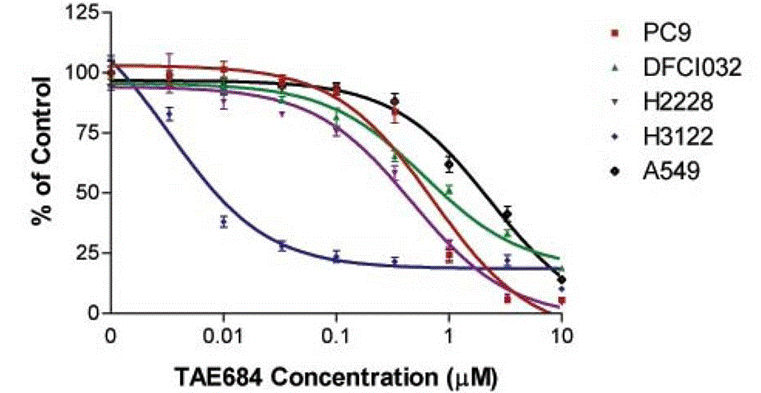
|
18594010 | |
| Western blot | p-ROS1 / ROS1 p-ALK / ALK / p-STAT3 / STAT3 / p-ERK / ERK / p-AKT / AKT / Survivin / BIM / PARP |
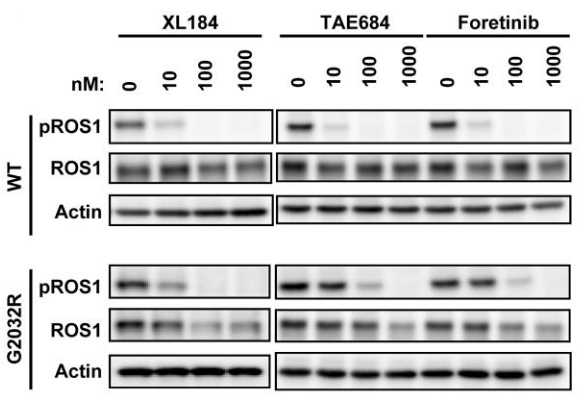
|
25351743 | |
| In Vivo | ||
| In vivo |
After 4 weeks of treatment with TAE684 at 3 and 10 mg/kg, there is a significant delay in lymphoma development and 100- to 1,000-fold reduction in luminescence signal, without any signs of compound- or disease-related toxicity in Karpas-299 lymphoma model. TAE684 treatment also induces disease regression in established Karpas-299 lymphomas and down-regulates CD30 expression. [1] TAE684 also shows impressive antitumor activity against H3122 CR xenograft tumors. [2] Furthermore, treatment with TAE684 improves the rough eye phenotype of both ALK mutants, especially that seen with ALKR1275Q, whereas Crizotinib has little effect on either phenotype. [3] |
|
|---|---|---|
| Animal Research | Animal Models | Karpas-299 xenografts are established in 4- to 6-week old female Fox Chase SCIDBeige mice. |
| Dosages | 1, 3, and 10 mg/kg | |
| Administration | Once daily by oral gavage for 3 weeks | |
Chemical Information & Solubility
| Molecular Weight | 614.2 | Formula | C30H40ClN7O3S |
| CAS No. | 761439-42-3 | SDF | Download TAE684 (NVP-TAE684) SDF |
| Smiles | CC(C)S(=O)(=O)C1=CC=CC=C1NC2=NC(=NC=C2Cl)NC3=C(C=C(C=C3)N4CCC(CC4)N5CCN(CC5)C)OC | ||
| Storage (From the date of receipt) | |||
|
In vitro |
DMSO : 10 mg/mL ( (16.28 mM); Moisture-absorbing DMSO reduces solubility. Please use fresh DMSO.) Water : Insoluble Ethanol : Insoluble |
Molecular Weight Calculator |
|
In vivo Add solvents to the product individually and in order. |
In vivo Formulation Calculator |
||||
Preparing Stock Solutions
Molarity Calculator
In vivo Formulation Calculator (Clear solution)
Step 1: Enter information below (Recommended: An additional animal making an allowance for loss during the experiment)
mg/kg
g
μL
Step 2: Enter the in vivo formulation (This is only the calculator, not formulation. Please contact us first if there is no in vivo formulation at the solubility Section.)
% DMSO
%
% Tween 80
% ddH2O
%DMSO
%
Calculation results:
Working concentration: mg/ml;
Method for preparing DMSO master liquid: mg drug pre-dissolved in μL DMSO ( Master liquid concentration mg/mL, Please contact us first if the concentration exceeds the DMSO solubility of the batch of drug. )
Method for preparing in vivo formulation: Take μL DMSO master liquid, next addμL PEG300, mix and clarify, next addμL Tween 80, mix and clarify, next add μL ddH2O, mix and clarify.
Method for preparing in vivo formulation: Take μL DMSO master liquid, next add μL Corn oil, mix and clarify.
Note: 1. Please make sure the liquid is clear before adding the next solvent.
2. Be sure to add the solvent(s) in order. You must ensure that the solution obtained, in the previous addition, is a clear solution before proceeding to add the next solvent. Physical methods such
as vortex, ultrasound or hot water bath can be used to aid dissolving.
Tech Support
Answers to questions you may have can be found in the inhibitor handling instructions. Topics include how to prepare stock solutions, how to store inhibitors, and issues that need special attention for cell-based assays and animal experiments.
Tel: +1-832-582-8158 Ext:3
If you have any other enquiries, please leave a message.
* Indicates a Required Field
Tags: buy TAE684 (NVP-TAE684) | TAE684 (NVP-TAE684) supplier | purchase TAE684 (NVP-TAE684) | TAE684 (NVP-TAE684) cost | TAE684 (NVP-TAE684) manufacturer | order TAE684 (NVP-TAE684) | TAE684 (NVP-TAE684) distributor



Products are for research use only. Not for human use. We do not sell to patients.
©Copyright 2013 Selleck Chemicals. All Rights Reserved.