
-
 Argentina
-
 Australia
-
 Austria
-
 Belgium
-
 Brazil
-
 Canada
-
 China
China
-
 Czech Republic
-
 Denmark
-
 Finland
-
 France
-
 Germany
-
 Greece
-
 Hong Kong
-
 Hungary
-
 Iceland
-
 India
India
-
 Ireland
-
 Israel
-
 Italy
Italy
-
 Japan
Japan
-
 Korea
Korea
-
 Luxembourg
-
 Malaysia
-
 Netherlands
-
 New Zealand
-
 Norway
-
 Poland
-
 Portugal
-
 Qatar
Qatar
-
 Romania
-
 Saudi Arabia
-
 Singapore
-
 Spain
Spain
-
 Sweden
-
 Switzerland
-
 Taiwan
-
 Turkey
-
 United Kingdom
-
 United States
Anti-infection Inhibitors
| Cat.No. | Product Name | Information | Product Use Citations | Product Validations |
|---|---|---|---|---|
| S4945 | Ethacridine lactate | Ethacridine lactate (Acrinol) is an aromatic organic compound based on acridine used as an antiseptic agent. This compound is also a poly(ADP-ribose) glycohydrolase (PARG) inhibitor. |
|
|
| S5927 | Proguanil | Proguanil (chlorguanide, chloroguanide) is a prophylactic antimalarial drug. It inhibits the dihydrofolate reductase of plasmodia and thereby blocks the biosynthesis of purines and pyrimidines, which are essential for DNA synthesis and cell multiplication. |
|
|
| S1553 | Delafloxacin (ABT-492) | Delafloxacin (ABT-492, RX-3341, WQ-3034) is a new fluoroquinolone against 155 aerobic and 171 anaerobic pathogens. |
|
|
| S4515 | Ademetionine disulfate tosylate | Ademetionine Disulfate Tosylate is the disulfate-tosylate mixed salt of a mixture of diastereoisomers of the ademetionine ions. Ademetionine possesses anti-inflammatory activity and has been used in treatment of chronic liver disease. |
|
|
| S4303 | 9-Aminoacridine | 9-Aminoacridine (Aminacrine) is a highly fluorescent dye used clinically as a topical antiseptic and experimentally as a mutagen, an intracellular pH indicator and a negative mode small molecule MALDI matrix. |
|
|
| S1958 | Sulbactam | Sulbactam(CP45899) is a beta-lactamase inhibitor with an average IC50 of 0.8 μM. |
|
|
| S3226 | Dehydroabietic acid | Dehydroabietic acid (DAA, DHAA), a naturally occurring diterpene resin acid derived from coniferous plants such as Pinus and Picea, displays anti-inflammatory activity via suppression of Src-, Syk-, and TAK1-mediated pathways. | ||
| S3308 | Caftaric acid | Caftaric acid (CA, Caffeoyl tartaric acid) is a natural product that shows anti-oxidant and anti-inflammatory effects. | ||
| S4946 | 2,3-Dihydroxybenzoic acid | 2,3-Dihydroxybenzoic acid (Pyrocatechuic acid, 3-Hydroxysalicylic acid, Hypogallic acid) is a natural phenol found in Phyllanthus acidus and in the aquatic fern Salvinia molesta, also a product of human aspirin metabolism. It is a potentially useful iron-chelating drug and has antimicrobial properties. | ||
| E0626 | AX 20017 | AX 20017 is a small-molecule protein kinase G (PknG) inhibitor with an IC50 of 0.39 μM. | ||
| S4417 | Ceftaroline Fosamil |
Ceftaroline fosamil (CX-0903, DSP-5990, PPI-0903, TAK-599, Teflaro, Zinforo) is a cephalosporin with activity against Gram-positive pathogens, including methicillin-resistant Staphylococcus aureus (MRSA). |
||
| S0846 | Euquinine | Euquinine is generally used as a febrifuge, antimalarial, and tonic. | ||
| S6771 | MAC-545496 | MAC-545496 is a nanomolar glycopeptide-resistance-associated protein R(GraR) inhibitor with strong binding affinity to the full-length GraR protein (Kd ≤ 0.1 nM). This compound can reverse β-lactam resistance in methicillin-resistant strains and synergize with CAMPs. It shows remarkable activity in macrophages and attenuates S. aureus virulence in a G. mellonella larvae infection model. | ||
| S3711 | Carbasalate Calcium | Carbasalate calcium (Iromin, Alcacyl, Omegin, Rheomin, Solupsan) is an analgesic, antipyretic, and anti-inflammatory drug as well as a platelet aggregation inhibitor. | ||
| E1126 | AFN-1252 | AFN-1252 (Debio 1452) is a potent inhibitor of enoyl-acyl carrier protein reductase (FabI), inhibits all clinical isolates of Staphylococcus aureus and Staphylococcus epidermidis at concentrations of ≤0.12 μg/ml. | ||
| E1421 | A2ti-1 | A2ti-1 is a selective and high-affinity inhibitor of annexin A2/S100A10 heterotetramer (A2t) with IC50 of 24 μM. This compound specifically disrupts the protein-protein interaction (PPI) between A2 and S100A10. It also prevents human papillomavirus type 16 (HPV16) infection. | ||
| E7151 | Mephenytoin | Mephenytoin is an antiepileptic drug, can be used as a probe for the estimation of the metabolic activities of CYP2B6 and CYP2C19. It can be used in antimalarial research. | ||
| S9341 | 3,4-Dimethoxycinnamic acid | 3,4-Dimethoxycinnamic acid (Caffeic acid dimethyl ether) is a bioavailable coffee component as a perspective anti-prion compound and bind potently to prion protein with a Kd of 405 nM. | ||
| S6802 | Etosalamide | Etosalamide (Ethosalamide) is an anti-inflammatory drug with antipyretic and analgesics properties. | ||
| E0516 | Nequinate | Nequinate, a quinoline compound, is an anticoccidial agent against cecal coccidiosis (Eimeria tenella) infections, also inhibits xanthine oxidoreductase (XOD) activity.This product has poor solubility, animal experiments are available, cell experiments please choose carefully! | ||
| E1436 | A2ti-2 | A2ti-2 is a selective and low-affinity inhibitor of annexin A2/S100A10 heterotetramer (A2t)with an IC50 of 230 μM. It specifically disrupts the protein-protein interaction (PPI) between A2 and S100A10 and also prevents human papillomavirus type 16 (HPV16) infection. | ||
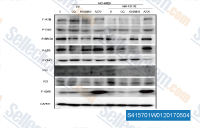
| S4157 | Chloroquine diphosphate | Chloroquine diphosphate is a 4-aminoquinoline anti-malarial and anti-rheumatoid agent, also acting as an ATM activator. Chloroquine is also an inhibitor of toll-like receptors (TLRs). |
|
|
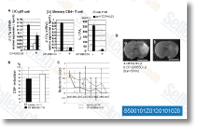
| S5001 | CP-690550 (Tofacitinib) Citrate | Tofacitinib citrate (CP-690550, Tasocitinib) is a novel JAK inhibitor with IC50 of 1 nM, 20 nM and 112 nM against JAK3, JAK2, and JAK1, respectively. It also has anti-infection activity. |
|
|
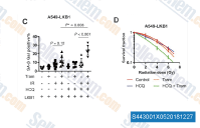
| S4430 | HCQ (Hydroxychloroquine) Sulfate | Hydroxychloroquine (HCQ) Sulfate is an antimalarial agent used for the treatment of systemic lupus erythematosus, rheumatoid arthritis and other autoimmune, inflammatory and dermatologic conditions. Also acts as an inhibitor of autophagy and toll-like receptor (TLR) 7/9. |
|
|
| S8279 | (Rac)-Shikonin | (±)-Shikonin, a potent and specific Pyruvate kinase M2 (PKM2) inhibitor, is a major component of zicao (purple gromwell, the dried root of Lithospermum erythrorhizon), a Chinese herbal medicine with various biological activities. It is also an inhibitor of TMEM16A chloride channel activity using cell-based fluorescent-quenching assay. Shikonin exerts an anti-inflammatory effect by inhibiting tumor necrosis factor-α (TNF-α) and prevents activation of nuclear factor-κB (NF-κB) pathway via proteasome inhibition. |
|
|
| S8068 | Chaetocin | Chaetocin, a natural product from Chaetomium species, is a histone methyltransferase inhibitor with IC50 of 0.8 μM, 2.5 μM and 3 μM for dSU(VAR)3-9, mouse G9a and Neurospora crassa DIM5, respectively. Chaetocin is an anticancer agent and inhibitor of thioredoxin reductase (TrxR). |
|
|
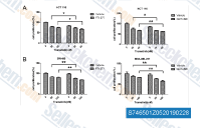
| S7465 | FTI 277 HCl | FTI 277 HCl is a potent and selective farnesyltransferase (FTase) inhibitor with IC50 of 500 pM, about 100-fold selectivity over the closely related GGTase I. This compound inhibits cell growth and induces apoptosis. This chemical is effective in clearing HDV viremia. |
|
|
| S2572 | Streptomycin sulfate | Streptomycin sulfate(Phytomycin) is a sulfate salt of streptomycin that is a protein synthesis inhibitor. |
|
|
| S5184 | Dexamethasone palmitate | Dexamethasone palmitate (DXP), a lipophilic prodrug of Dexamethasone (DXM), is a glucocorticoid receptor agonist with a 47-fold lower affinity for the glucocorticoid receptor than DXM. This compound exhibits anti-inflammatory activity. |
|
|
| S7867 | Oleuropein | Oleuropein is an antioxidant polyphenol isolated from olive leaf. It exerts antioxidant, anti-inflammatory and anti-atherogenic effects and suppresses the adipocyte differentiation in vitro. This compound inhibits PPARγ activity. It exerts anti-adipogenic effect through direct inhibition of PPARγ transcriptional activity. This chemical also inhibits aromatase. It induces apoptosis. Phase 2. |
|
|
| E0206 | Ginkgetin |
Ginkgetin is a biflavone from Ginkgo biloba leaves with anti-cancer, anti-inflammatory, anti-microbial, anti-adipogenic, and neuroprotective activities. |
|
|
| S3261 | Myrislignan | Myrislignan, a lignan isolated from Myristica fragrans Houtt, possesses anti-inflammatory activities. This compound inhibits interleukin-6 (IL-6) and tumour necrosis factor-α (TNF-α). It significantly inhibits the expressions of inducible NO synthase (iNOS) and cyclooxygenase-2 (COX-2) dose-dependently in LPS-stimulated macrophage cells. It also inhibits the NF-κB signalling pathway activation. |
|
|

Products are for research use only. Not for human use. We do not sell to patients.
©Copyright 2013 Selleck Chemicals. All Rights Reserved.