
-
 Argentina
-
 Australia
-
 Austria
-
 Belgium
-
 Brazil
-
 Canada
-
 China
China
-
 Czech Republic
-
 Denmark
-
 Finland
-
 France
-
 Germany
-
 Greece
-
 Hong Kong
-
 Hungary
-
 Iceland
-
 India
India
-
 Ireland
-
 Israel
-
 Italy
Italy
-
 Japan
Japan
-
 Korea
Korea
-
 Luxembourg
-
 Malaysia
-
 Netherlands
-
 New Zealand
-
 Norway
-
 Poland
-
 Qatar
Qatar
-
 Romania
-
 Saudi Arabia
-
 Singapore
-
 Spain
Spain
-
 Sweden
-
 Switzerland
-
 Taiwan
-
 Turkey
-
 United Kingdom
-
 United States
research use only
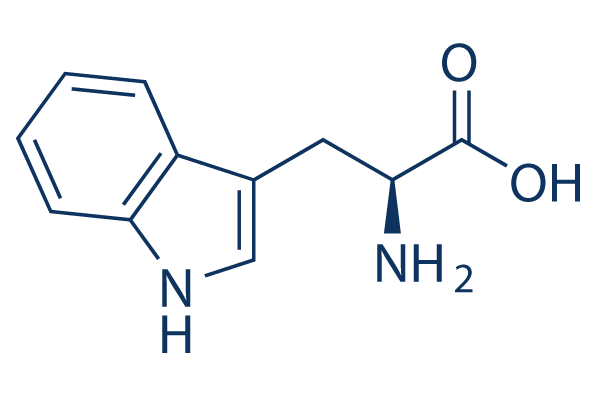
L-Tryptophan Amino Acids and Derivatives chemical
Cat.No.S3987
Quality Control
| Related Targets | Dehydrogenase HSP Transferase P450 (e.g. CYP17) PDE phosphatase PPAR Vitamin Carbohydrate Metabolism Mitochondrial Metabolism |
|---|---|
| Other Amino Acids and Derivatives Inhibitors | L-5-Hydroxytryptophan L-Ornithine Aceglutamide Acetylleucine Glyphosate Xanthosine 5'-monophosphate sodium salt Selenomethionine 4-Aminohippuric Acid Afalanine (N-Acetyl-DL-phenylalanine) Tos-Arg-OMe HCl |
Solubility
|
In vitro |
DMSO
: 11 mg/mL
(53.86 mM)
|
Molarity Calculator
|
In vivo |
|||||
In vivo Formulation Calculator (Clear solution)
Step 1: Enter information below (Recommended: An additional animal making an allowance for loss during the experiment)
Step 2: Enter the in vivo formulation (This is only the calculator, not formulation. Please contact us first if there is no in vivo formulation at the solubility Section.)
Calculation results:
Working concentration: mg/ml;
Method for preparing DMSO master liquid: mg drug pre-dissolved in μL DMSO ( Master liquid concentration mg/mL, Please contact us first if the concentration exceeds the DMSO solubility of the batch of drug. )
Method for preparing in vivo formulation: Take μL DMSO master liquid, next addμL PEG300, mix and clarify, next addμL Tween 80, mix and clarify, next add μL ddH2O, mix and clarify.
Method for preparing in vivo formulation: Take μL DMSO master liquid, next add μL Corn oil, mix and clarify.
Note: 1. Please make sure the liquid is clear before adding the next solvent.
2. Be sure to add the solvent(s) in order. You must ensure that the solution obtained, in the previous addition, is a clear solution before proceeding to add the next solvent. Physical methods such
as vortex, ultrasound or hot water bath can be used to aid dissolving.
Chemical Information, Storage & Stability
| Molecular Weight | 204.23 | Formula | C11H12N2O2 |
Storage (From the date of receipt) | |
|---|---|---|---|---|---|
| CAS No. | 73-22-3 | -- | Storage of Stock Solutions |
|
|
Read more about storage stability stock solution CAS number
Mechanism of Action
| In vivo |
L-Tryptophan suppresses both serum glucose and insulin levels after oral glucose administration and inhibits glucose absorption from the intestine. It increases glucose-associated energy expenditure in rats in vivo. This compound suppresses the rapid rise in blood glucose after a glucose-rich meal and lessens the burden of insulin secretion from β-cells. Oral administration of this chemical is more effective than intraperitoneal injection.
|
References |
|---|
Clinical Trial Information
(data from https://clinicaltrials.gov, updated on 2026-01-23)
| NCT Number | Recruitment | Conditions | Sponsor/Collaborators | Start Date | Phases |
|---|---|---|---|---|---|
| NCT05556473 | RECRUITING | Intracranial Glioma; Metastatic Brain Tumor; Breast Cancer; Neuroendocrine Tumors; Rectal Cancer |
Barbara Ann Karmanos Cancer Institute |
2022-09-29 | PHASE1 |
| NCT07013656 | NOT_YET_RECRUITING | Healthy |
University of Adelaide |
2025-06-28 | |
| NCT05576038 | RECRUITING | Tryptophan Metabolism Alterations; Celiac Disease |
McMaster University |
2022-12-01 | |
| NCT06089811 | UNKNOWN | Stress, Psychological |
KU Leuven |
2023-10-10 | |
| NCT06283706 | Not yet recruiting | Healthy Aging |
The Hospital for Sick Children|Canadian Institutes of Health Research (CIHR) |
2024-06-01 | Not Applicable |
| NCT06365801 | Not yet recruiting | Irritable Bowel Syndrome |
The Third Affiliated hospital of Zhejiang Chinese Medical University |
2024-04 | -- |
Read more about Clinical Trials
Tech Support
Tel: +1-832-582-8158 Ext:3
If you have any other enquiries, please leave a message.

Products are for research use only. Not for human use. We do not sell to patients.
©Copyright 2013 Selleck Chemicals. All Rights Reserved.