Entinostat (MS-275, SNDX-275)

MS-275 is an HDAC inhibitor of HDAC1 and HDAC3 with IC50 of 0.51 μM and 1.7 μM, respectively.

Catalog No.S1053
5 5 9 Reviews 18 Product Citations
Price Stock Quantity  
USD 70 In stock
USD 150 In stock
USD 270 In stock
USD 770 In stock

Free Overnight Delivery on all orders over $ 500.

Order now and get it on

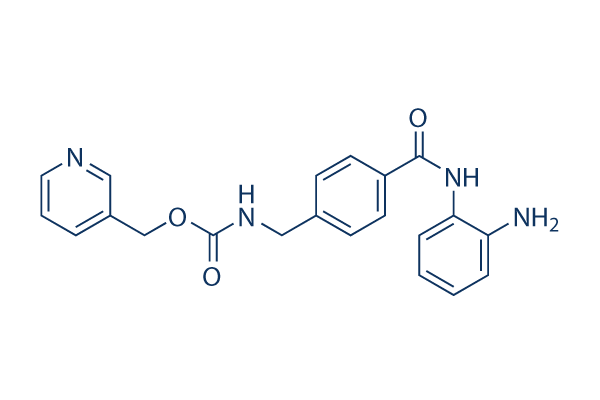
Entinostat (MS-275, SNDX-275) Chemical Structure

Entinostat (MS-275, SNDX-275) Chemical Structure
Molecular Weight: 376.41

Validation & Quality Control

Customer Reviews(9)

Quality Control & MSDS

Related Compound Libraries

Product Information

  • Compare HDAC Inhibitors
    Compare HDAC Inhibitors
  • Research Area

Product Description

Biological Activity

Description MS-275 is an HDAC inhibitor of HDAC1 and HDAC3 with IC50 of 0.51 μM and 1.7 μM, respectively.
Targets

HDAC1

HDAC3

IC50

0.51 μM

1.7 μM [2]

In vitro MS-275 shows inhibitory to HDACs by 2'-amino group. MS-275 induces accumulation of p21WAF1/CIP1 and gelsolin in K562 cell. MS-275 could reduce S-phase cells and induce G1-phase cells in A2780 cell. MS-275 inhibits the proliferation of human tumor cell lines including A2780, Calu-3, HL-60, K562, St-4, HT-29, KB-3-1, Capan-1, 4-1St and HCT-15 with IC50 from 41.5 nM to 4.71 μM, which due to HAD-inhibition. [1] MS-275 is not sensitive to other HDACs (4, 6, 8 and 10) with IC50 about/above 100 μM. [2] MS-275 shows great inhibition to human leukemia and lymphoma cells, including U937, HL-60, K562, and Jurkat. MS-275 also decreases expression of cyclin D1 and the antiapoptotic proteins Mcl-1 and XIAP. [3]
In vivo MS-275 exhibits great antitumor activity against human tumor xenografts except HCT-15 at 49 mg/kg. [1] MS-275 demonstrates promising therapeutic potential in both solid and hematologic malignancies, as well as regulation of physiologic and aberrant gene expression. [4] MS-275, combination with IL-2, has great antitumor activity to renal cell carcinoma xenograft model, which due to decreased T regulatory cells and increased splenocytes. [5]
Clinical Trials MS-275 is currently in Phase I/II clinical trials in recurrent advanced non-small cell lung cancer, combining with 5-azacytidine.
Features

Protocol(Only for Reference)

Kinase Assay:

[6]

Standard HDAC Assays Rat liver enzyme is diluted 1:6 with HDAC buffer. Recombinant human HDACs are diluted 1:4 in HDAC buffer. For standard HDAC assays, 60 μL of HDAC buffer is mixed with 10 μL of diluted enzyme solution at 30 °C. The HDAC reaction is started by adding 30 μL substrate solution in HDAC buffer followed by 30 min of incubation at 30 °C. The reaction is stopped by adding 100 μL trypsin solutions (10 mg/ml trypsin in 50 mM Tris-HCl [pH 8.0], 100 mM NaCl, 2 μM TSA). After a 20 min incubation period at 30 °C, the release of AMC is monitored by measuring the fluorescence at 460 nm (λex = 390 nm). Fluorescence intensity is calibrated using free AMC. For standard time course experiments, 20 pmol of substrate is used in the initial 100 μL HDAC reaction. Km and Vmax values are determined by measuring the fluorescence AMC generated by enzymatic cleavage of 2–50 pmol of substrate. The experimental data are analyzed using a Hanes plot. The AMC signals are recorded against a blank with buffer and substrate but without the enzyme.

Cell Assay:

[2]

Cell lines A2780, Calu-3, HL-60, K562, St-4, HT-29, KB-3-1, Capan-1, 4-1St and HCT-15 cells
Concentrations ~ 10 μM
Incubation Time 3 days
Method

Cancer cells (5 × 10³) are seeded into each well of 96-well plates and cultured with graded concentrations of MS-275 for 3 days. The cells are stained with 0.1 mg/mL neutral red for 1 hour in a CO2-incubator, and, after aspiration of the medium, OD540 of the neutral red solubilized with 50 μL of ethanol and 150 μL of 0.1 M Na2HPO4 is measured. The IC50 value is determined by plotting growth inhibition of the cells against the logarithm of the drug concentration.

Animal Study:

[1]

Animal Models A2780, HT-29, HTC-15, KB-3-1, 4-1St, St-4, Capan-1 and Calu-3 cells are injected subcutaneously into the flank of nude mice.
Formulation Dissolved with 0.05 N HCl, 0.1% Tween 80
Dosages 12.3, 24.5 and 49 mg/kg
Administration Administered orally once daily 5 days per week for 4 weeks
1

References

Chemical Information

Download Entinostat (MS-275, SNDX-275) SDF
Molecular Weight (MW) 376.41
Formula

C21H20N4O3

CAS No. 209783-80-2
Synonyms SNDX-275
Solubility (25°C)
  • DMSO 75 mg/mL
  • Water <1 mg/mL
  • Ethanol <1 mg/mL
Storage 2 years -20°CPowder
2 weeks4°Cin DMSO
6 months-80°Cin DMSO
Chemical Name pyridin-3-ylmethyl 4-((2-aminophenyl)carbamoyl)benzylcarbamate

Research Area

Customer Reviews (9)


Click to enlarge
Rating
Source Biochemical and Biophysical Research Communications, 414 (2011) 25–30. Entinostat (MS-275, SNDX-275) purchased from Selleck
Method qRT-PCR
Cell Lines HEK-293cells
Concentrations 0.37-10uM
Incubation Time
Results Analysis of mRNA changes following MS-275 treatment revealed a different profile than what was observed with the paninhibitors. Class I specific HDAC inhibition increased both total and exon 7 included mRNA. However, the fold increases of the total transcript exceeded that of exon 7 included.

Click to enlarge
Rating
Source J Am Heart Assoc, 2012, 1(3), e000901.. Entinostat (MS-275, SNDX-275) purchased from Selleck
Method Western blot
Cell Lines human aortic SMCs
Concentrations
Incubation Time
Results Both TSA and MS-275 significantly suppressed the induction of S MC proteins by Notch activation.

Click to enlarge
Rating
Source Mol Pain , 2010, 6, 51. Entinostat (MS-275, SNDX-275) purchased from Selleck
Method Immunoblot, Immunofluorescent histochemistry
Cell Lines lumbar spinal cord
Concentrations 0.5 μg
Incubation Time 30 min
Results As shown in Fig. A and B, the relative H3K9 acsignals in animals injected either with SAHA or with MS-275 were largely enhanced in comparison to that in animals receiving i.t. saline. Using an antibody specific to acety-lated H3 lysine 9/18 (H3K9/18ac) for immunohisto-chemistry, we further observed that 30 min after the injection, the signals of H3K9 /18ac robustly increased in the lumbar spinal cord (Fi g. C)

Click to enlarge
Rating
Source Breast Cancer Res Treat , 2010, 131(3), 777-789. Entinostat (MS-275, SNDX-275) purchased from Selleck
Method Western blot
Cell Lines MDA-MB-231 cells, MDA-MB-468 cells
Concentrations 0.5-10 μM
Incubation Time 24 h
Results In both MDA-MB-231 and MDA-MB-468 cell lines, exposure to MS-275 and other compounds produced significant global increase of nuclear H3K4me2,which is the specific substrate of LSD1.The enhanced level of histone methylation by HDAC inhibitors parallels the increase of acetylation of histone 3

Click to enlarge
Rating
Source Dr. Zhang of Tianjin Medical University. Entinostat (MS-275, SNDX-275) purchased from Selleck
Method Western blot
Cell Lines MDA-MB-231 cells
Concentrations 0-20 μM
Incubation Time
Results Western blot analysis of Acetyl-H3 and H3. 0-20μM MS-275 was added.

Click to enlarge
Rating
Source Breast Cancer Res Treat , 2010, 131(3), 777-789. Entinostat (MS-275, SNDX-275) purchased from Selleck
Method MTT growth inhibition and drug combination index (CI) analysis
Cell Lines MDA-MB-231 cells
Concentrations
Incubation Time 48 h
Results At very low dose combination (fractional growth inhibition,Fa=0.9), synergistic growth inhibition (CI<1) was observed between pargyline and HDAC inhibitors SAHA,TSA,MS-275, and LBH-589.At median or higher dose combination (Fa = 0.5 or 0.75), pargyline exhibited synergy with all the HDAC inhibitors tested (CI<1)

Click to enlarge
Rating
Source Sci Signal, 2010, 3, ra80. Entinostat (MS-275, SNDX-275) purchased from Selleck
Method Western blot
Cell Lines HAUSP WT cells, HAUSP KO cells, HEK 293 cells, RKO cells
Concentrations 5 μM
Incubation Time 24/48/72 h
Results The HDAC inhibitor MS-275 directly destabilizes DNMT1 by enhancing its ubiquitination (Fig. A and B).We then showed that acetylation of DNMT1 plays a direct role in this process. HDAC Inhibitor MS-275 increased DNMT1 acetylation (Fig.C). The functional importance of DNMT1 acetylation was then demonstrated by showing that inhibition of HDAC activity failed to induce degradation of a DNMT1 mutant in which the four previously identified acetylated lysines were altered to arginines (Fig. D). inducible knockdown of HDAC1 in RKO colorectal cancer cells led to reduced DNMT1 abundance, consistent with a similar observation made in a breast cancer cell line (Fig. E). Knockdown of HDAC1 led to increased DNMT1 acetylation (Fig. 2F). These data suggest that HDAC1 deacetylates DNMT1, thus protecting it from proteasomal degradation.

Click to enlarge
Rating
Source Sci Signal , 2010, 3, ra80. Entinostat (MS-275, SNDX-275) purchased from Selleck
Method Western blot
Cell Lines HEK 293 cells
Concentrations 5 μM
Incubation Time 24 h
Results HDAC inhibitor MS-275 increased the interaction between endogenous and transfected DNMT1 and UHRF1 (Fig. A to C). Furthermore, overexpression of UHRF1 led to increased ubiquitination of DNMT1 (Fig. D). UHRF1-mediated ubiquitination was required for HDAC inhibitor(MS-275)-induced degradation of DNMT1. In addition, knockdown of UHRF1 by three different siRNAs blocked HDAC inhibitor-induced degradation of DNMT1 (Fig. E). Conversely, overexpression of UHRF1 reduced the abundance of a DNMT1 mutant lacking the HAUSP interaction domain (DNMT1 D ) (Fig. F).

Click to enlarge
Rating
Source Sci Signal , 2010, 3, ra80. Entinostat (MS-275, SNDX-275) purchased from Selleck
Method Flow cytometric analyses, Western blot, MANOVA analyses, Tumor Volume Measurements
Cell Lines HAUSPKO cells
Concentrations 5/10 μM
Incubation Time 72 h
Results We treated wild-type and HAUSP knockout cells with HDAC inhibitor MS-275, which induced 5 to 10 times as many apoptotic cells in HAUSP knockout cells relative to wild-type cells (Fig. A). Furthermore, HDAC inhibition increased the number of apoptotic cells (sub-G 1 cells) (Fig. B) and increased the abundance of apoptotic cell markers including cleaved caspases 3, 6, and 9, and poly(adenosine diphosphate-ribose) polymerase (PARP) (Fig. C). Furthermore, degradation of DNMT1 was the major cause of cell death, because ectopic overexpression of DNMT1 in the HAUSP knockout cells partially rescued HDAC inhibitor-induced apoptosis (Fig. D). Moreover, HAUSP knockout cells were more sensitive to growth arrest caused by MS-275 (Fig. E)when grown in cell culture.

Product Citations (18)

  • Chemoproteomics profiling of HDAC inhibitors reveals selective targeting of HDAC complexes. [Bantscheff M, et al. Nat Biotechnol 2011;29(3), 255-265]

    PubMed: 21258344
  • Role of checkpoint kinase 1 (Chk1) in the mechanisms of resistance to histone deacetylase inhibitors. [Lee JH, et al. Proc Natl Acad Sci U S A 2011;108(49):19629-34]

    PubMed: 22106282
  • Selective class I histone deacetylase inhibition suppresses hypoxia-induced cardiopulmonary remodeling through an antiproliferative mechanism. [Cavasin MA, et al. Circ Res 2012;110(5):739-48]

    PubMed: 22282194
  • Schizophrenia is associated with dysregulation of a Cdk5 activator that regulates synaptic protein expression and cognition. [Engmann O, et al. Brain 2011;134(Pt 8):2408-21]

    PubMed: 21772061
  • Histone deacetylase inhibitors preserve white matter structure and function during ischemia by conserving ATP and reducing excitotoxicity. [Baltan S, et al. J Neurosci 2011;31(11):3990-9]

    PubMed: 21411642
  • DNMT1 stability is regulated by proteins coordinating deubiquitination and acetylation-driven ubiquitination. [Du Z, et al. Sci Signal 2010;3(146), ra80]

    PubMed: 21045206
  • IL-10 Regulates Il12b Expression via Histone Deacetylation: Implications for Intestinal Macrophage Homeostasis. [Kobayashi T, et al. J Immunol 2012;189(4):1792-9]

    PubMed: 22786766
  • RSK2Ser227 at N-terminal kinase domain is a potential therapeutic target for multiple myeloma. [Shimura Y, et al. Mol Cancer Ther 2012;11(12):2600-9]

    PubMed: 23012246
  • Inhibitors of histone demethylation and histone deacetylation cooperate in regulating gene expression and inhibiting growth in human breast cancer cells. [Huang Y, et al. Breast Cancer Res Treat 2012;131(3), 777-789]

    PubMed: 21452019
  • Histone Deacetylase Inhibitors (HDACis) That Release the Positive Transcription Elongation Factor b (P-TEFb) from Its Inhibitory Complex Also Activate HIV Transcription. [Bartholomeeusen K, et al. J Biol Chem 2013;288(20), 14400-14407]

    PubMed: 23539624
  • Histone deacetylase inhibitors downregulate checkpoint kinase 1 expression to induce cell death in non-small cell lung cancer cells. [Brazelle W, et al. PLoS One 2010;5(12), e14335]

    PubMed: 21179472
  • Enhancement of vaccinia virus based oncolysis with histone deacetylase inhibitors. [MacTavish H, et al. PLoS One 2010;5(12), e14462]

    PubMed: 21283510
  • Inhibition of class II histone deacetylases in the spinal cord attenuates inflammatory hyperalgesia. [Bai G, et al. Mol Pain 2010;6, 51]

    PubMed: 20822541
  • Histone deacetylase inhibitors preserve function in aging axons. [Baltan S, et al. J Neurochem 2012;123 Suppl 2:108-15]

    PubMed: 23050648
  • Epithelial to mesenchymal transition in an epidermal growth factor receptor-mutant lung cancer cell line with acquired resistance to erlotinib. [Suda K, et al. J Thorac Oncol 2011;6(7):1152-61]

    PubMed: 21597390
  • Sca-1 is an early-response target of histone deacetylase inhibitors and marks hematopoietic cells with enhanced function. [Walasek MA, et al. Exp Hematol 2013;41(1):113-23.e2]

    PubMed: 22989761
  • Differential regulation of theSMN2 gene by individual HDAC proteins. [Evans MC, et al. Biochem Biophys Res Commun 2011;414(1):25-30]

    PubMed: 21925145
  • Histone Deacetylase Activity Selectively Regulates Notch-Mediated Smooth Muscle Differentiation in Human Vascular Cells. [Tang Y, et al. J Am Heart Assoc 2012;1(3):e000901]

    PubMed: 23130137

Tech Support & FAQs

Answers to questions you may have can be found in the inhibitor handling instructions. Topics include how to prepare stock solutions, how to store inhibitors, and issues that need special attention for cell-based assays and animal experiments.

Tel: +1-832-582-8158 Ext:3Monday–Friday 9:00 AM–5:00 PM (Central Time)

If you have any other enquiries, please leave a message.

* Indicates a Required Field

Related HDAC Inhibitors

  • Panobinostat (LBH589)

    LBH589 (Panobinostat) is a novel broad-spectrum HDAC inhibitor with IC50 of 5 nM and 20 nM in MOLT-4 and Reh cells, respectively.

  • Trichostatin A (TSA)

    Trichostatin A (TSA) is an HDAC inhibitor with IC50 of ~1.8 nM.

  • Belinostat (PXD101)

    Belinostat (PXD101) is a novel HDAC inhibitor with IC50 of 27 nM in HeLa cell extracts.

  • PCI-24781

    PCI-24781 (CRA-024781) is a novel broad spectrum HDAC inhibitor targeting HDAC1, HDAC2, HDAC3, HDAC6, HDAC8 and HDAC10 with Ki of 7 nM, 19 nM, 8.2 nM, 17 nM, 280 nM, 24 nM, respectively.

  • LAQ824 (NVP-LAQ824, Dacinostat)

    LAQ824 (NVP-LAQ824) is a novel HDAC inhibitor with IC50 of 32 nM.

  • JNJ-26481585

    JNJ-26481585 (Quisinostat) is an HDAC inhibitor for HDAC1, HDAC2, HDAC4, HDAC10 and HDAC11 with IC50 of 0.11 nM, 0.33 nM, 0.64 nM, 0.46 nM and 0.37 nM, respectively.

  • Mocetinostat (MGCD0103)

    MGCD0103 (Mocetinostat) is a potent HDAC inhibitor for HDAC1, HDAC2 and HDAC3 with IC50 of 0.15 μM, 0.29 μM and 1.66 μM, respectively.

  • CUDC-101

    CUDC-101 is a potent multi-target inhibitor targeting HDAC, EGFR and HER2 with IC50 of 4.4 nM, 2.4 nM, and 15.7 nM, respectively.

  • Droxinostat

    Droxinostat (CMH, 5809354) is a selective inhibitor of HDAC3, HDAC6 and HDAC8 with IC50 of 16.9 μM, 2.47μM and 1.46 μM, respectively.

  • MC1568

    MC1568 is a selective HDAC inhibitor with IC50 of 220 nM.

Recently Viewed Items

Tags: buy Entinostat (MS-275, SNDX-275) | Entinostat (MS-275, SNDX-275) supplier | purchase Entinostat (MS-275, SNDX-275) | Entinostat (MS-275, SNDX-275) cost | Entinostat (MS-275, SNDX-275) manufacturer | order Entinostat (MS-275, SNDX-275) | Entinostat (MS-275, SNDX-275) distributor
Contact Us