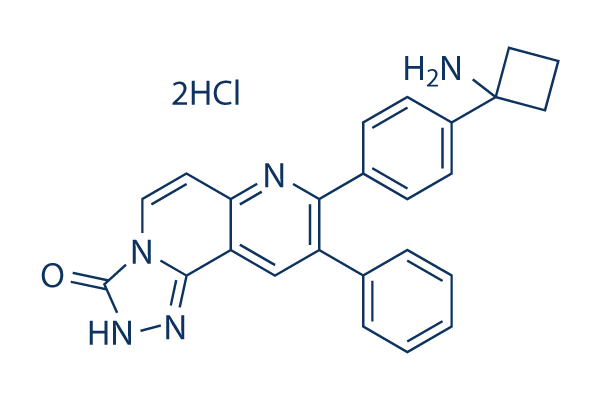
MK-2206 2HCl

MK-2206 2HCl is a highly selective inhibitor of Akt1, Akt2 and Akt3 with IC50 of 8 nM, 12 nM and 65 nM, respectively.

Catalog No.S1078
5 5 11 Reviews 41 Product Citations
Price Stock Quantity  
USD 110 In stock
USD 170 In stock
USD 370 In stock
USD 570 In stock

Free Overnight Delivery on all orders over $ 500.

Order now and get it on

MK-2206 2HCl Chemical Structure
Molecular Weight: 480.39

Validation & Quality Control

Customer Reviews(11)

Quality Control & MSDS

Related Compound Libraries

Products used with MK-2206 2HCl in previous publications

Product Information

  • Compare Akt Inhibitors
    Compare Akt Inhibitors
  • Research Area

Product Description

Biological Activity

Description MK-2206 2HCl is a highly selective inhibitor of Akt1, Akt2 and Akt3 with IC50 of 8 nM, 12 nM and 65 nM, respectively.
Targets Akt1 Akt2 Akt3
IC50 8 nM 12 nM 65 nM [1]
In vitro MK-2206 is an allosteric inhibitor and is activated by the pleckstrin homology domain. MK-2206 inhibits auto-phosphorylation of both Akt T308 and S473. MK-2206 also prevents Akt-mediated phosphorylation of downstream signaling molecules, including TSC2, PRAS40 and ribosomal S6 proteins. [1] MK-2206 inhibits Ras wild-type (WT) cell lines (A431, HCC827, and NCI-H292) more potently when compared to Ras-mutant cell lines (NCI-H358, NCI-H23, NCI-H1299, and Calu-6). MK-2206 also shows synergistic responses in combination with cytotoxic agents such as erlotinib or lapatinib in lung NCI-H460 or ovarian A2780 tumor cells. [2] MK-2206 or siRNA-mediated Akt inhibition strongly activates autophagy in human glioma cells. However, eukaryotic elongation factor-2 (eEF-2) silencing suppresses MK-2206-induced-autophagy, with a promotion of apoptotic cell death. [3]
In vivo MK-2206 shows 60% TGI and inhibits more than 70 % of phospho-Akt1/2 (T308 and S473) in A2780 ovarian cancer xenografts at a dose of 240 mg/kg. [1] MK-2206 exhibits significant antitumor activity in NCI-H292 xenograft in combination with erlotinib or lapatinib. [2]
Clinical Trials MK-2206 is currently under Phase II clinical trial for treatment of ovarian cancer, primary peritoneal cancer and fallopian tube cancer.
Features MK-2206 is the first allosteric small molecule inhibitor of Akt to enter clinical development.

Protocol(Only for Reference)

Kinase Assay: [4]

Akt kinases assay Akt kinases are assayed by a GSK-derived biotinylated peptide substrate. The extent of peptide phosphorylation is determined by Homogeneous Time Resolved Fluorescence (HTRF) using a lanthanide chelate (Lance)-coupled monoclonal antibody specific for the phosphopeptide in combination with a streptavidin-linked allophycocyanin (SA-APC) fluorophore which will bind to the biotin moiety on the peptide. When the Lance and APC are in proximity, a non-radiative energy transfer takes place from the Lance to the APC, followed by emission of light from APC at 655 nm. Working Solution: 100X protease inhibitor cocktail (PIC): 1mg/mL benzamidine, 0.5 mg/mL pepstatin, 0.5 mg/mL leupeptin, 0.5 mg/mL aprotinin; 10X assay buffer: 500 mM HEPES, pH7.5, 1% PEG, 16.6 mM EDTA, 1 mM EGTA, 1% BSA, 20 mM 9-glycerol phosphate; Quench buffer 50 mM HEPES pH 7.3, 16.6 mM EDTA, 0.1% BSA, 0.1% Triton X-100, 0.17 nM labeled monoclonal antibody, 0.0067 mg/mL SA-APC; ATP/MgCl2 working solution: 1X Assay buffer, 1 mM DTT, 1X PIC, 5% glycerol, active Akt; Peptide working solution: 1X Assay buffer, 1 mM DTT, 1X PIC, 5% glycerol, 2 TM GSK biotinylated peptide. The reaction is assembled by adding 16 µL of ATP/MgCl2 working solution to the appropriate wells. MK-2206 or vehicle (1.0 µL) is added followed by 10 µL of peptide working solution. The reaction is started by adding 13 μL of the enzyme working solution and mixing. The reaction is allowed to proceed for 50 min and then stopped by the addition of 60 µL HTRF quench buffer. The stopped reactions are incubated at room temperature for at least 30 min and then read in the instrument.

Cell Assay: [2]

Cell lines A431, HCC827, NCI-H292, NCI-H358, NCI-H23, NCI-H1299, Calu-6 and NCI-H460 cells
Concentrations 0, 0.3, 1 and 3 μM
Incubation Time 72 or 96 hours
Method MK-2206 is dissolved in DMSO as a stock solution and diluted by culture media before use. Cells are seeded at a density of 2-3 × 10³ in 96-well plates and incubated for 24 hours. Then MK-2206 (0, 0.3, 1 and 3 μM) is added to the cells. Cell proliferation is determined after 72 or 96 hours.

Animal Study: [2]

Animal Models SK-OV-3, NCI-H292, HCC70, PC-3, and NCI-H460 models in male CD1-nude mice
Formulation Formulated in 30% Captisol
Dosages 120 mg/kg
Administration Orally administered
1

References

Chemical Information

Download MK-2206 2HCl SDF
Molecular Weight (MW) 480.39
Formula

C25H21N5O.2HCl

CAS No. 1032350-13-2, 1032349-93-1 (free base), 1032349-77-1 (HCl)
Synonyms N/A
Solubility (25°C)
  • DMSO 14 mg/mL
  • Water 1 mg/mL
  • Ethanol <1 mg/mL
Storage 2 years -20°CPowder
2 weeks4°Cin DMSO
6 months-80°Cin DMSO
Chemical Name 8-(4-(1-aminocyclobutyl)phenyl)-9-phenyl-[1,2,4]triazolo[3,4-f][1,6]naphthyridin-3(2H)-one

Research Area

Customer Reviews (11)


Click to enlarge
Rating
Source Biochim Biophys Acta, 2012, 1823(5), 987-96. MK-2206 2HCl purchased from Selleck
Method Immunofluorescence
Cell Lines HC11 cells
Concentrations 10 µM
Incubation Time 1 h
Results whole ADRP levels, estimated by Western blot , decreased only in the presence of MK -2206 and LY294002. In most cases, ADRP decorated the surface of small lipid droplets and appeared as little patches on large cytoplasmic lipid droplets. With the exception of SP600125, which induced a strong ADRP coating of almost all cytoplasmic lipid droplets (although this inhibitor did not increase ADRP synthesis), variation in the distribution of ADRP at the surface of lipid droplet was difficult to estimate, notably because the signal was faint and uneven.

Click to enlarge
Rating
Source Oncotarget, 2011, 2(12), 1109-26.. MK-2206 2HCl purchased from Selleck
Method Western blot/ Wst-1 assay
Cell Lines ATC/ FTC cell lines
Concentrations 500 nM
Incubation Time 1 h/72 h
Results One-hour treatment with the AKT inhibitor MK-2206 (0.5 μM) or with the MEK inhibitor U0126 (10 μM) effectively abolished AKT and ERK1/2 phosphorylation in all cell lines.

Click to enlarge
Rating
Source Gynecol Oncol, 2011, 123(1), 13-8.. MK-2206 2HCl purchased from Selleck
Method Western blot
Cell Lines ovarian cancer cell lines
Concentrations 1-6 μM
Incubation Time 1 h/72 h
Results Activation of pAKT by IGF-1 in the low-grade cell line HOC-7 was blocked by the AKT inhibitor MK-2206.

Click to enlarge
Rating
Source FASEB J, 2013, 27(4), 1644-56.. MK-2206 2HCl purchased from Selleck
Method Clonogenic growth assay
Cell Lines U2OS cells
Concentrations 1 μM
Incubation Time 9 d
Results Specific inhibition of PKB activity using MK-2206 or triciribine also significantly reduced cell growth, although to a lesser extent compared to PI-103, suggesting that both the PKB and mTOR pathways are important for anchorage-dependent growth.

Click to enlarge
Rating
Source Cancer Res, 2013, 73(7), 2189-98.. MK-2206 2HCl purchased from Selleck
Method Western blot
Cell Lines SKNAS/SJNB8/IMR32/GIMEN/SHEP2/KCNR/NGP/LAN1/LAN5/TR14/UHGNP cell lines
Concentrations 8 μM
Incubation Time 48 h
Results The 8 μM MK-2206 treatments resulted in effective pathway inhibition in all cell lines as shown by western blot for phosphoryl ated FOXO3a and PRAS40 as well as AKT serine 473 phosphorylation.

Click to enlarge
Rating
Source J Cell Biochem, 2010, 112, 924–932. MK-2206 2HCl purchased from Selleck
Method Confocal microscopy
Cell Lines platelets
Concentrations 1μM
Incubation Time
Results Upon treatment with increasing concentrations of AEA from 0.1 to 10 mM (Fig. B–D) platelets were fully fluorescently marked as compared to control (Fig. A) and the increase in DAF 2 fluorescence intensity appears to be dose-dependent. In agreement with data shown in Figure 4, SR1(Fig. E) and MK2206 (Fig. F) abolished fluorescence intensity induced by AEA, while LY294002 (Fig. 5G) was less potent.

Click to enlarge
Rating
Source Radiat Oncol, 2009, 4, 43. MK-2206 2HCl purchased from Selleck
Method Western blot, clonogenic survival assay
Cell Lines U87MG cells
Concentrations 1 μM
Incubation Time 1 h
Results Akt inhibitor MK-2206 showed similar effect. MK-2206 is a potent allosteric Akt inhibitor with IC50 at 8 nm, 2 mM, 65 mM for Akt1, Akt2 and Akt3 respectively. U87MG cells were preincubated with 1 μM MK-2206 for 1 hr, followed by irradiation at 0 - 9 Gy. As shown in Fig C, MK-2206 treatment abolished IR-induced Akt phosphorylation. Moreover, treatment with MK-2206 also increased the radiosensitivity of U87MGcells (Fig. D)

Click to enlarge
Rating
Source J Cell Biochem, 2010, 112, 924–932. MK-2206 2HCl purchased from Selleck
Method Western blot
Cell Lines platelets
Concentrations 1 μM
Incubation Time
Results eNOSser1177 phosphorylation was greatly reduced by LY294002 and cancelled by MK2206 but it was not modified by platelet pretreatment with EGTA or BAPTA/AM.

Click to enlarge
Rating
Source Sci Signal, 2011, 4, rs9. MK-2206 2HCl purchased from Selleck
Method ELISA
Cell Lines HeLa cells
Concentrations 1 μM
Incubation Time
Results Treatment of infected cells with kinase inhibitors directed at Akt (MK-2206), MEK(PD 98059), PKC(CEC), or Pim family kinases identified a dominant role for Pim family kinases in the release of IL-8 from Salmonella-infected epithelial cells.

Click to enlarge
Rating
Source Dr. Zhang of Tianjin Medical University. MK-2206 2HCl purchased from Selleck
Method Western blot
Cell Lines Breast cancer cells
Concentrations 0-10 nM
Incubation Time 3 h
Results Breast cancer cells were serum starved for 24 h, pretreated with the indicated concentrations of MK-2206 for 3 h, and then treated with 100ng/ml EGF for 15 min.

Click to enlarge
Rating
Source J Cell Biochem, 2010, 112, 924–932. MK-2206 2HCl purchased from Selleck
Method Nitriter+Nitrate(NOX) measurement, cGMP detection
Cell Lines platelets
Concentrations 1 μM
Incubation Time 1 min
Results As shown in Figure 4 SR1 significantly reduced both NOx and cGMP formation, while SR2 failed to affect these parameters.

Product Citations (41)

  • Human Merkel cell polyomavirus small T antigen is an oncoprotein targeting the 4E-BP1 translation regulator. [Shuda M, et al. J Clin Invest 2011;121(9), 3623-3634]

    PubMed: 21841310
  • The Akt-SRPK-SR Axis Constitutes a Major Pathway in Transducing EGF Signaling to Regulate Alternative Splicing in the Nucleus. [Zhou Z, et al. Mol Cell 2012;47(3):422-33]

    PubMed: 22727668
  • Activation of MDL-1 (CLEC5A) on immature myeloid cells triggers lethal shock in mice. [Cheung R, et al. J Clin Invest 2011;121(11):4446-61]

    PubMed: 22005300
  • Relaxin increases human endothelial progenitor cell NO and migration and vasculogenesis in mice. [Segal MS, et al. Blood 2012;119(2):629-36]

    PubMed: 22028476
  • Cytotoxic activity of the novel Akt inhibitor, MK-2206, in T-cell acute lymphoblastic leukemia. [Simioni C, et al. Leukemia 2012;26(11):2336-42]

    PubMed: 22614243
  • Combinatorial treatments that overcome PDGFRβ-driven resistance of melanoma cells to V600EB-RAF inhibition. [Shi H, et al. Cancer Res 2011;71(15), 5067-5074]

    PubMed: 21803746
  • Antitumor activity of BRAF inhibitor vemurafenib in preclinical models of BRAF-mutant colorectal cancer. [Yang H, et al. Cancer Res 2012;72(3), 779-789]

    PubMed: 22180495
  • Resistance to selective BRAF inhibition can be mediated by modest upstream pathway activation. [Su F, et al. Cancer Res 2012;72(4), 969-978]

    PubMed: 22205714
  • FOXO3a Is A Major Target Of Inactivation By PI3K/AKT Signaling In Aggressive Neuroblastoma. [Santo EE, et al. Cancer Res 2013;ahead of print]

    PubMed: 23378341
  • Effects of Akt inhibitor MK2206 on proliferation and apoptosis of breast cancer cells. [Sangai T, et al. Clin Cancer Res 2012;18(20):5816-28]

    PubMed: 22932669
  • Akt Inhibitors MK-2206 and Nelfinavir Overcome mTOR Inhibitor Resistance in Diffuse Large B-cell Lymphoma. [Petrich AM, et al. Clin Cancer Res 2012;18(9):2534-44]

    PubMed: 22338016
  • MTORC1 functions as a transcriptional regulator of autophagy by preventing nuclear transport of TFEB. [Martina JA, et al. Autophagy 2012;8(6), 903-914]

    PubMed: 22576015
  • Snail1 controls TGF-β responsiveness and differentiation of mesenchymal stem cells. [Batlle R, et al. Oncogene 2012;ahead of print]

    PubMed: 22869142
  • Phosphoproteomic analysis of salmonella-infected cells identifies key kinase regulators and SopB-dependent host phosphorylation events. [Rogers LD, et al. Sci Signal 2011;4(191), rs9]

    PubMed: 21934108
  • PtdIns5P is an oxidative stress-induced second messenger that regulates PKB activation. [Jones DR, et al. FASEB J 2012;ahead of print]

    PubMed: 23241309
  • Selective Cox-2 inhibitor celecoxib induces epithelial-mesenchymal transition in human lung cancer cells via activating MEK-ERK signaling. [Wang ZL, et al. Carcinogenesis 2013;34(3):638-46]

    PubMed: 23172668
  • Metabolic biomarkers for response to PI3K inhibition in basal-like breast cancer. [Moestue SA, et al. Breast Cancer Res 2013;ahead of print]

    PubMed: 23448424
  • P90 RSK arranges Chk1 in the nucleus for monitoring of genomic integrity during cell proliferation. [Li P, Goto H, et al. Mol Biol Cell 2012;23(8):1582-92]

    PubMed: 22357623
  • PERK Utilizes Intrinsic Lipid Kinase Activity To Generate Phosphatidic Acid, Mediate Akt Activation, and Promote Adipocyte Differentiation. [Bobrovnikova-Marjon E, et al. Mol Cell Biol 2012;32(12):2268-78]

    PubMed: 22493067
  • Dual regulation of Glycogen Synthase Kinase 3 (GSK3)α/β by Protein Kinase C (PKC)α and Akt promotes thrombin-mediated integrin αIIbβ3 activation and granule secretion in platelets. [Moore SF, et al. J Biol Chem 2012;ahead of print]

    PubMed: 23239877
  • MicroRNA-21 orchestrates high glucose-induced signals to TOR complex 1, resulting in renal cell pathology in diabetes. [Dey N, Das F, et al. J Biol Chem 2011;286(29):25586-603]

    PubMed: 21613227
  • IKBKE protein activates Akt independent of phosphatidylinositol 3-kinase/PDK1/mTORC2 and the pleckstrin homology domain to sustain malignant transformation. [Guo JP, et al. J Biol Chem 2011;286(43), 37389-37398]

    PubMed: 21908616
  • Prolactin and epidermal growth factor stimulate adipophilin synthesis in HC11 mouse mammary epithelial cells via the PI3-kinase/Akt/mTOR pathway. [Pauloin A, et al. Biochim Biophys Acta 2012;1823(5), 987-996]

    PubMed: 22426621
  • Relaxin induces rapid dilation of rodent small renal and human subcutaneous arteries via PI3 kinase and nitric oxide. [McGuane JT, et al. Endocrinology 2011;152(7):2786-96]

    PubMed: 21558316
  • A switch from canonical to noncanonical Wnt signaling mediates drug resistance in colon cancer cells. [Bordonaro M, et al. PLoS One 2011;6(11):e27308]

    PubMed: 22073312
  • K-RAS mutant pancreatic tumors show higher sensitivity to MEK than to PI3K inhibition in vivo. [Hofmann I, et al. PLoS One 2012;7(8):e44146]

    PubMed: 22952903
  • Akt Regulates TNFα Synthesis Downstream of RIP1 Kinase Activation during Necroptosis. [McNamara CR, et al. PLoS One 2013;8(3):e56576]

    PubMed: 23469174
  • AKT Signaling as a Novel Factor Associated with In Vitro Resistance of Human AML to Gemtuzumab Ozogamicin. [Rosen DB, et al. PLoS One 2013;8(1), e53518]

    PubMed: 23320091
  • Combined targeting of AKT and mTOR synergistically inhibits proliferation of hepatocellular carcinoma cells. [Grabinski N, et al. Mol Cancer 2012;11, 85]

    PubMed: 23167739
  • Preventing the calorie restriction-induced increase in insulin-stimulated Akt2 phosphorylation eliminates calorie restriction's effect on glucose uptake in skeletal muscle. [Sharma N, et al. Biochim Biophys Acta 2012;1822(11):1735-40]

    PubMed: 22846604
  • Prolactin and epidermal growth factor stimulate adipophilin synthesis in HC11 mouse mammary epithelial cells via the PI3-kinase/Akt/mTOR pathway. [Pauloin A, et al. Biochim Biophys Acta 2012;1823(5):987-96]

    PubMed: 22426621
  • The insulin-like growth factor 1 pathway is a potential therapeutic target for low-grade serous ovarian carcinoma. [King ER, Zu Z, et al. Gynecol Oncol 2011;123(1):13-8]

    PubMed: 21726895
  • The Anandamide effect on NO/cGMP pathway in human platelets. [Signorello MG, et al. J Cell Biochem 2011;112(3), 924-932]

    PubMed: 21328466
  • Activation of AKT by hypoxia: a potential target for hypoxic tumors of the head and neck. [Stegeman H, et al. BMC Cancer 2012;12, 463]

    PubMed: 23046567
  • Casitas B-lineage lymphoma mutants activate AKT to induce transformation in cooperation with class III receptor tyrosine kinases. [Polzer H, et al. Exp Hematol 2013;41(3), 271-280.e4]

    PubMed: 23127761
  • CBL mutants activate AKT to induce transformation in cooperation with class III receptor tyrosine kinases. [Polzer H, et al. Exp Hematol 2013;41(3):271-280.e4]

    PubMed: 23127761
  • Reactivation of ERK signaling causes resistance to EGFR kinase inhibitors. [Ercan D, et al. Cancer Discov 2012;2(10), 934-947]

    PubMed: 22961667
  • Activation of Human Platelets by 2-Arachidonoylglycerol: Role of PKC in NO/cGMP Pathway Modulation. [Signorello MG, et al. Curr Neurovasc Res 2011;8(3):200-9]

    PubMed: 21675954
  • Radiation-induced Akt activation modulates radioresistance in human glioblastoma cells. [Li HF, et al. Radiat Oncol 2009;4, 43]

    PubMed: 19828040
  • Anandamide enhances expression of heat shock protein 72 to protect against ischemia-reperfusion injury in rat heart. [Li Q, et al. J Physiol Sci 2013;63(1):47-53]

    PubMed: 23007622
  • Thyrocyte-specific inactivation of p53 and Pten results in anaplastic thyroid carcinomas faithfully recapitulating human tumors. [Antico Arciuch VG, et al. Oncotarget 2011;2(12):1109-26]

    PubMed: 22190384

Tech Support & FAQs

Answers to questions you may have can be found in the inhibitor handling instructions. Topics include how to prepare stock solutions, how to store inhibitors, and issues that need special attention for cell-based assays and animal experiments.

Tel: +1-832-582-8158 Ext:3Monday–Friday 9:00 AM–5:00 PM (Central Time)

If you have any other enquiries, please leave a message.

* Indicates a Required Field

Related Akt Inhibitors

  • Perifosine

    Perifosine (KRX-0401) is a novel Akt inhibitor with IC50 of 4.7 μM.

  • GSK690693

    GSK690693 is a pan-Akt inhibitor targeting Akt1, Akt2 and Akt3 with IC50 of 2 nM, 13 nM, and 9 nM, respectively.

  • Triciribine

    Triciribine (TCN, API-2) is a DNA synthesis inhibitor and also inhibits Akt and HIV-1 with IC50 of 130 nM and 20 nM, respectively.

  • PHT-427

    PHT-427 is a dual Akt and PDPK1 inhibitor with Ki of 2.7 μM and 5.2 μM, respectively.

  • AT7867

    AT7867 is a potent ATP-competitive inhibitor of Akt1/2/3 and S6K with IC50 of 32 nM/17 n/47 nM and 85 nM, respectively.

  • Honokiol

    Honokiol is a biphyl neolignan present in the cones, bark, and leaves of Magnolia grandifloris that displays antiangiogenic, antiinflammatory, and antitumor properties due to the inhibitory effect on the PI3K/Akt pathway.

  • CCT128930

    CCT128930 is a potent, ATP-competitive and selective inhibitor of Akt2 with IC50 of 6 nM.

  • A-674563

    A-674563 inhibits Akt1, PKA and CDK2 with Ki of 11 nM, 16 nM and 46 nM, respectively.

  • Triciribine phosphate (NSC-280594)

    Triciribine phosphate (TCN-P, NSC-280594, API-2) is a potent Akt inhibitor with IC50 of 130 nM.

  • PF-04691502

    PF-04691502 is an ATP-competitive, selective inhibitor of PI3K(α/β/δ/γ)/mTOR with Ki of 1.8 nM/2.1 nM/1.6 nM/1.9 nM and 16 nM, also inhibits Akt phosphorylation on T308/S473 with IC50 of 7.5 nM/3.8 nM.

Recently Viewed Items

Tags: buy MK-2206 2HCl | MK-2206 2HCl supplier | purchase MK-2206 2HCl | MK-2206 2HCl cost | MK-2206 2HCl manufacturer | order MK-2206 2HCl | MK-2206 2HCl distributor
Contact Us