
-
 Australia
-
 Austria
-
 Belgium
-
 Brazil
-
 Canada
-
 China
China
-
 Czech Republic
-
 Denmark
-
 Finland
-
 France
-
 Germany
-
 Greece
-
 Hong Kong
-
 Hungary
-
 Iceland
-
 India
India
-
 Ireland
-
 Israel
-
 Italy
Italy
-
 Japan
Japan
-
 Korea
Korea
-
 Luxembourg
-
 Malaysia
-
 Netherlands
-
 New Zealand
-
 Norway
-
 Poland
-
 Qatar
Qatar
-
 Romania
-
 Saudi Arabia
-
 Singapore
-
 Spain
Spain
-
 Sweden
-
 Switzerland
-
 Taiwan
-
 Turkey
-
 United Kingdom
-
 United States
AMPK Activators
| Cat.No. | Product Name | Information | Product Use Citations | Product Validations |
|---|---|---|---|---|
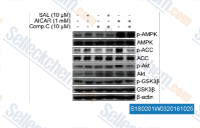
| S1802 | AICAR (Acadesine) | AICAR (Acadesine, NSC105823, AICA Riboside), an AMPK activator, results in accumulation of ZMP, which mimics the stimulating effect of AMP on AMPK and AMPK kinase. This compound induces mitophagy. Phase 3. |
|
|
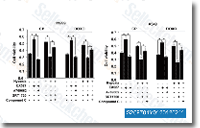
| S2697 | A-769662 | A-769662 is a potent, reversible AMPK activator with EC50 of 0.8 μM in cell-free assays, little effect on GPPase/FBPase activity. |
|
|
| S5958 | Metformin (1,1-Dimethylbiguanide) | Metformin (1,1-Dimethylbiguanide), a widely used drug for treatment of type 2 diabetes, activates AMP-activated protein kinase (AMPK) in hepatocytes. Metformin promotes mitophagy in mononuclear cells. Metformin induces apoptosis of lung cancer cells through activating JNK/p38 MAPK pathway and GADD153. |
|
|
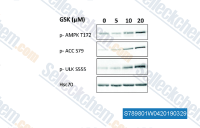
| S7898 | GSK621 | GSK621 is a specific and potent AMPK activator. |
|
|
| S8654 | Ex229 (Compound 991) | EX229 (compound 991) is a potent AMPK activator that is 5-10-fold more potent than A769662 in activating AMPK. |
|
|
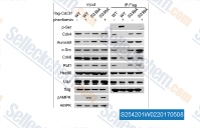
| S2542 | Phenformin HCl | Phenformin HCl is a hydrochloride salt of phenformin that is an anti-diabetic drug from the biguanide class. It activates AMPK, increasing activity and phosphorylation. |
|
|
| S7953 | Bempedoic acid (ETC-1002) | Bempedoic acid (ETC-1002) is an orally available, once-daily LDL-C lowering small molecule designed to reduce elevated levels of LDL-C and to avoid side effects associated with existing LDL-C lowering therapies. This compound is an activator of hepatic AMP-activated protein kinase (AMPK) and has potent inhibitory activity against hepatic ATP-citrate lyase(IC50=29 uM). |
|
|
| S0795 | O-304 | O-304 (O-304X) is an orally available pan-activator of AMPK activated protein kinase (AMPK). This compound exhibits a great potential as a novel drug to treat type 2 diabetes (T2D) and associated cardiovascular complications. |
|
|
| E1031 | MK-8722 |
MK-8722 is a potent, direct, allosteric activator of all 12 mammalian pan-AMPK complexes. |
|
|
| S8803 | MK-3903 | MK-3903 is a potent and selective AMPK activator with an EC50 of 8 nM for α1 β1 γ1 subunit. It activates 10 of the 12 pAMPK complexes with EC50 values in the range of 8-40 nM and maximal activation >50%. |
|
|
| S0411 | BAM 15 | BAM 15 is a novel mitochondrial protonophore uncoupler capable of protecting mammals from acute renal ischemic-reperfusion injury and cold-induced microtubule damage. This compound is also a potent AMPK activator. It attenuates transportation-induced apoptosis in iPS-differentiated retinal tissue. |
|
|
| S9604 | Lixumistat (IM156) | Lixumistat (IM156) is a potent activator of AMPK that increases AMPK phosphorylation. It blocks oxidative phosphorylation (OXPHOS) through the inhibition of complex I and increases apoptosis. This compound ameliorates various types of fibrosis and inhibits tumors. |
|
|
| S4561 | Danthron | Danthron (Chrysazin, Antrapurol) functions in regulating glucose and lipid metabolism by activating AMPK. This compound is a natural product extracted from the traditional Chinese medicine rhubarb. It used to be a laxativa and now is currently used as an antioxidant in synthetic lubricants, in the synthesis of experimental antitumor agents, as a fungicide and as an intermediate for making dyes. |
|
|
| S5284 | Adenosine 5'-monophosphate monohydrate | Adenosine 5'-monophosphate monohydrate (5'-Adenylic acid, 5'-AMP) is an activator of a class of protein kinases known as AMP-activated protein kinase (AMPK). | ||
| S8335 | PF-06409577 | PF-06409577 is an orally bioavailable AMPK activator with EC50 of 7 nM for α1β1γ1 in the TR-FRET assay and it shows no detectable inhibition of hERG in a patch-clamp assay (100 μM) and was not an inhibitor (IC50 > 100 μM) of the microsomal activities of major human cytochrome P450 isoforms. | ||
| E2032 | MOTS-c | MOTS-c, a mitochondria-derived peptide (MDP), exerts antinociceptive and anti-inflammatory effects through activating AMPK pathway and inhibiting MAP kinases-c-fos signaling pathway. | ||
| E2371 | YLF-466D | YLF-466D is an AMPK activator that inhibits platelet aggregation. | ||
| S3832 | Euphorbiasteroid | Euphorbiasteroid (Euphorbia factor L1), a component of Euphorbia lathyris L., inhibits adipogenesis of 3T3-L1 cells through activation of the AMPK pathway and induces HL-60 cells to apoptosis via promoting Bcl-2/Bax apoptotic signaling pathway in a dose-dependent manner. This compound is a tricyclic diperpene of Euphorbia lathyris L., inhibits tyrosinase, and increases the phosphorylation of AMPK, with anti-cancer, anti-virus, anti-obesity and multidrug resistance-modulating effect. | ||
| S8953 | ASP4132 | ASP4132 is a potent and orally active activator of Adenosine Monophosphate-Activated Protein Kinase (AMPK) with EC50 of 0.018 μM. This compound is used as a clinical candidate for the treatment of human cancer. | ||
| E5784 | AICAR phosphate | |||
| E0653 | Trans-ferulic acid | Trans-ferulic acid is a potent activator of AMPK under high glucose condition. | ||
| E0795 | COH-SR4 | COH-SR4 suppresses adipogenesis in 3T3-L1 cells through indirect activation of AMPK and downstream modulation of the Mammalian target of rapamycin complex 1 (mTORC1) signaling pathway, which blocks important regulators involved in protein synthesis, cell cycle progression, and expression of key transcription factors and their target adipogenic genes involved in lipid synthesis. | ||
| S3341 | Palmitoleic acid |
Palmitoleic acid (POA, Palmitoleate) stimulates the uptake of glucose in liver through activation of AMPK and FGF-21, dependent on PPARα. |
||
| S9096 | ligustroflavone | Ligustroflavone (Nuezhenoside), isolated from the leaves of Turpinia montana, shows high antioxidant capacity and is reported to be an AMPK activator. | ||
| S9860 | BC1618 | BC1618 is an orally active Fbxo48 inhibitor that stimulates adenosine monophosphate (AMP)-activated protein kinase (Ampk)-dependent signaling. This compound promotes mitochondrial fission, facilitates autophagy and improves hepatic insulin sensitivity. | ||
| S4460 | IMM-H007 | IMM-H007, an adenosine derivative, is an activator of AMP-Activated Protein Kinase (AMPK). This compound is a potential drug for treating cardiac dysfunction. It negatively regulates endothelium inflammation through inactivating NF-κB and JNK/AP1 signaling. This chemical inhibits ABCA1 (ATP binding cassette subfamily a member 1) degradation and facilitates its cell-surface localization in macrophages, thereby promotes cholesterol efflux. | ||
| E0204 | Poricoic acid A | Poricoic acid A is isolated from the surface layer of Poria cocos. This compound activates AMPK to attenuate fibroblast activation and abnormal extracellular matrix remodelling in renal fibrosis. It also is a modulator of tryptophan hydroxylase-1 (TPH-1). | ||
| S0888 | Rsva 405 | Rsva 405, a novel small-molecule activator of AMPK, is a potent inhibitor of adipogenesis and thus may have therapeutic potential against obesity. | ||
| S1323 | 7-Methoxyisoflavone | 7-Methoxyisoflavone (MIF) is a potent activator of adenosine monophosphate-activated protein kinase (AMPK). | ||
| E3011 | Sarsaparilla Extract | Sarsaparilla Extract is extracted from Smilax china L., which can stimulate 3T3-L1 Adipocytes to Brown-like Adipocytes Via β3-AR/AMPK Signaling Pathway. | ||
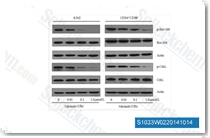
| S1033 | Nilotinib (AMN-107) | Nilotinib is a selective Bcr-Abl inhibitor with IC50 less than 30 nM in Murine myeloid progenitor cells. Nilotinib induces autophagy through AMPK activition. |
|
|
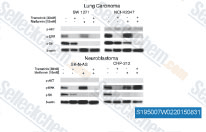
| S1950 | Metformin Hydrochloride | Metformin Hydrochloride (1,1-Dimethylbiguanide Hydrochloride) is a highly effective Antihyperglycemic Agent, which primarily decreases hyperglycemia in hepatocytes by suppressing hepatic gluconeogenesis (glucose production by the liver). It also promotes mitophagy in mononuclear cells and induces apoptosis of lung cancer cells through activating the JNK/p38 MAPK pathway and GADD153. |
|
|
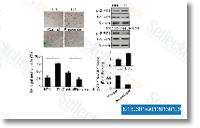
| S1396 | Resveratrol (trans-Resveratrol) | Resveratrol has a wide spectrum of targets including cyclooxygenases(i.e. COX, IC50=1.1 μM), lipooxygenases(LOX, IC50=2.7 μM), kinases, sirtuins and other proteins. It has anti-cancer, anti-inflammatory, blood-sugar-lowering and other beneficial cardiovascular effects. Resveratrol induces mitophagy/autophagy and autophagy-dependent apoptosis. |
|
|
| S4895 | Nilotinib hydrochloride monohydrate | Nilotinib (AMN-107, Tasigna) hydrochloride monohydrate is a selective and orally bioavailable inhibitor of Bcr-Abl with IC50 < 30 nM in Murine myeloid progenitor cells. Nilotinib induces autophagy through AMPK activition. |
|
|
| S3296 | Hispidulin | Hispidulin (Dinatin), an active natrual ingredient in a number of traditional Chinese medicinal herbs, exhibits inhibitory activity against the oncogenic protein kinase Pim-1 with IC50 of 2.71 μM. This compound induces apoptosis through mitochondrial dysfunction and inhibition of P13k/Akt signalling pathway in HepG2 cancer cells. It exerts anti-osteoporotic and bone resorption attenuating effects via activating the AMPK signaling pathway. |
|
|
| S1321 | Urolithin B | Urolithin B inhibits NF-κB activity by reducing the phosphorylation and degradation of IκBα. This compound suppresses the phosphorylation of JNK, ERK, and Akt, and enhances the phosphorylation of AMPK. It is also a regulator of skeletal muscle mass. |
|
|
| E1323New | Aldometanib | Aldometanib (LXY-05-029) is a selective inhibitor of aldolase (ALDOA) with an IC50 of 50 uM in in vitro enzymatic assays. It also activates lysosomal AMPK by blocking FBP-aldolase binding, mimicking glucose starvation and improving metabolic health without causing hypoglycemia. | ||
| S2942 | EB-3D | EB-3D is a potent and selective inhibitor of choline kinase α (ChoKα) with IC50 of 1 μM for ChoKα1. This compound induces deregulation of the AMPK-mTOR pathway and apoptosis in leukemia T-cells. | ||
| S9116 | Chikusetsusaponin IVa | Chikusetsusaponin IVa (Calenduloside F), a major active ingredient of triterpenoid saponins, has numerous pharmacological activities, including cytotoxic activity against various cancer cells, anti-inflammatory activity, prevention of dental caries and induction of genta-micin nephrotoxicity. This compound is a novel AMPK activator. | ||
| E2661 | Chitosan oligosaccharide | Chitosan oligosaccharide (COS) is an oligomer of β-(1➔4)-linked d-glucosamine, of which actions involve the modulation of several important pathways including the suppression of nuclear factor kappa B (NF-κB) and mitogen-activated protein kinases (MAPK) and the activation of AMP-activated protein kinase (AMPK). | ||
| S1273 | Amarogentin |
Amarogentin (AG), a secoiridoid glycoside mainly extracted from Swertia and Gentiana roots, exhibits anti-oxidative, anti-tumour, and anti-diabetic activities. This compound is an agonist for the bitter taste receptor TAS2R1 and inhibits in LAD-2 cells substance P-induced production of newly synthesized TNF-α. It induces apoptosis in human gastric cancer cells (SNU-16) through G2/M cell cycle arrest and PI3K/Akt signalling pathway. This chemical interacts with the α2 subunit of AMP-activated protein kinase (AMPK) and activates the trimeric kinase with EC50 of 277 pM. |
||
| S6221 | Methyl cinnamate | Methyl cinnamate, an active component of Zanthoxylum armatum, is a widely used natural flavor compound with antimicrobial and tyrosinase inhibitor activities. Methyl Cinnamate Inhibits Adipocyte Differentiation via Activation of the CaMKK2--AMPK Pathway in 3T3-L1 Preadipocytes. | ||
| S3299 | Demethyleneberberine | Demethyleneberberine (DMB), a component of Cortex Phellodendri Chinensis (CPC), significantly alleviates the weight loss and diminishes myeloperoxidase (MPO) activity, while significantly reduces the production of pro-inflammatory cytokines, such as interleukin (IL)-6 and tumor necrosis factor-α (TNF-α), and inhibits the activation of NF-κB signaling pathway. This compound potentially ameliorates NAFLD (Non-alcoholic fatty liver disease) by activating AMPK pathways. |

Products are for research use only. Not for human use. We do not sell to patients.
©Copyright 2013 Selleck Chemicals. All Rights Reserved.