
-
 Australia
-
 Austria
-
 Belgium
-
 Brazil
-
 Canada
-
 China
China
-
 Czech Republic
-
 Denmark
-
 Finland
-
 France
-
 Germany
-
 Greece
-
 Hong Kong
-
 Hungary
-
 Iceland
-
 India
India
-
 Ireland
-
 Israel
-
 Italy
Italy
-
 Japan
Japan
-
 Korea
Korea
-
 Luxembourg
-
 Malaysia
-
 Netherlands
-
 New Zealand
-
 Norway
-
 Poland
-
 Qatar
Qatar
-
 Romania
-
 Saudi Arabia
-
 Singapore
-
 Spain
Spain
-
 Sweden
-
 Switzerland
-
 Taiwan
-
 Turkey
-
 United Kingdom
-
 United States
PARP Inhibitors
| Cat.No. | Product Name | Information | Product Use Citations | Product Validations |
|---|---|---|---|---|
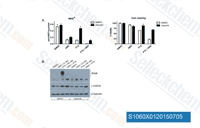
| S1060 | AZD2281 (Olaparib) | Olaparib (AZD2281, KU0059436) is a selective inhibitor of PARP1/2 with IC50 of 5 nM/1 nM in cell-free assays, 300-times less effective against tankyrase-1. Olaparib induces significant autophagy that is associated with mitophagy in cells with BRCA mutations. |
|
|
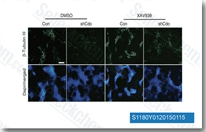
| S1180 | XAV-939 | XAV-939 (NVP-XAV939) selectively inhibits Wnt/β-catenin-mediated transcription through tankyrase1/2 inhibition with IC50 of 11 nM/4 nM in cell-free assays, regulates axin levels and does not affect CRE, NF-κB or TGF-β. |
|
|
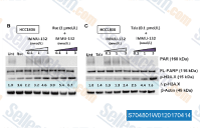
| S7048 | BMN-673 (Talazoparib) | Talazoparib (BMN 673, LT-673) is a novel PARP inhibitor with IC50 of 0.57 nM for PARP1 in a cell-free assay. It is also a potent inhibitor of PARP-2, but does not inhibit PARG and is highly sensitive to PTEN mutation. Phase 3. |
|
|
| S1004 | Veliparib (ABT-888) | Veliparib (ABT-888, NSC 737664) is a potent inhibitor of PARP1 and PARP2 with Ki of 5.2 nM and 2.9 nM in cell-free assays, respectively. This compound is inactive to SIRT2 and increases autophagy and apoptosis. Phase 3. |
|
|
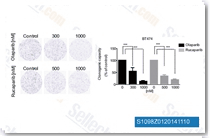
| S1098 | Rucaparib phosphate | Rucaparib phosphate is an inhibitor of PARP with Ki of 1.4 nM for PARP1 in a cell-free assay, also showing binding affinity to eight other PARP domains. Phase 3. |
|
|
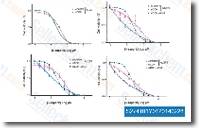
| S2741 | Niraparib (MK-4827) | Niraparib (MK-4827) is a selective inhibitor of PARP1/2 with IC50 of 3.8 nM/2.1 nM, with great activity in cancer cells with mutant BRCA-1 and BRCA-2. It is >330-fold selective against PARP3, V-PARP and Tank1. This compound can form PARP–DNA complexes resulting in DNA damage, apoptosis, and cell death. Phase 3. |
|
|
| S4948 | Rucaparib (AG-014699) | Rucaparib is an inhibitor of PARP with Ki of 1.4 nM for PARP1 in a cell-free assay, also showing binding affinity to eight other PARP domains. |
|
|
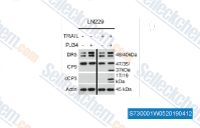
| S7300 | PJ34 HCl | PJ34 HCl is the hydrochloride salt of PJ34, which is a PARP inhibitor with EC50 of 20 nM and is equally potent to PARP1/2. |
|
|
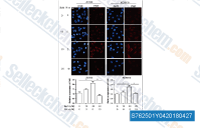
| S7625 | Niraparib tosylate | Niraparib tosylate is a selective inhibitor of PARP1/PARP2 with IC50 of 3.8 nM/2.1 nM. Niraparib increases formation of PARP-DNA complexes resulting in DNA damage, apoptosis, and cell death. |
|
|
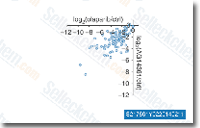
| S2178 | AG-14361 | AG14361 is a potent inhibitor of PARP1 with Ki of <5 nM in a cell-free assay. It is at least 1000-fold more potent than the benzamides. |
|
|
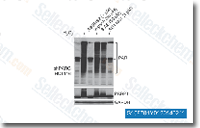
| S1087 | Iniparib (BSI-201) | Iniparib (BSI-201, NSC-746045, IND-71677) is a PARP1 inhibitor with demonstrated effectiveness in triple-negative breast cancer (TNBC). Phase 3. |
|
|
| S5195 | Rucaparib Camsylate | Rucaparib (Rubraca, AG014699, PF01367338) Camsylate is an inhibitor of PARP with Ki of 1.4 nM for PARP1 in a cell-free assay, also showing binding affinity to eight other PARP domains. |
|
|
| S8592 | Pamiparib | Pamiparib is a potent and selective inhibitor of PARP1 and PARP2 with IC50 values of 0.83 and 0.11 nM, respectively in biochemical assays. It shows high selectivity over other PARP enzymes. |
|
|
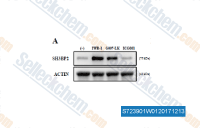
| S7239 | G007-LK | G007-LK is a potent and selective tankyrase inhibitor with IC50 of 46 nM and 25 nM for TNKS1/2, respectively. |
|
|
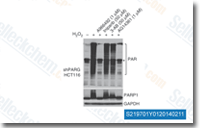
| S2197 | A-966492 | A-966492 is a novel and potent inhibitor of PARP1 and PARP2 with Ki of 1 nM and 1.5 nM, respectively. |
|
|
| S8038 | UPF 1069 | UPF 1069 is a selective PARP2 inhibitor with IC50 of 0.3 μM. It is ~27-fold selective against PARP1. |
|
|
| S8419 | Stenoparib (E7449) | Stenoparib (E7449, 2X-121, MGI25036) is an orally bioavailable, brain penetrable, small molecule dual inhibitor of PARP1/2 and also inhibits PARP5a/5b, otherwise known as tankyrase1 and 2 (TNKS1/2), important regulators of canonical Wnt/β-catenin signaling. It has IC50 values of 1.0 and 1.2 nM for PARP1 and 2, respectively. |
|
|
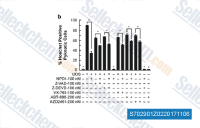
| S7029 | AZD2461 | AZD2461 is a novel PARP inhibitor with low affinity for Pgp. Phase 1. |
|
|
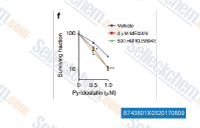
| S7438 | ME0328 | ME0328 is a potent and selective PARP inhibitor with IC50 of 0.89 μM for PARP3, about 7-fold selectivity over PARP1. |
|
|
| S8363 | NMS-P118 | NMS-P118 is a potent, orally available, and highly selective PARP-1 inhibitor endowed with excellent ADME and pharmacokinetic profiles, showing 150-fold selectivity for PARP-1 over PARP-2 (Kd 0.009 μM vs 1.39 μM, respectively). |
|
|
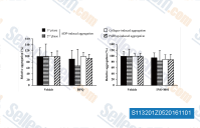
| S1132 | 3-Aminobenzamide | 3-Aminobenzamide (3-ABA , 3-Amino Benzamide, 3-AB) is a potent inhibitor of Poly(ADP-ribose)polymerase (PARP) and inhibits cell apoptosis after SCI (Spinal Cord Injury) in caspase-independent way. |
|
|
| S7238 | NVP-TNKS656 | NVP-TNKS656 is a highly potent, selective, and orally active tankyrase inhibitor with IC50 of 6 nM for TNKS2, > 300-fold selectivity against PARP1 and PARP2. |
|
|
| S8370 | BGP-15 2HCl | BGP-15, is a nicotinic amidoxime derivative with PARP inhibitory activity. It has been demonstrated that BGP-15 protects against ischemia-reperfusion injury. |
|
|
| S9875 | AZD5305 (Saruparib) | Saruparib (AZD5305) is a highly selective and potent inhibitor of PARP1 with an IC50 of 3 nM in wild-type A549 lung cancer cells. AZD5305 shows no or minimal growth inhibitory effects in other cells (IC50s >10μM). |
|
|
| S7730 | NU1025 | NU1025 (NSC 696807) is a potent PARP inhibitor with IC50 of 400 nM. |
|
|
| S7490 | WIKI4 | WIKI4 is a novel Tankyrase inhibitor with IC50 of 15 nM for TNKS2, and leads to inhibition of Wnt/beta-catenin signaling. |
|
|
| S4715 | Benzamide | Benzamide, a derivative of benzoic acid, is an inhibitor of poly(ADP-ribose) polymerase with an IC50 of 3.3 μM. |
|
|
| S9712 | Fluzoparib (SHR-3162) |
Fluzoparib (SHR3162, HS10160) is a potent Poly (ADP-ribose) polymerase (PARP) inhibitor that shows anti-tumor activity, with an IC50 of 1.46±0.72 nM for PARP1. |
|
|
| S4710 | Picolinamide | Picolinamide (2-Pyridinecarboxamide, Picolinoylamide, 2-Carbamoylpyridine) is found to be a strong inhibitor of poly (ADP-ribose) synthetase of nuclei from rat pancreatic islet cells. |
|
|
| S0519 | BYK204165 | BYK204165 is a potent and selective inhibitor of the poly(ADP-ribose) polymerase (PARP). This compound inhibits cell-free recombinant human PARP-1 (hPARP-1) with pIC50 of 7.35 and pKi of 7.05 and murine PARP-2 (mPARP-2) with pIC50 of 5.38, respectively. |
|
|
| S8993 | Atamparib (RBN-2397) | RBN-2397 (Atamparib) is a potent, selective and orally active NAD+ competitive inhibitor PARP7 with IC50 of <3 nM and Kd of <0.001 μM. This compound has the potential for the research of tumor treatment. |
|
|
| S8992 | RBN012759 | RBN012759 is a potent and selective inhibitor of PARP14 with IC50 of <3 nM and 5 nM for human catalytic domain and mouse catalytic domain, respectively. This compound contributes to anti-tumor immune response. |
|
|
| E2147 | AZD9574 (Palacaparib) | AZD9574 is a novel PARP inhibitor which combines PARP1 selectivity, trapping and high CNS penetration in a single molecule. |
|
|
| E1425 | Nesuparib | Nesuparib (JPI-547, NOV140201) is a potential inhibitor of both PARP and tankyrases, with IC50 of 0.005 μM, 0.001 μM, 0.002 μM, and ND for TNKS1, TNKS2, PARP1, and PARP2, respectively. This compound exhibits anti-tumor activity in BRCA-deficient xenograft models. | ||
| S6977 | DR2313 | DR2313 is a potent, selective, competitive and brain-penetrant inhibitor of poly(ADP-ribose) polymerase (PARP), with IC50s of 0.20 μM and 0.24 μM for PARP-1 and PARP-2, respectively. | ||
| S6739 | MN 64 | MN-64 is a potent inhibitor of TNKS1 and TNKS2 with IC50 value of 6 and 72 nM, respectively. | ||
| E5842New | Nudifloramide | Nudifloramide (2PY, N-methyl-2-pyridone-5- carboxamide) is a pyridine derivative of nicotinamide that inhibits PARP-1 (poly (ADP-ribose) polymerase-1) activity in vitro, with an IC50 of 8 µM. | ||
| E1069 | M2912 | M2912 (MSC2504877) is a very potent TNKS1/TNKS2 inhibitor (IC50=0.6 nM for TNKS1) with exquisite selectivity over other PARP family enzymes and favorable compound properties. This inhibitor potently modulates the Wnt/β-catenin pathway by elevating the levels of axin2 (EC50=17 nM) and tankyrase in DLD1 cells in a dose-dependent manner resulting in reduced cellular Wnt reporter activity. | ||
| S0732 | GeA-69 | GeA-69 is a cell-permeable, selective allosteric inhibitor targeting macrodomain 2 (MD2) of poly-adenosine-diphosphate-ribose polymerase 14 (PARP14) with Kd of 860 nM. | ||
| E1912 | B102(PARP/HDAC-IN-1) | B102(PARP/HDAC-IN-1) is a dual inhibitor of PARP and HDAC, with IC50 of 19.01 nM, 2.13 nM, 1.69 μM, > 10 μM for PARP1, PARP2, HDAC1, HDAC6, respectively, in an enzymatic assay. It exhibits anti-proliferative and anti-tumor effects. It also induces DNA damage and apoptosis in vitro. | ||
| E1614 | OUL232 | OUL232 (Compound 27) is an potent inhibitor of mono-ADP-ribosylation (mono-ARTs) PARP10 with IC50 of 7.8 nM. It also inhibits PARP7, PARP11, PARP12, PARP14, and PARP15 at nM potencies. | ||
| S9893 | Venadaparib(IDX-1197) | Venadaparib (IDX-1197), a potent PARP1/2 inhibitor with IC50 values of 1.4 nM and 1.0 nM respectively, prevents the repair of DNA single-strand breaks (SSB) and promotes the conversion of SSB to double-stranded breaks (DSB), which ultimately leads to synthetic lethality in cancer cells. | ||
| E4942New | Talazoparib tosylate | Talazoparib tosylate (BMN 673ts) is a potent, orally bioavailable PARP1/2 inhibitor exhibiting an IC50 of 0.57 nM against PARP1. | ||
| E4869 | Niraparib hydrochloride | Niraparib hydrochloride (MK-4827 hydrochloride) is a potent poly(ADP-ribose)polymerase (PARP) inhibitor with IC50s of 3.8 and 2.1 nM against both the PARP-1 and PARP-2 enzymes, respectively.It inhibits the repair of radiation-induced DNA double-strand breaks, activates apoptosis, and exhibits anti-tumor activity. | ||
| S9360 | 4-Hydroxyquinazoline | 4-Hydroxyquinazoline (Quinazolin-4-ol, 4-Quinazolinol) is a PARP inhibitor with a high potency for PARP-1 with IC50 of 9.5 μM. | ||
| E4719 | XYL-1 | XYL-1 is a highly potent inhibitor of PARP7 with and IC50 of 0.6 nM. It could enhance the type-Ⅰinterferon signaling in vitro, and can be a potential candidate for developing cancer immunotherapy agents. | ||
| E5851New | T26 | T26( PARP1-IN-35) is a potent, selective, orally active, inhibitor of PARP1 capable of crossing the blood-brain barrier, with IC50 values of 0.2 nM. It exhibits significant antitumor efficacy and holds potential as a research treatment for breast cancer metastases. | ||
| E7366 | Veliparib dihydrochloride | Veliparib dihydrochloride is an orally active and potent inhibitor of both PARP-1 and PARP-2 with Kis of 5.2 nM and 2.9 nM, respectively. It exhibit ability to cross the blood-brain barrier and potentiate DNA-damaging agents in preclinical tumor model. | ||
| E1518 | DPQ | DPQ is a potent inhibitor of Poly (ADP-ribose) polymerase (PARP), with an IC50 of 40 nM for PARP1. It also suppresses macrophage-mediated inflammation and mitigates acute lung injury (ALI) induced by lipopolysaccharide (LPS) challenge in mice. | ||
| S8876 | RK-287107 | RK-287107 is a novel, potent and selective tankyrase inhibitor with antitumor activity. This compound inhibits tankyrase-1 and tankyrase-2 in vitro with IC50 of 14.3 nM and 10.6 nM. | ||
| S6745 | JW55 | JW55 is a potent and selective inhibitor of the canonical Wnt pathway that functions via inhibition of the PARP domain of tankyrase 1 and tankyrase 2 (TNKS1/2). |
|
|
| S6899 | Licochalcone D | Licochalcone D (Lico D, LCD, LD), a flavonoid isolated from a Chinese medicinal plant Glycyrrhiza inflata, has antioxidant, anti-inflammatory and anti-cancer properties. This compound inhibits phosphorylation of NF-κB p65 in LPS signaling pathway. It inhibits JAK2, EGFR and Met (c-Met) activities and induces ROS-dependent apoptosis. This chemical also induces caspases activation and poly (ADP-ribose) polymerase (PARP) cleavage. | ||
| S0913 | 4',5,7-Trimethoxyflavone | 4',5,7-Trimethoxyflavone (5,7,4'-Trimethoxyflavone, TMF) is a flavonoid isolated from Kaempferia parviflora (KP) that induces apoptosis. This compound increases sub-G1 phase, DNA fragmentation, annexin-V/PI staining and Bax/Bcl-xL ratio, activates caspase-3 and degrades poly (ADP-ribose) polymerase (PARP) protein. |

Products are for research use only. Not for human use. We do not sell to patients.
©Copyright 2013 Selleck Chemicals. All Rights Reserved.