
-
 Australia
-
 Austria
-
 Belgium
-
 Brazil
-
 Canada
-
 China
China
-
 Czech Republic
-
 Denmark
-
 Finland
-
 France
-
 Germany
-
 Greece
-
 Hong Kong
-
 Hungary
-
 Iceland
-
 India
India
-
 Ireland
-
 Israel
-
 Italy
Italy
-
 Japan
Japan
-
 Korea
Korea
-
 Luxembourg
-
 Malaysia
-
 Netherlands
-
 New Zealand
-
 Norway
-
 Poland
-
 Qatar
Qatar
-
 Romania
-
 Saudi Arabia
-
 Singapore
-
 Spain
Spain
-
 Sweden
-
 Switzerland
-
 Taiwan
-
 Turkey
-
 United Kingdom
-
 United States
AMPK Inhibitors
| Cat.No. | Product Name | Information | Product Use Citations | Product Validations |
|---|---|---|---|---|
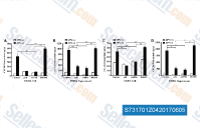
| S7317 | WZ4003 | WZ4003 is a highly specific NUAK kinase inhibitor with IC50 of 20 nM and 100 nM for NUAK1 and NUAK2 in cell-base assays, respectively, without significant inhibition on 139 other kinases. |
|
|
| S8654 | Ex229 (Compound 991) | EX229 (compound 991) is a potent AMPK activator that is 5-10-fold more potent than A769662 in activating AMPK. |
|
|
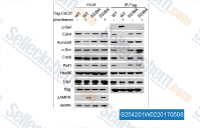
| S2542 | Phenformin HCl | Phenformin HCl is a hydrochloride salt of phenformin that is an anti-diabetic drug from the biguanide class. It activates AMPK, increasing activity and phosphorylation. |
|
|
| S9833 | BAY-3827 | BAY-3827 is a potent AMPK inhibitor which inhibits AMPK kinase activity with IC50 values of 1.4 nM at a low, 10 μM ATP concentration and 15 nM at a high, 2 mM ATP concentration. |
|
|
| S7953 | Bempedoic acid (ETC-1002) | Bempedoic acid (ETC-1002) is an orally available, once-daily LDL-C lowering small molecule designed to reduce elevated levels of LDL-C and to avoid side effects associated with existing LDL-C lowering therapies. This compound is an activator of hepatic AMP-activated protein kinase (AMPK) and has potent inhibitory activity against hepatic ATP-citrate lyase(IC50=29 uM). |
|
|
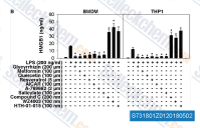
| S7318 | HTH-01-015 | HTH-01-015 is a potent and selective NUAK1 inhibitor with IC50 of 100 nM, >100-fold selectivity over NUAK2. |
|
|
| S0795 | O-304 | O-304 (O-304X) is an orally available pan-activator of AMPK activated protein kinase (AMPK). This compound exhibits a great potential as a novel drug to treat type 2 diabetes (T2D) and associated cardiovascular complications. |
|
|
| E1031 | MK-8722 |
MK-8722 is a potent, direct, allosteric activator of all 12 mammalian pan-AMPK complexes. |
|
|
| S8803 | MK-3903 | MK-3903 is a potent and selective AMPK activator with an EC50 of 8 nM for α1 β1 γ1 subunit. It activates 10 of the 12 pAMPK complexes with EC50 values in the range of 8-40 nM and maximal activation >50%. |
|
|
| S0411 | BAM 15 | BAM 15 is a novel mitochondrial protonophore uncoupler capable of protecting mammals from acute renal ischemic-reperfusion injury and cold-induced microtubule damage. This compound is also a potent AMPK activator. It attenuates transportation-induced apoptosis in iPS-differentiated retinal tissue. |
|
|
| S9604 | Lixumistat (IM156) | Lixumistat (IM156) is a potent activator of AMPK that increases AMPK phosphorylation. It blocks oxidative phosphorylation (OXPHOS) through the inhibition of complex I and increases apoptosis. This compound ameliorates various types of fibrosis and inhibits tumors. |
|
|
| S4561 | Danthron | Danthron (Chrysazin, Antrapurol) functions in regulating glucose and lipid metabolism by activating AMPK. This compound is a natural product extracted from the traditional Chinese medicine rhubarb. It used to be a laxativa and now is currently used as an antioxidant in synthetic lubricants, in the synthesis of experimental antitumor agents, as a fungicide and as an intermediate for making dyes. |
|
|
| S5284 | Adenosine 5'-monophosphate monohydrate | Adenosine 5'-monophosphate monohydrate (5'-Adenylic acid, 5'-AMP) is an activator of a class of protein kinases known as AMP-activated protein kinase (AMPK). | ||
| S8335 | PF-06409577 | PF-06409577 is an orally bioavailable AMPK activator with EC50 of 7 nM for α1β1γ1 in the TR-FRET assay and it shows no detectable inhibition of hERG in a patch-clamp assay (100 μM) and was not an inhibitor (IC50 > 100 μM) of the microsomal activities of major human cytochrome P450 isoforms. | ||
| E2032 | MOTS-c | MOTS-c, a mitochondria-derived peptide (MDP), exerts antinociceptive and anti-inflammatory effects through activating AMPK pathway and inhibiting MAP kinases-c-fos signaling pathway. | ||
| E3652 | Rehmanniae radix praeparata Extract | Rehmanniae radix praeparata Extract is extracted from Rehmanniae radix praeparata, which can improve diabetes through AMPK-mediated NF-κB/NLRP3 signaling pathway. | ||
| E2371 | YLF-466D | YLF-466D is an AMPK activator that inhibits platelet aggregation. | ||
| S3832 | Euphorbiasteroid | Euphorbiasteroid (Euphorbia factor L1), a component of Euphorbia lathyris L., inhibits adipogenesis of 3T3-L1 cells through activation of the AMPK pathway and induces HL-60 cells to apoptosis via promoting Bcl-2/Bax apoptotic signaling pathway in a dose-dependent manner. This compound is a tricyclic diperpene of Euphorbia lathyris L., inhibits tyrosinase, and increases the phosphorylation of AMPK, with anti-cancer, anti-virus, anti-obesity and multidrug resistance-modulating effect. | ||
| S8953 | ASP4132 | ASP4132 is a potent and orally active activator of Adenosine Monophosphate-Activated Protein Kinase (AMPK) with EC50 of 0.018 μM. This compound is used as a clinical candidate for the treatment of human cancer. | ||
| E2818 | MARK4 inhibitor 1 | MARK4 inhibitor 1 is a potent microtubule affinity-regulating kinase 4 (MARK4) inhibitor, with an IC50 of 1.54 μM for MARK4 inhibition assay. | ||
| E0022 | Ophiopogonin D | Ophiopogonin D (OJV-VI, Deacetylophiopogonin C) is a steroidal glycoside isolated from Chinese herb Radix ophiopogonis and shows anti-tumor property. This compound could suppress TGF-β1-mediated metastatic behavior of MDA-MB-231 cells by regulating ITGB1/FAK/Src/AKT/β-catenin/MMP-9 signaling axis. It also attenuates PM2.5-induced inflammation via suppressing the AMPK/NF-κB pathway in mouse pulmonary epithelial cells. | ||
| E5784 | AICAR phosphate | |||
| E0653 | Trans-ferulic acid | Trans-ferulic acid is a potent activator of AMPK under high glucose condition. | ||
| E0795 | COH-SR4 | COH-SR4 suppresses adipogenesis in 3T3-L1 cells through indirect activation of AMPK and downstream modulation of the Mammalian target of rapamycin complex 1 (mTORC1) signaling pathway, which blocks important regulators involved in protein synthesis, cell cycle progression, and expression of key transcription factors and their target adipogenic genes involved in lipid synthesis. | ||
| S3341 | Palmitoleic acid |
Palmitoleic acid (POA, Palmitoleate) stimulates the uptake of glucose in liver through activation of AMPK and FGF-21, dependent on PPARα. |
||
| S9096 | ligustroflavone | Ligustroflavone (Nuezhenoside), isolated from the leaves of Turpinia montana, shows high antioxidant capacity and is reported to be an AMPK activator. | ||
| S0177 | XMD-17-51 | XMD-17-51 (XMD17-51) is a potent and highly selective inhibitor of NUAK1. | ||
| S9860 | BC1618 | BC1618 is an orally active Fbxo48 inhibitor that stimulates adenosine monophosphate (AMP)-activated protein kinase (Ampk)-dependent signaling. This compound promotes mitochondrial fission, facilitates autophagy and improves hepatic insulin sensitivity. | ||
| S4460 | IMM-H007 | IMM-H007, an adenosine derivative, is an activator of AMP-Activated Protein Kinase (AMPK). This compound is a potential drug for treating cardiac dysfunction. It negatively regulates endothelium inflammation through inactivating NF-κB and JNK/AP1 signaling. This chemical inhibits ABCA1 (ATP binding cassette subfamily a member 1) degradation and facilitates its cell-surface localization in macrophages, thereby promotes cholesterol efflux. | ||
| E0204 | Poricoic acid A | Poricoic acid A is isolated from the surface layer of Poria cocos. This compound activates AMPK to attenuate fibroblast activation and abnormal extracellular matrix remodelling in renal fibrosis. It also is a modulator of tryptophan hydroxylase-1 (TPH-1). | ||
| S0888 | Rsva 405 | Rsva 405, a novel small-molecule activator of AMPK, is a potent inhibitor of adipogenesis and thus may have therapeutic potential against obesity. | ||
| S1323 | 7-Methoxyisoflavone | 7-Methoxyisoflavone (MIF) is a potent activator of adenosine monophosphate-activated protein kinase (AMPK). | ||
| E3011 | Sarsaparilla Extract | Sarsaparilla Extract is extracted from Smilax china L., which can stimulate 3T3-L1 Adipocytes to Brown-like Adipocytes Via β3-AR/AMPK Signaling Pathway. | ||
| E3029 | White Paeony Root Extract | White Paeony Root Extract is extracted from Paeonia lactiflora Pall., which can alleviate liver injury in hypercholesterolemic rats through the ROCK/AMPK pathway. | ||
| E3032 | Atractyloides Macrocephala Root Extract | Atractyloides Macrocephala Root Extract is extracted from Atractylodes macrocephala Koidz., which can regulate lysophagy based on LKB1-AMPK-TFEB pathway. | ||
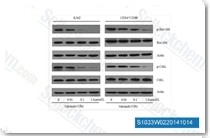
| S1033 | Nilotinib (AMN-107) | Nilotinib is a selective Bcr-Abl inhibitor with IC50 less than 30 nM in Murine myeloid progenitor cells. Nilotinib induces autophagy through AMPK activition. |
|
|
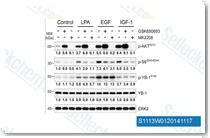
| S1113 | GSK690693 | GSK690693 is a pan-Akt inhibitor targeting Akt1/2/3 with IC50 of 2 nM/13 nM/9 nM in cell-free assays, also sensitive to the AGC kinase family: PKA, PrkX and PKC isozymes. GSK690693 also potently inhibits AMPK and DAPK3 from the CAMK family with IC50 of 50 nM and 81 nM, respectively. GSK690693 affects Unc-51-like autophagy activating kinase 1 (ULK1) activity, robustly inhibits STING-dependent IRF3 activation. Phase 1. |
|
|
| S8274 | STO-609 | STO-609 is a specific inhibitor of the Ca2+/Calmodulin-dependent protein kinase kinase(CaM-KK) that inhibits the activities of recombinant CaM-KKα and CaM-KKβ isoforms, with Ki values of 80 and 15 ng/ml, respectively, and also inhibits their autophosphorylation activities. This compound inhibits AMPKK activity and inhibits autophagy. |
|
|
| S4895 | Nilotinib hydrochloride monohydrate | Nilotinib (AMN-107, Tasigna) hydrochloride monohydrate is a selective and orally bioavailable inhibitor of Bcr-Abl with IC50 < 30 nM in Murine myeloid progenitor cells. Nilotinib induces autophagy through AMPK activition. |
|
|
| S3296 | Hispidulin | Hispidulin (Dinatin), an active natrual ingredient in a number of traditional Chinese medicinal herbs, exhibits inhibitory activity against the oncogenic protein kinase Pim-1 with IC50 of 2.71 μM. This compound induces apoptosis through mitochondrial dysfunction and inhibition of P13k/Akt signalling pathway in HepG2 cancer cells. It exerts anti-osteoporotic and bone resorption attenuating effects via activating the AMPK signaling pathway. |
|
|
| S1321 | Urolithin B | Urolithin B inhibits NF-κB activity by reducing the phosphorylation and degradation of IκBα. This compound suppresses the phosphorylation of JNK, ERK, and Akt, and enhances the phosphorylation of AMPK. It is also a regulator of skeletal muscle mass. |
|
|
| E3041 | Alpiniae Katsumadai Extract | Alpiniae Katsumadai Extract is extracted from Alpiniae Katsumadai, which can induce growth inhibition and autophagy‑related apoptosis by regulating the AMPK and Akt/mTOR/p70S6K signaling pathways in cancer cells. | ||
| E1323New | Aldometanib | Aldometanib (LXY-05-029) is a selective inhibitor of aldolase (ALDOA) with an IC50 of 50 uM in in vitro enzymatic assays. It also activates lysosomal AMPK by blocking FBP-aldolase binding, mimicking glucose starvation and improving metabolic health without causing hypoglycemia. | ||
| S2942 | EB-3D | EB-3D is a potent and selective inhibitor of choline kinase α (ChoKα) with IC50 of 1 μM for ChoKα1. This compound induces deregulation of the AMPK-mTOR pathway and apoptosis in leukemia T-cells. | ||
| S9116 | Chikusetsusaponin IVa | Chikusetsusaponin IVa (Calenduloside F), a major active ingredient of triterpenoid saponins, has numerous pharmacological activities, including cytotoxic activity against various cancer cells, anti-inflammatory activity, prevention of dental caries and induction of genta-micin nephrotoxicity. This compound is a novel AMPK activator. | ||
| E2661 | Chitosan oligosaccharide | Chitosan oligosaccharide (COS) is an oligomer of β-(1➔4)-linked d-glucosamine, of which actions involve the modulation of several important pathways including the suppression of nuclear factor kappa B (NF-κB) and mitogen-activated protein kinases (MAPK) and the activation of AMP-activated protein kinase (AMPK). | ||
| S1273 | Amarogentin |
Amarogentin (AG), a secoiridoid glycoside mainly extracted from Swertia and Gentiana roots, exhibits anti-oxidative, anti-tumour, and anti-diabetic activities. This compound is an agonist for the bitter taste receptor TAS2R1 and inhibits in LAD-2 cells substance P-induced production of newly synthesized TNF-α. It induces apoptosis in human gastric cancer cells (SNU-16) through G2/M cell cycle arrest and PI3K/Akt signalling pathway. This chemical interacts with the α2 subunit of AMP-activated protein kinase (AMPK) and activates the trimeric kinase with EC50 of 277 pM. |
||
| S6221 | Methyl cinnamate | Methyl cinnamate, an active component of Zanthoxylum armatum, is a widely used natural flavor compound with antimicrobial and tyrosinase inhibitor activities. Methyl Cinnamate Inhibits Adipocyte Differentiation via Activation of the CaMKK2--AMPK Pathway in 3T3-L1 Preadipocytes. | ||
| S3299 | Demethyleneberberine | Demethyleneberberine (DMB), a component of Cortex Phellodendri Chinensis (CPC), significantly alleviates the weight loss and diminishes myeloperoxidase (MPO) activity, while significantly reduces the production of pro-inflammatory cytokines, such as interleukin (IL)-6 and tumor necrosis factor-α (TNF-α), and inhibits the activation of NF-κB signaling pathway. This compound potentially ameliorates NAFLD (Non-alcoholic fatty liver disease) by activating AMPK pathways. |

Products are for research use only. Not for human use. We do not sell to patients.
©Copyright 2013 Selleck Chemicals. All Rights Reserved.