
|
How to Cite 1. For In-Text Citation (Materials & Methods): 2. For Key Resources Table: |
||
|
Toll Free: (877) 796-6397 -- USA and Canada only -- |
Fax: +1-832-582-8590 Orders: +1-832-582-8158 |
Tech Support: +1-832-582-8158 Ext:3 Please provide your Order Number in the email. We strive to reply to |
Biological Description
| Specificity | DUSP6/MKP3 Antibody [E9K23] detects endogenous levels of total DUSP6/MKP3 protein. |
|---|---|
| Background | Dual‑specificity phosphatase 6 (DUSP6), also known as MAP kinase phosphatase‑3 (MKP3/Pyst1), is a cytoplasmic dual‑specificity phosphatase that selectively dephosphorylates and inactivates ERK1/2 within the classical MAPK cascade, thereby shaping the duration, intensity, and spatial profile of ERK signaling. DUSP6 contains an N‑terminal kinase‑interaction motif (KIM) that docks to the common docking site of ERK2, positioning the C‑terminal catalytic phosphatase domain to remove phosphate groups from both Thr and Tyr residues within the ERK activation‑loop heptapeptide (Thr‑Glu‑Tyr), while structural studies show that the phosphatase domain forms a shallow, active pocket that accommodates the doubly phosphorylated ERK activation segment and permits ERK‑stimulated phosphatase activity. ERK‑dependent transcriptional induction of DUSP6 creates a negative feedback loop that limits ERK amplitude and duration, and genetic loss of Dusp6/Mkp3 in mouse models enhances ERK activation and underlies developmental defects such as skeletal dwarfism and craniosynostosis, phenotypes that mirror hyperactive FGFR signaling, demonstrating its role as an intrinsic brake on FGF/ERK outputs. DUSP6 expression is both ERK‑regulated and oncogene‑tuned: DUSP6 loss or downregulation heightens ERK activity and promotes proliferation and tumorigenesis in epithelial cancers, whereas DUSP6 overexpression in some settings, including ovarian and breast carcinoma lines, dampens ERK signaling, lowers cyclin D3 levels, increases the G0/G1 ratio, and can either sensitize cells to chemotherapeutic apoptosis or, conversely, promote quiescence‑associated therapy resistance. |
Usage Information
| Application | WB, IP | Dilution |
|
||||
|---|---|---|---|---|---|---|---|
| Reactivity | Human | ||||||
| Source | Rabbit Monoclonal Antibody | MW | 42 kDa | ||||
| Storage Buffer | PBS, pH 7.2+50% Glycerol+0.05% BSA+0.01% NaN3 | Storage (from the date of receipt) |
-20°C (avoid freeze-thaw cycles), 2 years | ||||
References
|
Application Data
WB
Validated by Selleck
-
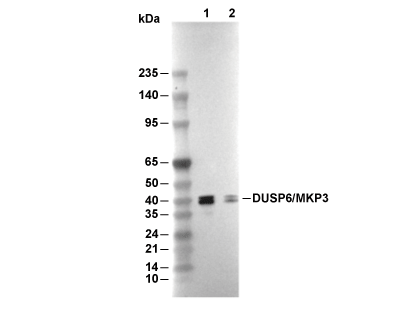 Lane 1: NCI-H3255, Lane 2: DLD-1