
|
How to Cite 1. For In-Text Citation (Materials & Methods): 2. For Key Resources Table: |
||
|
Toll Free: (877) 796-6397 -- USA and Canada only -- |
Fax: +1-832-582-8590 Orders: +1-832-582-8158 |
Tech Support: +1-832-582-8158 Ext:3 Please provide your Order Number in the email. We strive to reply to |
Technical Data
| Formula | C13H10BrN3O4 |
||||||
| Molecular Weight | 352.14 | CAS No. | 182498-32-4 | ||||
| Solubility (25°C)* | In vitro | DMSO | 70 mg/mL (198.78 mM) | ||||
| Ethanol | 16 mg/mL (45.43 mM) | ||||||
| Water | Insoluble | ||||||
| In vivo (Add solvents to the product individually and in order) |
|
||||||
|
* <1 mg/ml means slightly soluble or insoluble. * Please note that Selleck tests the solubility of all compounds in-house, and the actual solubility may differ slightly from published values. This is normal and is due to slight batch-to-batch variations. * Room temperature shipping (Stability testing shows this product can be shipped without any cooling measures.) |
|||||||
Preparing Stock Solutions
Biological Activity
| Description | SB225002 is a potent, and selective CXCR2 antagonist with IC50 of 22 nM for inhibiting interleukin IL-8 binding to CXCR2, > 150-fold selectivity over the other 7-TMRs tested. | ||
|---|---|---|---|
| Targets |
|
||
| In vitro | In vitro, SB225002 inhibits GROα-stimulated calcium mobilization, and potently inhibits human and rabbit neutrophil chemotaxis induced by both IL-8 and GROalpha. This compound substantially reduces the levels of phosphorylated ERK1/2, and decreases cell proliferation in WHCO1 cells. It also shows the antitumor activity as a microtubule inhibitor. | ||
| In vivo | In rabbits, SB225002 selectively blocks IL-8-induced neutrophil margination. In mouse intrahepatic cholangiocellular carcinoma model, this compound (1 mg/kg i.p.) suppresses the growth of transplanted subcutaneous tumors. In addition, it also displays long-lasting antinociceptive effects, and reduces TNBS-induced colitis in mouse models. |
Protocol (from reference)
| Kinase Assay:[1] |
|
|---|---|
| Cell Assay:[2] |
|
| Animal Study:[1] |
|
References
|
Customer Product Validation
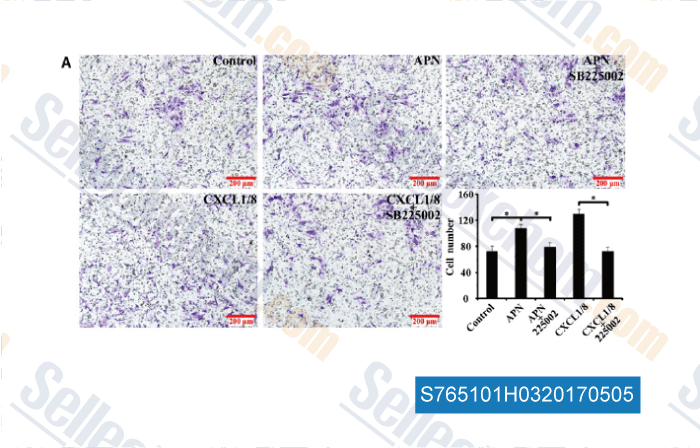
-
, , J Cell Mol Med, 2017, 21(7):1411-1419
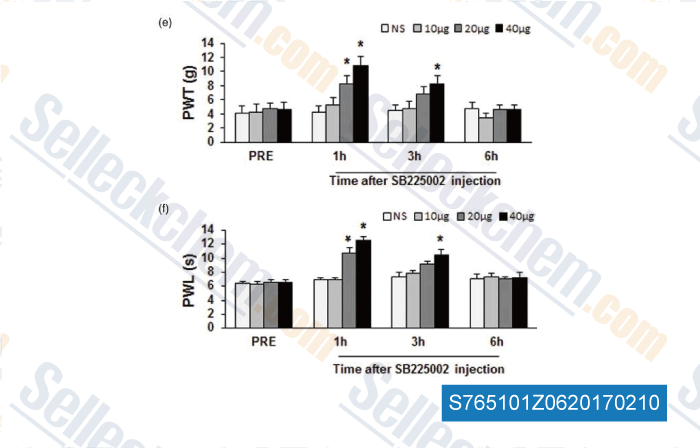
-
, , Mol Pain, 2016, doi: 10.1177/1744806916646381
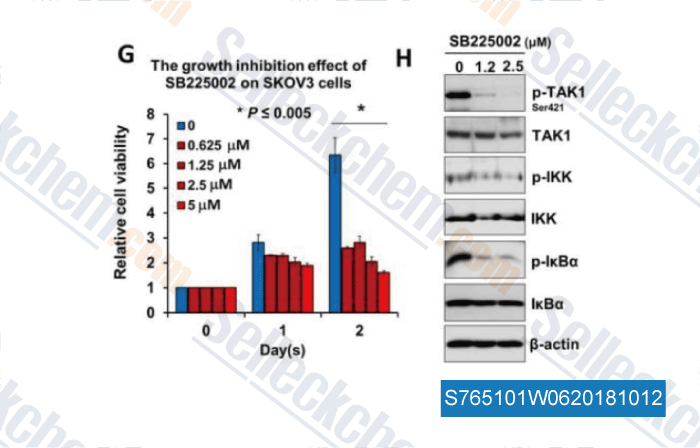
-
Data from [ , , Theranostics, 2018, 8(5):1270-1285 ]
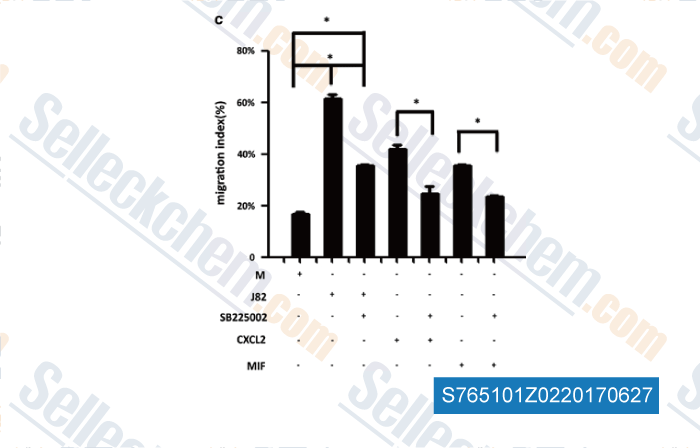
-
Data from [ , , Oncogene, 2017, 36(15):2095-2104 ]
Selleck's SB 225002 Has Been Cited by 91 Publications
| Myeloid-Derived Suppressor Cell Accumulation Drives Intestinal Fibrosis through mCCL6/hCCL15 Chemokine-Mediated Fibroblast Activation [ Adv Sci (Weinh), 2025, 12(8):e2411711] | PubMed: 39739231 |
| Tumor-derived exosomes induce neutrophil infiltration and reprogramming to promote T-cell exhaustion in hepatocellular carcinoma [ Theranostics, 2025, 15(7):2852-2869] | PubMed: 40083930 |
| USP15 Facilitates Colorectal Cancer Immune Evasion through SMYD3/CCL2-Dependent Myeloid-Derived Suppressor Cell Recruitment [ Cancer Immunol Res, 2025, 10.1158/2326-6066.CIR-24-1194] | PubMed: 40323348 |
| Cholesterol 25-Hydroxylase Enhances Myeloid-Derived Suppressor Cell (MDSC) Immunosuppression via the Stimulator of Interferon Genes (STING)-Tank-Binding Kinase 1 (TBK1)-Receptor-Interacting Protein Kinase 3 (RIPK3) Pathway in Colorectal Cancer [ MedComm (2020), 2025, 6(10):e70411] | PubMed: 41020041 |
| CXCR2 mediates rotenone-induced neuroinflammation and neurodegeneration through neurotrophil infiltration and extracellular traps formation in mice [ Int J Biol Macromol, 2025, 330(Pt 4):148305] | PubMed: 41093199 |
| KRASG12D drives immunosuppression in lung adenocarcinoma through paracrine signaling [ JCI Insight, 2025, 10(1)e182228] | PubMed: 39782689 |
| Induction of cell death by the CXCR2 antagonist SB225002 in colorectal cancer and stromal cells [ Biomed Pharmacother, 2025, 188:118203] | PubMed: 40412356 |
| The crosstalk of monocyte-neutrophil in hair follicles regulates neutrophil transepidermal migration in contact dermatitis [ Commun Biol, 2025, 8(1):564] | PubMed: 40185981 |
| IDO1 promotes Echinococcus multilocularis infection by regulating the formation of neutrophil extracellular traps [ Vet Res, 2025, 56(1):131] | PubMed: 40597301 |
| Extracellular-vesicle-packaged S100A11 from osteosarcoma cells mediates lung premetastatic niche formation by recruiting gMDSCs [ Cell Rep, 2024, 43(2):113751] | PubMed: 38341855 |
RETURN POLICY
Selleck Chemical’s Unconditional Return Policy ensures a smooth online shopping experience for our customers. If you are in any way unsatisfied with your purchase, you may return any item(s) within 7 days of receiving it. In the event of product quality issues, either protocol related or product related problems, you may return any item(s) within 365 days from the original purchase date. Please follow the instructions below when returning products.
SHIPPING AND STORAGE
Selleck products are transported at room temperature. If you receive the product at room temperature, please rest assured, the Selleck Quality Inspection Department has conducted experiments to verify that the normal temperature placement of one month will not affect the biological activity of powder products. After collecting, please store the product according to the requirements described in the datasheet. Most Selleck products are stable under the recommended conditions.
NOT FOR HUMAN, VETERINARY DIAGNOSTIC OR THERAPEUTIC USE.