
|
How to Cite 1. For In-Text Citation (Materials & Methods): 2. For Key Resources Table: |
||
|
Toll Free: (877) 796-6397 -- USA and Canada only -- |
Fax: +1-832-582-8590 Orders: +1-832-582-8158 |
Tech Support: +1-832-582-8158 Ext:3 Please provide your Order Number in the email. We strive to reply to |
Biological Description
| Specificity | METTL14 Antibody [A8N22] detects endogenous levels of total METTL14 protein. |
|---|---|
| Background | Methyltransferase‑like protein 3 (METTL3) is the catalytic core of an N6‑adenosine methyltransferase complex that installs m6A marks on a broad spectrum of RNA transcripts, where it functions as a key writer of the epitranscriptomic code that influences mRNA splicing, processing, translation efficiency, stability, and primary miRNA maturation. METTL3 directly catalyzes the transfer of methyl groups to adenosine residues, whereas its partner METTL14 acts as an RNA‑binding scaffold that helps position the substrate and stabilize the active conformation of the methyltransferase module, so that together they define the substrate specificity and methylation landscape of the complex. The complex is further regulated by the Wilms’ tumor 1‑associating protein (WTAP), which directs the METTL3–METTL14 core to nuclear speckles, specialized subnuclear domains enriched in splicing factors and RNA‑processing machinery, thereby coupling m6A deposition to cotranscriptional and early post‑transcriptional regulation. Through these mechanisms, METTL3‑dependent m6A modification modulates the expression of genes involved in circadian rhythm, embryonic stem cell self‑renewal, immune tolerance, meiotic progression, and fertility, underscoring its role in integrating transcriptional and post‑transcriptional control across diverse developmental and homeostatic pathways. METTL3 is frequently overexpressed in lung adenocarcinoma and other malignancies, where it enhances tumor‑cell growth, survival, and invasion by stabilizing or promoting the translation of oncogenic transcripts and by altering the abundance and activity of key signaling and metabolic regulators. |
Usage Information
| Application | WB | Dilution |
|
||
|---|---|---|---|---|---|
| Reactivity | Human, Mouse, Rat, Monkey | ||||
| Source | Rabbit Monoclonal Antibody | MW | 65 kDa | ||
| Storage Buffer | PBS, pH 7.2+50% Glycerol+0.05% BSA+0.01% NaN3 | Storage (from the date of receipt) |
-20°C (avoid freeze-thaw cycles), 2 years | ||
References
|
Application Data
WB
Validated by Selleck
-
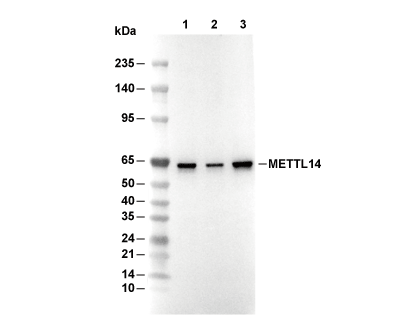 Lane 1: NCCIT, Lane 2: F9, Lane 3: COS-7