
|
How to Cite 1. For In-Text Citation (Materials & Methods): 2. For Key Resources Table: |
||
|
Toll Free: (877) 796-6397 -- USA and Canada only -- |
Fax: +1-832-582-8590 Orders: +1-832-582-8158 |
Tech Support: +1-832-582-8158 Ext:3 Please provide your Order Number in the email. We strive to reply to |
Biological Description
| Specificity | HMGN2 Antibody [F23H15] detects endogenous levels of total HMGN2 protein. |
|---|---|
| Background | HMGN2 (High Mobility Group Nucleosome‑binding domain 2) is a small, non‑histone chromosomal protein of the HMGN family that binds directly to the nucleosome core particle and modulates chromatin structure and function. It is widely expressed in multiple tissues and is recruited to nucleosomes by interacting with the acidic patch of the H2A–H2B dimer and with nucleosomal DNA near the dyad‑entry/exit regions, partially displacing linker histone H1 and altering nucleosome spacing and higher‑order folding. Through these interactions, HMGN2 influences chromatin accessibility and histone modification patterns, including the enhancement of certain histone acetylation marks, and thereby regulates the binding of transcription factors and the activity of transcriptional enhancers and promoters. HMGN2 also associates with transcription factors such as Lef‑1 and Pitx2, and can inhibit their DNA‑binding and transcriptional activation, positioning it as a chromatin‑linked modulator of lineage‑specific gene programs during development and differentiation. HMGN2 is detectable in the extracellular milieu under inflammatory or cytotoxic conditions and can act as an effector‑type protein in immune cells, where it has been reported to inhibit tumor‑cell proliferation and migration, induce apoptosis, and sensitize cancer cells to chemotherapeutic agents. Altered HMGN2 expression or localization is observed in several cancers, where it can correlate with reduced proliferation, migration, and tumor growth, and HMGN2‑deficiency studies further link it to changes in innate immune responses and chromatin‑dependent macrophage reprogramming. |
Usage Information
| Application | WB, IHC | Dilution |
|
||||
|---|---|---|---|---|---|---|---|
| Reactivity | Human | ||||||
| Source | Rabbit Monoclonal Antibody | MW | 9 kDa | ||||
| Storage Buffer | PBS, pH 7.2+50% Glycerol+0.05% BSA+0.01% NaN3 | Storage (from the date of receipt) |
-20°C (avoid freeze-thaw cycles), 2 years | ||||
References
|
Application Data
WB
Validated by Selleck
-
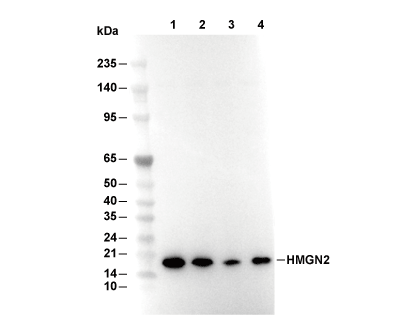 Lane 1: HL60, Lane 2: K562, Lane 3: Hela, Lane 4: SH-SY5Y