
|
How to Cite 1. For In-Text Citation (Materials & Methods): 2. For Key Resources Table: |
||
|
Toll Free: (877) 796-6397 -- USA and Canada only -- |
Fax: +1-832-582-8590 Orders: +1-832-582-8158 |
Tech Support: +1-832-582-8158 Ext:3 Please provide your Order Number in the email. We strive to reply to |
Biological Description
| Specificity | CD109 Antibody [K2B17] detects endogenous levels of total CD109 protein. |
|---|---|
| Background | CD109 is a glycosylphosphatidylinositol (GPI)-anchored cell surface glycoprotein of the α2‑macroglobulin/complement thioester-containing protein family that localizes to platelets, activated T cells, CD34⁺ hematopoietic progenitors, endothelial cells, basal keratinocytes, and a wide range of epithelial and mesenchymal tumors. The extracellular region contains a bait domain with protease recognition sequences and an internal thioester bond characteristic of α2‑macroglobulin-like proteins, and the GPI anchor links CD109 to membrane microdomains where it associates with signaling receptors. CD109 binds transforming growth factor‑β (TGF‑β) on the keratinocyte surface and forms complexes with TGF‑β receptor I and II, and this co-receptor function attenuates canonical TGF‑β/SMAD signaling by promoting receptor internalization and degradation, reducing SMAD2/3 phosphorylation, and limiting transcriptional responses to TGF‑β in epithelial cells. CD109 also modulates noncanonical TGF‑β signaling and interacts with components that regulate SMAD7 and Smurf2 localization, linking this GPI-anchored molecule to the control of receptor turnover and feedback inhibition within the TGF‑β pathway. In addition to its role in TGF‑β signaling, CD109 influences epidermal growth factor receptor (EGFR) signaling, and expression of CD109 enhances EGFR pathway activity while simultaneously dampening TGF‑β responses, thereby shifting the balance between growth-inhibitory and growth-promoting signals in keratinocytes and glioblastoma cells. CD109 carries the biallelic platelet-specific Gov alloantigen system and presents epitopes for ABH blood group antigens, and alloantibodies directed against CD109-associated antigens are linked to platelet transfusion refractoriness, neonatal alloimmune thrombocytopenia, and post-transfusion purpura, which places this protein at the interface between transfusion immunology and platelet biology. CD109 correlates with invasive and proliferative phenotypes and associates with altered TGF‑β and EGFR signaling status in many squamous cell carcinomas and adenocarcinomas, including lung, esophageal, head and neck, breast, and glioblastoma. In hematopoietic tissues, CD109 expression on stem and progenitor compartments and on platelets links this molecule to regulation of TGF‑β sensitivity in hematopoietic stem and progenitor cells and to lineage outcomes in bone marrow failure contexts, while in inflammatory settings, CD109 modulates cytokine secretion, immune cell recruitment, and macrophage polarization through coordinated effects on TGF‑β and NF‑κB pathways across skin, lung, bone, and tumor microenvironments. |
Usage Information
| Application | WB, IP, IHC, IF, ELISA | Dilution |
|
||||||||
|---|---|---|---|---|---|---|---|---|---|---|---|
| Reactivity | Human, Mouse, Rat | ||||||||||
| Source | Mouse Monoclonal Antibody | MW | 170 kDa | ||||||||
| Storage Buffer | PBS, pH 7.2+50% Glycerol+0.05% BSA+0.01% NaN3 | Storage (from the date of receipt) |
-20°C (avoid freeze-thaw cycles), 2 years | ||||||||
References
|
Application Data
WB
Validated by Selleck
-
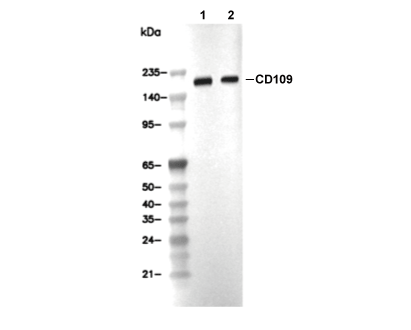 Lane 1: Hela, Lane 2: A-431