
|
How to Cite 1. For In-Text Citation (Materials & Methods): 2. For Key Resources Table: |
||
|
Toll Free: (877) 796-6397 -- USA and Canada only -- |
Fax: +1-832-582-8590 Orders: +1-832-582-8158 |
Tech Support: +1-832-582-8158 Ext:3 Please provide your Order Number in the email. We strive to reply to |
Biological Description
| Specificity | ACADL Antibody (Rabbit mAb) [C9C8] detects endogenous levels of total ACADL proteins. |
|---|---|
| Background | ACADL encodes long-chain acyl-CoA dehydrogenase (LCAD), a mitochondrial flavoenzyme belonging to the acyl-CoA dehydrogenase family that catalyzes the first, committed step of mitochondrial fatty acid beta-oxidation for straight-chain fatty acyl-CoA substrates, acting preferentially on chains between eight and eighteen carbons long. This first oxidation step removes hydrogen atoms from the C2 and C3 positions of the fatty acyl-CoA thioester substrate, generating a trans-2-enoyl-CoA product and initiating the repeating cycle of reactions that progressively shortens the fatty acid chain by two carbons per cycle while generating acetyl-CoA for entry into the citric acid cycle. Transcription of the human LCAD gene is directly controlled by nuclear hormone receptor transcription factors, positioning ACADL expression under the same regulatory control used broadly across genes of mitochondrial fatty acid oxidation, and this transcriptional regulation allows LCAD expression to be adjusted according to the cell's metabolic demand for fat-derived energy. Beyond its established metabolic role, ACADL expression is significantly reduced in human lung adenocarcinoma tissue compared with normal lung, and restoring ACADL expression in lung cancer cells decreases cell viability, migration and invasion, while knocking down ACADL produces the opposite effect and increases these malignant behaviors; in vivo, tumors overexpressing ACADL show impeded growth and reduced metastasis, and this tumor-suppressive activity is achieved mechanistically through induction of cell cycle arrest, promotion of apoptosis and suppression of the epithelial-to-mesenchymal transition program that normally enables cancer cell invasion. This pattern of reduced ACADL expression correlating with more aggressive tumor behavior extends beyond lung cancer to breast cancer, hepatocellular carcinoma and other malignancies, and in hepatocellular carcinoma specifically, ACADL restrains tumor growth through modulation of the Hippo/YAP signaling pathway, indicating that ACADL's fatty acid oxidation activity is coupled to control of a distinct oncogenic signaling cascade rather than acting solely through changes in cellular energy metabolism, and establishing reduced ACADL expression as a recurring feature associated with cancer progression across multiple tissue types. |
Usage Information
| Application | WB, IHC, ELISA | Dilution |
|
||||
|---|---|---|---|---|---|---|---|
| Reactivity | Human, Mouse, Rat | ||||||
| Source | Rabbit Monoclonal Antibody | MW | 48 kDa | ||||
| Storage Buffer | PBS, pH 7.2+50% Glycerol+0.05% BSA+0.01% NaN3 | Storage (from the date of receipt) |
-20°C (avoid freeze-thaw cycles), 2 years | ||||
References
|
Application Data
WB
Validated by Selleck
-
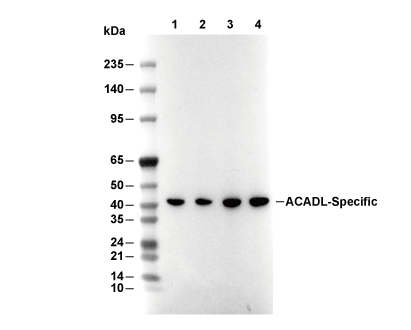 Lane 1: Mouse liver, Lane 2: Mouse kindey, Lane 3: Mouse lung, Lane 4: Rat liver